Artificial jewellery stores · Retail
Give the festival-season browser a reason to remember your shop for the next outfit.
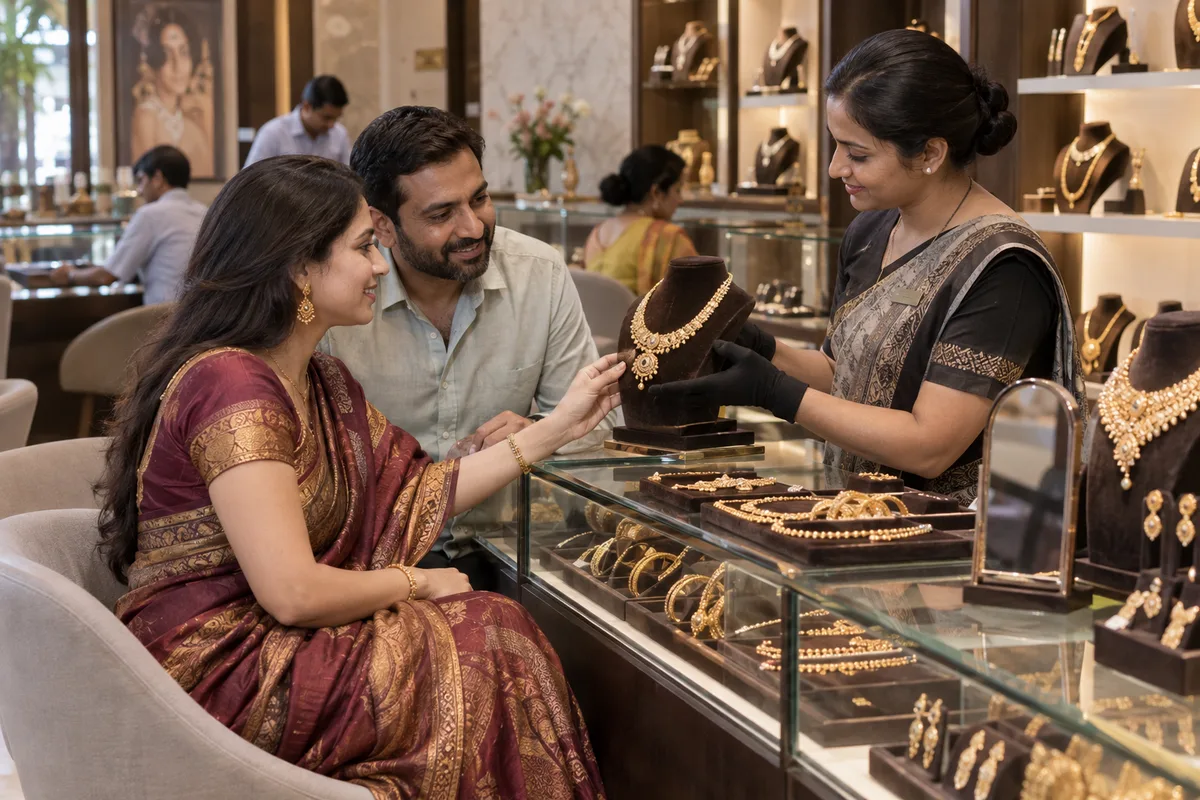
A great deal of artificial jewellery is bought for one outfit and one date. A woman has a lehenga for a cousin's sangeet on Saturday and walks into three shops in the market to find a set that matches the dupatta.
Scope, fee, reporting and term are agreed in writing after we have read your brief and spoken to you.
In one paragraph
Artificial jewellery marketing helps a store selling imitation, oxidised, kundan and gold-plated sets get found by women buying to match an outfit, and by boutique owners buying in bulk. GullySales prepares the shop listing, the WhatsApp catalogue, the festival plan and a separate route for resellers.
The shop that has the colour in stock, shows it quickly and sends a photo of the back of the earrings to a sister on WhatsApp is the one remembered. The second half of the trade is quieter and worth more. Boutique owners, Instagram resellers and small shop owners in nearby towns buy sets by the dozen from wholesalers, and they reorder from whoever sends a clear catalogue and ships without drama. A store that sells both ways needs two kinds of marketing: one for the woman at the counter and one for the boutique owner on the phone.
Last updated 18 Oct 2026.
How buyers decide
How artificial jewellery stores are chosen.
The retail buyer decides on look, matching and a price that can be agreed without consulting anyone. The search is oxidised jewellery or kundan sets near me, then a shop's Instagram for the colour needed, then a WhatsApp message asking whether a set is in stock before the trip to the market. A photo and a price in the reply is what the buyer is waiting for.
The trade buyer decides on repeat design, consistent quality and whether the supplier will pick up the phone when a lot arrives with broken stones. Catalogues shared as PDFs or WhatsApp broadcasts get compared, and a small first order comes before any commitment. Reliability is the product being bought.
Both buyers care about skin-safety and finish. Nickel allergy, colour fading and stones falling out are the complaints that decide whether someone comes back, so how a shop talks about its plating and its return policy carries real weight.
The problem
What usually goes wrong for artificial jewellery stores.
Common situations to check against your own enquiry records.
“Our shop is full on festival days and empty the rest of the month”
The crowd comes for Navratri, Karwa Chauth and the wedding season, then disappears. We have no way to bring those same women back for the next occasion.
“Customers ask for a photo on WhatsApp and then go quiet”
The counter staff are busy with walk-ins, the enquiry is answered late and the buyer has already bought from the next shop in the lane.
“Resellers buy once and then order from someone else”
We sent a catalogue and a rate once. Nobody followed up, and the boutique owner now orders from a supplier who messages when new designs arrive.
“Our Instagram has hundreds of photos and no way to buy”
Followers like the posts but cannot tell what is in stock, what the price is or where the shop is.
“Our Google listing shows a handful of blurry photos”
A buyer searching for artificial jewellery near the market sees a competitor with a full gallery, opening hours and reviews.
“We cannot say which sets sell to whom”
Stock decisions are made from memory, so festive colours run out while last season's pieces sit in the drawer.
What we do
What we do for artificial jewellery stores.
Possible deliverables for artificial jewellery stores. Your written scope confirms what is included.
A shop listing that shows the shelves
Photos of the display, the entrance and the best sets, with product-type names a buyer searches for, opening hours and a WhatsApp number printed on the listing.
A WhatsApp catalogue organised by colour and occasion
Sets grouped as bridal, sangeet, office and daily wear, with prices on the photo and a short note on availability.
A reseller order route
A separate catalogue, a minimum lot, a rate sheet and a reply routine for boutique owners and Instagram sellers, kept apart from the retail shelf.
A festival calendar for stock and messages
Colours and sets planned against Navratri, Karwa Chauth, Diwali and the wedding months, with posts and broadcasts ready before the rush.
A customer list that remembers the occasion
Name, number, what was bought and which event it was for, so a message about a matching set can go out before the next one.
How the result is measured
- WhatsApp photo requests that ended in a shop visit or an order
- Walk-ins who say they saw a reel or the shop listing
- Bills from women who shopped with you for an earlier occasion
- Boutique and reseller orders placed, and those that reordered
- Direction requests from the Google listing on festival weekends
- Which sets and colours were asked for and not in stock
Recorded as a baseline before work starts, so every later report has an honest comparison.
Every service, written for artificial jewellery stores
Each has its own page: what it involves for artificial jewellery stores, what you get, and what it is measured on.
- Lead generationFind the buyers who need a set for a named outfit and a named date.
- SEOBe the page a buyer finds when they search for the set that matches the outfit.
- Local SEOAppear on the map when a buyer searches for jewellery near the market lane.
- Social media marketingShow the set on the outfit so the follower knows what to ask for.
- Content marketingWrite the guides a buyer reads before choosing a set for the function.
- Buyer personasKnow the six people who walk through the door before choosing what to stock.
- CRMKeep a record of who bought what for which occasion, so the next message is useful.
- Follow-up systemsReply to the buyer who asked for a photo, and again before the next occasion.
- WhatsApp marketingTurn the WhatsApp photo request into a sale and a buyer who returns.
- Digital marketingPut the shop where the buyer looks, in the order the buyer looks.
- WebsiteGive the shop a site that shows the sets, the lane and a way to ask.
Worth a page and a campaign of their own
Matching sets for lehengas, sarees and suits · Bridesmaid and sangeet jewellery in quantity · Festival stock for Navratri, Diwali and Karwa Chauth · Wholesale catalogues for boutique owners and resellers · Return gifts and hamper orders · Repeat buyers and a customer list for new arrivals · Google Business Profile with real photos and hours · Clear talk on plating, finish and skin safety
Priority campaigns
Campaigns for what artificial jewellery stores most want to sell.
Each one planned around when your buyers decide, and measured against the baseline.
Outfit-matching campaign
Short videos and posts showing one dupatta colour with several sets, aimed at the women searching for jewellery to wear with a specific outfit.
Navratri and garba season push
Oxidised and mirror-work sets promoted in the weeks before the festival, with a reel for each look and a message to past buyers.
Wedding guest and bridesmaid sets
Posts and a WhatsApp offer for groups buying matching jewellery for five or ten people at once.
Boutique and reseller broadcast
A catalogue of new designs sent to a list of trade buyers who asked for it, with an order form that takes the lot size and delivery town.
Beyond search
Where we reach buyers of artificial jewellery stores, beyond Google.
Search matters, but it is rarely the only way this industry's buyers find a supplier.
Women who shop for weddings and festivals
Pages, photos and messages written for searches such as kundan set for lehenga, in the area your shop covers.
Boutique owners and clothing store owners
A catalogue and a short introduction for boutiques that want jewellery to sell beside their outfits without a separate supplier.
Instagram and WhatsApp resellers
A trade route where small online sellers order in lots and see new arrivals without a long chat.
Event planners and wedding stylists
Brides' parties, mehendi functions and stage styling use matching jewellery in numbers, so planners get their own rate sheet and sample set.
Small shops in nearby towns
A list of the towns your wholesale buyers already come from, and a pitch for the shops there that could stock your designs.
A practical starting point · Artificial jewellery stores
Start with one buying journey.
Use a real enquiry to find the first useful change. You do not need to buy every service listed on this page.
- The record to review
- Choose one product category and compare enquiries with purchases, cancellations, and repeat orders. Distinguish a stock enquiry from a buyer who visited or purchased.
- The buyer's question
- Check that product availability, store details, and purchase options agree across the website and listings. A promotion needs a clear route to an item the customer can actually buy.
- The handover to agree
- Agree who confirms stock and who responds to messages during a campaign. Store staff should know which offer the customer has seen.
Who it is for
This is written for these artificial jewellery stores.
- Retail shops in market lanes selling imitation and oxidised jewellery
- Wholesalers and manufacturers supplying boutiques and resellers
- Gold-plated and micro-plated jewellery shops
- Kundan, meenakari and polki-look specialists
- Temple and classical dance jewellery sellers
- Bridal jewellery rental and hire shops
- Mall kiosks and festival exhibition stalls
- Home-based sellers working through Instagram and WhatsApp groups
Not for
It is not the right fit if.
- You want a guaranteed Google ranking or a guaranteed number of leads. Nobody honest can promise either.
- You need enquiries by next week and have nobody to answer them.
- You want posts and reach reported, not enquiries and orders.
How it works
How the work runs for artificial jewellery stores
The work itself, in order. How an engagement starts, from your brief to a written scope, is set out on our method page.
- 1
Look at the shop as a buyer does
Search for your shop by lane and by set type, send a photo request on WhatsApp, and note who in the shop answers, how fast the reply carries a price, and whether reseller enquiries go to the same phone.
- 2
Sort the stock into a catalogue
Sets are photographed and grouped by occasion and colour. Retail and trade each get their own list, and the Google listing is corrected to match the shelves.
- 3
Start from the next occasion
Whichever of Navratri, Karwa Chauth, Diwali or the wedding months is nearest sets the first posts, reels and the trade broadcast.
- 4
Answer the unanswered
Ready replies for stock, price and back-of-earring photos, and a list of past buyers and boutique owners who asked once and heard nothing.
- 5
Read what was missed
Colours asked for and not in stock, sets that sat in the drawer and resellers who did not reorder decide what the next plan changes.
Where this fits
Three pieces of sales work, in this order.
GullySales builds every engagement from three pieces of sales work. This page is not one of them, but the same three steps apply to the business behind it.
Step 1
Sales audit
Find where deals are being lost and what to fix first.
Start here if you cannot say where orders are lost.
Step 2
Sales process design
One written way to sell, from first enquiry to repeat order.
Start here if every salesperson sells differently.
Step 3
Sales management
A target, a review routine and someone who owns the number.
Start here if the team has targets and no routine.
FAQ
Questions artificial jewellery stores ask before they call.
Not here? More answers, or ask on WhatsApp.
Can you help with both retail and wholesale in one shop?
Is Instagram or Google better for an artificial jewellery shop?
We sell on Meesho and marketplaces too. Does that conflict?
How do we talk about plating quality honestly?
Can you plan around festivals and the wedding season?
How much does it cost?
How long is the contract?
How soon will we see results?
Who will actually do the work?
What do you need from us?
Part of Retail. See the other industries in the sector.
Your next practical step
Tell us what you are trying to grow, and we will read it before we call.
Eight short steps, mostly taps. Skip anything you would rather answer on the call.