Bakeries · Lead generation
Bring in cake enquiries from the families who live inside your delivery area.
Lead generation for a bakery means creating a steady supply of cake and hamper enquiries from people planning a specific occasion nearby, rather than waiting for walk-ins. GullySales works on where those enquiries start, what the first message contains and who answers it.
Scope, fee, reporting and term are agreed in writing after we have read your brief and spoken to you.
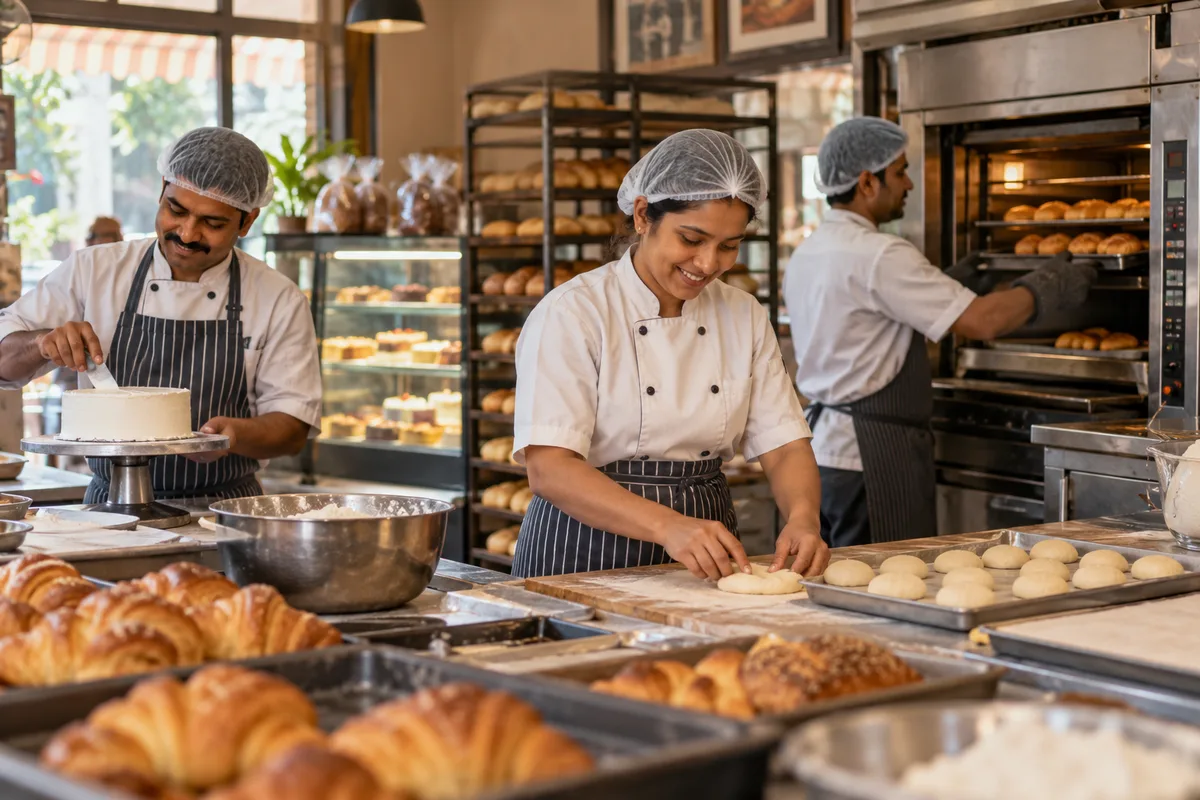
What lead generation means
Lead generation is the combined work of every channel that brings in a new enquiry, whether from search, adverts, referrals or a stall at an exhibition. GullySales runs these channels together and reports the number of enquiries each one produced, not the activity behind it.
Plan the next part of the work
Last updated 21 Nov 2026. Rules for this trade differ by state and professional body, and they change. We describe restrictions in general terms, so check the current position with your own council or adviser before you publish anything.
For bakeries
Where it usually goes wrong, and what we would do.
“An enquiry begins with an occasion, not with the bakery”
The parent planning a first birthday searches for the cake, the flavour or the theme. A bakery that is described only as a shop never appears for that search, however good the sponge is.
“Lead sources are not recorded”
Orders arrive through the shop counter, Instagram, a Google profile and a forwarded WhatsApp number. Without a note of where each began, the owner spends on the wrong one and cannot tell which deserves more.
“The enquiry outside the radius wastes a kitchen slot”
A customer two localities away asks for a tiered cake, gets a quote, then learns delivery is not possible. The time spent quoting could have gone to an order the van can actually reach.
“Corporate and event leads need a different first reply”
An office manager ordering for a team celebration wants a quantity, an invoice and a delivery time. A reply written for a birthday customer does not answer any of those.
What we do
What we deliver for bakeries.
The work available for this need. We agree the deliverables and responsibilities for your engagement in writing.
Occasion-based enquiry pages
One page for each cake occasion, each with real photographs, a price range, the delivery area and a button that opens WhatsApp with the occasion already filled in.
Result: The owner sees which occasion page the enquiry came from.
A fixed enquiry message
A pre-filled WhatsApp message that asks for date, weight, design reference, locality and egg-free preference before anything is quoted.
Result: Every new enquiry arrives with the details the kitchen needs.
Source tag on every order
A short tag, such as counter, Instagram, Google or referral, added when the order is written in the order book or CRM.
Result: The owner can read off where the last set of orders began.
Delivery area filter in the advertising
Local advertising and listings aimed at the localities the bakery delivers to, set from where past orders actually went.
Result: Enquiries come from places the van can reach.
A corporate and event enquiry sheet
A one-page offer for offices, schools and function halls with quantities, invoice details and a cut-off date.
Result: A bulk buyer gets an answer in the form they need.
How the result is measured
- Relevant enquiries by source
- Duplicate and unsuitable enquiries
- Time to the first response
- Accepted enquiries reaching an agreed next step
Recorded as a baseline before work starts, so every later report has an honest comparison.
What to capture
The details of a cake enquiry that tell you whether to quote it.
A cake enquiry arrives as a photograph and a date. These are the fields to note on the first reply and why each matters.
- Date and time the cake is needed
- Check it against the oven and the cut-off before any price is sent. A date you cannot meet should get an honest no at once.
- Delivery address or pickup
- Note the locality so you can tell at a glance if it is inside your radius, and keep it for the delivery slot.
- Occasion and who it is for
- A child's birthday, an anniversary and an office farewell call for different designs. It is also the date you write to next year.
- Reference photograph sent
- Save the picture with the chat. It is the design you were asked for, and settles the argument if the finished cake is questioned.
- Eggless, allergies and guest count
- These decide the recipe and the weight, and a guest count that is missing leads to a cake that is too small.
- How the customer found you
- Instagram, a friend, Google Maps or a delivery app. Without it you cannot tell which source sends orders worth baking.
Who it is for
This is written for these bakeries.
- Neighbourhood bakeries and cake shops
- Home-based and cloud bakeries
- Bakery and confectionery chains
- Bread and artisan bakeries
- Wedding and event cake specialists
- Bakeries supplying cafes and hotels
Before you decide
When this may not be the right fit.
- You already turn away orders every weekend, and more enquiries would only add to the refusals.
- Nobody records where an enquiry came from, so a new source could not be judged.
- You cannot answer a WhatsApp message on the same evening, when cake enquiries arrive.
Before you decide
Agree the work. Know how to judge it.
Lead generation for bakeries: use these checks to prepare, choose the scope, and review what changes.
Bring the right evidence
Define the organisations or buyers you can serve and the reasons they would consider a conversation. Bring examples of accepted and rejected prospects so the selection rule is visible.
Make the scope clear
Agree the research sources, contact approach, qualification rules, and handover. Clarify which meetings count as accepted and what happens to replies that are not ready to buy.
Check the work in use
Review why a prospect was selected and what was learned from the response. Count held, relevant conversations separately from contacts found, messages sent, or meetings booked.
Know when to change course
If the same objection appears repeatedly, adjust the offer or buyer group before increasing outreach. Respect a request to stop contact and keep the exclusion in the record.
These are discussion points, not a fixed package. GullySales confirms the deliverables, responsibilities, fee, and term in writing after reading your brief and speaking with you.
Before we start
What to have ready before the work starts.
The records, access and decisions this work needs from bakeries. Anything missing is noted in the written scope, with who will supply it.
- A rough record of recent enquiries
- To see where leads come from, we need a record of enquiries over a recent stretch. Chats, calls noted in a book or the order notebook will do. Without it, we start counting from now, and the comparison against a starting figure arrives much later.
- The list of localities you deliver to
- Leads from outside the area waste a kitchen slot. Bring the localities and pincodes your staff can reach. Without them, enquiry pages and advertisements may bring orders you cannot deliver, and the kitchen holds a slot for a cake that never leaves the shop.
- Photographs of cakes for main occasions
- Occasion pages need real pictures of cakes you bake. Bring a handful for each occasion that matters. If photographs are missing, the pages are held until the kitchen shoots them, because a page without a real cake does not persuade a parent to write.
- Your rule for corporate and event orders
- Larger orders need a different first reply, with quantity and date. Bring your minimum, your lead time and your payment terms. Where these are not decided, the sheet records only the contact and waits for you to set the terms. Include any minimum order you apply.
- One person to read new enquiries
- A named person must read each new enquiry and send the first reply. Give us their number and hours. If the owner is also baking, we agree a set time to read, so that enquiries are not forgotten behind the oven door.
How it works
How the lead generation work runs
The work itself, in order. How an engagement starts, from your brief to a written scope, is set out on our method page.
- 1
Count where enquiries come from today
We begin with a plain list of the last stretch of enquiries and where each one came from, as far as you can recall: Maps, Instagram, a friend, the shopfront. You fill gaps from memory. The list shows which source deserves attention, and which cannot be traced at all.
- 2
Write the occasion enquiry pages
For the two or three occasions that bring the biggest orders, we write a page or post that begins with the occasion rather than the bakery. You read each for claims you cannot stand behind. Each page ends in one clear way to enquire.
- 3
Fix the first reply to every enquiry
We write one first message that asks for the date, the flavour, the size and the area, so the kitchen knows at once whether it can take the order. You edit it. The corporate and event version asks for a different set of details.
- 4
Tag the source on every order
A column in the order book records where each customer came from. You choose the words staff will use and who fills it in. Without this tag, we cannot say later which source brought a baked cake and which only brought chat. The tag is a single word.
- 5
Set the delivery area filter in the advertising
Any paid placement is limited to the localities you serve, using the area list you gave us. You confirm it matches your delivery staff's reach. An enquiry from outside the radius is answered politely with a collection option, not with a refusal. Sets of pincodes are listed in plain words.
- 6
Compare sources against the starting list
At the end we put the tagged orders beside the first list. You tell us which sources you now trust. The next round of effort goes to the sources that led to baked cakes and away from those that produced chat only. The report names the source of each baked cake.
Where this fits
Three pieces of sales work, in this order.
This work sits inside sales process design, at stage 1, prospecting and lead generation. The audit comes before it, and sales management keeps it running.
Step 1
Sales audit
Find where deals are being lost and what to fix first.
Start here if you cannot say where orders are lost.
Step 2 · you are here
Sales process design
One written way to sell, from first enquiry to repeat order.
Start here if every salesperson sells differently.
Step 3
Sales management
A target, a review routine and someone who owns the number.
Start here if the team has targets and no routine.
FAQ
Questions owners ask before they call.
Not here? More answers, or ask on WhatsApp.
Which source should a new bakery start with?
Do paid ads make sense for a small bakery?
Can we count walk-ins as leads?
What should we do with an enquiry from outside our radius?
Should a new bakery pay for leads from a directory?
Who counts as a lead if they only ask the price?
How long is the contract?
How soon will we see results?
Who will actually do the work?
What do you need from us?
From the blog
Further reading for bakeries.
 6 min read · 8 Jul 2026Email marketing tips for cafes and baristasEmail tips for baristas and cafe owners: where a small cafe list comes from, what is worth sending to it, and what to leave out.
 6 min read · 25 Jun 2026How to increase cafe sales: fill the quiet hours and raise the billCafe sales grow four ways: regulars visiting more, a higher bill per table, busier quiet hours and new customers from Maps. Work in that order.
 6 min read · 9 Jun 2026How to increase bakery sales beyond the walk-in counterTake custom cake orders properly on WhatsApp, be found on Maps for birthday cakes, sell to offices in bulk, and bring regulars back with a reason to visit.
More for bakeries
Related work to consider.
Closest to this: leads and follow-up
Also for bakeries
Or start from the overview: sales and marketing for bakeries.
Your next practical step
Tell us what you are trying to grow, and we will read it before we call.
Eight short steps, mostly taps. Skip anything you would rather answer on the call.