How people choose in this industry
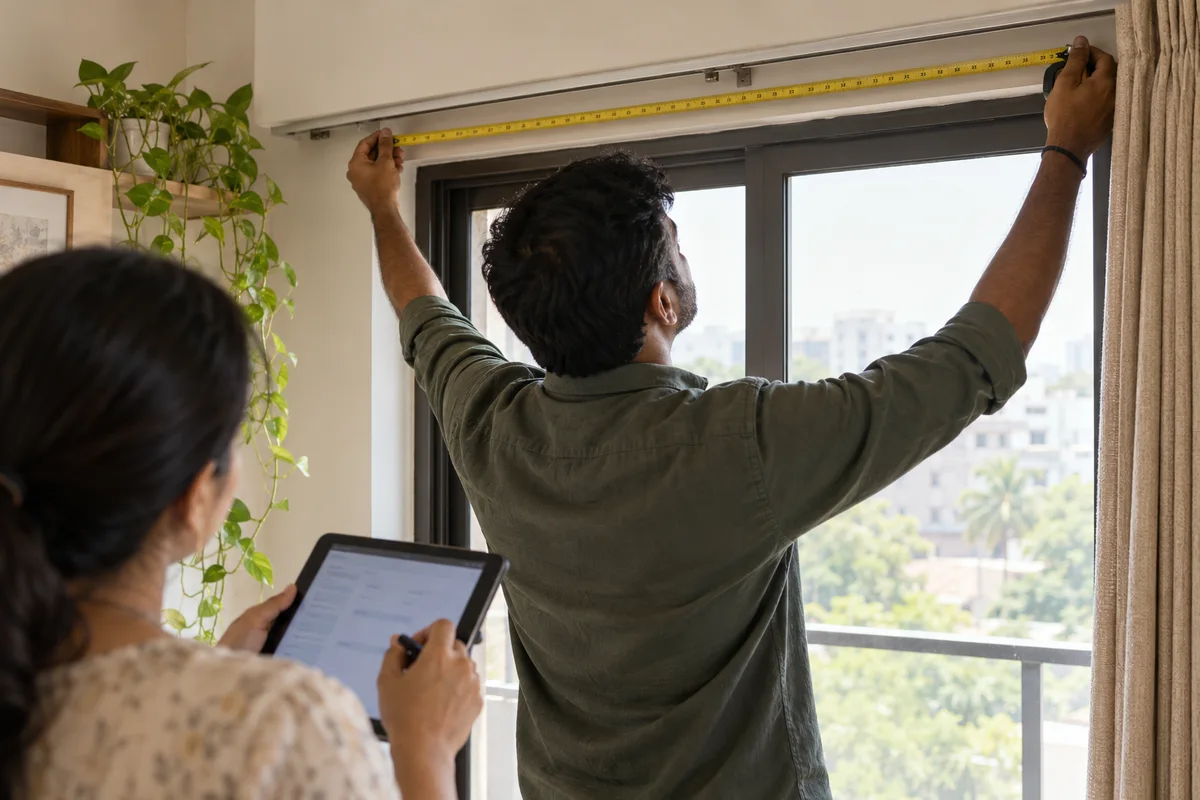
Flat owners search Google and Instagram for roller blinds for a balcony, zebra blinds for a bedroom or a bamboo chik for a veranda, then message two or three dealers with a photo. They compare the fabric sample, the fitting date and the price per window, in that order of worry. The dealer who sends a fabric swatch and a measurement visit stays in the conversation.
Shops, restaurants and offices choose differently. The shop owner wants a shopfront awning that the landlord and the local body will not object to, and asks neighbouring shops who fitted theirs. A facility manager wants forty windows done in a weekend, with a GST invoice, and picks the dealer who can show a similar office. Interior designers keep two or three blind vendors and send them every project.
Awnings carry a wrinkle that curtains do not. Balcony awnings, terrace canopies and shopfront awnings can fall under society rules, building by-laws or a landlord's consent, and those differ by city and by building. A dealer who tells the buyer to check this early looks careful. One who says nothing sometimes gets the job taken down.
The decision before implementation
A direct-only business may not need a partner programme. Agree the channel role and conflict boundaries first.
Existing industry priorities to review
- Roller and zebra blinds for bedrooms and living rooms
- Blackout blinds for children's rooms and shift workers
- Balcony drop-down shades against rain and sun
- Retractable awnings for terraces and restaurants
- Shopfront awnings and fascia canopies
These describe the industry's wider priorities. The written scope identifies which this service will address.