Blinds, shades and awning dealers · Website
Build a site where a buyer can see the fitting and book the measuring visit.
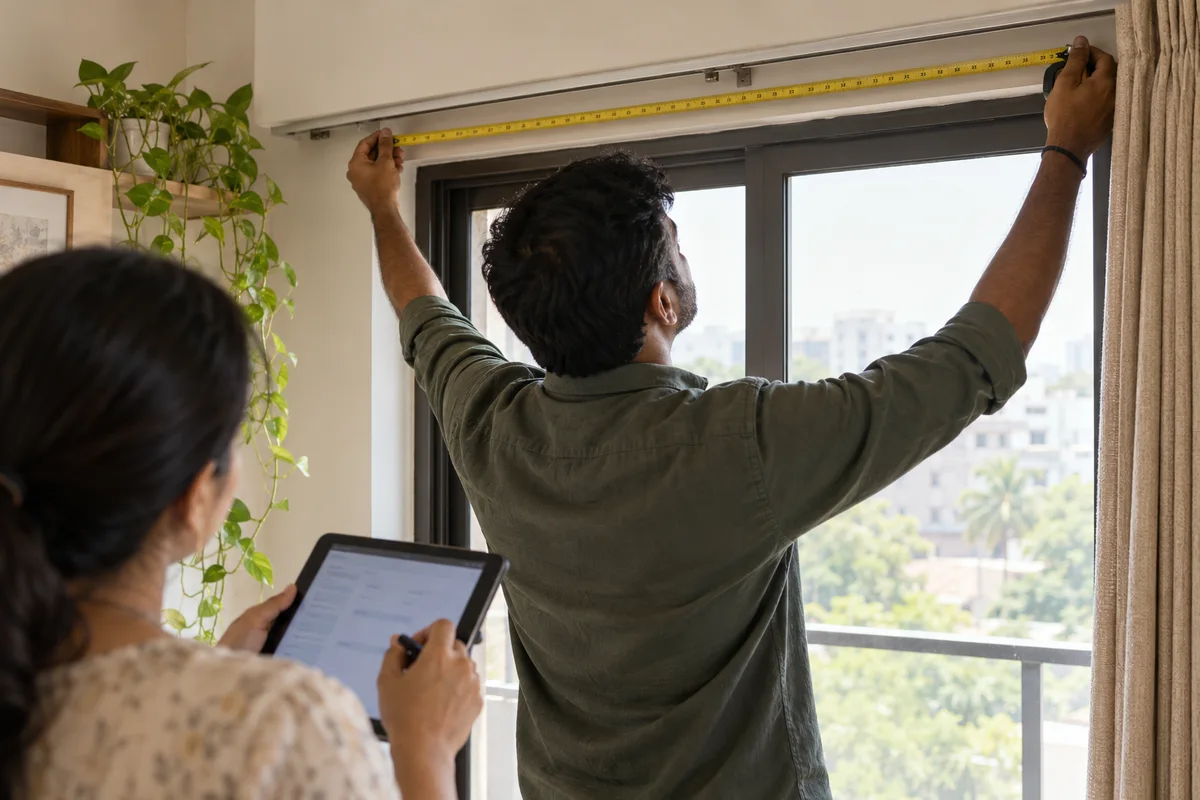
A website for a blinds and awning dealer is the place where a buyer compares fabrics, studies fitted windows and chooses a visit slot. GullySales works on the pages, the photographs and the booking step so the site does the showroom's first conversation.
Scope, fee, reporting and term are agreed in writing after we have read your brief and spoken to you.
What website means
A website is the page a customer lands on after searching, clicking an advert or scanning a code, and it decides whether they call or leave. GullySales builds and maintains sites that load quickly, explain the offer plainly and make the enquiry form or phone number easy to find.
Also for blinds, shades and awning dealers
Sales and marketing for blinds, shades and awning dealers, the overview.
Last updated 14 Nov 2026.
For blinds, shades and awning dealers
Where it usually goes wrong, and what we would do.
“The site is judged on fitted windows”
A buyer scanning for proof wants to see blinds hanging straight in real rooms. Stock images of generic interiors say nothing about your fitters, while your own photographs show the finish.
“The phone is the main screen”
Visitors arrive from a phone, with a window in front of them. Pages that load heavy images or hide the call button lose the buyer standing in the room.
“The booking step should be one tap away”
A buyer who has decided to book should not have to search for a contact page. A visible button for a measuring visit, with a short form, turns interest into a diary entry.
“Type pages need clear fabric and fitting detail”
Roller, zebra, Venetian, bamboo and awnings each need their own page that says what the fabric does, how it fits and what the measurement involves. A single catalogue page cannot hold that detail.
What we do
What we deliver for blinds, shades and awning dealers.
The work available for this need. We agree the deliverables and responsibilities for your engagement in writing.
A page structure by blind and awning type
A home page and separate pages for each product type, with clear links between them.
Result: Each buyer reaches the product page they want.
A fitting gallery that loads on a phone
Your own photographs, resized, captioned and grouped by room and product.
Result: The site shows real work without slowing down.
A visit-booking form
A short form for the address, room, photograph and preferred slot, sent to the showroom and the fitter.
Result: Bookings arrive with what the fitter needs.
A designer and builder page
A page for professionals with fabric lines, fitting areas and a named contact.
Result: Designers have a page to share.
Basic tracking of calls and forms
Records of calls, form submissions and WhatsApp taps against each page.
Result: You see which pages bring bookings.
How the result is measured
- Page load time
- Bounce rate
- Enquiries from the website
Recorded as a baseline before work starts, so every later report has an honest comparison.
Searches your buyers type
Give each buyer a page showing the type fitted and a button to book.
- roller and zebra blinds with photographs
- A type page with fitted examples, fabric options and a measuring visit button.
- how to measure my window
- A guide page with a diagram and a link to send a photograph to the dealer.
- awnings for shops and restaurants
- A commercial page with fitted shopfronts, material options and a quote request.
- blind fabric options and care
- A fabric page grouped by use, blackout, sheer and outdoor, with care notes.
- book a measuring visit
- A short form for name, area, window photograph and room. It sends the request to the site team.
Who it is for
This is written for these blinds, shades and awning dealers.
- Roller, zebra and day-and-night blind showrooms for flats
- Venetian and wooden blind specialists
- Bamboo chik, cane and outdoor weatherproof blind dealers
- Balcony shade and drop-down PVC blind fitters
- Retractable and fixed awning and canopy makers
- Motorised and smart blind installers
- Office and commercial blind contractors
- Shopfront and restaurant awning suppliers
- Mosquito net and insect screen fitters who also sell blinds
- Blind fabric and component wholesalers selling to fitters
Before you decide
When this may not be the right fit.
- You have no photographs of fitted work
- You have no one to check the booking form
- The product range is still changing
Before you decide
Agree the work. Know how to judge it.
Website for blinds dealers: use these checks to prepare, choose the scope, and review what changes.
Bring the right evidence
List the pages that support a buying decision and the actions visitors must complete. Keep examples of failed forms, unclear product information, and questions your team answers repeatedly.
Make the scope clear
Agree the page list, content ownership, integrations, and who controls the domain and hosting. Include redirects and existing search traffic in a redesign brief, before changing addresses.
Check the work in use
Complete a real enquiry journey on a phone and a laptop. Check that the confirmation appears, the enquiry reaches the right person, and tracking records the action once.
Know when to change course
If visitors can enquire but the team does not follow up, start with the sales handover. A larger website will not resolve that delay.
These are discussion points, not a fixed package. GullySales confirms the deliverables, responsibilities, fee, and term in writing after reading your brief and speaking with you.
Before we start
What to have ready before the work starts.
The records, access and decisions this work needs from blinds, shades and awning dealers. Anything missing is noted in the written scope, with who will supply it.
- Domain, hosting and current site logins
- Where the domain is registered, who hosts the site and who can approve changes. Where an old developer holds them, getting them back comes first. Without access, the new site cannot go live on your name, and the old site stays. Add the renewal date of the domain, since a lapsed domain takes the site down.
- A folder of finished-job photographs
- All the photographs your team holds, grouped by product and room, with permissions noted. Phone pictures are fine. A thin library means the first pages launch with fewer pictures, and the gallery grows as jobs are photographed. Tell us which pictures show a client's home so we check permission before use.
- Your fabric list with supplier names
- The fabrics and ranges you stock or order, with supplier names and sample availability. We describe them by what your fitter says. Without a list, pages describe types of fabric in general terms, which carry less weight. Mark the fabrics you can show in the showroom and the ones you only order.
- A statement of products and places you decline
- A written list of what you do not fit and the areas you do not reach. The pages say so politely. Without it, the site invites enquiries that must be refused. Include any product you are thinking of adding, marked as planned and not offered.
- A named person for the booking form
- Someone who receives each booking request and calls the same working day. Without a person, the better site only collects enquiries that wait unanswered, which is the commonest reason a buyer tries the next dealer. Add how fast calls are returned today, since the form must promise nothing more.
How it works
How the website work runs
The work itself, in order. How an engagement starts, from your brief to a written scope, is set out on our method page.
- 1
Review the current site against real enquiries
We take recent enquiries and read your site as each buyer would: the flat owner searching for a balcony blind, the restaurant owner asking about an awning, the designer wanting a reliable vendor. We note what each cannot find. Those gaps become the list the new pages must answer, in the order a buyer asks. We also compare the site with two competitor sites you name, only to see what they leave unsaid.
- 2
Agree the page map by product and buyer
We decide the pages: one for each blind type, one for awnings and balcony shades, a measuring page, a gallery, a designer and builder page and a contact page. You approve the map before writing starts. Pages for products you do not fit are left out. Each product page gets a short list of questions it must answer, which we check at the end.
- 3
Photograph finished work with your fitters
On agreed jobs, we photograph finished windows and frontages in daylight, with the blind open and closed, and take close shots of fabric and fittings. The client's belongings are kept out of frame. You choose the pictures that represent the work, and permission is recorded. Close-ups of fabric weave and brackets are included, because buyers zoom in on them.
- 4
Write each page from your fitter's account
For each product we write what it suits, what it does not, how it is fitted, what care it needs and what the buyer should check first. For awnings, the page tells the buyer to check society rules, building by-laws and the landlord's consent with their own adviser. Your fitter reads each draft against a real job and strikes out any line that does not match how the work is done.
- 5
Build the visit-booking step into every page
Each page ends in the same plain route: a short form asking for the place, the product and a photograph, plus a call button and a WhatsApp link. We test that each route reaches a named person. You decide which hours the booking form promises. The form asks for a photograph, the room, the floor and the place, and nothing else.
- 6
Test on a phone and hand over the site
On a test site we send an enquiry by form, call and message from a phone, check the gallery loads on a mobile connection and read each page as a buyer would. You do the same. After launch we hand over logins and a note on updating pages, then compare enquiries with the figures recorded before the work began. We read the first enquiries together, and you mark any that came from the wrong area or product.
Where this fits
Three pieces of sales work, in this order.
This work sits inside sales process design, at stage 1, prospecting and lead generation. The audit comes before it, and sales management keeps it running.
Step 1
Sales audit
Find where deals are being lost and what to fix first.
Start here if you cannot say where orders are lost.
Step 2 · you are here
Sales process design
One written way to sell, from first enquiry to repeat order.
Start here if every salesperson sells differently.
Step 3
Sales management
A target, a review routine and someone who owns the number.
Start here if the team has targets and no routine.
FAQ
Questions owners ask before they call.
Not here? More answers, or ask on WhatsApp.
Do we need an online shop for blinds?
How long should the site be?
Who updates the site after launch?
Do we need a gallery?
Should the site have a page for each housing society we have fitted?
How do we show fabrics on screen when colours change on phones?
How much does it cost?
How long is the contract?
Who will actually do the work?
What do you need from us?
More for blinds, shades and awning dealers
Related work to consider.
Closest to this: search and visibility
Also for blinds, shades and awning dealers
Or start from the overview: sales and marketing for blinds, shades and awning dealers.
Your next practical step
Tell us what you are trying to grow, and we will read it before we call.
Eight short steps, mostly taps. Skip anything you would rather answer on the call.