Children's clothing stores · Lead generation
Find the parents who are about to need an outfit before they walk past.
Lead generation for a children's clothing store means finding families with a child at the right age, a coming function or a school reopening, and getting a conversation started. GullySales works on the sources that bring those families to the shop and on writing each one down.
Scope, fee, reporting and term are agreed in writing after we have read your brief and spoken to you.
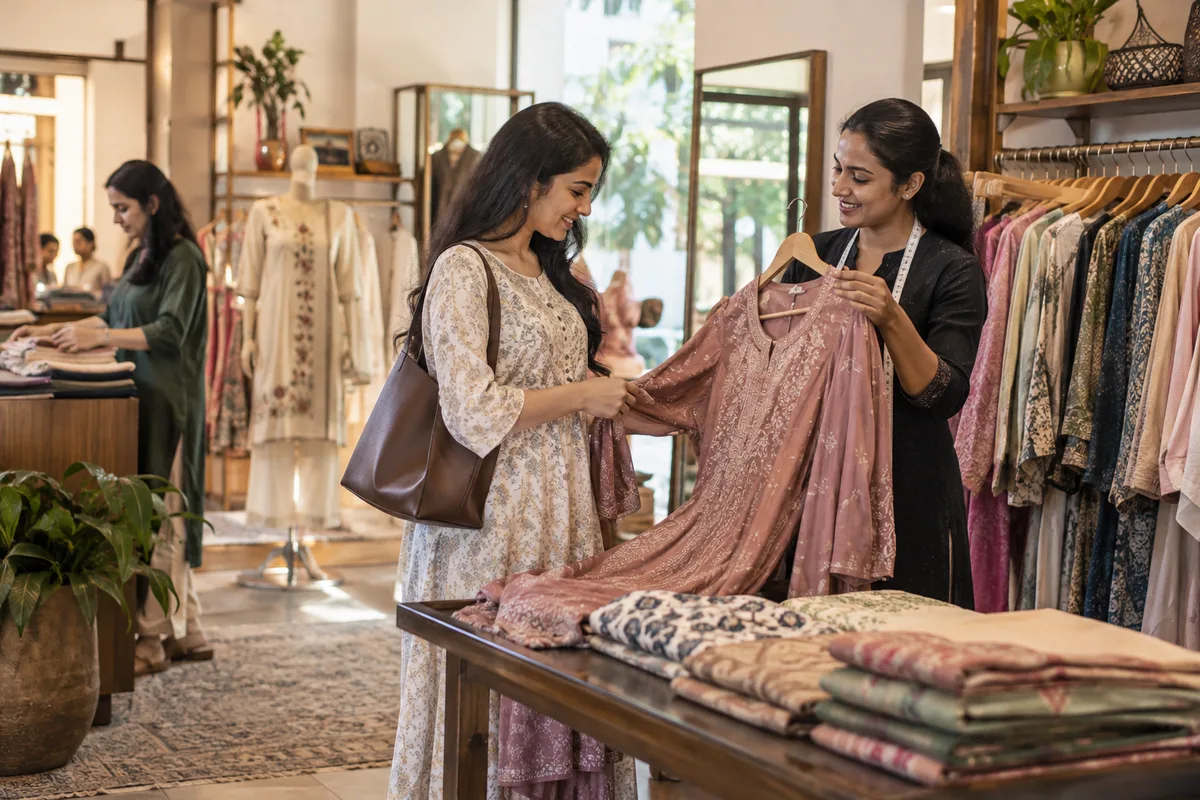
What lead generation means
Lead generation is the combined work of every channel that brings in a new enquiry, whether from search, adverts, referrals or a stall at an exhibition. GullySales runs these channels together and reports the number of enquiries each one produced, not the activity behind it.
Also for children's clothing stores
- CRM for children's clothing stores
- Follow-up systems for children's clothing stores
- SEO for children's clothing stores
- Local SEO for children's clothing stores
- Social media marketing for children's clothing stores
- Content marketing for children's clothing stores
- Buyer personas for children's clothing stores
- WhatsApp marketing for children's clothing stores
Sales and marketing for children's clothing stores, the overview.
Plan the next part of the work
Last updated 21 Nov 2026.
For children's clothing stores
Where it usually goes wrong, and what we would do.
“The best lead is a date, not a name”
A parent planning a first birthday, a naming ceremony or a cousin's wedding has a day fixed and a size to find. A lead that carries the function date and the child's age is worth more than a hundred taps from people with no occasion.
“Walk-ins leave without being counted”
A parent who looks at the baby wear rack, checks a price and leaves is a lead the shop never recorded. Without a name, a number and the child's age noted at the counter, the visit disappears and the next outfit is bought elsewhere.
“Grandparents ask, parents decide”
A grandmother enquires about a gift, then the parent chooses the size and the colour. The shop has to capture both: the relative who asked and the parent who will return, or the lead goes cold at the handover.
“Hospitals and play schools already hold your buyers”
Maternity clinics, baby photographers, play schools and apartment welfare groups meet new parents long before a shop does. A courteous introduction to each, with their consent to refer, reaches families at the moment they start buying.
What we do
What we deliver for children's clothing stores.
The work available for this need. We agree the deliverables and responsibilities for your engagement in writing.
A counter enquiry card
A small form for parent name, number, child's date of birth and the next function, filled with the parent's consent while the bill is made.
Result: Every visit leaves a line you can follow up.
A map listing built to be enquired from
Entrance photographs, baby wear and party wear shown, and a WhatsApp button that opens a chat the counter answers.
Result: A parent with a pram can see the shop and ask a size question from the listing.
An occasion landing page
One page for first birthdays, naming ceremonies and festive sets that asks for the party date and the child's age before anything else.
Result: Each form arrives with a date attached.
Neighbourhood introductions
A short note for clinics, photographers and play schools, with a rule on who may share it and where.
Result: A list of local partners who can point parents to the shop.
A lead sheet by source
Walk-ins, map taps, WhatsApp chats, group referrals and ad forms entered in one sheet with the source of each.
Result: You can see which source brought which family.
How the result is measured
- Relevant enquiries by source
- Duplicate and unsuitable enquiries
- Time to the first response
- Accepted enquiries reaching an agreed next step
Recorded as a baseline before work starts, so every later report has an honest comparison.
What to capture or send
Capture the date a parent will need an outfit.
- Child's age or due date
- Entered with the parent's consent at the counter or on a form, it tells the shop which size and season to write about.
- Occasion and date
- First birthday, naming ceremony, wedding or festival, with the date, so the shop writes while the parent is still choosing.
- Who is buying
- Parent, grandparent or relative, noted at the first message, because a grandparent needs the size guide and a parent needs the look.
- Where they heard of the shop
- Hospital board, play school, mothers' group or a friend, so the shop knows which door to knock on again.
- Photograph or size sent
- The outfit a parent liked on WhatsApp, saved with the enquiry so the next message picks up where the last stopped.
Who it is for
This is written for these children's clothing stores.
- Newborn and baby wear shops
- Kids' casual and daily wear stores
- Party wear and festive outfit shops for children
- Ethnic wear for boys and girls
- School-age fashion stores in family neighbourhoods
- Kidswear departments inside multi-brand showrooms
- Franchise outlets of children's brands
- Gift shops selling baby sets and hampers
Before you decide
When this may not be the right fit.
- No one at the counter can ask for a birth date without making the parent uneasy, so the field would stay empty.
- The shop holds too little stock in infant sizes to meet the demand a newborn list would bring.
- Every enquiry arrives on a personal phone that is not checked in the evening, so leads would go cold unseen.
Before you decide
Agree the work. Know how to judge it.
Lead generation for children's clothing stores: use these checks to prepare, choose the scope, and review what changes.
Bring the right evidence
Define the organisations or buyers you can serve and the reasons they would consider a conversation. Bring examples of accepted and rejected prospects so the selection rule is visible.
Make the scope clear
Agree the research sources, contact approach, qualification rules, and handover. Clarify which meetings count as accepted and what happens to replies that are not ready to buy.
Check the work in use
Review why a prospect was selected and what was learned from the response. Count held, relevant conversations separately from contacts found, messages sent, or meetings booked.
Know when to change course
If the same objection appears repeatedly, adjust the offer or buyer group before increasing outreach. Respect a request to stop contact and keep the exclusion in the record.
These are discussion points, not a fixed package. GullySales confirms the deliverables, responsibilities, fee, and term in writing after reading your brief and speaking with you.
Before we start
What to have ready before the work starts.
The records, access and decisions this work needs from children's clothing stores. Anything missing is noted in the written scope, with who will supply it.
- A fortnight's count of walk-ins
- A simple tally kept by the counter staff for a stretch of days: people who entered, people who bought, and people who asked about an occasion. A notebook is fine. Without this count we cannot tell later whether anything changed, and the leads we record would have no baseline.
- The last season's bills sorted by month
- Bills or the billing software's report for the last year, sorted by month, with the festivals marked. We look for the weeks that bring a rush of families. Without them, the plan treats all months alike and the campaign misses the periods when parents are ready to buy.
- A list of play schools and clinics nearby
- Names of the play schools, clinics, photographers and societies within reach of the shop, and any person you already know there. We start with introductions, so a name in hand matters. Without a list, we begin with strangers, which takes longer.
- A staff member to fill the lead sheet
- One person at the counter who writes each enquiry into the lead sheet, even when the customer leaves without buying. The time needed is small. If nobody is named, the sheet stays empty and the shop cannot tell which source brought the visit.
- Photographs of the shop and current stock
- Clear photographs of the entrance, the racks, the trial room and the new stock, taken on a phone in good light and without children in them. Without photographs, the listing and page show whatever others have uploaded, and a parent with a pram may doubt the shop is accessible.
How it works
How the lead generation work runs
The work itself, in order. How an engagement starts, from your brief to a written scope, is set out on our method page.
- 1
Stand at the counter through a busy afternoon
We start at the billing counter and the trial room on a busy afternoon, watching who walks in and what they ask. You tell us which customers come back and which leave with nothing. We note how a parent mentions a function or a birthday in passing, because that remark is the first lead the shop hears.
- 2
List the places parents already gather
With the owner we list the places where parents of small children already meet: play schools, paediatric clinics, baby photographers, tailoring neighbours and mothers' WhatsApp groups. For each, you tell us whether the shop has any link. This gives a short list of introductions worth making before any money is spent on advertising.
- 3
Design a counter card that asks for a date
We design a small card or a page of the register that asks for the child's name, age or birth month, the occasion coming up and a phone number, with the parent's agreement. The staff try it on a few customers, and any question that makes a parent hesitate is rewritten or removed.
- 4
Set up the map listing and the occasion page
We prepare the shop's map listing so a parent can call or ask for directions, and a single page for the occasions you want, such as first birthday outfits or festive sets. The owner approves the wording and the photographs, and confirms which sizes are really in stock.
- 5
Write the lead sheet and trial the sources
We write a lead sheet with one line per enquiry: date, source, occasion, size asked and what happened. A staff member keeps it. Over a short trial, we check every source is being recorded, including walk-ins, calls and chats, and that the staff understand each column.
- 6
Compare the lead sheet with the counter count
We compare the lead sheet with the figures recorded at the start: walk-ins counted, enquiries about functions, repeat parents. You and the owner decide which sources deserve more effort and which to drop. We report what the sheet shows and promise no rise in sales.
Where this fits
Three pieces of sales work, in this order.
This work sits inside sales process design, at stage 1, prospecting and lead generation. The audit comes before it, and sales management keeps it running.
Step 1
Sales audit
Find where deals are being lost and what to fix first.
Start here if you cannot say where orders are lost.
Step 2 · you are here
Sales process design
One written way to sell, from first enquiry to repeat order.
Start here if every salesperson sells differently.
Step 3
Sales management
A target, a review routine and someone who owns the number.
Start here if the team has targets and no routine.
FAQ
Questions owners ask before they call.
Not here? More answers, or ask on WhatsApp.
Is paid advertising a must for a kids' clothing shop?
How do we ask a parent for details without pushing?
Is a grandparent a lead worth recording?
Is a baby's due date a lead?
Do we record a customer who only browsed?
How do we count a lead from a hospital or play school?
How much does it cost?
How long is the contract?
How soon will we see results?
Who will actually do the work?
More for children's clothing stores
Related work to consider.
Closest to this: leads and follow-up
Also for children's clothing stores
Or start from the overview: sales and marketing for children's clothing stores.
Your next practical step
Tell us what you are trying to grow, and we will read it before we call.
Eight short steps, mostly taps. Skip anything you would rather answer on the call.