Costume and clothing rental shops · Lead generation
Reach the wedding family, the school and the dance teacher first.
Lead generation for a rental shop means being in front of the people who need an outfit for one date: the groom's family, a school coordinator, a dance teacher. GullySales works on where those enquiries start, how each is recorded with its event date and how a trial visit is booked.
Scope, fee, reporting and term are agreed in writing after we have read your brief and spoken to you.
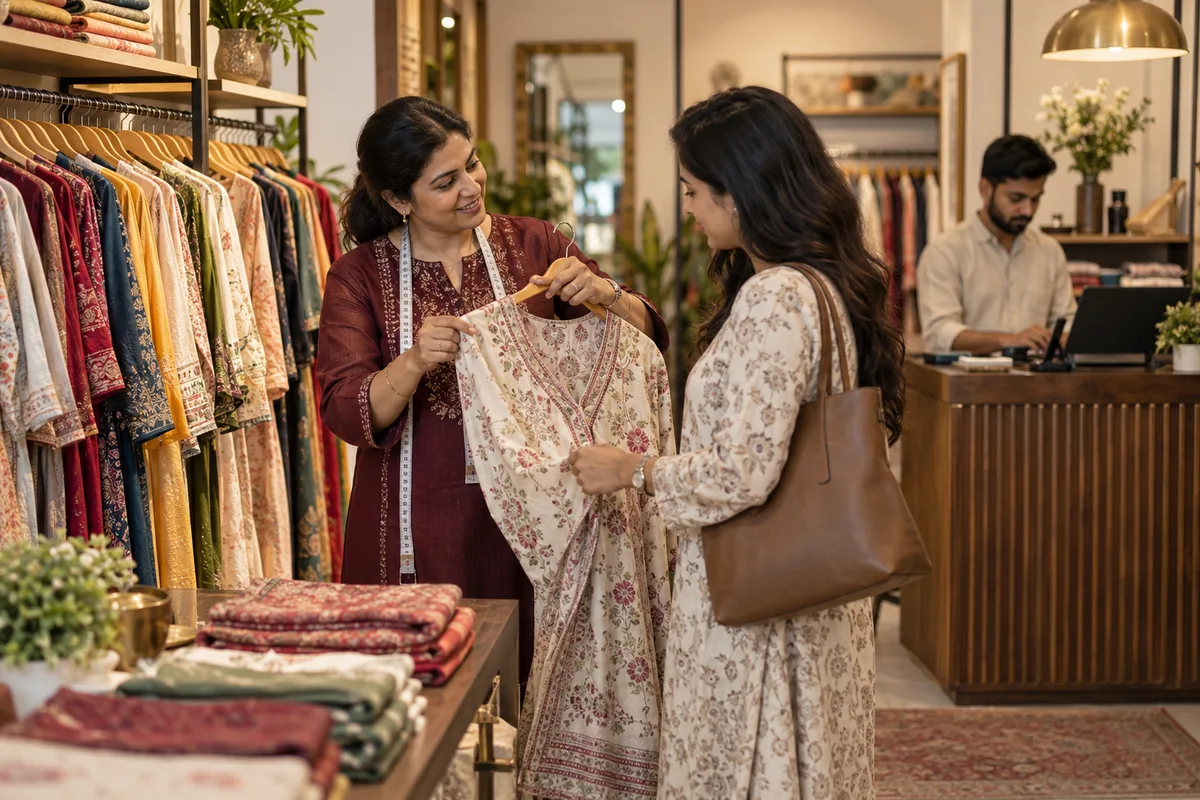
What lead generation means
Lead generation is the combined work of every channel that brings in a new enquiry, whether from search, adverts, referrals or a stall at an exhibition. GullySales runs these channels together and reports the number of enquiries each one produced, not the activity behind it.
Also for costume and clothing rental shops
- CRM for costume and clothing rental shops
- Follow-up systems for costume and clothing rental shops
- SEO for costume and clothing rental shops
- Local SEO for costume and clothing rental shops
- Social media marketing for costume and clothing rental shops
- Content marketing for costume and clothing rental shops
- Buyer personas for costume and clothing rental shops
- WhatsApp marketing for costume and clothing rental shops
Sales and marketing for costume and clothing rental shops, the overview.
Plan the next part of the work
Last updated 21 Nov 2026.
For costume and clothing rental shops
Where it usually goes wrong, and what we would do.
“The event date is the whole lead”
A person asking about a sherwani for a particular wedding day is worth far more than a person browsing. The date, the size and the number of outfits belong on the enquiry from the first message.
“Schools decide on a committee calendar”
A fancy dress order for an annual day is placed by a teacher after the school fixes its programme. Reaching the coordinator in the weeks before the theme is announced puts you in the room when costumes are chosen.
“One groom brings the whole wedding party”
A groom's sherwani leads to the father, the brothers and the friends. A lead recorded only as one outfit misses four more bookings that come from the same family.
“Photographers and planners see the guests first”
A wedding photographer, a decorator or a planner knows who needs outfits. A friendly arrangement with them sends enquiries your way, though no payment should be promised for referrals without your own adviser's view.
What we do
What we deliver for costume and clothing rental shops.
The work available for this need. We agree the deliverables and responsibilities for your engagement in writing.
An enquiry form built on the event date
A WhatsApp message and short form asking for date, occasion, size and number of outfits.
Result: Every enquiry arrives with the date that decides availability.
A school and dance-class approach pack
A costume list, rate sheet and introduction for teachers and coordinators.
Result: A school office has something to forward to its committee.
A family-booking note
A record linking a booking to the relatives and friends who may need outfits too.
Result: A single wedding becomes several bookings.
Partner introductions
A short letter and sample photographs for photographers, planners and tailors who meet your buyers.
Result: Partners know what to say when a guest asks where to hire.
A source column
Each lead logged with where it came from.
Result: You see which source brings confirmed bookings.
How the result is measured
- Relevant enquiries by source
- Duplicate and unsuitable enquiries
- Time to the first response
- Accepted enquiries reaching an agreed next step
Recorded as a baseline before work starts, so every later report has an honest comparison.
What to capture or send
Take the event details at the first message, before anything else.
- Event date and pickup day
- The date of the wedding, annual day or party, and the day the outfit is needed. It decides at once whether the garment is free.
- Garment and size asked for
- The sherwani, lehenga or costume theme, with height and chest or waist if known. Staff note it so the reply names a piece that fits.
- Number of outfits in the party
- One groom or a whole family. A party enquiry is a larger booking, so mark it for the owner to call.
- Who is asking
- Groom's family, school coordinator, dance teacher or planner. It sets the tone of the reply and whether to offer a bulk rate.
- Trial visit slot
- The day the family can come to try the outfit. Without a booked visit the enquiry rarely turns into a booking.
Who it is for
This is written for these costume and clothing rental shops.
- Wedding sherwani, achkan and groom accessories rental shops
- Lehenga, saree and bridal outfit rental boutiques
- Fancy dress and school annual day costume shops
- Theatre, dance and stage costume suppliers
- Gown, tuxedo and party wear rental for receptions and proms
- Festival costume renters for Navratri chaniya choli and Ganesh festivals
- Film, photography and shoot wardrobe rental houses
- Traditional wear rental for cultural societies and associations
- Halloween and theme party costume sellers in big cities
Before you decide
When this may not be the right fit.
- Your garment register is not written down, so you cannot answer whether a date is free and every new enquiry would be a guess.
- The counter is already unable to reply to the enquiries from the peak weeks, and more would only be lost.
- You want leads from other cities, when the outfit must be tried and collected in your shop.
Before you decide
Agree the work. Know how to judge it.
Lead generation for costume and clothing rental shops: use these checks to prepare, choose the scope, and review what changes.
Bring the right evidence
Define the organisations or buyers you can serve and the reasons they would consider a conversation. Bring examples of accepted and rejected prospects so the selection rule is visible.
Make the scope clear
Agree the research sources, contact approach, qualification rules, and handover. Clarify which meetings count as accepted and what happens to replies that are not ready to buy.
Check the work in use
Review why a prospect was selected and what was learned from the response. Count held, relevant conversations separately from contacts found, messages sent, or meetings booked.
Know when to change course
If the same objection appears repeatedly, adjust the offer or buyer group before increasing outreach. Respect a request to stop contact and keep the exclusion in the record.
These are discussion points, not a fixed package. GullySales confirms the deliverables, responsibilities, fee, and term in writing after reading your brief and speaking with you.
Before we start
What to have ready before the work starts.
The records, access and decisions this work needs from costume and clothing rental shops. Anything missing is noted in the written scope, with who will supply it.
- Last season's booking slips and notebook
- Lead generation starts from what the shop already knows about itself. The slips or notebook should show date, event, outfit and customer name, even if the handwriting is poor and some entries are missing. We photograph them page by page. Without them there is no starting count, so any later claim of more enquiries would have nothing to be compared with, and we would first have to record a whole season before judging what works.
- The calendar of school and festival dates
- Schools, dance classes and festival committees fix their dates early, and the dates decide when a coordinator is ready to listen. Bring whatever you have: last year's annual day dates, Navratri week, the local Ganesh mandal programme, and any wedding season you already track. A rough list is acceptable. If it is missing, our approach pack goes out at the wrong time and lands on a committee that has already chosen.
- Names of planners, photographers and tailors
- Planners, photographers and alteration tailors meet the wedding party before you do, so their introductions carry weight. List the ones who have sent you customers, with a note on how well you know each. First names and shop names are enough. If the list is empty we begin with cold introductions instead, which means the partner step of the plan starts smaller and takes longer to show anything.
- Whoever answers the phone and WhatsApp
- The enquiry form only works if the person who takes the call uses it. That person must be in the room when we rebuild the form and when we run the test enquiry. If the owner alone answers every call, the owner must say so, because then we design the form around one pair of hands. A form built without the real answerer is dropped within the first busy afternoon.
- Your rule on holding stock for an enquiry
- Only you can decide whether an outfit is held for an enquiry, for how long and against what token. Our replies and the family-booking note both repeat this rule, so it must be settled before they are written. Any clear rule will do, even a strict one. Without a decision, staff improvise, a customer is told two things on two days, and the first complaint lands on the page we have just built.
How it works
How the lead generation work runs
The work itself, in order. How an engagement starts, from your brief to a written scope, is set out on our method page.
- 1
Open the booking slips and rack register
We begin with the slips or notebook where bookings are written and the register of outfits that went out. For each booking you tell us the event, the date, the size and how the customer first heard of the shop. We copy these into one sheet without correcting anything. That sheet is the record we compare against later, and it shows which customers, such as a groom's family, a school coordinator or a dance teacher, already reach you without effort from the shop.
- 2
Mark which events filled the racks
We lay the sheet against your calendar and mark the dates when every sherwani or lehenga was out and the dates when stock sat idle. You decide which events deserve a harder chase, for example a school annual day that hires costumes in bulk, and which you would rather not chase because the stock is already spoken for. We write that choice down as the focus, so enquiries are sought only where you can serve them.
- 3
Rewrite the enquiry form with counter staff
We sit with the people who answer the phone and the shop WhatsApp and list the questions they already ask: event date, number of outfits, sizes, trial day and return date. We turn those into the enquiry form, on paper at the counter and as a message template online. Your staff read it aloud and tell us which question puzzles a customer. We change the wording until staff can complete it while the customer is still standing there.
- 4
Meet the coordinator and the dance teacher
You introduce us to two or three school coordinators, dance teachers or event planners you already know. We ask each how they choose a costume supplier, who signs off and when their committee meets. We write the approach pack from those answers and not from assumptions. You decide which of them may be named as a reference and which prefer to stay private. At the close of the step you hold a one-page pack you can hand to the next school without rewriting it.
- 5
Run a test enquiry through the whole counter
Before anything is published, a friend of the shop makes a test enquiry by phone, by WhatsApp and in person, first with a wedding date and then with a school date. We watch what is written on the slip, whether a trial visit is offered and whether the source column is filled. Where a step fails we fix the form or the habit. You approve the route only when a test enquiry reaches a trial booking with every field complete.
- 6
Read the source column against last season
Once the season is under way we set the new source column beside the slips we recorded at the start. We count enquiries, trial visits and confirmed bookings by source and by event type, in your own terms, and mark sources that sent enquiries your racks could not serve. You decide which sources to feed, which to drop and which school or planner gets a visit before the next calendar fills. We compare what was written down then with what is written down now, and we promise nothing beyond that.
Where this fits
Three pieces of sales work, in this order.
This work sits inside sales process design, at stage 1, prospecting and lead generation. The audit comes before it, and sales management keeps it running.
Step 1
Sales audit
Find where deals are being lost and what to fix first.
Start here if you cannot say where orders are lost.
Step 2 · you are here
Sales process design
One written way to sell, from first enquiry to repeat order.
Start here if every salesperson sells differently.
Step 3
Sales management
A target, a review routine and someone who owns the number.
Start here if the team has targets and no routine.
FAQ
Questions owners ask before they call.
Not here? More answers, or ask on WhatsApp.
Is it worth chasing schools?
How do I handle peak-season rush?
Can you promise more enquiries?
Should we collect the deposit with the enquiry?
Who records an enquiry when the owner is away from the counter?
Can we use a planner's introduction without paying a commission?
How much does it cost?
How long is the contract?
How soon will we see results?
Who will actually do the work?
More for costume and clothing rental shops
Related work to consider.
Closest to this: leads and follow-up
Also for costume and clothing rental shops
- SEO for costume and clothing rental shops
- Local SEO for costume and clothing rental shops
- Social media marketing for costume and clothing rental shops
- Content marketing for costume and clothing rental shops
- Buyer personas for costume and clothing rental shops
- WhatsApp marketing for costume and clothing rental shops
Or start from the overview: sales and marketing for costume and clothing rental shops.
Your next practical step
Tell us what you are trying to grow, and we will read it before we call.
Eight short steps, mostly taps. Skip anything you would rather answer on the call.