Costume and clothing rental shops · WhatsApp marketing
Run catalogue, sizes, dates and trial bookings on the app buyers already use.
WhatsApp marketing for a rental shop uses chat for catalogue, availability, trial bookings and return reminders. GullySales works on the catalogue, the replies and the lists.
Scope, fee, reporting and term are agreed in writing after we have read your brief and spoken to you.
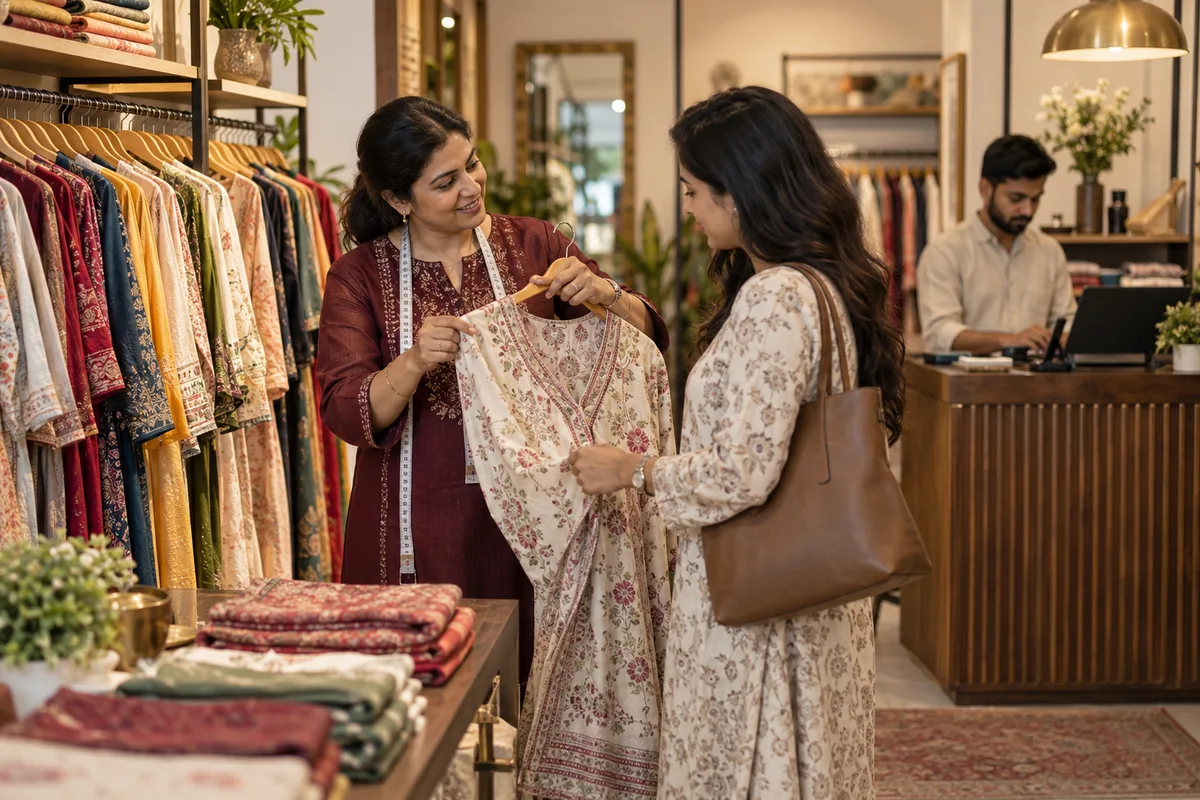
What WhatsApp marketing means
WhatsApp marketing is sending updates, offers and reminders to customers on the app most Indian buyers already check daily. GullySales sets up business WhatsApp, writes the message templates and keeps the list consented and current.
Also for costume and clothing rental shops
- Lead generation for costume and clothing rental shops
- SEO for costume and clothing rental shops
- Local SEO for costume and clothing rental shops
- Social media marketing for costume and clothing rental shops
- Content marketing for costume and clothing rental shops
- Buyer personas for costume and clothing rental shops
- CRM for costume and clothing rental shops
- Follow-up systems for costume and clothing rental shops
Sales and marketing for costume and clothing rental shops, the overview.
Last updated 14 Nov 2026.
For costume and clothing rental shops
Where it usually goes wrong, and what we would do.
“Buyers send a photo and ask if it is available”
A screenshot from another source arrives with the question. A catalogue with your own outfits, and a prompt answer on availability for the stated date, wins the visit, while a vague reply sends the buyer to the next shop on the list.
“Groups plan together”
A family group chat may include the buyer's relatives, who each have a view on the outfit. Replies that can be forwarded neatly, with a photograph, size range, rent and address in one message, help the family decide together.
“Bulk lists need permission”
Customers should agree to receive messages, and every broadcast should say how to stop them. Past hires, school coordinators and wedding families sit in separate lists. Look up the platform's current rules before any bulk send.
“Dates change”
A chat is the place where a function date shifts or a family adds a second outfit. A record updated after the chat, before the next reply goes out, keeps availability true and stops a promise made on an old date.
What we do
What we deliver for costume and clothing rental shops.
The work available for this need. We agree the deliverables and responsibilities for your engagement in writing.
A business catalogue
Outfits, sizes and rent bands set up in the business app, grouped by groom wear, bridal wear, school costumes and festival wear.
Result: Buyers browse in the chat.
Saved replies
Answers for rent, deposit, availability, trial timings and shop address, written in the shop's own voice and ready to send.
Result: Routine questions get a prompt answer.
An availability check routine
A step to confirm the date against the garment register before any reply promises an outfit to the buyer.
Result: No double booking.
Separate lists
Weddings, schools and festivals kept apart, each with a record that the contact agreed to receive messages.
Result: Messages stay relevant.
Return reminders
A polite note before the return date, with the closing time and the condition check explained.
Result: Outfits return on time.
A greeting and away message
A short greeting that asks for the date, occasion and size, and an away message for hours when the shop is shut.
Result: The first chat holds what you need.
How the result is measured
- Messages delivered
- Reply rate
- Enquiries from WhatsApp
Recorded as a baseline before work starts, so every later report has an honest comparison.
What to capture or send
Send what a renter needs to say yes: photo, size, date and deposit.
- Photo with name and size range
- Each outfit sent with its style name and the sizes available, so the buyer knows at once if it can be tried.
- Dates free for this piece
- A reply naming the days the garment is free, checked against the register before sending, never from memory.
- Trial slot offer
- Two or three slots on the coming days, with the shop address and a landmark, so the family books by replying.
- Deposit and return rules
- A short message with the amount, the return day and the damage terms, sent after the buyer shows interest.
- Group order summary
- For a wedding party or school, a single message listing outfits, sizes and dates for everyone to confirm.
Who it is for
This is written for these costume and clothing rental shops.
- Wedding sherwani, achkan and groom accessories rental shops
- Lehenga, saree and bridal outfit rental boutiques
- Fancy dress and school annual day costume shops
- Theatre, dance and stage costume suppliers
- Gown, tuxedo and party wear rental for receptions and proms
- Festival costume renters for Navratri chaniya choli and Ganesh festivals
- Film, photography and shoot wardrobe rental houses
- Traditional wear rental for cultural societies and associations
- Halloween and theme party costume sellers in big cities
Before you decide
When this may not be the right fit.
- Your register is not up to date, and a promised date on chat would clash with another booking.
- You use a personal number and cannot yet give the shop a business account.
- A school wants a bulk order and your stock of that theme cannot cover the count.
Before you decide
Agree the work. Know how to judge it.
WhatsApp marketing for costume and clothing rental shops: use these checks to prepare, choose the scope, and review what changes.
Bring the right evidence
Describe how the contact list was collected, what people asked to receive, and which messages are currently sent. Include opt-outs and replies when reviewing campaign performance.
Make the scope clear
Agree the audience, message purpose, sending system, and response owner. Separate promotional communication from order or service updates, and check current platform requirements before launch.
Check the work in use
Test the message with a small appropriate audience before wider use. Check links, reply handling, opt-outs, and whether the response leads to a relevant conversation or order.
Know when to change course
Do not use an unexplained contact list as a shortcut to demand. If recipients do not expect the message, resolve the permission and relevance questions before sending.
These are discussion points, not a fixed package. GullySales confirms the deliverables, responsibilities, fee, and term in writing after reading your brief and speaking with you.
Before we start
What to have ready before the work starts.
The records, access and decisions this work needs from costume and clothing rental shops. Anything missing is noted in the written scope, with who will supply it.
- The business phone number and its history
- WhatsApp work is tied to a number. Bring the number the shop uses with customers, and say whether it is personal or kept for business. If it also holds family chats, decide whether to move to a separate number. Changing the number later means customers must find you again.
- A sample of chats with customer names hidden
- To write replies in the shop's real voice we need examples. Export or screenshot a handful of chats with names and numbers covered if you prefer. Choose ones that ended in a booking and some that did not. Without examples, our wording sounds like a template and customers reply less.
- Permission records for broadcast contacts
- Messages to a whole list need each person's consent. Bring whatever shows that a customer agreed to hear from you, even a reply saying yes. Contacts without it should not receive a broadcast. If no records exist, the first lists will be short, built from the next customers you ask in the shop.
- Photographs for the catalogue
- A catalogue is only photographs and a line each. Bring clean pictures of the garments you are happy to promote, grouped by occasion. Clothes with stains or mismatched hangers hurt the catalogue. Where pictures are missing, those items wait out of the catalogue, and chats continue to rely on photographs sent by hand.
- A rule for who may reply and when
- Chats arrive in the evening, when the shop is closed and customers are free. Decide who answers then, if anyone, and what the away message promises. Do not promise a reply you cannot give. Without a decision, replies depend on whoever happens to see the phone.
How it works
How the whatsapp marketing work runs
The work itself, in order. How an engagement starts, from your brief to a written scope, is set out on our method page.
- 1
Read a sample of your real WhatsApp chats
With your permission we read a sample of chats from last season: the photos sent, the questions asked, the replies and the point where chats stopped. We note which questions repeat and which messages bring a trial. You tell us any chats that must stay private. This gives us the real wording of customers.
- 2
Decide between the app and the API
We explain what the Business app can do and what the paid API adds, and what each costs in set-up and attention. You decide, and we advise on the smaller choice for a rental shop. Read the platform's present rules again, as they change. The decision fixes what the rest of the work can include.
- 3
Build the catalogue and the saved replies
We set up the catalogue with outfits grouped by occasion, each with a photograph and a line of detail. We write saved replies for availability, trial, deposit and return. You read every reply and cut anything staff would not say. Staff learn the shortcuts by using them on real questions.
- 4
Separate the lists by purpose
We help you split contacts into wedding enquiries, schools and dance classes, past customers and partners, and record whether each person agreed to receive messages. You decide who may receive a broadcast. Anyone without permission stays out. The result is a clean set of lists in place of one mixed group.
- 5
Settle who replies and where chats are logged
We decide which staff member answers during opening hours, what the away message says and where each chat's outcome is entered. You choose the end-of-chat note. We test by sending questions at different hours. The routine is approved only when no test question is left unanswered or unrecorded.
- 6
Count trials that began in chat
After the season we read the record of chats that led to a trial or booking, and compare it with the earlier sample of chats. You decide which replies to rewrite and which lists to prune. We report the counts staff recorded, and do not describe message volume as success.
Where this fits
Three pieces of sales work, in this order.
This work sits inside sales process design, at stage 0, foundation. The audit comes before it, and sales management keeps it running.
Step 1
Sales audit
Find where deals are being lost and what to fix first.
Start here if you cannot say where orders are lost.
Step 2 · you are here
Sales process design
One written way to sell, from first enquiry to repeat order.
Start here if every salesperson sells differently.
Step 3
Sales management
A target, a review routine and someone who owns the number.
Start here if the team has targets and no routine.
FAQ
Questions owners ask before they call.
Not here? More answers, or ask on WhatsApp.
Can I send offers to everyone?
Do I need the paid API?
Who should answer chats?
Can we create a group for a wedding party?
Should staff send voice notes to customers?
How should we handle a photo sent by a customer asking if it is available?
How much does it cost?
How long is the contract?
How soon will we see results?
Who will actually do the work?
More for costume and clothing rental shops
Related work to consider.
- Lead generation for costume and clothing rental shops
- SEO for costume and clothing rental shops
- Local SEO for costume and clothing rental shops
- Social media marketing for costume and clothing rental shops
- Content marketing for costume and clothing rental shops
- Buyer personas for costume and clothing rental shops
Or start from the overview: sales and marketing for costume and clothing rental shops.
Your next practical step
Tell us what you are trying to grow, and we will read it before we call.
Eight short steps, mostly taps. Skip anything you would rather answer on the call.