Electronic components distributors · Sales process
Write down the steps from BOM to dispatch, and who does each one.
A sales process for an electronic components distributor is the set of steps a request goes through from the first message to the parts leaving your counter, with a named person at each step. GullySales writes that process around your BOMs, stock checks and dispatch, so a sale does not depend on whoever was at the desk.
Scope, fee, reporting and term are agreed in writing after we have read your brief and spoken to you.
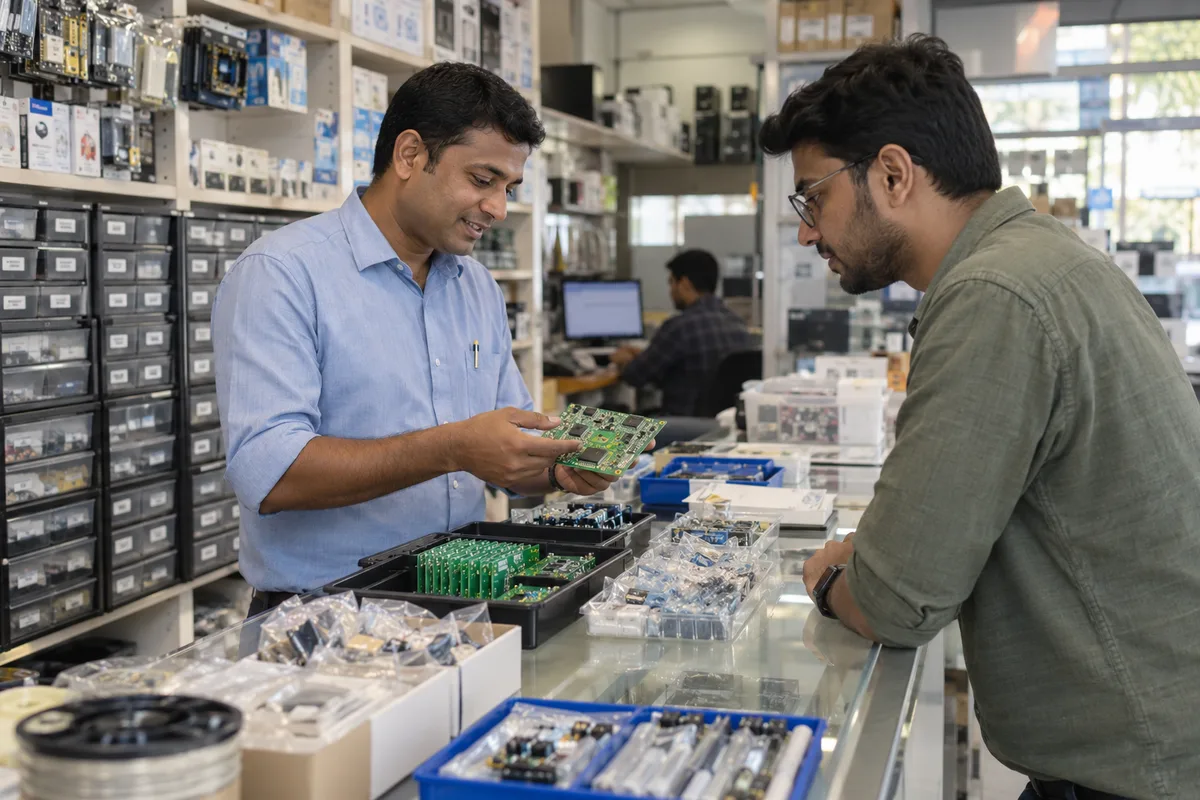
What sales process means
A sales process is the fixed sequence of steps, such as enquiry, site visit, quote and order, that every deal is expected to pass through in the same order. GullySales writes this sequence down for your business and checks that every salesperson actually follows it.
Also for electronic components distributors
- Sales management for electronic components distributors
- SEO for electronic components distributors
- Lead generation for electronic components distributors
- Email marketing for electronic components distributors
- CRM for electronic components distributors
- WhatsApp marketing for electronic components distributors
- Website development for electronic components distributors
- PPC ads for electronic components distributors
Sales and marketing for electronic components distributors, the overview.
Last updated 6 Oct 2026.
For electronic components distributors
Where it usually goes wrong, and what we would do.
“The quote goes out before the part is identified”
A marking read wrongly from a photograph gives a quote for a part the buyer does not need, and the sale becomes a return.
“Stock is checked by asking whoever is nearest”
Nobody owns the stock answer. One person says yes from memory, and the shelf says otherwise when the order comes.
“Dispatch is where a good sale is lost”
Wrong quantity, no invoice with the goods, anti-static bag missing. The buyer's stores team remembers the packing, not the price.
What we do
What we deliver for electronic components distributors.
Every deliverable, what it covers for you, and the result it is there to produce. Nothing here is an extra.
The steps written in your counter's words
From enquiry to handover, each step named the way your staff say it, with who does it and what must be written down before it passes on.
Result: A new person can run a step without asking the owner.
A part identification check
A short routine for confirming the part before quoting: the full part number, the marking, the equipment, and a datasheet check for any substitute.
Result: Fewer quotes go out for the wrong part.
A stock and source answer with one owner
One person answers stock, and a fixed way to ask other counters or suppliers when you do not hold it, with the answer written on the quote.
Result: A quote states what is on the shelf and what is not.
Quote format with validity and terms
A standard layout showing part, quantity, price, how long the price stands, payment terms, GST and when each line can be supplied.
Result: The buyer can place an order from the quote without a call.
Order and payment steps
What happens when a purchase order arrives: checking it against the quote, advance or credit terms, and who clears a credit buyer's order.
Result: No order is packed against terms nobody agreed.
A dispatch checklist
Quantity counted against the invoice, date codes noted, packing suited to the part, the invoice with the parcel and the tracking sent to the buyer.
Result: The parcel the buyer opens matches what they ordered.
How the result is measured
- Deals following the process
- Time spent at each step
- Drop-off rate by step
Recorded as a baseline before work starts, so every later report has an honest comparison.
Steps of a sale
The steps a components sale passes through, and what to write down at each.
- Enquiry received
- Log the buyer, the parts and the need-by date at once, with the source. The date decides the order in which requests are answered.
- Part identified
- Confirm the full part number, package and brand, or the marking and equipment for a repair part. Note any substitute offered and that the buyer agreed to it.
- Stock and source checked
- Mark each line in stock, sourced or cannot supply. Write down where sourced stock comes from, since a purchaser may ask.
- Quote sent
- Send price, quantity, validity, terms and when each line can be supplied. Record the date and the next call date. A quote with no date to follow it up is likely to be lost.
- Follow-up and negotiation
- Call, do not just message. Note objections: price, date, brand or paperwork. If the buyer wants a lower price, ask for the quantity they will commit to.
- Order, payment and dispatch
- Check the purchase order against the quote, confirm payment terms, count the quantity at packing and send the invoice and tracking. Record any shortfall.
Who it is for
This is written for these electronic components distributors.
- Authorised distributors for one or two brand lines
- Multi-brand stockists of ICs, passives and connectors
- Independent and excess-stock traders
- Development board, module and sensor suppliers for startups and colleges
- BOM sourcing and kitting firms for contract manufacturers
- Repair spares and service parts counters
- Relay, transformer, battery and power component suppliers
- Importers who source against a customer's RFQ
Not for
It is not the right fit if.
- Nobody has agreed who prices, who checks stock and who follows up, and a written process cannot settle that.
- You have one salesperson who quotes from memory and will not follow steps on paper.
- You expect a process to win buyers who ask only for the lowest price on every line.
How it works
How the sales process work runs
The work itself, in order. How an engagement starts, from your brief to a written scope, is set out on our method page.
- 1
Study current deal flow
We trace how deals actually move today, comparing across reps and outcomes.
- 2
Define the stages
Clear stages and criteria are designed to match how deals genuinely progress and close.
- 3
Configure the CRM
The process is built into your CRM so it is enforced structurally, not just documented.
- 4
Train the team
Reps are trained on the new process and why each stage exists.
- 5
Review adoption
We check after rollout whether the process is being followed and adjust where it is not.
Where this fits
Three pieces of sales work, in this order.
This work sits inside sales process design, at stage 1, prospecting and lead generation. The audit comes before it, and sales management keeps it running.
Step 1
Sales audit
Find where deals are being lost and what to fix first.
Start here if you cannot say where orders are lost.
Step 2 · you are here
Sales process design
One written way to sell, from first enquiry to repeat order.
Start here if every salesperson sells differently.
Step 3
Sales management
A target, a review routine and someone who owns the number.
Start here if the team has targets and no routine.
FAQ
Questions owners ask before they call.
Not here? More answers, or ask on WhatsApp.
Who should do which step in a small counter?
When should we quote and when should we ask more first?
How do we deal with a buyer who only wants the lowest price?
Should we add a step for credit approval?
How long is the contract?
How soon will we see results?
Who will actually do the work?
What do you need from us?
What if we are not happy with the work?
From the blog
Further reading for electronic components distributors.
 5 min read · 6 Oct 2026How electronic components distributors answer a BOM enquiryAnswer a BOM in the buyer's own line order, saying for each part whether you hold it, how many, from which source and by what date, and send the firm lines before the open ones.
 6 min read · 6 Oct 2026How trade buyers pick a dealer when the brands matchWhen every counter in town carries the same brands, trade buyers choose on stock, delivery, paperwork and returns. This post sets out how contractors, electricians, plumbers and purchase managers compare dealers.
More for electronic components distributors
Everything else we would do for you.
Closest to this: sales craft
Also for electronic components distributors
- SEO for electronic components distributors
- Lead generation for electronic components distributors
- Email marketing for electronic components distributors
- CRM for electronic components distributors
- WhatsApp marketing for electronic components distributors
- Website development for electronic components distributors
Or start from the overview: sales and marketing for electronic components distributors.
Your next practical step
Tell us what you are trying to grow, and we will read it before we call.
Eight short steps, mostly taps. Skip anything you would rather answer on the call.