Fashion jewellery stores · WhatsApp marketing
Answer the sizing question on WhatsApp where the buyer already is.
WhatsApp marketing for a fashion jewellery brand is the use of the Business app or API to answer enquiries, share new pieces and confirm orders with people who agreed to hear from the brand. GullySales works on the catalogue, the replies and the rules for what is sent and to whom.
Scope, fee, reporting and term are agreed in writing after we have read your brief and spoken to you.
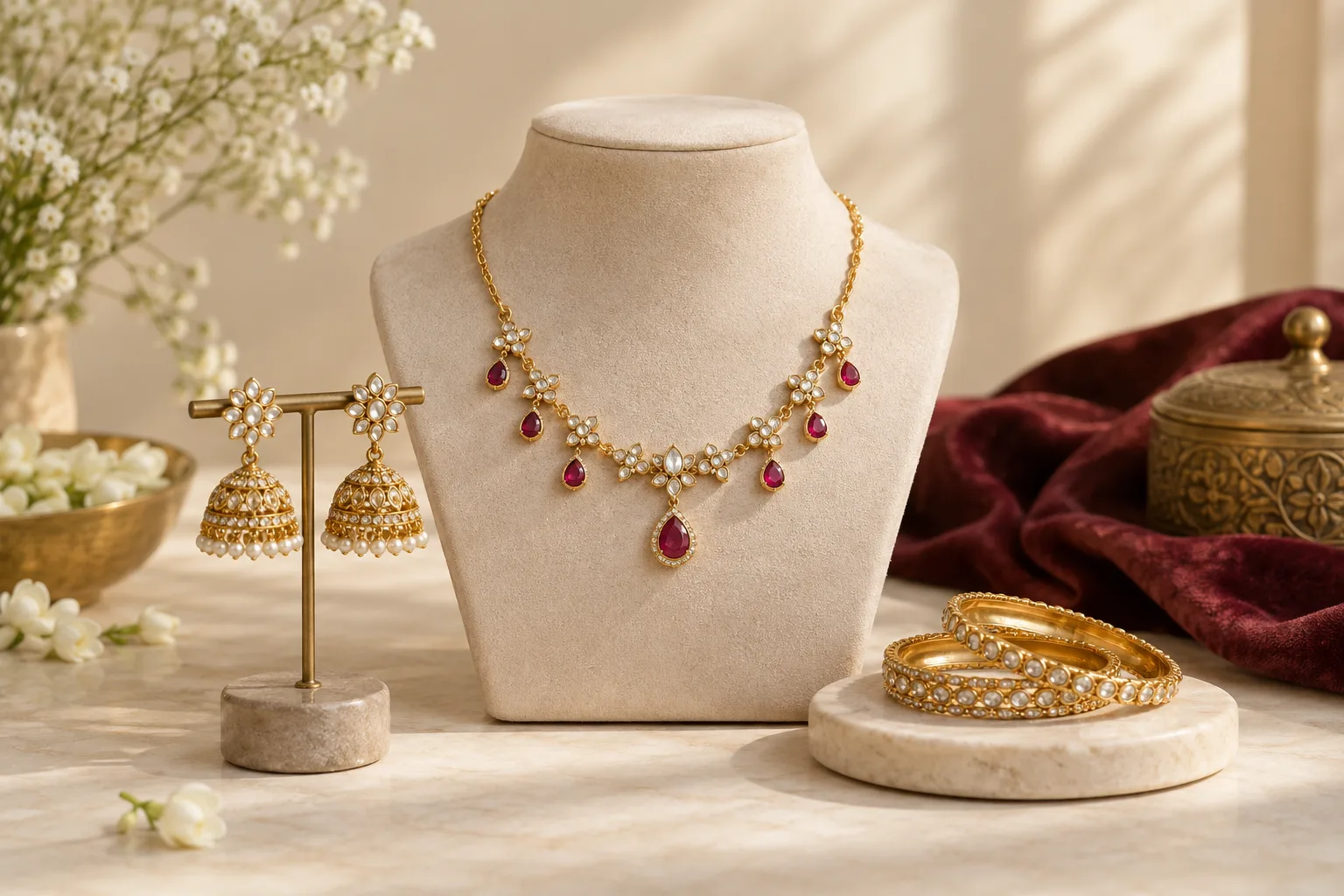
What WhatsApp marketing means
WhatsApp marketing is sending updates, offers and reminders to customers on the app most Indian buyers already check daily. GullySales sets up business WhatsApp, writes the message templates and keeps the list consented and current.
Also for fashion jewellery stores
- Push notifications and in-app messaging for fashion jewellery stores
- Lead generation for fashion jewellery stores
- SEO for fashion jewellery stores
- Local SEO for fashion jewellery stores
- Social media marketing for fashion jewellery stores
- Content marketing for fashion jewellery stores
- Buyer persona for fashion jewellery stores
- CRM for fashion jewellery stores
Sales and marketing for fashion jewellery stores, the overview.
Last updated 14 Nov 2026.
For fashion jewellery stores
Where it usually goes wrong, and what we would do.
“The buyer asks on WhatsApp before ordering”
Messages such as is this available in gold or can you send more photos arrive on WhatsApp more readily than by email. A prompt reply with a clear photograph closes the sale in the same conversation.
“A catalogue beats a string of photographs”
Sending ten pictures one by one makes the buyer scroll and forget. A catalogue with names, prices and links, plus a short chat to guide the choice, keeps the pieces and the price together.
“Broadcasting to everyone burns the list”
A new-drop message sent to every contact, including buyers of a different style, produces blocks and silence. Sending by interest and by past purchase keeps the list willing to listen.
“Consent is not optional”
Adding a number to a group or list without a clear yes risks complaints and a blocked account. The brand should hold a record of how and when each person agreed.
What we do
What we deliver for fashion jewellery stores.
The work available for this need. We agree the deliverables and responsibilities for your engagement in writing.
A WhatsApp Business profile set up properly
Name, description, hours, address, catalogue and an away message, so the first contact looks like a real shop.
Result: A new enquirer sees a complete, trustworthy profile.
A product catalogue with clear names
Pieces listed with photographs, price, material and finish, grouped by type and occasion.
Result: A buyer can browse the range inside the app.
Saved replies for the common questions
Answers on stock, colour fade, delivery, returns and gift wrapping, written in the brand's voice.
Result: The team gives consistent answers to repeated questions.
An opt-in route and a record of consent
Sign-up through the site, the parcel insert and the counter, with the date and source stored.
Result: Every contact has a recorded yes.
Segmented drop and festival messages
New-arrival and gifting messages sent to the buyers who bought or asked about that type of piece.
Result: Each message goes to people with a reason to read it.
How the result is measured
- Messages delivered
- Reply rate
- Enquiries from WhatsApp
Recorded as a baseline before work starts, so every later report has an honest comparison.
What to capture or send
Send the messages a jewellery buyer would welcome.
- Size and fit reply
- A saved answer with the ring sizer and the chain lengths, sent when a buyer asks. It removes the doubt that sits between a click and an order.
- Catalogue by style
- Earrings, rings, necklaces and gift sets as catalogue sections with prices, so the buyer browses in the chat without leaving.
- Order confirmation with photo
- The piece, the order number and the dispatch status in one message, which cuts the 'where is my order' enquiries.
- Drop notice to consenting buyers
- A short message with a photograph and the sale date, sent only to those who agreed and bought a related style.
- Gift note capture
- A message asking for the recipient's name and note for the card, so the gift is packed right and not left to chance.
Who it is for
This is written for these fashion jewellery stores.
- Direct-to-consumer fashion jewellery brands selling online
- Mall and high-street fashion jewellery stores
- Multi-brand accessory stores
- Anti-tarnish and silver-tone jewellery labels
- Minimal and everyday-wear jewellery brands
- Gifting-focused jewellery brands with boxes and personalisation
- Pop-up and college-fest stall sellers
- Brands that sell mainly through marketplaces and want their own customers
Before you decide
When this may not be the right fit.
- You have no phone number that the brand owns, and customer chats are on a team member's personal phone.
- You plan to add buyers to lists from an order sheet without telling them.
- Your replies to size and tarnish questions are inconsistent between staff, so a saved answer would need agreement first.
Before you decide
Agree the work. Know how to judge it.
WhatsApp marketing for fashion jewellery stores: use these checks to prepare, choose the scope, and review what changes.
Bring the right evidence
Describe how the contact list was collected, what people asked to receive, and which messages are currently sent. Include opt-outs and replies when reviewing campaign performance.
Make the scope clear
Agree the audience, message purpose, sending system, and response owner. Separate promotional communication from order or service updates, and check current platform requirements before launch.
Check the work in use
Test the message with a small appropriate audience before wider use. Check links, reply handling, opt-outs, and whether the response leads to a relevant conversation or order.
Know when to change course
Do not use an unexplained contact list as a shortcut to demand. If recipients do not expect the message, resolve the permission and relevance questions before sending.
These are discussion points, not a fixed package. GullySales confirms the deliverables, responsibilities, fee, and term in writing after reading your brief and speaking with you.
Before we start
What to have ready before the work starts.
The records, access and decisions this work needs from fashion jewellery stores. Anything missing is noted in the written scope, with who will supply it.
- A business number not shared with family
- The account needs its own number. A spare SIM works. If the number is personal, moving family chats off it comes first, and the rest waits.
- Photographs and names for every piece sold
- Weak photographs make a weak catalogue. Bring clean photographs and the names used in the store. Without them, the catalogue uses blurred images and buyers stop trusting it. Add the size chart for rings and bangles if you sell them, since those are the questions asked repeatedly in chat.
- The order sheet with consent marked
- Adding buyers to a broadcast list requires their agreement. Mark who agreed and how. People who bought but never agreed stay off the list.
- A person to reply in set hours
- Chats need an owner while the brand is open. Name them and the hours. With nobody named, the catalogue brings enquiries that go cold.
- Policy on sold-out and made-to-order pieces
- Buyers ask for pieces that have sold out. Decide what staff say: a restock note, a similar piece, or a wait list. Without a rule, replies differ and promises are broken. If custom or personalised pieces are offered, the rule must also say what a buyer is told about the wait and whether the piece can be returned.
How it works
How the whatsapp marketing work runs
The work itself, in order. How an engagement starts, from your brief to a written scope, is set out on our method page.
- 1
Read the questions buyers send on chat
We open a sample of recent chats and sort them: price, stock, size, delivery, return, custom order. You show us which chats ended in an order. What exists afterwards is a list of the questions that arrive again and again, and a count of those left unanswered. We also mark the chats that ended with a buyer asking for a photograph of a piece worn, since those shape the catalogue.
- 2
Decide on the Business app or the API
A small team can run on the Business app. We explain what the API adds, such as shared inboxes and approved templates, and what it asks of the team. The call is yours, and we record it in writing.
- 3
Build the catalogue with clear names
We add each piece with a plain name, material, size and price, and a clear photograph. You approve every entry. Sold-out pieces are removed so the catalogue never offers what cannot be shipped. Where a piece comes in several finishes, each finish is a separate entry so the buyer does not order the wrong one.
- 4
Write saved replies and the first message
The common questions get saved replies, and the first message to a new enquiry is drafted to answer the question asked and offer the catalogue. You edit the voice. Staff keep them one tap away.
- 5
Set the opt-in route and record consent
We place an opt-in line on the website, the parcel card and the till, and keep a record of when and how each person agreed. You decide the wording. Nobody is added without a yes. Each broadcast carries a clear way to leave the list, and the first one is sent to a small group of staff and friends to check how it reads.
- 6
Plan drop and festival messages by group
We split the list by interest, such as everyday wear or gifting, and plan which message goes to whom. You approve every broadcast. Afterwards we read replies, orders and opt-outs against the first chat sample.
Where this fits
Three pieces of sales work, in this order.
This work sits inside sales process design, at stage 0, foundation. The audit comes before it, and sales management keeps it running.
Step 1
Sales audit
Find where deals are being lost and what to fix first.
Start here if you cannot say where orders are lost.
Step 2 · you are here
Sales process design
One written way to sell, from first enquiry to repeat order.
Start here if every salesperson sells differently.
Step 3
Sales management
A target, a review routine and someone who owns the number.
Start here if the team has targets and no routine.
FAQ
Questions owners ask before they call.
Not here? More answers, or ask on WhatsApp.
Can a small jewellery team stay on the WhatsApp Business app, or is the API needed?
Can we add buyers to a broadcast list from our order sheet?
What should a first message say?
What about buyers who ask for a price on a piece that has sold out?
Can a small team stay on the Business app?
Can we add buyers from our order sheet to a broadcast list?
How long is the contract?
How soon will we see results?
Who will actually do the work?
What do you need from us?
More for fashion jewellery stores
Related work to consider.
Closest to this: messaging and automation
Also for fashion jewellery stores
Or start from the overview: sales and marketing for fashion jewellery stores.
Your next practical step
Tell us what you are trying to grow, and we will read it before we call.
Eight short steps, mostly taps. Skip anything you would rather answer on the call.