Flower shops · CRM
Hold the sender, the recipient and the delivery slot in one place.
A florist's CRM is the record of who sent flowers to whom, on what date and to which address, kept where the whole shop can read it. GullySales sets up the fields an order actually needs, including the recipient, and gets the counter, the phone and the rider working from the same record.
Scope, fee, reporting and term are agreed in writing after we have read your brief and spoken to you.
What CRM means
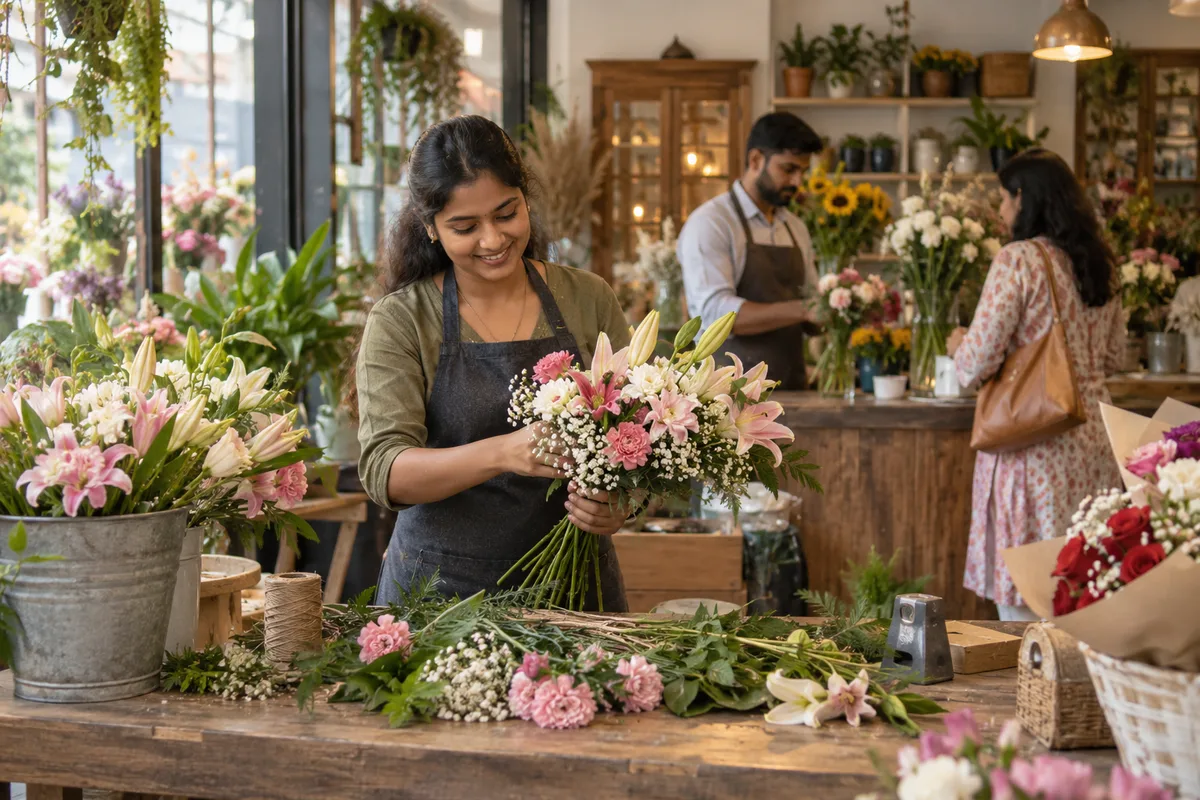
A CRM is the record where every enquiry, call and quote is kept against a customer, replacing separate notebooks, spreadsheets and memory. GullySales sets up or cleans an existing CRM and reports from it by enquiry outcome rather than by activity logged.
Last updated 8 Nov 2026.
For flower shops
Where it usually goes wrong, and what we would do.
“The buyer and the recipient are two different people”
The husband pays and the wife receives, and next year you want both names against one address. A contact record with a single name loses half the order.
“The delivery slot is a field, not a scribbled note”
Before six, at the reception desk, after the ceremony. Written as free text it gets missed by the rider, and a wreath arriving late is not a small mistake.
“A wedding is a file, not a line in a diary”
Colour palette, venue, mandap size, the planner's number and the advance stages all belong on one record that four months of conversation can be read out of.
What we do
What we deliver for flower shops.
Every deliverable, what it covers for you, and the result it is there to produce. Nothing here is an extra.
Fields that match a flower order
Sender, recipient, delivery address and landmark, occasion, date and slot, the arrangement, the card message, advance and balance.
Result: The rider, the counter and the owner all read the same order.
One record whether the order came by phone, counter, chat or website
Every enquiry logged in the same place, so the order book stops being spread across a diary, a phone and an inbox.
Result: Nothing is promised twice and nothing is forgotten on a slow day.
A wedding and event file kept apart from bouquet orders
A longer record holding the venue, the planner, the palette, each quote version sent and the payment stages agreed.
Result: Four months of conversation can be picked up by whoever is free.
Standing corporate orders entered as recurring records
Hotel, office and clinic arrangements set as a repeating order with the day, the vase and the contact who signs for it.
Result: A weekly arrangement is never missed because one person was away.
A recipient list built as you fulfil orders
Names and addresses of everyone who received flowers, with the occasion and who sent them, gathered from work you are doing anyway.
Result: Next year's reminder goes to the sender with the address already in it.
Counter training on the fields that cannot be blank
A short session and a printed rule, so a rushed Valentine's order still carries an address, a slot and a phone number.
Result: The record survives your busiest week.
Orders by occasion, area and value read against the baseline
Same-day against event orders, the areas you deliver to most, and repeat senders, all set beside the baseline recorded before work started.
Result: You can tell whether the weddings or the bouquets are growing.
How the result is measured
- Enquiries logged in the CRM
- Data completeness
- Reports generated from CRM data
Recorded as a baseline before work starts, so every later report has an honest comparison.
What to record, and when
What a flower shop should record about every order, and whether it needs software yet.
- Occasion and the date it matters
- Pick from a list: birthday, anniversary, wedding, funeral, hospital, festival, corporate. Add the date the flowers must arrive. The occasion changes what you offer and how you speak to the buyer.
- Recipient name, address and landmark
- Write the recipient and a delivery address with a landmark and a phone number the rider can call. A bouquet that fails at the gate is an order lost, and the customer remembers it.
- Message on the card, word for word
- Copy the card message exactly as given, and note whether to say who it is from. Some senders prefer to stay unnamed, and funeral cards need care, so read it back to the customer when the order is taken.
- Wedding and event brief
- Keep these in a separate file: venue, date, set-up time, the stage, mandap or table pieces, the amount paid and the person who confirms on the day. A wedding is not a larger bouquet order.
- Standing orders from offices and hotels
- For a corporate customer, record the delivery day, the arrangement size, the vase to collect and the person who approves the invoice. Repeat orders make a florist's income steadier.
- Do you need software yet?
- A spreadsheet is enough for one shop where the same person takes orders. Move to a shared tool when phone, chat and counter orders arrive together. The recipient's details belong to your customer, so use them for delivery only.
Who it is for
This is written for these flower shops.
- Neighbourhood flower shops
- Wedding and event florists
- Corporate and hotel flower suppliers
- Online flower delivery services
- Florists specialising in funeral and sympathy arrangements
- Florists inside malls and commercial complexes
Not for
It is not the right fit if.
- You take a handful of orders a day and know every customer, where a notebook already works.
- Staff will not enter the recipient and slot at the counter, so the record would be incomplete.
- You want a system to remind customers of dates they never agreed to share.
How it works
How the CRM work runs
The work itself, in order. How an engagement starts, from your brief to a written scope, is set out on our method page.
- 1
Map the sales process
We sit with the people who sell and write down how a deal moves from enquiry to payment, including where it stalls.
- 2
Agree stages, fields and owners
Each stage gets a name your team already uses and a proof that the deal has left it. We agree which fields are required at which stage, and who may change what.
- 3
Build on a copy
Pipeline, fields and views are built on a trial copy where the CRM offers one, or in a separate pipeline where the plan allows. Live work stays untouched.
- 4
Connect channels, then switch on automations
Channels are connected first. Each automation is then switched on separately, so a misfiring rule is easy to find.
- 5
Test with real deals
The people who will use the CRM run open deals through it. Gaps are fixed before the whole team switches over.
- 6
Switch over and trim
Once real use shows which fields stay empty and which stages nobody uses, those are cut and the handover record is updated.
Where this fits
Three pieces of sales work, in this order.
This work sits inside sales management. A target, a review routine and someone who owns the number.
Step 1
Sales audit
Find where deals are being lost and what to fix first.
Start here if you cannot say where orders are lost.
Step 2
Sales process design
One written way to sell, from first enquiry to repeat order.
Start here if every salesperson sells differently.
Step 3 · you are here
Sales management
A target, a review routine and someone who owns the number.
Start here if the team has targets and no routine.
FAQ
Questions owners ask before they call.
Not here? More answers, or ask on WhatsApp.
Is a spreadsheet enough for a single shop?
Can we record who received the flowers without upsetting anyone?
A customer's anniversary comes round every year. Can we remind them?
Is it worth moving our old order register into a sheet?
How much does it cost?
How long is the contract?
How soon will we see results?
Who will actually do the work?
What do you need from us?
What if we are not happy with the work?
From the blog
Further reading for flower shops.
More for flower shops
Everything else we would do for you.
Closest to this: leads and follow-up
Also for flower shops
Or start from the overview: sales and marketing for flower shops.
Your next practical step
Tell us what you are trying to grow, and we will read it before we call.
Eight short steps, mostly taps. Skip anything you would rather answer on the call.