Gift shops · Buyer persona
Describe the buyer by the person they are choosing for, not by age.
A buyer persona for a gift shop is a written picture of who walks in or messages, whom they are buying for and what makes them choose. GullySales builds it from your own orders, so the menu and the messages speak to real buyers.
Scope, fee, reporting and term are agreed in writing after we have read your brief and spoken to you.
What buyer persona means
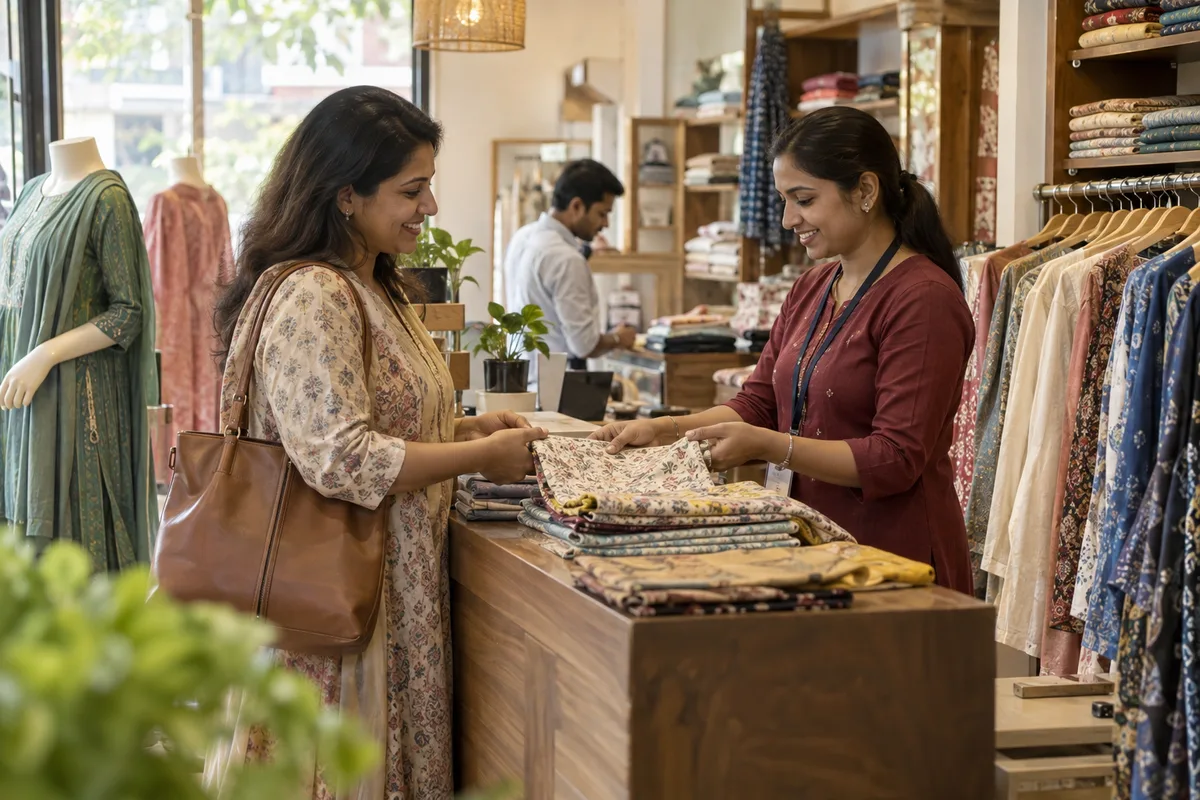
A buyer persona is a plain description of the kind of customer who actually buys from you. It includes what they search, what worries them and who else they ask before deciding. GullySales builds this from real enquiries and past sales rather than a generic template, then uses it to write every page and advert.
Last updated 14 Nov 2026.
For gift shops
Where it usually goes wrong, and what we would do.
“The buyer and the receiver are different people”
The shop serves one person but the gift is for another, and their tastes may differ. A husband choosing for a wife wants safety and a clear price. The persona has to record both who pays and who receives.
“The last-minute buyer needs a decision made for them”
Someone with an anniversary tomorrow does not want twenty options. They want three that look right, a price and a time of delivery. Their persona is defined by the date, not the age.
“The planner buys in bulk and early”
A family arranging a wedding or a housewarming orders return gifts weeks ahead and compares shops. They need samples, quantities and a price per piece, and they decide with relatives watching.
“The repeat gifter wants to be remembered”
An owner who gifts to the same relatives every year values a shop that recalls last year's choice. This buyer is the most loyal and the least marketed to, because nobody asks them when the date is.
What we do
What we deliver for gift shops.
The work available for this need. We agree the deliverables and responsibilities for your engagement in writing.
Three or four buyer profiles from your orders
Short written profiles of the last-minute buyer, the planner, the repeat gifter and any other group your records show.
Result: Each profile is grounded in orders you have actually taken.
A note of occasion, budget and receiver
The fields to record on each order so the pattern can be read next season.
Result: You can see who buys what for whom.
A menu arranged for each profile
Gifts regrouped so the last-minute buyer sees three ready options and the planner sees quantities.
Result: Each buyer finds their route at once.
Message wording for each buyer
Opening replies written for each profile, in the language and tone they use with you.
Result: The first reply sounds like the shop knows them.
A check against real orders
The profiles tested against the next set of orders and corrected where the shop was wrong.
Result: The persona changes when your buyers do.
How the result is measured
- Enquiry match to persona
- Conversion rate by persona
- Content aligned to persona
Recorded as a baseline before work starts, so every later report has an honest comparison.
Who is asking
Describe the buyer by the person they are buying for.
- A last-minute buyer the evening before
- Wants two or three choices decided for them, a price they can accept and a pick-up or delivery they can trust.
- A spouse planning an anniversary
- Wants something personal, a name or date on it, and reassurance that it will arrive in time.
- A parent organising a children's party
- Wants return gifts in bulk, safe items for children and one invoice.
- An office admin buying for a colleague
- Wants a neat, neutral gift, a bill, and a simple way to collect money from the team.
- A relative abroad sending to family in the city
- Wants the shop to deliver, add a message card and send a photo of the packed gift.
- A repeat gifter with a diary full of birthdays
- Wants to be reminded before each date and to see new gifts without repeating the last one.
Who it is for
This is written for these gift shops.
- Neighbourhood gift and novelty shops
- Personalised and photo gift shops
- Greeting card and party gift stores
- Handicraft and home decor gift shops
- Chocolate, hamper and festive gift sellers
- Gift shops in malls and tourist areas
- Wedding and return gift suppliers
- Instagram-led gift boutiques with a small walk-in counter
Before you decide
When this may not be the right fit.
- You have no record of past orders, so a persona would be your guess about customers you cannot name.
- The shop sells almost only to walk-ins from one street, where staff already know every regular.
- You plan to write personas for corporate buyers, a different job that needs its own work.
Before you decide
Agree the work. Know how to judge it.
Buyer persona for gift shops: use these checks to prepare, choose the scope, and review what changes.
Bring the right evidence
Write the decision the research must support, such as entering a market or choosing a buyer group. Separate what you know from sales records from what the team currently assumes.
Make the scope clear
Agree which buyers to speak to, which sources to review, and what access you can provide. Include lost enquiries and people who chose another supplier, where they are willing to take part.
Check the work in use
Look for source dates, sample limitations, and evidence that disagrees with the preferred answer. A recommendation should show how it follows from the findings.
Know when to change course
Do not treat a few positive conversations as proof of demand. Test the proposed offer with an actual buying decision before committing to a wider launch.
These are discussion points, not a fixed package. GullySales confirms the deliverables, responsibilities, fee, and term in writing after reading your brief and speaking with you.
Before we start
What to have ready before the work starts.
The records, access and decisions this work needs from gift shops. Anything missing is noted in the written scope, with who will supply it.
- An export or photographs of the order book
- We need the orders with dates, items and any note on the occasion. Photographs of handwritten pages are acceptable if readable. When the book is missing or thin, the personas rest on staff memory, and we say so on each profile so no one mistakes it for evidence.
- Names of buyers who agree to be called
- Pick regular buyers who will take a short call and ask them first yourself. Their consent is yours to obtain. If no one agrees, we rely on the order book and the staff, and the profiles say less about why people choose the shop and more about what they bought.
- Time from two or three counter staff
- Staff who serve the counter should be free for a conversation, away from customers. They know the hesitation and the questions that no record holds. Without their time, the personas describe the buyer's purchase but not the moment before it.
- A record of enquiries that did not become orders
- Keep or reconstruct a list of buyers who asked and did not buy, with the reason if you know it. Chat screenshots are acceptable. If this is missing, the personas describe only the buyers who succeeded, and the hesitation that cost you the others stays unseen.
- A decision on which buyers matter first
- Tell us whether the shop wants more last-minute buyers, more planners or more yearly repeaters. This choice shapes the order of the profiles. If undecided, the personas are written in equal weight and the shop has no guide to which buyer to invite first.
How it works
How the buyer persona work runs
The work itself, in order. How an engagement starts, from your brief to a written scope, is set out on our method page.
- 1
Sort the order book by who bought for whom
We take the order book and the billing slips and sort them by buyer and receiver, such as a husband buying for a wife, an office buying for a farewell or a mother buying for a child. You help us read the shorthand your staff use. When we finish, there is a table of orders that shows the pattern, with the unclear ones set aside.
- 2
Pick the buyers we will speak to
You choose six to eight buyers from different groups, including one who comes every year and one who bought once. You ask each for permission to be called, and we draft the questions. We do not call anyone you have not asked first. We prepare a short sheet for the counter staff to note what they have heard in person.
- 3
Listen to the counter staff before the buyers
We sit with the people who serve the counter and ask what the last-minute buyer says, what the planner asks for and which question makes a buyer leave. You hear these notes too. We mark where staff opinion and the order book agree, and where they do not, because the persona will use only what is supported by an order.
- 4
Write the profiles and test them on orders
We draft three or four profiles, each with the buyer, the receiver, the occasion, the budget, what they check and what makes them hesitate. We then take twenty past orders and see which profile each fits. You read the profiles aloud with your staff and correct any that sound false.
- 5
Rearrange the menu and messages for each profile
With the profiles agreed, we mark which part of the gift menu each buyer should see first and which words in a reply suit them. You choose which profile the shop leads with this season. We write a short sheet per profile for the counter and the WhatsApp number, so everybody replies in the same way.
- 6
Check the profiles against new orders
As new orders arrive, the counter notes which profile each fits and which fit none. We read those notes against the first sort of the order book and tell you whether the profiles still describe your buyers. You decide whether a profile is merged, split or retired before the next gifting season.
Where this fits
Three pieces of sales work, in this order.
This work sits inside sales process design, at stage 0, foundation. The audit comes before it, and sales management keeps it running.
Step 1
Sales audit
Find where deals are being lost and what to fix first.
Start here if you cannot say where orders are lost.
Step 2 · you are here
Sales process design
One written way to sell, from first enquiry to repeat order.
Start here if every salesperson sells differently.
Step 3
Sales management
A target, a review routine and someone who owns the number.
Start here if the team has targets and no routine.
FAQ
Questions owners ask before they call.
Not here? More answers, or ask on WhatsApp.
Do we need survey data to build a persona?
Can one shop have several personas?
How does a persona change our marketing?
How do we learn who the last-minute buyer is?
How soon do the profiles go out of date?
Do staff need training to use the personas?
How much does it cost?
How long is the contract?
Who will actually do the work?
What do you need from us?
More for gift shops
Related work to consider.
Closest to this: strategy and research
Also for gift shops
Or start from the overview: sales and marketing for gift shops.
Your next practical step
Tell us what you are trying to grow, and we will read it before we call.
Eight short steps, mostly taps. Skip anything you would rather answer on the call.