Handbag stores · Digital marketing
Spend where buyers actually look: the map, the feed and the chat on their phone.
Digital marketing for a handbag store is the set of online routes that bring people to the counter: Google Maps, Instagram, search, ads and WhatsApp. GullySales works out which routes suit your shop and joins them with one record of enquiries.
Scope, fee, reporting and term are agreed in writing after we have read your brief and spoken to you.
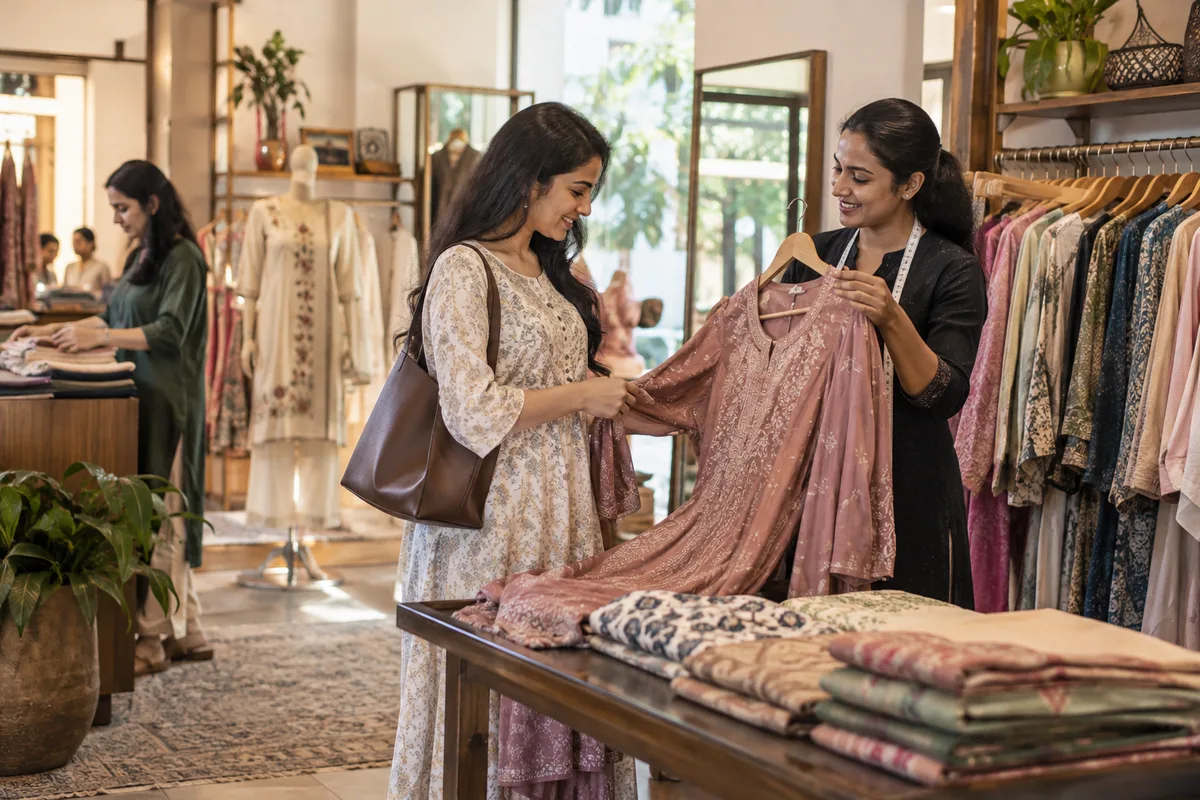
What digital marketing means
Digital marketing is the combined work of search, social media, advertising and website channels running together rather than as separate projects with separate people. GullySales runs these as one connected system so a change in one channel, such as a new offer, is reflected everywhere at once.
Last updated 14 Nov 2026.
For handbag stores
Where it usually goes wrong, and what we would do.
“Every route can look busy while none sells”
Posts, ads and a website can each look active while no one asks about a bag. A plan starts from the enquiry and the sale, and works back to the route that produced it.
“A shop sells to people within reach”
Unlike a brand shipping across the country, a store serves the streets around it. Spending on attention from far away buys views and no footfall, so the plan follows the catchment.
“The calendar sets the budget”
Weddings, college admission, festivals and holidays are when bags are bought. Money spent evenly across the year misses the weeks that matter and wastes the quiet ones.
“Ads without a landing route lose the buyer”
An ad that points to a home page makes the customer hunt for the bag. An ad that points to the right occasion page or a chat with a photograph asks for the next step at once.
What we do
What we deliver for handbag stores.
The work available for this need. We agree the deliverables and responsibilities for your engagement in writing.
A route-by-route plan
Which of Maps, Instagram, search, ads and WhatsApp to use first, and which to leave, given your stock and area.
Result: You know where effort goes and why.
An occasion calendar
The weeks for weddings, college, festive gifting and travel, with the posts and offers planned for each.
Result: Every season has its work planned before it arrives.
One enquiry log
A single place that records every enquiry from every route, with the occasion and source.
Result: You can see which route brought which buyer.
Ad accounts set up properly
Campaigns aimed at your catchment, using your own photographs and sending people to a page or chat that answers.
Result: Spend is directed at buyers who can reach the shop.
A budget split you decide
A written view of what to spend on each route, set by you, and a place to note what came of it.
Result: The budget has a reason behind each line.
A review of what worked
A look at the log after each season to decide what to repeat, change or drop.
Result: The next season's plan uses this season's evidence.
How the result is measured
- Enquiries across channels
- Cost per enquiry overall
- Channel mix by contribution
Recorded as a baseline before work starts, so every later report has an honest comparison.
Searches your buyers type
Check where a bag buyer looks before choosing a shop.
- handbag shop near me
- A map profile with correct hours, real photographs and a working number.
- wedding clutch under a budget
- A page that shows clutches by price band, with the shop's own photographs.
- handbag gift for sister
- A gift page with options, wrapping and exchange terms.
- leather bag shop in the locality name
- A page that tells the buyer what leather you stock and where to find you.
- bag shop with exchange policy
- A clear line on exchange, shown on the site and the profile.
Who it is for
This is written for these handbag stores.
- Ladies' handbag and clutch boutiques
- Leather bag and wallet stores
- College bags, backpacks and laptop bag shops
- Luggage and travel bag stores
- Bridal clutch and potli bag shops
- Gift-focused bag and accessory stores
- Premium brand bag showrooms and franchises
- Wholesale bag shops that also retail
Before you decide
When this may not be the right fit.
- The shop cannot answer calls or messages within the day, so more reach would lose buyers.
- You have no photographs of current stock, so any paid post would show old items.
Before you decide
Agree the work. Know how to judge it.
Digital marketing for handbag stores: use these checks to prepare, choose the scope, and review what changes.
Bring the right evidence
Bring a recent won order and an enquiry that went nowhere. Trace how each buyer found you, what they asked, and who handled the next step. A channel list alone will not explain the difference.
Make the scope clear
Choose one offer and one buyer group first. Agree which part needs attention: being found, getting a useful enquiry, or turning an enquiry into an order. Separate recommendations from the work required to carry them out.
Check the work in use
A useful plan names the first change, its owner, the evidence behind it, and the number that will show whether it worked. Ask what has deliberately been left out and why.
Know when to change course
If your team cannot answer the enquiries it already receives, improve that handover before buying more traffic. If the offer itself is unclear, test it with buyers before adding channels.
These are discussion points, not a fixed package. GullySales confirms the deliverables, responsibilities, fee, and term in writing after reading your brief and speaking with you.
Before we start
What to have ready before the work starts.
The records, access and decisions this work needs from handbag stores. Anything missing is noted in the written scope, with who will supply it.
- A tally of how recent customers found you
- Staff note, for a stretch of sales, how each customer says they found the shop. A paper tally is fine. Without it, the baseline is missing and budget follows habit.
- Access to the map, social and chat accounts
- We need manager access to each. Where an account is with a former agency or employee, recovering it comes first. Without access, the plan is advice.
- A stock plan for the coming occasions
- A rough list of what you expect to hold for weddings, college and gifts. Without it the calendar cannot place promotions, and customers are drawn to bags you cannot show.
- A ceiling for paid spending, if any
- Decide the limit you will spend on ads, or choose to spend nothing. We set no figure. Without a decision, the plan covers unpaid routes only.
- A person who keeps the enquiry log
- Name who records enquiries and checks it is filled. This must be someone in the shop on working days. Without an owner the log fills unevenly and the counts mislead.
How it works
How the digital marketing work runs
The work itself, in order. How an engagement starts, from your brief to a written scope, is set out on our method page.
- 1
Ask which route brought the last sales
We ask staff to recall the last handful of sales and how each customer found the shop: the map, an Instagram post, a friend, passing the door. We put the answers on one page. If two of the five customers say a friend sent them, the plan gives that word of mouth its own place, such as a request at the counter to share the shop's profile with a friend. This sketch of the real routes, not a list of channels, is what the plan follows.
- 2
Look at the map, feed and chat accounts
You give us access to the map profile, the social pages and the WhatsApp number. We read what each has brought, using your notes and the counter tally. Channels that look busy but have brought no customer are listed so you can decide whether to keep them. We also check that the phone number, the address and the hours match on every one of them, since a shopper who finds two different closing times trusts neither.
- 3
Build the occasion calendar with the stock
With the owner we map the year: wedding season, college openings, festivals and gift occasions, and when stock arrives for each. The calendar places each route's work around those dates. Nothing is promoted that the shelf cannot supply. We also mark the weeks when stock is thin and staff are busy with orders, so no campaign sends extra people to the door when nobody can serve them well.
- 4
Set up one log and the ad accounts
We create a single place to record every enquiry with its source and set up the ad accounts in the shop's name. Staff test the log with sample enquiries from each route and tell us where it is awkward. If you choose paid work, nothing runs until the log is working. Each ad points to an occasion page or the chat, never to the home page alone, because a buyer who lands on a general page has to search again for the bag that was shown.
- 5
Approve the split and start one route first
You decide how the budget, if any, is split across routes, and we suggest starting with the one closest to a purchase, the map profile. Each route starts only on your approval, and a route that does not work is stopped with your agreement. The sums are yours to set and we show you the first sales from each route before asking whether to extend it.
- 6
Review sales by route against the tally
After the first wedding or festival season of the plan, we set the sales and enquiries by route beside the counter tally recorded earlier. You see which routes brought customers who bought. Then you decide how to move effort and budget for the next calendar.
Where this fits
Three pieces of sales work, in this order.
This work sits inside sales process design, at stage 0, foundation. The audit comes before it, and sales management keeps it running.
Step 1
Sales audit
Find where deals are being lost and what to fix first.
Start here if you cannot say where orders are lost.
Step 2 · you are here
Sales process design
One written way to sell, from first enquiry to repeat order.
Start here if every salesperson sells differently.
Step 3
Sales management
A target, a review routine and someone who owns the number.
Start here if the team has targets and no routine.
FAQ
Questions owners ask before they call.
Not here? More answers, or ask on WhatsApp.
Where should a small bag shop start?
How do we know digital marketing brought a sale?
Is an online store needed?
Should we spend before a wedding season or during it?
Is it better to spend before the wedding season starts or during it?
Can we run all routes at the same time?
How much does it cost?
How long is the contract?
How soon will we see results?
Who will actually do the work?
More for handbag stores
Related work to consider.
Closest to this: strategy and research
Also for handbag stores
Or start from the overview: sales and marketing for handbag stores.
Your next practical step
Tell us what you are trying to grow, and we will read it before we call.
Eight short steps, mostly taps. Skip anything you would rather answer on the call.