Home appliance stores · Lead generation
Turn a family's fridge or AC enquiry into a name, a number and a visit.
Lead generation for an appliance store is the work of collecting the household that is about to buy a white-goods item before the bill is written elsewhere. GullySales works on where those enquiries arrive, how each one is recorded, and who calls back.
Scope, fee, reporting and term are agreed in writing after we have read your brief and spoken to you.
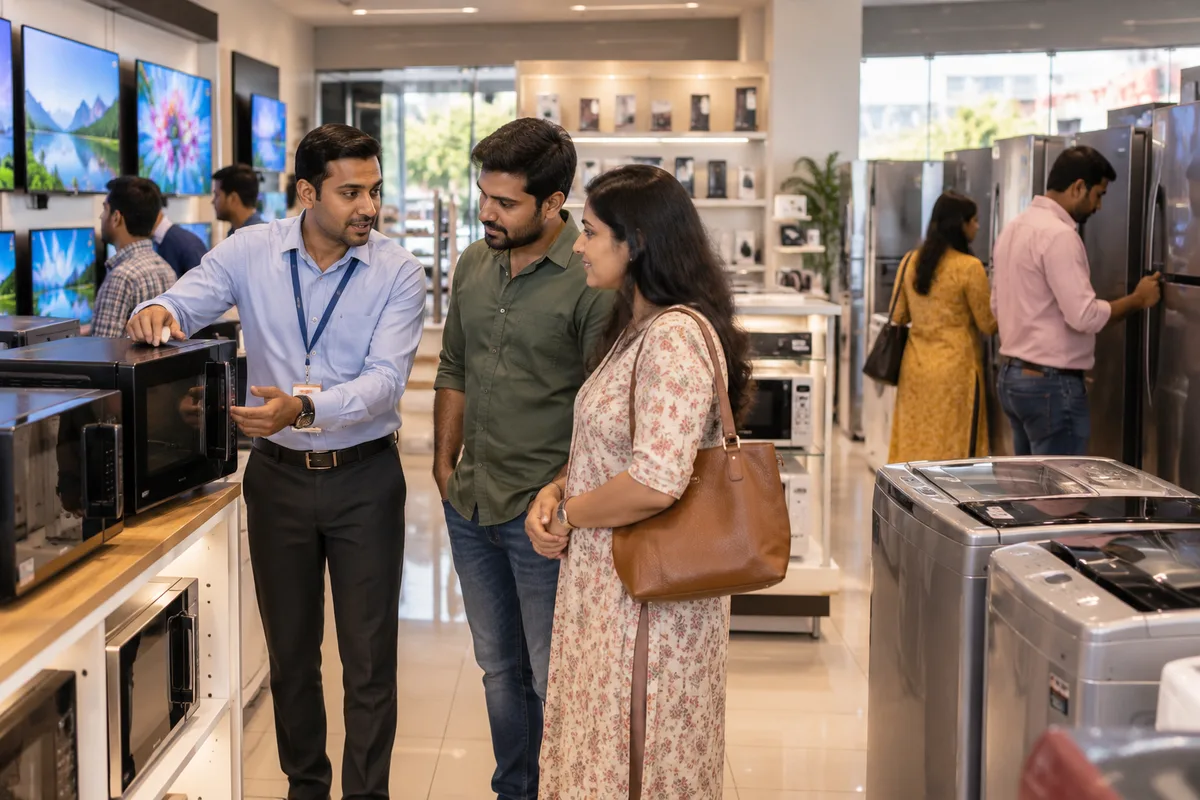
What lead generation means
Lead generation is the combined work of every channel that brings in a new enquiry, whether from search, adverts, referrals or a stall at an exhibition. GullySales runs these channels together and reports the number of enquiries each one produced, not the activity behind it.
Also for home appliance stores
- CRM for home appliance stores
- Follow-up systems for home appliance stores
- SEO for home appliance stores
- Local SEO for home appliance stores
- Social media marketing for home appliance stores
- Content marketing for home appliance stores
- Buyer personas for home appliance stores
- WhatsApp marketing for home appliance stores
Sales and marketing for home appliance stores, the overview.
Last updated 18 Oct 2026.
For home appliance stores
Where it usually goes wrong, and what we would do.
“The enquiry arrives in four places and is written down in none”
A family messages on WhatsApp, rings the landline, walks in to look and taps a Google call button. Each channel is handled by a different person, so the shop cannot say which households asked about a split AC last week.
“The model number is the lead, not the name”
A buyer who asks about one particular double-door fridge has already finished half the research. Record the model, the floor they live on and the budget, and the callback can answer the real question instead of repeating the brochure.
“Bulk buyers never fill a form”
A builder handing over flats or a hostel owner fitting rooms asks for a written quote and goes to whoever sends one first. That lead comes through a contact made in person, so it needs a quote template ready, not an advertisement.
“The festival rush buries the slow buyer”
In Diwali week the counter serves whoever is standing there. The person who messaged on Tuesday about a washing machine is forgotten by Friday, and the sale goes to the shop that rang them on Wednesday.
What we do
What we deliver for home appliance stores.
The work available for this need. We agree the deliverables and responsibilities for your engagement in writing.
One enquiry sheet for every channel
A shared sheet or form where phone, WhatsApp, walk-in and Google enquiries are all entered with product, model, budget and floor.
Result: Any enquiry from last week can be found by product and by source.
A Google listing that invites the call
Product photographs, brands stocked and a working phone and WhatsApp link on the profile, so a search ends in an enquiry.
Result: The profile's call and message taps are counted separately from walk-ins.
Questions the counter asks first
A short card for staff covering room size, floor, inverter or not, family size and budget before any price is quoted.
Result: Two staff asked about the same AC enquiry record the same details.
A bulk quote template
A one-page quote for builders, designers, PG owners and hostels, with unit rate, delivery and installation scope left for you to fill.
Result: A quote can be sent the same day the contact is made, by anyone in the shop.
Lead source tagging
Each enquiry is marked with how it found you, including referral from a brand dealer, a housing society or a past buyer.
Result: You can name the source of the last ten bills.
How the result is measured
- Enquiries generated
- Cost per enquiry
- Enquiries by source
Recorded as a baseline before work starts, so every later report has an honest comparison.
What to capture or send
Write down the few details that turn an appliance enquiry into a callback.
- Model asked about
- Record the exact fridge, AC or washer model. The callback can then answer the real question instead of repeating the brochure.
- Room and floor
- Room size for an AC, floor and lift access for a fridge. Decides the size to suggest and whether installation needs extra work.
- Budget and instalment interest
- Ask for the figure the household has in mind and whether a finance scheme is wanted. Saves a second visit to the counter.
- Where the enquiry arrived
- WhatsApp, phone, walk-in or Google. Shows which route sends buyers who actually come in and which only ask for a price.
- Decision maker not in the shop
- Note who else decides, such as a parent or spouse. Lets the callback offer a message that person can read without visiting.
Who it is for
This is written for these home appliance stores.
- Multi-brand white goods and appliance showrooms
- Single-brand exclusive stores run by dealers
- Air conditioner specialists with installation teams
- Washing machine and fridge dealers in market streets
- Water heater, geyser and water purifier stores
- Appliance retailers selling mainly on instalments
- Showrooms supplying builders, hostels and guest houses in bulk
- Open-box and ex-display appliance outlets
Not for
It is not the right fit if.
- Nobody at the counter will write the enquiry down during the festival rush, so a new form would stay empty when it matters most
- You have no stock of the models people ask about, so more enquiries would only be turned away at the shelf
Before you decide
Agree the work. Know how to judge it.
Lead generation for home appliance stores: use these checks to prepare, choose the scope, and review what changes.
Bring the right evidence
Define the organisations or buyers you can serve and the reasons they would consider a conversation. Bring examples of accepted and rejected prospects so the selection rule is visible.
Make the scope clear
Agree the research sources, contact approach, qualification rules, and handover. Clarify which meetings count as accepted and what happens to replies that are not ready to buy.
Check the work in use
Review why a prospect was selected and what was learned from the response. Count held, relevant conversations separately from contacts found, messages sent, or meetings booked.
Know when to change course
If the same objection appears repeatedly, adjust the offer or buyer group before increasing outreach. Respect a request to stop contact and keep the exclusion in the record.
These are discussion points, not a fixed package. GullySales confirms the deliverables, responsibilities, fee, and term in writing after reading your brief and speaking with you.
How it works
How the lead generation work runs
The work itself, in order. How an engagement starts, from your brief to a written scope, is set out on our method page.
- 1
Requirements and capacity decision
Send the requirements brief, then discuss your offer and available sales capacity with us. You receive the scope, fee, and term in writing before committing to the work.
- 2
Source review and baseline approval
We review available enquiry records and channel dashboards. You confirm the starting figures for enquiries by source, reply time, conversion, and cost per order, including gaps in the records.
- 3
Offer and capture approval
Your sales lead approves the audience and the questions needed before a call. Page copy and contact-use wording go through your internal review before publication.
- 4
Test enquiry and sales handoff
We test the agreed routes from submission to the shared record and first reply. The person responsible for sales checks that the record contains enough information to act.
- 5
Launch and source decisions
Traffic starts on the approved channels. We compare enquiry quality with the baseline and use your sales outcomes to decide which sources need changes or less spend.
Where this fits
Three pieces of sales work, in this order.
This work sits inside sales process design, at stage 1, prospecting and lead generation. The audit comes before it, and sales management keeps it running.
Step 1
Sales audit
Find where deals are being lost and what to fix first.
Start here if you cannot say where orders are lost.
Step 2 · you are here
Sales process design
One written way to sell, from first enquiry to repeat order.
Start here if every salesperson sells differently.
Step 3
Sales management
A target, a review routine and someone who owns the number.
Start here if the team has targets and no routine.
FAQ
Questions owners ask before they call.
Not here? More answers, or ask on WhatsApp.
Should we buy leads from a portal?
How do we get leads for air conditioners before the heat starts?
Do walk-ins count as leads?
Should we ask for an address at the first enquiry?
How much does it cost?
How long is the contract?
How soon will we see results?
Who will actually do the work?
What do you need from us?
What if we are not happy with the work?
More for home appliance stores
Related work to consider.
Closest to this: leads and follow-up
Also for home appliance stores
Or start from the overview: sales and marketing for home appliance stores.
Your next practical step
Tell us what you are trying to grow, and we will read it before we call.
Eight short steps, mostly taps. Skip anything you would rather answer on the call.