Hypermarkets · Lead generation
Turn a full car park into a register of households you can invite back.
Lead generation for a hypermarket is the work of collecting the names and numbers of households and bulk buyers who show interest, so the store can invite them back instead of waiting for the next sale weekend. GullySales works on where a name is asked for, who in the store records it and how each lead is followed.
Scope, fee, reporting and term are agreed in writing after we have read your brief and spoken to you.
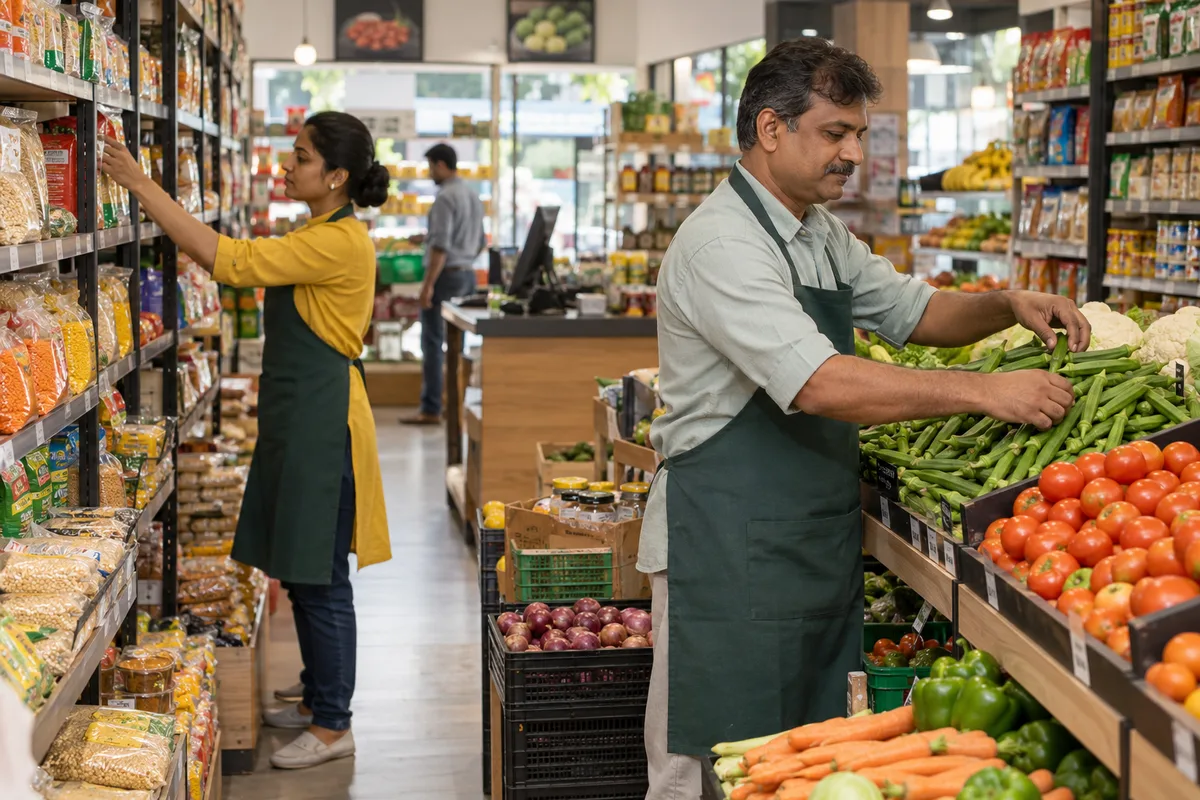
What lead generation means
Lead generation is the combined work of every channel that brings in a new enquiry, whether from search, adverts, referrals or a stall at an exhibition. GullySales runs these channels together and reports the number of enquiries each one produced, not the activity behind it.
Plan the next part of the work
Last updated 21 Nov 2026.
For hypermarkets
Where it usually goes wrong, and what we would do.
“Footfall is a crowd, not a list”
The car park is full on a festival Saturday and the store holds no names from it. Without a household register, every sale begins again from the hoarding, and the general manager pays for the same attention twice.
“The best lead is at the billing counter”
A family with a full trolley has just shown what they spend. A cashier who asks for a mobile number for the offer list reaches the buyer at the moment they are most willing to say yes, which no hoarding can do.
“Bulk buyers ask once and move on”
A canteen contractor or hall manager rings for a rate on sacks and tins. If nobody writes down who asked, what pack and by which date, the enquiry goes to the wholesaler who called back.
“Each floor collects its own names”
Grocery, apparel and appliances each hold a separate notebook or none at all. One family appears three times with three spellings and never receives one sensible invitation.
What we do
What we deliver for hypermarkets.
The work available for this need. We agree the deliverables and responsibilities for your engagement in writing.
One household register for the whole building
A single sheet or CRM list with name, locality, number and the floor where the name was taken, shared by every department.
Result: Each household appears once, with the floor it first came through.
A billing-counter ask with a reason attached
A short line for the cashier and a printed card at the counter that tells the family what they receive for giving the number.
Result: Cashiers can say the same sentence, and the register shows which counter collected.
A bulk and institutional enquiry log
A form for the bulk desk that records buyer, pack, quantity wanted, invoice needs and the date a call was promised.
Result: No bulk enquiry sits unanswered without being visible on the sheet.
Sale-weekend sign-ups on the floor
A stand and a QR code at the entrance where a family joins the WhatsApp offer list, with a staff member who explains what will be sent.
Result: You can count sign-ups from the stand separately from the billing counter.
Lead sources named in the register
Each entry carries its source: insert code, hoarding keyword, billing counter or Maps call.
Result: You can read which source brought names, not only which brought visits.
How the result is measured
- Relevant enquiries by source
- Duplicate and unsuitable enquiries
- Time to the first response
- Accepted enquiries reaching an agreed next step
Recorded as a baseline before work starts, so every later report has an honest comparison.
What to capture or send
What a hypermarket should record when a household or a bulk buyer shows interest.
- Mobile number with consent at billing
- Taken by the cashier with a reason given, such as sale alerts. Without a recorded yes, the number cannot be messaged later.
- Locality or pin code
- Asked once at billing. It shows which localities the store draws from and where a hoarding or a van is wasted.
- Household size and big-shop day
- A short answer from the shopper at the counter. It tells you who buys the month-start trolley and when to invite them back.
- Bulk buyer type
- A caterer, a school hostel, a hotel or a society committee, noted at first call. Each wants a different range and credit terms.
- Department the shopper came for
- Noted on a sale sign-up form. An appliance buyer and a grocery buyer are different leads, even in the same building.
- How the shopper heard of the sale
- Tick-box of hoarding, newspaper insert, message, creator or passing by. Lets the owner count which spend brought a family in.
Who it is for
This is written for these hypermarkets.
- Single-site hypermarkets on a highway or ring road
- Hypermarkets inside shopping malls
- Regional chains of hypermarkets across a few cities
- Hypermarkets with an attached electronics and appliances floor
- Hypermarkets with a strong apparel and home section
- Cash-and-carry style large formats that sell to both households and traders
- Hypermarkets in tier-two towns that draw from several villages
- Franchise hypermarkets that follow a national brand's offer calendar
Before you decide
When this may not be the right fit.
- Your billing counters have no way to ask for and record a mobile number, so more footfall would pass through without a name.
- No one owns the follow-up on a bulk enquiry, so more leads would only add to calls nobody returns.
- Your departments each keep their own notebook, and a combined register would clash with them before anyone could use it.
Before you decide
Agree the work. Know how to judge it.
Lead generation for hypermarkets: use these checks to prepare, choose the scope, and review what changes.
Bring the right evidence
Define the organisations or buyers you can serve and the reasons they would consider a conversation. Bring examples of accepted and rejected prospects so the selection rule is visible.
Make the scope clear
Agree the research sources, contact approach, qualification rules, and handover. Clarify which meetings count as accepted and what happens to replies that are not ready to buy.
Check the work in use
Review why a prospect was selected and what was learned from the response. Count held, relevant conversations separately from contacts found, messages sent, or meetings booked.
Know when to change course
If the same objection appears repeatedly, adjust the offer or buyer group before increasing outreach. Respect a request to stop contact and keep the exclusion in the record.
These are discussion points, not a fixed package. GullySales confirms the deliverables, responsibilities, fee, and term in writing after reading your brief and speaking with you.
Before we start
What to have ready before the work starts.
The records, access and decisions this work needs from hypermarkets. Anything missing is noted in the written scope, with who will supply it.
- Footfall and billing counts for sale weekends
- Bring the figures you already keep for the last two sale weekends: how many bills, and how many people entered if a counter exists. A page from the manager's diary is acceptable. Without a baseline we cannot tell whether the register fills faster than before, and the review at the end has nothing to compare against.
- A supervisor for each billing counter
- Name the person at every counter who will make the ask and be answerable for it. The shift roster is enough. Where nobody is named, the ask depends on whoever is free, and names will come from only a few counters.
- Whoever answers bulk buyers on the phone
- A hostel or canteen that enquires needs a named person to call back with a rate. Give us that person's role and the hours they are reachable. If the enquiry has no owner, we plan the log but hold the bulk route until someone is named.
- The store's current offer to a returning household
- Decide what a household that gives a number will receive, such as an early notice of a sale or a bill on the phone. You decide it, and it must be something the store will really send. If you cannot decide, the ask has no reason and shoppers decline.
How it works
How the lead generation work runs
The work itself, in order. How an engagement starts, from your brief to a written scope, is set out on our method page.
- 1
Stand at the billing counters for a shift
We begin by watching how a shopper leaves the store: the queue at each billing counter, what the cashier says, and whether anyone asks for a name or number. You tell us which counters are busiest on a sale weekend and who supervises them. From this we mark the moments when a household is willing to give a number, and we note what is lost today at the exit.
- 2
Map every place a name could be taken
Next we list each spot where a household meets the store: the entrance, the trial counters, the electronics floor, the bulk desk, the website and the Maps listing. Each gets a note on who stands there and what they can record. You decide which spots will collect names and which will stay clear, so the shopper is never asked twice in one visit.
- 3
Write the ask and the reason for it
We draft the line a cashier or floor staff member says, and the reason attached: an invitation to the next sale, a bill sent to the phone, or a bulk rate call back. You read the words aloud with your counter supervisors and change anything that sounds forced. The approved line goes on a small card at each counter.
- 4
Build the register and the bulk enquiry log
We set up one household register for the whole building, with a source column that names where each entry came from, and a separate log for hostels, canteens and function halls. You choose who may add entries and who reads them. We test the register with a sample of real names from a sale weekend before it goes live.
- 5
Read the register against footfall and bills
After a sale weekend we count the names collected at each source against the footfall and the billing counts we noted before the work began. We look at which counter, floor and sign-up point gave names that came back, and which gave names that were wrong. You then decide where to put more staff time and where to withdraw it.
Where this fits
Three pieces of sales work, in this order.
This work sits inside sales process design, at stage 1, prospecting and lead generation. The audit comes before it, and sales management keeps it running.
Step 1
Sales audit
Find where deals are being lost and what to fix first.
Start here if you cannot say where orders are lost.
Step 2 · you are here
Sales process design
One written way to sell, from first enquiry to repeat order.
Start here if every salesperson sells differently.
Step 3
Sales management
A target, a review routine and someone who owns the number.
Start here if the team has targets and no routine.
FAQ
Questions owners ask before they call.
Not here? More answers, or ask on WhatsApp.
Is a mobile number at billing something shoppers will give?
Who owns a lead in a store with several departments?
How do we count leads from a hoarding?
What can a hypermarket do with the numbers it collects?
What does the cashier say if a shopper refuses?
Can staff keep the register on their own phones?
How much does it cost?
How long is the contract?
How soon will we see results?
Who will actually do the work?
More for hypermarkets
Related work to consider.
Closest to this: leads and follow-up
Also for hypermarkets
Or start from the overview: sales and marketing for hypermarkets.
Your next practical step
Tell us what you are trying to grow, and we will read it before we call.
Eight short steps, mostly taps. Skip anything you would rather answer on the call.