Hypermarkets · Social media
Post what a family will plan the weekend around, not what the shelf holds.
Social media marketing for a hypermarket is the use of Instagram, Facebook and YouTube to show families what the store offers for the coming weekend and festival, and to bring them in. GullySales works on the post plan, the store footage and the way a comment becomes a visit.
Scope, fee, reporting and term are agreed in writing after we have read your brief and spoken to you.
What social media means
Social media is the ongoing posting your business does on platforms such as Instagram, Facebook and LinkedIn to stay visible to customers and prospects between purchases. GullySales plans a posting calendar, writes captions and designs the images so the page looks active and answers what a visitor would ask.
Last updated 14 Nov 2026.
For hypermarkets
Where it usually goes wrong, and what we would do.
“A price tag on a photograph is not a post”
Shelf photographs with a price are copied from the leaflet. A family scrolling past sees an advert, not a reason. A post about what to buy for the festival, with items from several floors, gives a reason to plan the trip.
“Reels of the store build the trip”
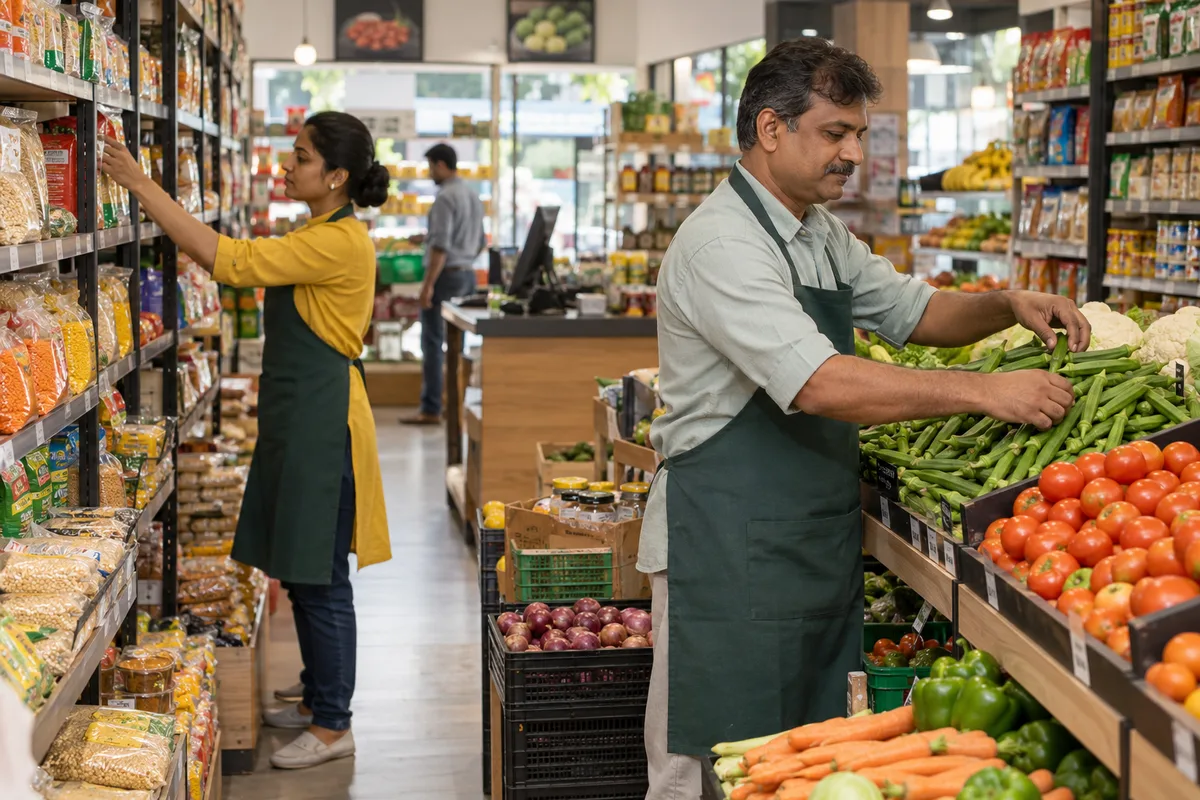
A walk through the fresh section, the new appliance floor or the opening-day queue shows what the building holds. A family that sees the range on a phone arrives with a list instead of wandering.
“The comment section is a shop counter”
A shopper asks if a mixer is in stock and nobody answers for two days. Another asks the sale end date and gets silence. Each unanswered comment is a family who stays home.
“Local creators bring a different crowd”
A household-budget creator or a neighbourhood food page speaks to the people in a catchment. The store has to give them a clear brief and a clean offer, or the post is a thank-you, not a visit.
What we do
What we deliver for hypermarkets.
The work available for this need. We agree the deliverables and responsibilities for your engagement in writing.
A post plan built on the sale calendar
Posts mapped to the festival and sale dates, each tied to one offer from a floor and one way to respond.
Result: Every post has a date, a floor and a response method.
Store footage shot on a working floor
Short vertical clips of the fresh section, the home floor and the bulk aisle, with permission from staff who appear.
Result: The store has a library of its own footage to draw on.
Comment and message answers assigned
A named person for the comment section, with a short list of answers about stock, timings, parking and sale dates.
Result: Questions receive a reply from someone who knows.
Creator briefs with a code
A one-page brief for each creator with the offer, the dates and a code that the family quotes at billing.
Result: Visits from a creator can be counted at the counter.
Paid posts aimed at catchment localities
Boosted posts set to the localities the store serves, with a different offer for a gated community and for a township.
Result: Reports show which locality saw which post.
A festival content pack
Images and short clips for a festival, prepared before the date, with the floors' offers named.
Result: The pack is ready before the festival starts.
How the result is measured
- Posts published
- Engagement rate
- Enquiries from social profiles
Recorded as a baseline before work starts, so every later report has an honest comparison.
Posts and pieces to plan
Posts a family plans a weekend around, drawn from the sale calendar.
- The festival shopping list
- A carousel of the items a family buys before the festival, with the floors they sit on. Needs the sale dates, not a price on every item.
- A walk through the produce floor
- A reel from the entrance to the vegetables, shot on a working morning. Shows the store before anyone drives.
- Month-start trolley offers
- A post that names the staples on offer and the dates. Held for the days families plan their big shop.
- Appliance floor demonstration
- A short clip from the appliance floor with a staff member showing one product. Needs the brand's permission to feature it.
- Bulk orders for hostels and canteens
- A post for institutional buyers with the range and an enquiry route. Comments are answered by the bulk desk.
- A local creator's store visit
- A creator's reel with a code that is counted at billing. Check the platform's current rules on disclosing paid posts.
Who it is for
This is written for these hypermarkets.
- Single-site hypermarkets on a highway or ring road
- Hypermarkets inside shopping malls
- Regional chains of hypermarkets across a few cities
- Hypermarkets with an attached electronics and appliances floor
- Hypermarkets with a strong apparel and home section
- Cash-and-carry style large formats that sell to both households and traders
- Hypermarkets in tier-two towns that draw from several villages
- Franchise hypermarkets that follow a national brand's offer calendar
Before you decide
When this may not be the right fit.
- No one is assigned to answer comments and messages, so a busy page would collect unanswered questions.
- Your sale calendar is set at the last moment, so posts could not be planned before the offers start.
- Shoppers cannot find the offer on the shelf, and a post that brings them in would add to the complaint.
Before you decide
Agree the work. Know how to judge it.
Social media marketing for hypermarkets: use these checks to prepare, choose the scope, and review what changes.
Bring the right evidence
Review the posts that produced useful conversations, not only the ones with the most views. Gather buyer questions and decide which team member can contribute credible material.
Make the scope clear
Choose the audience and channel before setting a posting volume. Agree who supplies material, approves posts, and handles messages, including complaints or questions the agency cannot answer.
Check the work in use
Follow a post through to the profile, website, and response. A useful report explains the quality of conversations and enquiries, alongside reach and engagement.
Know when to change course
If publishing takes time away from unanswered buyer messages, fix the response routine first. Do not expand to another channel without a clear reason for being there.
These are discussion points, not a fixed package. GullySales confirms the deliverables, responsibilities, fee, and term in writing after reading your brief and speaking with you.
Before we start
What to have ready before the work starts.
The records, access and decisions this work needs from hypermarkets. Anything missing is noted in the written scope, with who will supply it.
- Admin access to the store's pages
- We need to be added as editors by the page owner. A shared personal password is not safe. Without access, we can only hand over drafts.
- A shot list agreed with department heads
- Ask each head what they want shown for the coming sale. A short list is enough. Without it, the footage will not match what the buying team has stocked. Add the festival ranges the buying team is proud of, so the footage supports the offers they have bought for.
- Permission to film staff and shoppers
- Tell staff beforehand and plan filming when the aisles are quiet. A notice at the entrance is a minimum. If permission is missing, we film shelves and produce only.
- A reply rota for comments
- Name who reads comments and in which hours. A late answer to a price question costs a visit. If the rota is empty, we limit posting to what you can answer.
- The catchment localities list
- Write the localities from which the bulk of billing addresses come, or the names the cashiers know. This sets the audience for paid posts. Without it, paid posts reach people who will not drive to you.
How it works
How the social media work runs
The work itself, in order. How an engagement starts, from your brief to a written scope, is set out on our method page.
- 1
Pick the platform where your catchment looks
We start by asking where the households near the store spend time, and look at your existing pages. You tell us who holds the logins and which platform brings visits. We agree on one main platform and a secondary, and set aside the others for now. We also check whether the store already has a page that shoppers tag, because an old page with followers is worth keeping and mending.
- 2
Walk the floor and film what is true
We spend a session on a working floor with your staff, filming trolley loads, the fresh counter, new arrivals and the billing queue. You tell us which areas can be filmed and which cannot. The aim is footage that shows the store as it is, with no staging of stock you do not hold.
- 3
Approve a plan from the sale calendar
We build the post plan around the sale and festival dates, putting the ranges on offer first. You approve each theme and remove anything that would clash with the buying team's plans. The plan names the post that carries the invitation to visit.
- 4
Agree who answers every comment
We write reply wording for questions about prices, stock and timings, then assign a person to read comments and messages on a rota. You decide what may be answered online and what must be taken to a phone call. Complaints are moved to the store manager.
- 5
Brief creators and set the catchment audience
If you use local creators, we write a brief with a code that records visits, and you agree the fee in your own terms. For paid posts we set the audience to the localities in your catchment map. You approve the spend limit before anything runs.
- 6
Count visits against the codes and bills
After a sale, we read the codes, the comments that became visits and the footfall against the counts noted before the work began. You see which posts and creators brought households. Then you choose which themes return in the next festival pack.
Where this fits
Three pieces of sales work, in this order.
This work sits inside sales process design, at stage 0, foundation. The audit comes before it, and sales management keeps it running.
Step 1
Sales audit
Find where deals are being lost and what to fix first.
Start here if you cannot say where orders are lost.
Step 2 · you are here
Sales process design
One written way to sell, from first enquiry to repeat order.
Start here if every salesperson sells differently.
Step 3
Sales management
A target, a review routine and someone who owns the number.
Start here if the team has targets and no routine.
FAQ
Questions owners ask before they call.
Not here? More answers, or ask on WhatsApp.
Which platform matters most for a hypermarket?
Should we show prices in posts?
How do we know a post brought someone in?
Can we film shoppers and staff inside the store?
Should posts name the discount?
How do we handle a negative comment?
How long is the contract?
How soon will we see results?
Who will actually do the work?
What do you need from us?
More for hypermarkets
Related work to consider.
Closest to this: content and social
Also for hypermarkets
Or start from the overview: sales and marketing for hypermarkets.
Your next practical step
Tell us what you are trying to grow, and we will read it before we call.
Eight short steps, mostly taps. Skip anything you would rather answer on the call.