Innerwear stores · Buyer persona
Know who walks in: the nervous first buyer, the new mother and the family shopper.
A buyer persona for an innerwear store is a plain description of one type of customer: what they need, what worries them and how they decide. GullySales works on building these from your counter notes and sales records and writing each persona's questions into the shop's replies.
Scope, fee, reporting and term are agreed in writing after we have read your brief and spoken to you.
What buyer persona means
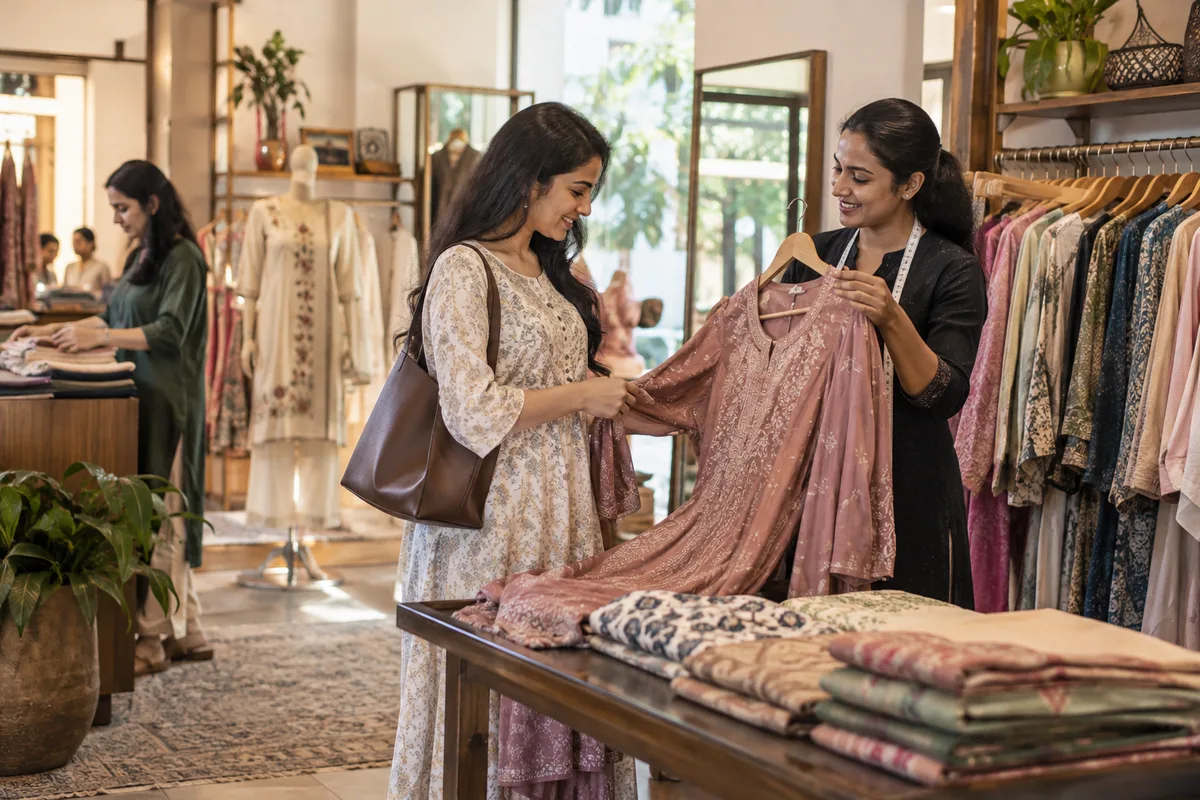
A buyer persona is a plain description of the kind of customer who actually buys from you. It includes what they search, what worries them and who else they ask before deciding. GullySales builds this from real enquiries and past sales rather than a generic template, then uses it to write every page and advert.
Last updated 14 Nov 2026.
For innerwear stores
Where it usually goes wrong, and what we would do.
“The daughter and the mother arrive together”
A first bra is bought with a mother. The daughter is embarrassed, the mother wants value and a proper fit, and the staff member who speaks kindly to both of them makes the sale and the next several.
“The new mother is shopping for a changed body”
Nursing wear, comfort and a clean, private corner matter more than brand to this buyer. A shop that explains the options without being asked, and offers a place to sit, earns a customer for the whole stage.
“The household shopper buys in one visit”
A man or a wife buying vests, briefs and school hosiery for the house wants range and sizes on the shelf and a short wait. Brand and price decide, and a cluttered display loses the sale.
“The wholesale visitor looks like a customer”
A small shop owner buying in quantity stands at the same counter. Treated as retail, they leave. A separate route and rate for trade buyers keeps both kinds of customer happy. Writing this buyer down as a persona stops the mix-up at the counter.
What we do
What we deliver for innerwear stores.
The work available for this need. We agree the deliverables and responsibilities for your engagement in writing.
Persona sheets for each buyer type
A one-page description of the first-time buyer, the new mother, the household shopper, the sports buyer and the trade buyer.
Result: Staff can read who they are serving at a glance.
A list of questions for each persona
The questions each buyer asks before a visit and at the counter, written in their own words.
Result: Replies and pages answer the real questions.
Reply wording by persona
Opening lines and follow-ups for WhatsApp, matched to what each buyer is worried about.
Result: The first message sounds like it was written for that buyer.
A counter note routine
A quick way for staff to note the type of need at billing, with no name taken.
Result: The personas are checked against what the till shows.
A map from persona to route
Which buyers come from the map listing, which from a post and which from word of mouth.
Result: You can see which buyer each route reaches.
How the result is measured
- Enquiry match to persona
- Conversion rate by persona
- Content aligned to persona
Recorded as a baseline before work starts, so every later report has an honest comparison.
Who is asking
Write down the shoppers who actually walk into the shop.
- Nervous first-time buyer
- Wants privacy and no judgement, and asks whether a woman will serve and how long the fitting takes before deciding to go in.
- Mother and daughter together
- The daughter wants comfort and the mother wants value. The fitter needs to talk to both and not over the daughter's head.
- New mother shopping for a changed body
- Wants nursing wear and a size that cannot be guessed, and needs a calm hour, not a rush, with stock for the stage reached.
- Household shopper buying for the family
- Wants vests, briefs and socks in one visit, with sizes noted for each member, and a bill that separates them.
- Man buying basics alone
- Wants a quick, familiar brand and size, and a counter that does not keep the buyer waiting while others are fitted.
- Wholesale visitor
- Looks like a customer but wants rates and quantities. Needs a separate conversation and a price list the retail counter does not use.
Who it is for
This is written for these innerwear stores.
- Women's innerwear and lingerie boutiques
- Family innerwear and hosiery stores
- Men's innerwear and vest shops
- Maternity and nursing wear stores
- Thermal wear and winter innerwear shops
- Kids' innerwear and school hosiery stores
- Shapewear and sports bra specialists
- Wholesale hosiery shops that also retail
Before you decide
When this may not be the right fit.
- You have not noticed who actually buys, and the counter staff have no time to share what they see, so personas would be guesses.
- Your shop serves a single kind of buyer, such as school children, so a long set of personas would add pages with no new message.
Before you decide
Agree the work. Know how to judge it.
Buyer personas for innerwear stores: use these checks to prepare, choose the scope, and review what changes.
Bring the right evidence
Write the decision the research must support, such as entering a market or choosing a buyer group. Separate what you know from sales records from what the team currently assumes.
Make the scope clear
Agree which buyers to speak to, which sources to review, and what access you can provide. Include lost enquiries and people who chose another supplier, where they are willing to take part.
Check the work in use
Look for source dates, sample limitations, and evidence that disagrees with the preferred answer. A recommendation should show how it follows from the findings.
Know when to change course
Do not treat a few positive conversations as proof of demand. Test the proposed offer with an actual buying decision before committing to a wider launch.
These are discussion points, not a fixed package. GullySales confirms the deliverables, responsibilities, fee, and term in writing after reading your brief and speaking with you.
Before we start
What to have ready before the work starts.
The records, access and decisions this work needs from innerwear stores. Anything missing is noted in the written scope, with who will supply it.
- Billing data by item and month
- An export or printout of sales by item and month, without customer names. It shows what sells to whom by season. If billing cannot export, a few weeks of the bill book are enough, and the personas lean more on staff memory.
- Staff time to describe customers
- A sitting with the people at the counter, including the staff who do the fittings. They know the customers better than any record. Without it, the personas are guesses, and we mark them as drafts.
- A rule for what is recorded
- The owner's decision that no name, size or address is noted without the customer's agreement. Personas need patterns, not people. If the shop already keeps a size book, we ask how it is stored and who can read it.
- Examples of enquiries from chat or calls
- A handful of recent messages or call notes, with details removed. They show the words customers use. Without them, the reply wording draws on the staff's speech alone, which may differ from customers' own.
- A place for the sheets at the counter
- A spot where the staff can read the persona sheets and question lists, such as a folder by the billing desk. A sheet in a drawer does nothing. If the counter has no room, we make a phone version for the staff only.
How it works
How the buyer persona work runs
The work itself, in order. How an engagement starts, from your brief to a written scope, is set out on our method page.
- 1
Read the counter notes and sales records
We start with whatever the shop already holds: billing records by item, the staff's memory of regular customers, any notebook of sizes. You tell us which customers repeat. We do not need names. This gives a first sort of the people who buy, by what they buy and when.
- 2
Ask the staff who walks in together
We ask the counter staff about the pairs and groups who arrive: a mother and daughter, a new mother with a relative, a woman who buys for the household in one trip, a trader who looks like a customer. Their answers show who decides and who pays, and they are kept in the staff's words.
- 3
Draft one sheet for each kind of customer
For each type we write what they need, what worries them, what they ask first and how they choose. We keep it to what the counter has seen, in plain language. You read the sheets and strike out anything that does not match your customers.
- 4
List the questions each persona asks
For every persona we write the questions in the words customers use, with the shop's answer beside each. The staff add from their own experience. The lists are meant to sit by the counter phone, so a new member of staff answers like an experienced one.
- 5
Write reply wording and match to routes
We write how the shop should reply to each persona by chat or at the counter, and which route suits the need, whether a fitting visit, a held item or a bulk quote. The wording stays gentle and never assumes. You approve it, and it goes into the quick replies.
- 6
Keep counter notes and compare after a season
We show the staff how to add a one-line note after a sale, with no names or sizes recorded unless the customer has agreed. After a season we read the notes against the sheets. You see which personas the shop serves best and which it misses, and the sheets are corrected.
Where this fits
Three pieces of sales work, in this order.
This work sits inside sales process design, at stage 0, foundation. The audit comes before it, and sales management keeps it running.
Step 1
Sales audit
Find where deals are being lost and what to fix first.
Start here if you cannot say where orders are lost.
Step 2 · you are here
Sales process design
One written way to sell, from first enquiry to repeat order.
Start here if every salesperson sells differently.
Step 3
Sales management
A target, a review routine and someone who owns the number.
Start here if the team has targets and no routine.
FAQ
Questions owners ask before they call.
Not here? More answers, or ask on WhatsApp.
How many personas should we write?
Do we need to record customer names to build personas?
Should personas include the buyer's age and income?
How do we keep personas private?
Should personas include a customer's age and income?
How do we keep the sheets private?
How much does it cost?
How long is the contract?
How soon will we see results?
Who will actually do the work?
More for innerwear stores
Related work to consider.
Closest to this: strategy and research
Also for innerwear stores
Or start from the overview: sales and marketing for innerwear stores.
Your next practical step
Tell us what you are trying to grow, and we will read it before we call.
Eight short steps, mostly taps. Skip anything you would rather answer on the call.