Online fashion stores · Digital marketing
Judge every channel by what a kept order costs after returns.
Digital marketing for an online fashion store covers search, social, creators, email and WhatsApp, each judged by the orders it brings and keeps. GullySales works on the mix, the tracking and the reporting so the label can see which spend earns an order that stays sold.
Scope, fee, reporting and term are agreed in writing after we have read your brief and spoken to you.
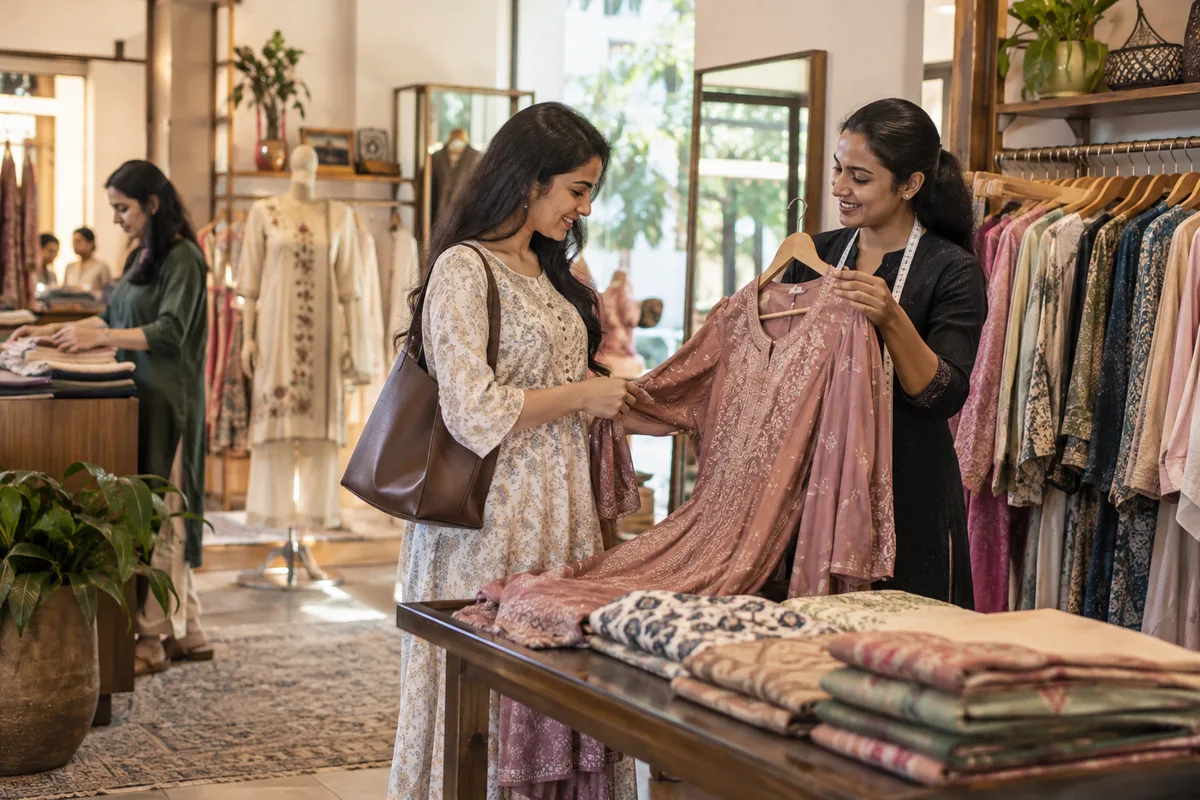
What digital marketing means
Digital marketing is the combined work of search, social media, advertising and website channels running together rather than as separate projects with separate people. GullySales runs these as one connected system so a change in one channel, such as a new offer, is reflected everywhere at once.
Also for online fashion stores
- Buyer personas for online fashion stores
- Lead generation for online fashion stores
- SEO for online fashion stores
- Social media marketing for online fashion stores
- Content marketing for online fashion stores
- CRM for online fashion stores
- Follow-up systems for online fashion stores
- WhatsApp marketing for online fashion stores
Sales and marketing for online fashion stores, the overview.
Last updated 18 Oct 2026.
For online fashion stores
Where it usually goes wrong, and what we would do.
“Cost per order hides the return”
An ad that brings an order for a bodycon dress at a low cost looks good until the parcel comes back. The label should measure cost per kept order, after returns and refused cash on delivery.
“Channels pass the same shopper along”
A buyer may see a Reel, search the label on Google, open a WhatsApp chat and then order on the website. The last click gets the credit, and the Reel that began it gets cut. Reports should show the path.
“Marketplaces and the own store need different roles”
A marketplace listing brings reach at the cost of fees, and the own store brings a list and control. The marketing plan should say which job each does instead of copying the same offer to both.
“Festive seasons reward early preparation”
Collections for weddings and festivals are searched and planned for before the date. A label that prepares pages, creators and stock late spends more per order for less return.
What we do
What we deliver for online fashion stores.
The work available for this need. We agree the deliverables and responsibilities for your engagement in writing.
Channel and margin review
A table showing, for each channel, the ad cost, orders, returns and cash on delivery refusals, using your own figures.
Result: Each channel has a cost per kept order beside it.
Tracking set-up
Store analytics, ad pixels and tagged links checked so orders are credited to the right source.
Result: Test orders appear in analytics and ad accounts.
Budget split proposal
A written suggestion for dividing spend between search, social, creators and retention, with the reasons stated.
Result: You hold a proposal with its reasoning on one page.
Festive and wedding calendar
A plan of the collections, pages, content and stock checks for each season, working back from the date.
Result: The calendar lists tasks with named owners.
Reporting by order
A report of ad cost, orders, returns and refusals by source, set beside the figures taken before work started.
Result: The report ends in cost per kept order.
How the result is measured
- Enquiries across channels
- Cost per enquiry overall
- Channel mix by contribution
Recorded as a baseline before work starts, so every later report has an honest comparison.
Searches your buyers type
What shoppers search for in different moments, and the place each should land.
- Label name with the word reviews
- A new shopper checking trust. Point them to a page of real shopper photos and delivery experiences, collected with consent, not to a rating you wrote yourself.
- Garment name plus an occasion
- Searches such as saree for a reception or kurta for a puja. A collection page for the occasion beats an ad to the home page.
- Label name with size chart
- A shopper already interested and unsure of fit. The size page should be easy to find, and linked from every product page.
- Label name on Instagram
- A shopper who saw a Reel and looks for the profile. The bio, link and highlights should say what you sell and how to order.
- Festival or season collection searches
- Early-season searches for festive wear. The collection page should be live before the demand, with stock and delivery dates stated.
Who it is for
This is written for these online fashion stores.
- Women's ethnic wear labels selling on Instagram
- Western wear and casual wear D2C brands
- Men's fashion brands with their own website
- Kids' clothing and school wear online
- Footwear and accessories sold online
- Sustainable, handloom and craft-led labels
- WhatsApp and Instagram-only boutiques
- Sellers on Myntra, Amazon and Flipkart building their own channel
Not for
It is not the right fit if.
- You do not yet know your return rate by style, so extra advertising would add orders that may come back.
- Your store cannot take payment or show stock reliably, and more visits would only reach a shop that fails at checkout.
Before you decide
Agree the work. Know how to judge it.
Digital marketing for online fashion stores: use these checks to prepare, choose the scope, and review what changes.
Bring the right evidence
Bring a recent won order and an enquiry that went nowhere. Trace how each buyer found you, what they asked, and who handled the next step. A channel list alone will not explain the difference.
Make the scope clear
Choose one offer and one buyer group first. Agree which part needs attention: being found, getting a useful enquiry, or turning an enquiry into an order. Separate recommendations from the work required to carry them out.
Check the work in use
A useful plan names the first change, its owner, the evidence behind it, and the number that will show whether it worked. Ask what has deliberately been left out and why.
Know when to change course
If your team cannot answer the enquiries it already receives, improve that handover before buying more traffic. If the offer itself is unclear, test it with buyers before adding channels.
These are discussion points, not a fixed package. GullySales confirms the deliverables, responsibilities, fee, and term in writing after reading your brief and speaking with you.
How it works
How the digital marketing work runs
The work itself, in order. How an engagement starts, from your brief to a written scope, is set out on our method page.
- 1
Campaign decision
You confirm the business objective and offer with GullySales. We agree which channels belong in this campaign and which requests need separate work.
- 2
Readiness and ownership
Channel owners confirm access, available material, and production responsibilities. Your sales lead confirms who receives responses, and we record the baseline before work starts.
- 3
Message approval
Your nominated approver signs off the campaign idea and message sheet. Questions about product claims or commercial terms go back to your team before production proceeds.
- 4
Production handoff
Each agency, freelancer, or in-house owner receives the approved reference and calendar. Material is checked for format suitability and agreement with the offer.
- 5
Release approval
The response route is tested and outstanding approvals are checked before release. If the offer changes, the revised message goes to every affected channel owner for replacement.
- 6
Sales reconciliation
Campaign responses are compared with the enquiry and order records your team provides. The review identifies missing source information and channel decisions for the next campaign.
Where this fits
Three pieces of sales work, in this order.
This work sits inside sales process design, at stage 0, foundation. The audit comes before it, and sales management keeps it running.
Step 1
Sales audit
Find where deals are being lost and what to fix first.
Start here if you cannot say where orders are lost.
Step 2 · you are here
Sales process design
One written way to sell, from first enquiry to repeat order.
Start here if every salesperson sells differently.
Step 3
Sales management
A target, a review routine and someone who owns the number.
Start here if the team has targets and no routine.
FAQ
Questions owners ask before they call.
Not here? More answers, or ask on WhatsApp.
Which channel should a new label start with?
How do we know if ads are working?
Who owns the ad accounts?
Is it wise to rely on a marketplace and skip our own channels?
How much does it cost?
How long is the contract?
How soon will we see results?
Who will actually do the work?
What do you need from us?
What if we are not happy with the work?
More for online fashion stores
Related work to consider.
Closest to this: strategy and research
Also for online fashion stores
Or start from the overview: sales and marketing for online fashion stores.
Your next practical step
Tell us what you are trying to grow, and we will read it before we call.
Eight short steps, mostly taps. Skip anything you would rather answer on the call.