Organic food stores · Search engine optimisation
The search for organic jaggery shows ten sellers, and yours must look different from the others.
SEO for an organic food store is the work of making your products and your shop appear when a household searches for a specific organic item or for a store nearby. GullySales works on product pages, source stories and the words shoppers type.
Scope, fee, reporting and term are agreed in writing after we have read your brief and spoken to you.
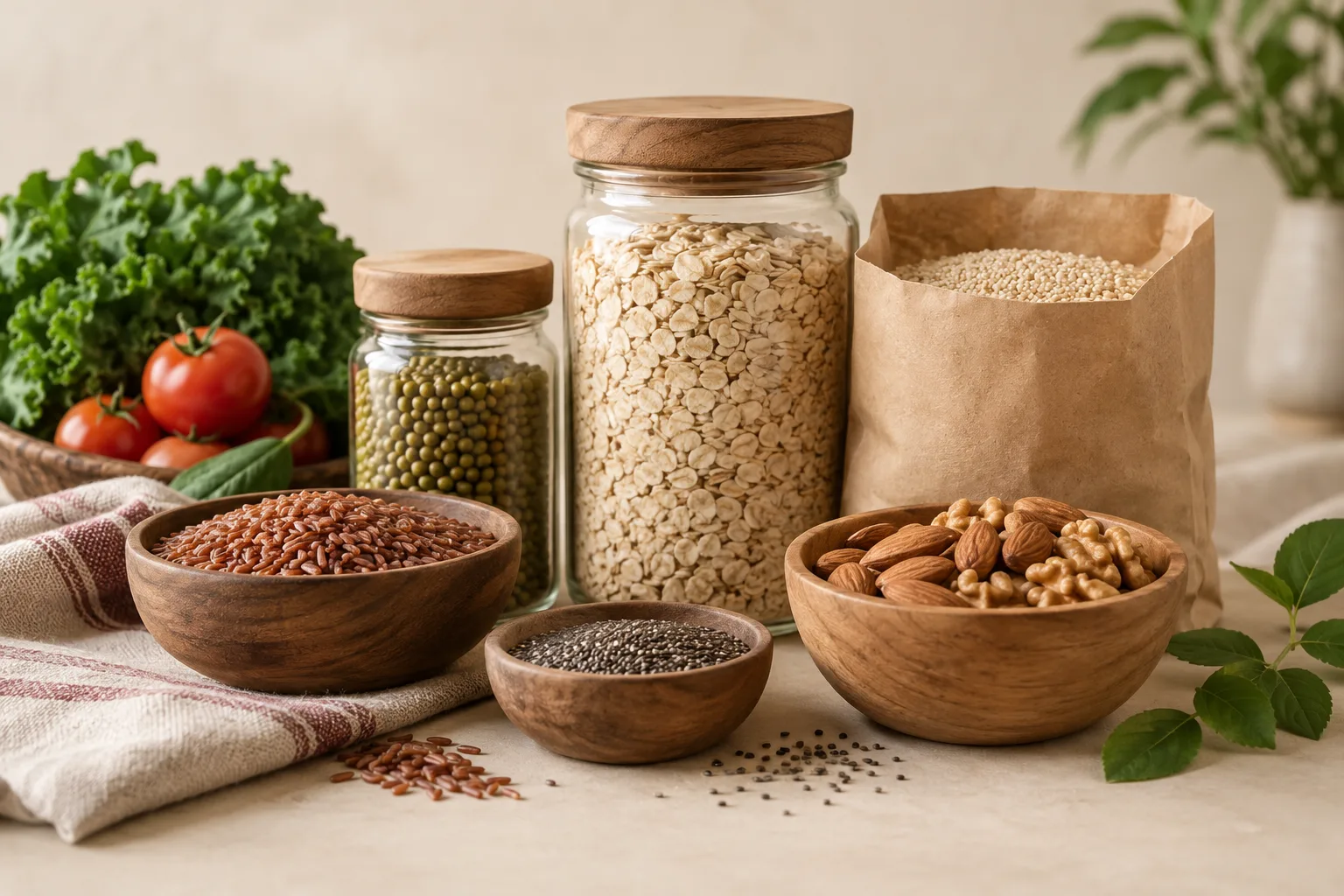
What search engine optimisation means
Search engine optimisation (SEO) is the work of getting your website to appear when a buyer searches Google for what you sell. GullySales builds pages around real search terms, fixes technical issues that block ranking, and tracks which searches actually bring enquiries.
Also for organic food stores
- Local SEO for organic food stores
- Website for organic food stores
- Shopify store design and setup for organic food stores
- Lead generation for organic food stores
- Social media marketing for organic food stores
- Content marketing for organic food stores
- Buyer personas for organic food stores
- CRM for organic food stores
Sales and marketing for organic food stores, the overview.
Last updated 14 Nov 2026.
For organic food stores
Where it usually goes wrong, and what we would do.
“Shoppers search for a thing, not a trade”
A parent types cold-pressed groundnut oil or foxtail millet, rarely the phrase organic store. Pages built around single products meet that search, while a homepage listing everything meets none of them.
“Ten sellers use the same sentence”
Marketplace listings copy one another, down to the photograph. A page that names the farm, the region and the certificate held reads differently from the rest and gives a search engine something unique to show.
“A claim on the page needs a document behind it”
The word organic is covered by labelling and certification rules. Each product page should say only what the supplier's certificate supports, and the team should know which certificate backs which page.
“Thin pages are worse than no pages”
A product page with a title and a price tells the shopper nothing and tells the search engine the same. A short page with the source, the use in the kitchen and the shelf life earns its place.
What we do
What we deliver for organic food stores.
The work available for this need. We agree the deliverables and responsibilities for your engagement in writing.
A list of the searches your shoppers use
Product names, local names for grains and oils, and the questions a household asks before buying.
Result: A written keyword list sorted by product line.
Product pages with sourcing detail
One page per main product naming the supplier or farm group, the place and the certificate, in words the certificate supports.
Result: Each main product has its own page with a named source.
Titles and descriptions rewritten
Page titles that carry the product and the shop's locality in plain words.
Result: Your search listing reads like a shop, not like a catalogue.
Pages that answer kitchen questions
Short guides on cooking millets, storing cold-pressed oil and reading an organic label.
Result: A set of guides linked from the product pages.
A check of what the site already shows
A look at which pages are found today and which searches send visitors.
Result: A baseline you can compare against later.
How the result is measured
- Ranking positions
- Organic traffic
- Enquiries from organic search
Recorded as a baseline before work starts, so every later report has an honest comparison.
Searches your buyers type
What a household types when it looks for an organic staple, and the page that answers it.
- organic jaggery powder near me
- A product page. Name the maker or farm, the form it comes in, pack sizes and price, with a photograph of the pack as sold.
- cold pressed groundnut oil organic
- A product page naming the press and the seed source, with a storage note. Claims about organic status wait for the document.
- foxtail millet how to cook
- A kitchen answer. A short page with soaking, water and one family dish, linking to the packs you sell.
- organic store in your locality
- A local page for the shop with address, hours and the staples on the shelf, the same as the map listing.
- is organic jaggery really organic
- A source page showing who grows it, which document applies to it and where the shopper can see that document.
- organic basket subscription home delivery
- A basket page with what is included, the cut-off for each order and the areas you deliver to.
Who it is for
This is written for these organic food stores.
- Single-shop organic stores in residential localities
- Organic stores that also run a small cafe or a cold-press oil counter
- Farm-direct stores that source from one or two named farmer groups
- Millet and traditional grain shops
- Organic stores that sell by weekly basket or subscription
- Stores inside gated communities that deliver to residents
- Small chains of organic stores in one city
- Organic stores that supply restaurants, cafes and hostels
Before you decide
When this may not be the right fit.
- You have no written source or document for the products, so a page would have nothing to say beyond the word organic
- The shop cannot update stock online, and product pages showing items you no longer hold turn shoppers away
- You expect a page to put the shop first for general words like organic food, which belong to far larger sellers
Before you decide
Agree the work. Know how to judge it.
SEO for organic food stores: use these checks to prepare, choose the scope, and review what changes.
Bring the right evidence
Bring the pages for the products or services you want to sell, the search queries available in your reports, and examples of enquiries from search. Separate branded searches from buyers discovering you for the first time.
Make the scope clear
Agree which pages and technical fixes come first, who can publish changes, and who supplies subject knowledge. Link search work to a relevant enquiry route on each priority page.
Check the work in use
Follow the trail from a relevant query to its landing page and then to an enquiry. Review whether those enquiries fit your offer, alongside indexing and search visibility.
Know when to change course
A ranking movement alone is not a buying signal. If traffic grows but relevant enquiries do not, revisit page intent and the offer before producing more pages.
These are discussion points, not a fixed package. GullySales confirms the deliverables, responsibilities, fee, and term in writing after reading your brief and speaking with you.
Before we start
What to have ready before the work starts.
The records, access and decisions this work needs from organic food stores. Anything missing is noted in the written scope, with who will supply it.
- Login to the website and its search tool
- We need an administrator login for the site and, if it exists, access to Google Search Console. These show what is already ranking. If nobody knows the login, recover it first through the domain owner, or the plan has to start from a new site.
- A clean product list with names
- A sheet with each product's common name, local name, pack size and supplier lets us match searches to stock. It may be rough. If only billing codes exist, we spend the first stretch decoding them, and the pages arrive later.
- Supplier certificates for what you will claim
- Each claim on a page, such as certified or farm-direct, must trace to a document. A scanned copy is acceptable if it is readable. Where a certificate has expired or cannot be found, that product page stays plain until your certifying body confirms the wording.
- Photographs of shelves and packs
- Clear pictures of labels, loose stock and the shop front let product pages show what a household will actually see. Phone photographs in daylight are fine. Without them the pages carry stock images, which weaken trust for a store that sells on honesty.
- The decision on who answers kitchen questions
- Someone in the shop must check every recipe note and cooking method before it is posted. Name that person. When nobody is available, we publish fewer pages, because a wrong method damages a store built on trust.
How it works
How the search engine optimisation work runs
The work itself, in order. How an engagement starts, from your brief to a written scope, is set out on our method page.
- 1
Read the item list shelf by shelf
We start from your product master or a walk along the shelves, writing down each staple by the name a household uses, in English and in the local language. You mark which items you want found, such as foxtail millet or wood-pressed groundnut oil. Items you cannot restock reliably are held back so no page promises stock you do not have.
- 2
Gather the certificates behind each product
You hand over supplier certificates, farmer group records and purchase invoices. We match each to the product page it will support and note which claims the paper backs. A product without paper gets a plain description of what the shop knows. Anything unclear goes to your certifying body before a word is published.
- 3
Check what a shopper types against what you stock
We try the searches a household would try, from a single grain to organic store near me, and read what appears. You confirm which results are your real competitors, including the shop two streets away. The output is a short list of searches ranked by how closely they match your shelves.
- 4
Rewrite titles with the owner at the desk
We sit with you at the website admin screen or share a document, and change page titles and descriptions one at a time. You read each aloud to check that it sounds like your shop and says only what you can document. Nothing is saved until you nod.
- 5
Draft the kitchen answers with the cook at home
For the questions households ask, such as how to soak a millet, we draft pages with whoever in the store knows the answer, such as the owner or a counter regular. You correct the method and the vocabulary. The page goes live only when it reads like something you would say across the counter.
- 6
Compare the search report with enquiries
We look at which searches brought visitors and which of those turned into calls, WhatsApp messages or visits to the shop, against the figures taken before the work began. You tell us what the counter noticed. Pages that bring visitors and no enquiries are rewritten before new ones are added.
Where this fits
Three pieces of sales work, in this order.
This work sits inside sales process design, at stage 1, prospecting and lead generation. The audit comes before it, and sales management keeps it running.
Step 1
Sales audit
Find where deals are being lost and what to fix first.
Start here if you cannot say where orders are lost.
Step 2 · you are here
Sales process design
One written way to sell, from first enquiry to repeat order.
Start here if every salesperson sells differently.
Step 3
Sales management
A target, a review routine and someone who owns the number.
Start here if the team has targets and no routine.
FAQ
Questions owners ask before they call.
Not here? More answers, or ask on WhatsApp.
Can we say certified organic in the page title?
Can the shop show up in search with only a Maps listing?
Will SEO put us first on Google?
Can a product page quote a certificate?
Do we need to change our website platform for SEO?
What happens to the content our current agency wrote?
How much does it cost?
How long is the contract?
How soon will we see results?
Who will actually do the work?
More for organic food stores
Related work to consider.
Closest to this: search and visibility
Also for organic food stores
Or start from the overview: sales and marketing for organic food stores.
Your next practical step
Tell us what you are trying to grow, and we will read it before we call.
Eight short steps, mostly taps. Skip anything you would rather answer on the call.