How people choose in this industry
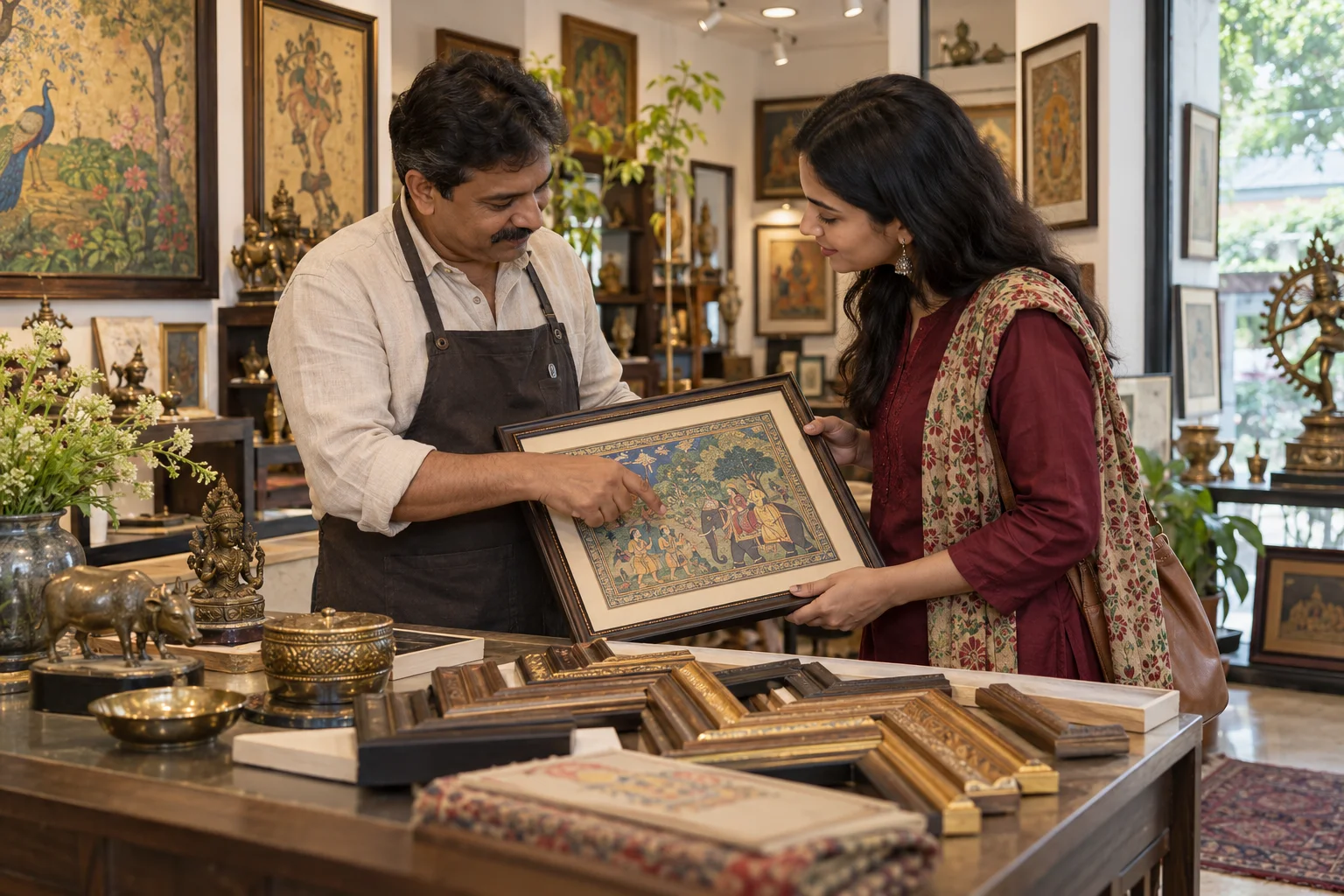
Walk-in framing is local. A family frames a wedding photograph, a graduate frames a degree before an interview, a new flat needs six prints on one wall. They search for a framing shop near them on Google Maps, look at the photographs of finished work on the Business Profile, and message. Distance matters because nobody wants to carry a large glass pane across a city.
Trade buyers choose differently. An interior designer in Indiranagar or Anna Nagar wants a framer who delivers to the site, matches the colours in the moodboard, and can do twenty frames in one finish without the fifteenth looking different. A gallery or an artist looks for conservation-grade board and a framer who does not crop the edge of the canvas. These buyers repeat, and they recommend each other.
Prices are compared on the first message, but the decision turns on trust with something irreplaceable: a hand-painted portrait, a jersey signed by a cricketer, a letter. A shop that shows how it handles such pieces wins the order even when it quotes higher.
The decision before implementation
The owner approves segment priorities and commercial boundaries before the team changes its approach.
Existing industry priorities to review
- Custom framing for photographs and portraits
- Certificate and degree framing, ready in a single visit
- Jersey and memorabilia shadow boxes
- Bulk framing for interior designers and hotel projects
- Canvas stretching and gallery-style framing for artists
These describe the industry's wider priorities. The written scope identifies which this service will address.