Tile, flooring and bathware dealers · CRM
Write down the visitor before the visitor reaches the next showroom.
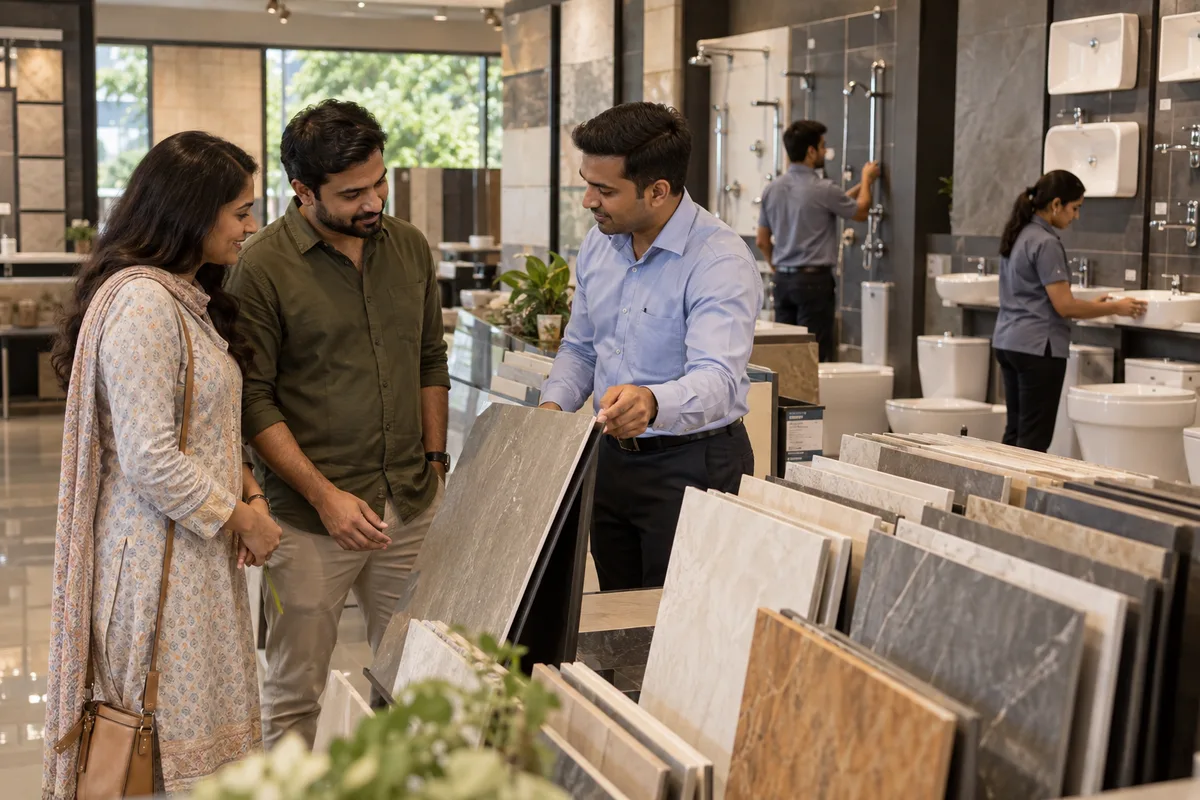
A CRM for a tile and bathware dealer is the single record of every visiting family, mason, designer and builder, the rooms quoted and what happened next. GullySales works on setting up a record your floor staff will fill in at the counter and your owner can read without a spreadsheet hunt.
Scope, fee, reporting and term are agreed in writing after we have read your brief and spoken to you.
What CRM means
A CRM is the record where every enquiry, call and quote is kept against a customer, replacing separate notebooks, spreadsheets and memory. GullySales sets up or cleans an existing CRM and reports from it by enquiry outcome rather than by activity logged.
Also for tile, flooring and bathware dealers
- Lead generation for tile, flooring and bathware dealers
- Follow-up systems for tile and bathware dealers
- SEO for tile, flooring and bathware dealers
- PPC for tile, flooring and bathware dealers
- Digital marketing for tile, flooring and bathware dealers
- Reputation management for tile, flooring and bathware dealers
- Local SEO for tile, flooring and bathware dealers
- Branding for tile, flooring and bathware dealers
Sales and marketing for tile, flooring and bathware dealers, the overview.
Last updated 5 Oct 2026.
For tile, flooring and bathware dealers
Where it usually goes wrong, and what we would do.
“The quotation lives in a notebook and a salesperson's memory”
A handwritten quote with a mobile number scribbled on the corner is the whole customer record. When that salesperson is off for a day, nobody can say which family was promised a rate on which tile.
“One home produces several orders over the months of a build”
Floor tiles come first, then bathroom tiles, then sanitaryware, then wooden flooring for a bedroom. A showroom that remembers the first visit can sell the later rooms; one that does not starts from nothing every time.
“The referrer disappears from the record”
A mason brings in a family, the family buys, and the sale is logged under the family's name alone. Without the mason on the record, the dealer cannot see which trades send the best orders or thank them.
“Builder and retail customers need different views”
A builder with phased deliveries and a credit arrangement is tracked in stages. A family that came in once is tracked by their next decision. One flat list of names cannot show both without becoming unreadable.
What we do
What we deliver for tile, flooring and bathware dealers.
Every deliverable, what it covers for you, and the result it is there to produce. Nothing here is an extra.
A visitor and quotation record sized for the counter
Fields for name, number, rooms, tiles shown, quote given and referrer, designed so a salesperson can fill it in on a phone while the family is still in the showroom.
Result: Every walk-in has a record before they leave.
Referrer field on every entry
A required field for the mason, plumber, contractor, designer or walk-in source, with a short list so entries stay consistent.
Result: You can see which trades send orders.
Separate pipelines for families and projects
A stage list for a family (visited, quoted, sample taken, ordered, delivered) and another for a builder (rate agreed, phase one, phase two, balance).
Result: A project is not lost in a list of homes.
Next-room reminders after delivery
A prompt on the record to ask about the next room after an order is delivered and the first one is settled.
Result: A completed floor leads to a conversation about the bathroom.
A short owner's view of quotes open and orders won
A single page showing quotes still open, orders confirmed and which salesperson holds each one.
Result: The owner can ask about a quote by name.
How the result is measured
- Enquiries logged in the CRM
- Data completeness
- Reports generated from CRM data
Recorded as a baseline before work starts, so every later report has an honest comparison.
Fields worth keeping
The fields a tile showroom keeps on each visitor, quotation and order.
- Room and area being tiled
- Filled in by the salesperson at the display. It lets the quote be built room by room and tells the follow-up call which room to ask about.
- Tile, size and finish shortlisted
- Entered after the family chooses. It lets the salesperson check the stock, hold a lot and remember what the family liked when they return.
- Decision-maker and who else is involved
- The couple, the mason or the designer, as named by the family. It shows who must be called before the order is confirmed.
- Referrer
- The mason, designer or relative who sent the family. Filled in at the first visit. It lets the showroom thank the referrer and see who sends the real orders.
- Delivery site and mason's start date
- Added when the order is placed. It lets the showroom plan the lorry for the day laying begins and keeps lots matched across deliveries.
Who it is for
This is written for these tile, flooring and bathware dealers.
- Multi-brand tile and sanitaryware showrooms
- Single-brand exclusive tile galleries
- Bathware, CP fittings and bath accessories dealers
- Wooden, laminate and vinyl flooring retailers
- Granite, marble and natural stone dealers
- Tile distributors supplying builders and sub-dealers
- Premium imported tile and bathroom studios
- Flooring retail and installation businesses
Not for
It is not the right fit if.
- Salespeople keep their own notebooks and customers' details leave with them, so the first task is agreeing one place to write, not choosing a system.
- You take only a handful of quotations a month from regular customers whom the owner knows by name, and a record would add typing.
How it works
How the CRM work runs
The work itself, in order. How an engagement starts, from your brief to a written scope, is set out on our method page.
- 1
Map the sales process
We sit with the people who sell and write down how a deal moves from enquiry to payment, including where it stalls.
- 2
Agree stages, fields and owners
Each stage gets a name your team already uses and a proof that the deal has left it. We agree which fields are required at which stage, and who may change what.
- 3
Build on a copy
Pipeline, fields and views are built on a trial copy where the CRM offers one, or in a separate pipeline where the plan allows. Live work stays untouched.
- 4
Connect channels, then switch on automations
Channels are connected first. Each automation is then switched on separately, so a misfiring rule is easy to find.
- 5
Test with real deals
The people who will use the CRM run open deals through it. Gaps are fixed before the whole team switches over.
- 6
Switch over and trim
Once real use shows which fields stay empty and which stages nobody uses, those are cut and the handover record is updated.
Where this fits
Three pieces of sales work, in this order.
This work sits inside sales management. A target, a review routine and someone who owns the number.
Step 1
Sales audit
Find where deals are being lost and what to fix first.
Start here if you cannot say where orders are lost.
Step 2
Sales process design
One written way to sell, from first enquiry to repeat order.
Start here if every salesperson sells differently.
Step 3 · you are here
Sales management
A target, a review routine and someone who owns the number.
Start here if the team has targets and no routine.
FAQ
Questions owners ask before they call.
Not here? More answers, or ask on WhatsApp.
Do we need paid software to start?
Our salespeople will not enter data. What then?
Can the CRM hold dealer and sub-dealer accounts too?
What if a family and their mason both visit separately?
How much does it cost?
How long is the contract?
How soon will we see results?
Who will actually do the work?
What do you need from us?
What if we are not happy with the work?
From the blog
Further reading for tile, flooring and bathware dealers.
 5 min read · 6 Oct 2026Why homeowners pick one quote out of threeInterior, kitchen, window, tile and AC buyers collect three quotes and choose the firm they understood and heard back from. Here is what they compare and where the quote loses.
 7 min read · 21 Sept 2026How to advertise to interior designersA designer does not buy your product. They specify it, and somebody else pays for it. That one fact changes what you advertise, when, and what you are actually asking for.
 8 min read · 21 Sept 2026How to advertise to contractorsA contractor is on site, on a phone, with one hand free. Work out first whether your product is chosen by him or by the person paying him, because that decides everything.
More for tile, flooring and bathware dealers
Everything else we would do for you.
Closest to this: leads and follow-up
Also for tile, flooring and bathware dealers
- SEO for tile, flooring and bathware dealers
- PPC for tile, flooring and bathware dealers
- Digital marketing for tile, flooring and bathware dealers
- Reputation management for tile, flooring and bathware dealers
- Local SEO for tile, flooring and bathware dealers
- Branding for tile, flooring and bathware dealers
Or start from the overview: sales and marketing for tile, flooring and bathware dealers.
Your next practical step
Tell us what you are trying to grow, and we will read it before we call.
Eight short steps, mostly taps. Skip anything you would rather answer on the call.