Water cooler and dispenser dealers · Lead generation
A cooler enquiry is worth a site visit when it names the building, the headcount and who signs.
Lead generation for a water cooler dealer is the work of getting schools, offices, factories and public bodies to name the site, the number of users and the person who approves before the quotation is prepared. GullySales works on the sources that bring those details and records which source each enquiry came from.
Scope, fee, reporting and term are agreed in writing after we have read your brief and spoken to you.
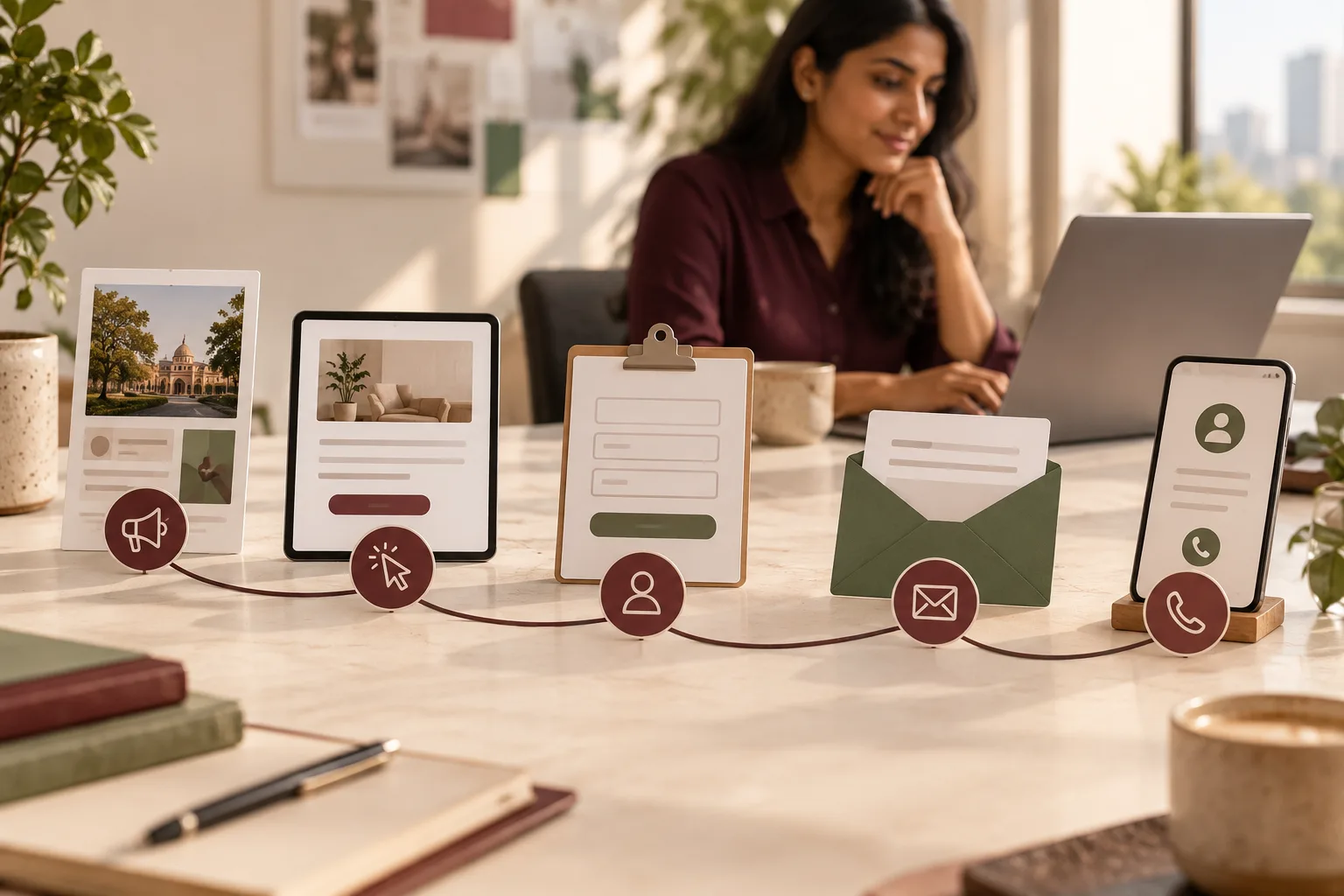
What lead generation means
Lead generation is the combined work of every channel that brings in a new enquiry, whether from search, adverts, referrals or a stall at an exhibition. GullySales runs these channels together and reports the number of enquiries each one produced, not the activity behind it.
Also for water cooler and dispenser dealers
- CRM for water cooler and dispenser dealers
- Follow-up systems for water cooler and dispenser dealers
- SEO for water cooler and dispenser dealers
- Local SEO for water cooler and dispenser dealers
- Social media marketing for water cooler and dispenser dealers
- Content marketing for water cooler and dispenser dealers
- Buyer personas for water cooler and dispenser dealers
- WhatsApp marketing for water cooler and dispenser dealers
Sales and marketing for water cooler and dispenser dealers, the overview.
Plan the next part of the work
Last updated 21 Nov 2026.
For water cooler and dispenser dealers
Where it usually goes wrong, and what we would do.
“A request for rates is not yet a lead”
A clerk asks for the rate of a 40 litre cooler and the same message goes to six dealers. Until it carries the site, the users and the approver, the quotation is a number in a pile.
“Each buyer group enters through a different door”
A school trustee, a factory admin head and a station contractor do not read the same page or answer the same questions. One form for all of them loses the contractor first.
“The best leads come from people who already buy”
A facilities manager moved from one plant to another asks the dealer they trust. Nobody noted the move or sent a message to the new address.
“Referrals arrive and the source is lost”
An administrator tells a neighbouring school about you, and the call comes in as if from nowhere. Without a note, the shop cannot say which institution deserves thanks.
What we do
What we deliver for water cooler and dispenser dealers.
The work available for this need. We agree the deliverables and responsibilities for your engagement in writing.
An enquiry form built around the site
Questions for institution, location, number of users, floors and taps wanted, and whether service is needed, used on the website and WhatsApp.
Result: Every enquiry arrives with the details a quotation needs.
Separate routes for school, office, factory and public place
Four short entry points, each with its own message and its own person who replies.
Result: You can count enquiries by buyer type.
A target list for your city
Schools, colleges, industrial estates and offices in your service area, with the role to contact at each.
Result: A named call list to work through.
Source tag on every enquiry
A single field recording where the buyer heard of you, including the institution that referred them.
Result: A count of enquiries by source.
How the result is measured
- Relevant enquiries by source
- Duplicate and unsuitable enquiries
- Time to the first response
- Accepted enquiries reaching an agreed next step
Recorded as a baseline before work starts, so every later report has an honest comparison.
Where enquiries come from
The ways a water cooler enquiry reaches a dealer, and what to record on each.
- Request for quotation on email or WhatsApp
- Record the institution, the number of users and the approver before replying. Send the specification and the site visit offer along with the price.
- IndiaMART or JustDial enquiry
- Log the buyer type, the units asked for and the delivery site. Reply with the sizing sheet and note which directory it came from.
- Call from a school administrator
- Write the school name, the term date and the number of corridors. Offer a visit before the session begins.
- Factory admin or HR enquiry
- Record the plant, the shift pattern and the number of drinking points. Ask who maintains the current units.
- Contractor for a station or public place
- Note the project, the authority and the documents asked for. Check the portal's current rules before promising eligibility.
- Referral from a current client
- Record the referring institution and thank them. Send the new contact the same sizing sheet the first one received.
Who it is for
This is written for these water cooler and dispenser dealers.
- Commercial water cooler suppliers for schools and colleges
- Dispenser dealers for offices and bank branches
- Suppliers of coolers with filtration for factories and industrial estates
- Water cooler dealers for railway and bus stations and public places
- Hospital and hostel drinking-water point suppliers
- Bottle-fed and bottle-free dispenser dealers
- Water ATM and community drinking point installers
- Service-only companies with annual maintenance contracts
Before you decide
When this may not be the right fit.
- You have no service team or visit plan, so more enquiries would turn into orders you cannot maintain.
- Your units and rates are not settled for the year, and a form would collect requests you cannot price.
Before you decide
Agree the work. Know how to judge it.
Lead generation for water cooler and dispenser dealers: use these checks to prepare, choose the scope, and review what changes.
Bring the right evidence
Define the organisations or buyers you can serve and the reasons they would consider a conversation. Bring examples of accepted and rejected prospects so the selection rule is visible.
Make the scope clear
Agree the research sources, contact approach, qualification rules, and handover. Clarify which meetings count as accepted and what happens to replies that are not ready to buy.
Check the work in use
Review why a prospect was selected and what was learned from the response. Count held, relevant conversations separately from contacts found, messages sent, or meetings booked.
Know when to change course
If the same objection appears repeatedly, adjust the offer or buyer group before increasing outreach. Respect a request to stop contact and keep the exclusion in the record.
These are discussion points, not a fixed package. GullySales confirms the deliverables, responsibilities, fee, and term in writing after reading your brief and speaking with you.
Before we start
What to have ready before the work starts.
The records, access and decisions this work needs from water cooler and dispenser dealers. Anything missing is noted in the written scope, with who will supply it.
- Ten recent quotations, won and lost
- We read these to learn what a good enquiry looked like by the time it reached a quotation. Photographs or scans are fine, with the buyer's name kept. Mark which ones became orders. If you cannot find them, we start from your engineer's memory, which makes the enquiry form less accurate until real quotations are added later.
- A sizing note from your engineer
- A single page saying how the engineer decides on capacity for a school, an office and a plant is enough. It need not be formal. This note produces the questions on the form. Without it, the form asks generic questions and your team still phones back to get the headcount.
- The person who owns every enquiry reply
- Someone must be responsible for reading each enquiry and replying on the same working day. Tell us who covers when they are on leave. If nobody is named, every route we build leaks, because a good enquiry waits in an inbox and the buyer asks the next dealer.
- Access to the directory and website accounts
- We need login or manager access to each place enquiries arrive, including any directory listing and the website form. Read access is acceptable at first. Where access is held by an old vendor, we plan around it and the source tags for that route stay incomplete until you recover control.
- A list of institutions you will not serve
- Tell us the places beyond your service reach or below the order size you accept, such as a tiny shop wanting one unit far from your technician. The list stops the target work from chasing buyers you would turn away, and it keeps the form from promising a visit you cannot make.
How it works
How the lead generation work runs
The work itself, in order. How an engagement starts, from your brief to a written scope, is set out on our method page.
- 1
Read ten past quotations for the site details
We start with the quotations you have already sent to schools, offices and plants, and mark which ones named the building, the number of users and the signing person before the price was asked for. The gap between those quotations and the ones that came blind shows where enquiries lose information. You tell us which of the old buyers were good and which wasted a site visit, and we write that down as the standard a new enquiry must meet.
- 2
Sort the enquiries by the door they used
Next we list every route by which a request reached you: the directory listing, a call from a contractor, a school office, a repeat buyer and a walk-in. Each is tagged by buyer group. You confirm which routes your coordinator can actually answer on the same working day, because a route nobody covers is dropped from the plan rather than advertised. This leaves a short list of doors we will work on.
- 3
Draft the sizing questions with your engineer
We sit with the person who sizes your units and ask what they need to know before they can recommend a tank, a cooling capacity and a number of taps. Those questions become the form and the phone script. You decide which answers are compulsory and which can wait for the visit. When the step is done, a stranger can fill the form without a phone call and your engineer can read it without calling back.
- 4
Build the target list from your own ground
We assemble schools, offices, bank branches, plants and public premises near you, using public sources and your own visit records, and mark the ones you already supply or service. Existing buyers are listed first because they know the unit and trust the service. You strike off any institution you will not serve, such as a site too far for a technician to reach, so the list matches what you can actually support.
- 5
Send one test enquiry down each route
Before anything is promoted, we send a test enquiry through every route as an administrator, a facilities manager and a contractor would. We watch who in your office receives it, how it is logged, how long the reply sits unanswered, and whether the source tag survives. Anything that is lost or retyped on the way is repaired first. You see the log with your own eyes and sign off the routes that worked.
- 6
Compare tagged enquiries with the recorded baseline
Once the routes are live we read the source tags against the count of enquiries, site visits and quotations you recorded before we began. We separate enquiries that named a site and a signer from those that only asked for rates. You decide which routes to keep feeding and which to drop, using your own conversion from visit to order. We never promise a number of enquiries, only that each one can now be traced.
Where this fits
Three pieces of sales work, in this order.
This work sits inside sales process design, at stage 1, prospecting and lead generation. The audit comes before it, and sales management keeps it running.
Step 1
Sales audit
Find where deals are being lost and what to fix first.
Start here if you cannot say where orders are lost.
Step 2 · you are here
Sales process design
One written way to sell, from first enquiry to repeat order.
Start here if every salesperson sells differently.
Step 3
Sales management
A target, a review routine and someone who owns the number.
Start here if the team has targets and no routine.
FAQ
Questions owners ask before they call.
Not here? More answers, or ask on WhatsApp.
Are directory enquiries from IndiaMART worth answering?
How do we find the person who decides in a school or factory?
Should we pay for lists of schools and offices?
What counts as a qualified enquiry?
Who answers the enquiry first, GullySales or our own team?
What do we do with enquiries that came before this work started?
How much does it cost?
How long is the contract?
How soon will we see results?
Who will actually do the work?
More for water cooler and dispenser dealers
Related work to consider.
Closest to this: leads and follow-up
Also for water cooler and dispenser dealers
- SEO for water cooler and dispenser dealers
- Local SEO for water cooler and dispenser dealers
- Social media marketing for water cooler and dispenser dealers
- Content marketing for water cooler and dispenser dealers
- Buyer personas for water cooler and dispenser dealers
- WhatsApp marketing for water cooler and dispenser dealers
Or start from the overview: sales and marketing for water cooler and dispenser dealers.
Your next practical step
Tell us what you are trying to grow, and we will read it before we call.
Eight short steps, mostly taps. Skip anything you would rather answer on the call.