Telecom and broadband providers · Lead generation
Capture every household and office that asks for a connection, and record the address.
Lead generation for a broadband provider is the work of bringing in enquiries from households and businesses, and recording each with the address and the source. GullySales sets up the sources, the replies and the sheet, so the sales team knows who is feasible and who to call first.
Scope, fee, reporting and term are agreed in writing after we have read your brief and spoken to you.
What lead generation means
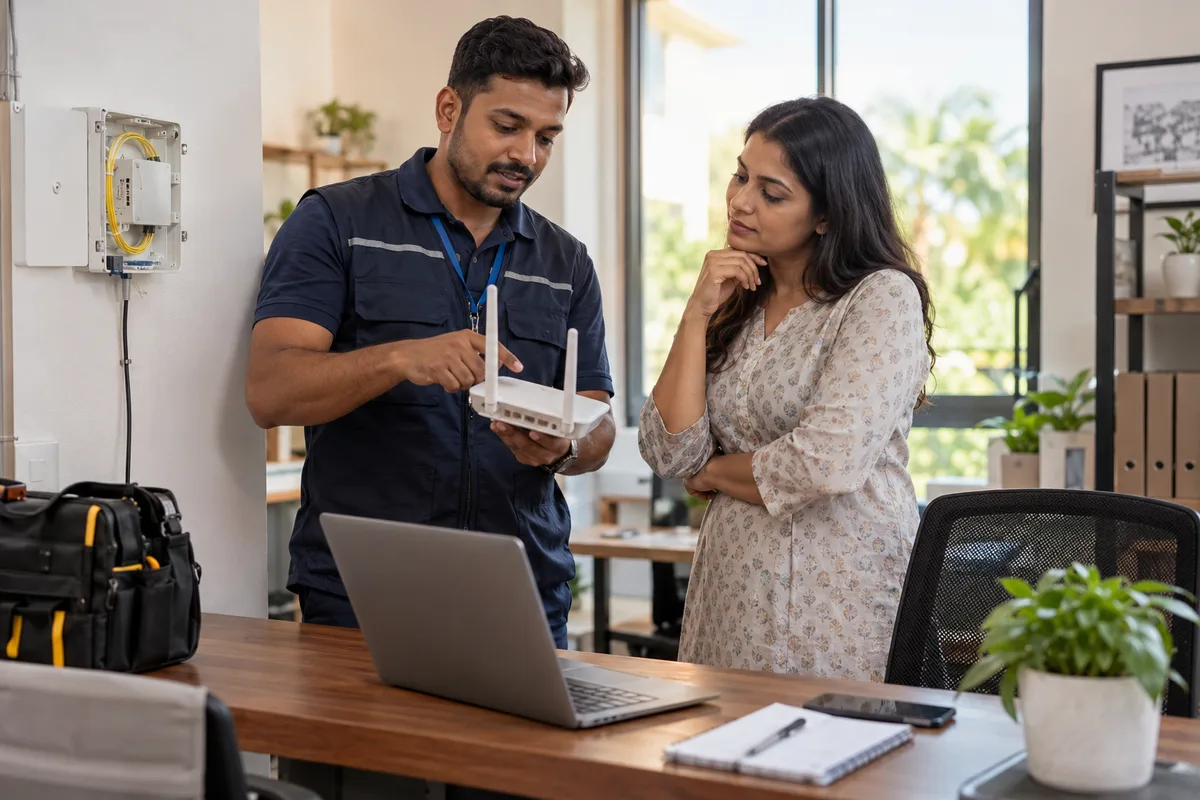
Lead generation is the combined work of every channel that brings in a new enquiry, whether from search, adverts, referrals or a stall at an exhibition. GullySales runs these channels together and reports the number of enquiries each one produced, not the activity behind it.
Also for telecom and broadband providers
- CRM for telecom and broadband providers
- Follow-up systems for broadband providers
- SEO for telecom and broadband providers
- PPC ads for telecom and broadband providers
- Content marketing for telecom and broadband providers
- Email marketing for telecom and broadband providers
- Sales process for telecom and broadband providers
- Buyer persona for telecom and broadband providers
Sales and marketing for telecom and broadband providers, the overview.
Last updated 11 Oct 2026.
For telecom and broadband providers
Where it usually goes wrong, and what we would do.
“Enquiries arrive on many numbers”
Calls, WhatsApp, forms and field staff all collect leads, and none of them go into one list.
“Address is not captured”
Without the address, no one can check feasibility, and the lead is called twice for the same question.
“Door-to-door visits leave no record”
A field executive speaks to twenty flats and writes nothing down.
What we do
What we deliver for telecom and broadband providers.
Every deliverable, what it covers for you, and the result it is there to produce. Nothing here is an extra.
One enquiry sheet for all sources
Every call, message, form, flyer and field visit entered with the address, source and owner.
Result: The team works from a single list.
A first reply by enquiry type
A message for homes, another for offices and a third for areas not covered.
Result: Each person gets a relevant answer.
A feasibility step
A rule on who checks, how, and by when the answer reaches the buyer.
Result: Buyers are not left waiting.
Field and society lead capture
A simple form or QR code for gate flyers, camps and society visits.
Result: Offline conversations become leads.
Referral capture
A way for existing customers to give a neighbour's name and flat.
Result: Neighbours are reached with a recommendation.
Report from lead to installation
Enquiries, feasible leads, quotations, installations and drop-outs by source.
Result: You see which source brings connections.
How the result is measured
- Enquiries generated
- Cost per enquiry
- Enquiries by source
Recorded as a baseline before work starts, so every later report has an honest comparison.
Where enquiries come from
These are the real sources for a broadband provider, and what to record when each arrives.
- Call to the sales number
- Ask for the address, flat or house number, and whether it is for home or office. Enter it in the sheet before the call ends, and say when the feasibility result will be shared.
- WhatsApp message from a neighbour or society group
- Reply with the address question first. Save the number, the society name and the person who recommended you, if any.
- Website form or Business Profile call
- Match the form fields to your sheet, with a required address. Mark the source as website or profile, and call the person the same day.
- Field executive and society visits
- Give each executive a printed or digital form for flat, name, number and current provider. Enter the data in the sheet the same evening.
- Customer referral
- Record who gave the name and the flat. When the connection is done, tell the customer a neighbour was served. Do not promise a reward in the form.
- A lead you should not chase
- An address outside your coverage, a request for a free connection or a student looking for a job. Reply once with a polite note, save the address for expansion planning and mark it not serviceable.
Who it is for
This is written for these telecom and broadband providers.
- Local fibre broadband providers
- Cable TV and broadband operators
- ISP franchise partners and sub-operators
- Leased line and enterprise connectivity resellers
- Wi-Fi providers for PGs, hostels and coworking spaces
- Providers serving apartments and gated communities
- Providers selling TV and OTT bundles with broadband
Not for
It is not the right fit if.
- Your team cannot check an address on the day it is given, so more enquiries would only lengthen the pending list.
- Field executives and the office keep separate lists and will not merge them, so a shared sheet would hold half the picture.
- You plan to buy phone numbers from a data seller, which brings people who never asked for a connection.
How it works
How the lead generation work runs
The work itself, in order. How an engagement starts, from your brief to a written scope, is set out on our method page.
- 1
Understand your capacity
We ask how many enquiries your team can answer well, who answers after hours, and what a good enquiry looks like. Without this, the system fills a funnel nobody is watching.
- 2
Audit current sources
We read your call log, WhatsApp chats, enquiry sheet and platform dashboards. The baseline is recorded: enquiries by source, reply time, conversion and cost per order.
- 3
Strategise the channel mix
Search and maps are chosen for people ready to buy, ads for people who are not yet looking, and content and referrals for trust.
- 4
Implement capture and follow-up
Pages, forms, tags, the lead record and the first-reply message are built and tested end to end. We submit test enquiries ourselves before any media money is spent.
- 5
Measure and optimise
Enquiries are traced to source and judged by what became orders, not by volume alone. Channels that fill the sheet with poor enquiries are cut back. How often you are reported to is agreed in writing.
Where this fits
Three pieces of sales work, in this order.
This work sits inside sales process design, at stage 1, prospecting and lead generation. The audit comes before it, and sales management keeps it running.
Step 1
Sales audit
Find where deals are being lost and what to fix first.
Start here if you cannot say where orders are lost.
Step 2 · you are here
Sales process design
One written way to sell, from first enquiry to repeat order.
Start here if every salesperson sells differently.
Step 3
Sales management
A target, a review routine and someone who owns the number.
Start here if the team has targets and no routine.
FAQ
Questions owners ask before they call.
Not here? More answers, or ask on WhatsApp.
Should we buy leads from a data seller?
How do we handle duplicates?
What counts as a qualified lead for us?
Do offline sources count in the report?
How much does it cost?
How long is the contract?
How soon will we see results?
Who will actually do the work?
What do you need from us?
What if we are not happy with the work?
More for telecom and broadband providers
Everything else we would do for you.
Closest to this: leads and follow-up
Also for telecom and broadband providers
Or start from the overview: sales and marketing for telecom and broadband providers.
Your next practical step
Tell us what you are trying to grow, and we will read it before we call.
Eight short steps, mostly taps. Skip anything you would rather answer on the call.