Telecom equipment manufacturers · Lead generation
Find the engineer who will run your sample, not only the purchase head.
Lead generation for a telecom equipment manufacturer means finding the ISPs, integrators and operators who are about to buy and the technical people who test. GullySales works on a named list of buyers, outreach written for each role, and a record of where every lead stands.
Scope, fee, reporting and term are agreed in writing after we have read your brief and spoken to you.
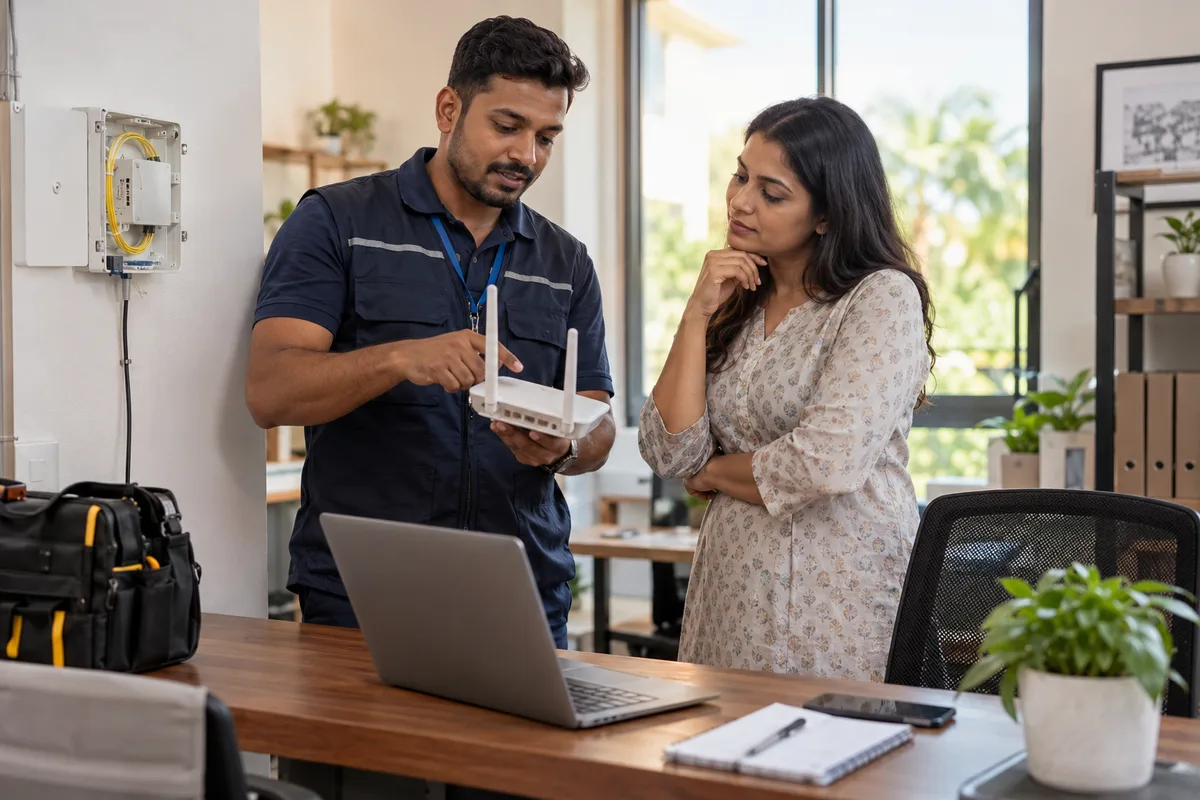
What lead generation means
Lead generation is the combined work of every channel that brings in a new enquiry, whether from search, adverts, referrals or a stall at an exhibition. GullySales runs these channels together and reports the number of enquiries each one produced, not the activity behind it.
Also for telecom equipment manufacturers
- CRM for telecom equipment manufacturers
- Follow-up systems for telecom equipment manufacturers
- SEO for telecom equipment manufacturers
- Social media marketing for telecom equipment manufacturers
- Content marketing for telecom equipment manufacturers
- Buyer personas for telecom equipment manufacturers
- WhatsApp marketing for telecom equipment manufacturers
- Digital marketing for telecom equipment manufacturers
Sales and marketing for telecom equipment manufacturers, the overview.
Last updated 18 Oct 2026.
For telecom equipment manufacturers
Where it usually goes wrong, and what we would do.
“The tester and the signer are two different people”
A purchase head signs the order, but a network engineer decides whether your unit passes the trial. A lead list that holds only purchase contacts reaches the person who waits for a verdict and never the one who writes it.
“Rollouts create the buying window”
A regional ISP buys in lots when it expands into a new town or replaces a failing batch. Outreach that arrives after the equipment is chosen meets a closed door, so the list should note which buyers are planning a rollout.
“Integrators carry your product into projects you never see”
A system integrator bidding for a network job picks the products it already knows. If your range is not in its quote format, a project can finish with a rival's name on every box.
“Event cards go cold in a drawer”
A telecom exhibition produces a stack of contacts, and each one asked about a particular product. Without a record of that product and the next step, the follow-up becomes a generic mail that nobody answers.
What we do
What we deliver for telecom equipment manufacturers.
Every deliverable, what it covers for you, and the result it is there to produce. Nothing here is an extra.
A target buyer list
Regional ISPs, cable operators, integrators and contractors in your chosen states, each with the technical and purchase contact and the products that fit them.
Result: Your team can see which buyers are on the list and who in each firm is the first call.
Role-specific outreach
One message for the engineer who tests and another for the purchase head who signs, each built on a datasheet and an offer of a sample.
Result: Both contacts at a buyer receive a note written for their part of the decision.
A lead record with a product and a next step
Every enquiry logged against the product asked about, the source, the owner on your side and the next action.
Result: No lead sits without a name beside it and a date to act.
Event and association follow-up
A plan for each contact collected at telecom events or through trade bodies, based on what they asked about.
Result: Each card from a stall has a follow-up that mentions the product they stopped at.
Source review
A read of which sources produced samples requested and orders placed, not only enquiries.
Result: You can see which source brings buyers who run trials and which brings only questions.
How the result is measured
- Enquiries generated
- Cost per enquiry
- Enquiries by source
Recorded as a baseline before work starts, so every later report has an honest comparison.
What to capture or send
What to record when a buyer or tester first touches your product.
- Role of the contact
- Tester, procurement, owner or integrator. The salesperson sets it at first contact, because each role needs a different next message.
- Product and model asked about
- The exact ONT, router or power unit named. It lets the right engineer reply and shows which models draw interest.
- Sample requested or sent
- Date, serial numbers and the name of the person who will test. A sample without an owner on the buyer's side is a cost with no follow-up.
- Approval or datasheet asked for
- A note of which papers the buyer wanted. If the same document is asked for each time, it belongs on the site.
- Rollout or tender the product is for
- The project, circle or network the buyer names. It marks the buying window and tells the team when the next call matters.
- Where the contact came from
- An event, an integrator, a search or an introduction. Over time it shows which routes bring buyers who test and not just ask.
Who it is for
This is written for these telecom equipment manufacturers.
- Optical networking equipment makers for ONTs, OLTs and media converters
- Router, switch and customer-premises equipment manufacturers
- Antenna, RF and wireless link equipment makers
- Telecom power system and battery backup manufacturers
- Fibre cable, closure and passive component makers
- Tower accessories and outdoor enclosure manufacturers
- Telecom test and measurement instrument makers
- Contract manufacturers building telecom products for other brands
Not for
It is not the right fit if.
- You have no engineer free to answer technical questions, so more enquiries would wait for a reply that never comes.
- Your plant is committed to one operator's order and has no capacity to take sample requests from new buyers.
- You have no datasheet or test papers in a shareable form, and outreach would start with a request you cannot meet.
How it works
How the lead generation work runs
The work itself, in order. How an engagement starts, from your brief to a written scope, is set out on our method page.
- 1
Understand your capacity
We ask how many enquiries your team can answer well, who answers after hours, and what a good enquiry looks like. Without this, the system fills a funnel nobody is watching.
- 2
Audit current sources
We read your call log, WhatsApp chats, enquiry sheet and platform dashboards. The baseline is recorded: enquiries by source, reply time, conversion and cost per order.
- 3
Strategise the channel mix
Search and maps are chosen for people ready to buy, ads for people who are not yet looking, and content and referrals for trust.
- 4
Implement capture and follow-up
Pages, forms, tags, the lead record and the first-reply message are built and tested end to end. We submit test enquiries ourselves before any media money is spent.
- 5
Measure and optimise
Enquiries are traced to source and judged by what became orders, not by volume alone. Channels that fill the sheet with poor enquiries are cut back. How often you are reported to is agreed in writing.
Where this fits
Three pieces of sales work, in this order.
This work sits inside sales process design, at stage 1, prospecting and lead generation. The audit comes before it, and sales management keeps it running.
Step 1
Sales audit
Find where deals are being lost and what to fix first.
Start here if you cannot say where orders are lost.
Step 2 · you are here
Sales process design
One written way to sell, from first enquiry to repeat order.
Start here if every salesperson sells differently.
Step 3
Sales management
A target, a review routine and someone who owns the number.
Start here if the team has targets and no routine.
FAQ
Questions owners ask before they call.
Not here? More answers, or ask on WhatsApp.
Should we chase operators or smaller ISPs first?
Do cold calls work for technical equipment?
What counts as a lead for a telecom equipment maker?
Should every enquiry get a sample?
How much does it cost?
How long is the contract?
How soon will we see results?
Who will actually do the work?
What do you need from us?
What if we are not happy with the work?
More for telecom equipment manufacturers
Everything else we would do for you.
Closest to this: leads and follow-up
Also for telecom equipment manufacturers
- SEO for telecom equipment manufacturers
- Social media marketing for telecom equipment manufacturers
- Content marketing for telecom equipment manufacturers
- Buyer personas for telecom equipment manufacturers
- WhatsApp marketing for telecom equipment manufacturers
- Digital marketing for telecom equipment manufacturers
Or start from the overview: sales and marketing for telecom equipment manufacturers.
Your next practical step
Tell us what you are trying to grow, and we will read it before we call.
Eight short steps, mostly taps. Skip anything you would rather answer on the call.