Ayurveda clinics · Lead generation
Bring in patients who want the consultation your physician actually offers.
Lead generation for an Ayurveda clinic means collecting enquiries from people who are ready to book a first consultation with the physician. GullySales works on the sources that bring them, the form or message they use, and a record of which enquiries reached the diary.
Scope, fee, reporting and term are agreed in writing after we have read your brief and spoken to you.
What lead generation means
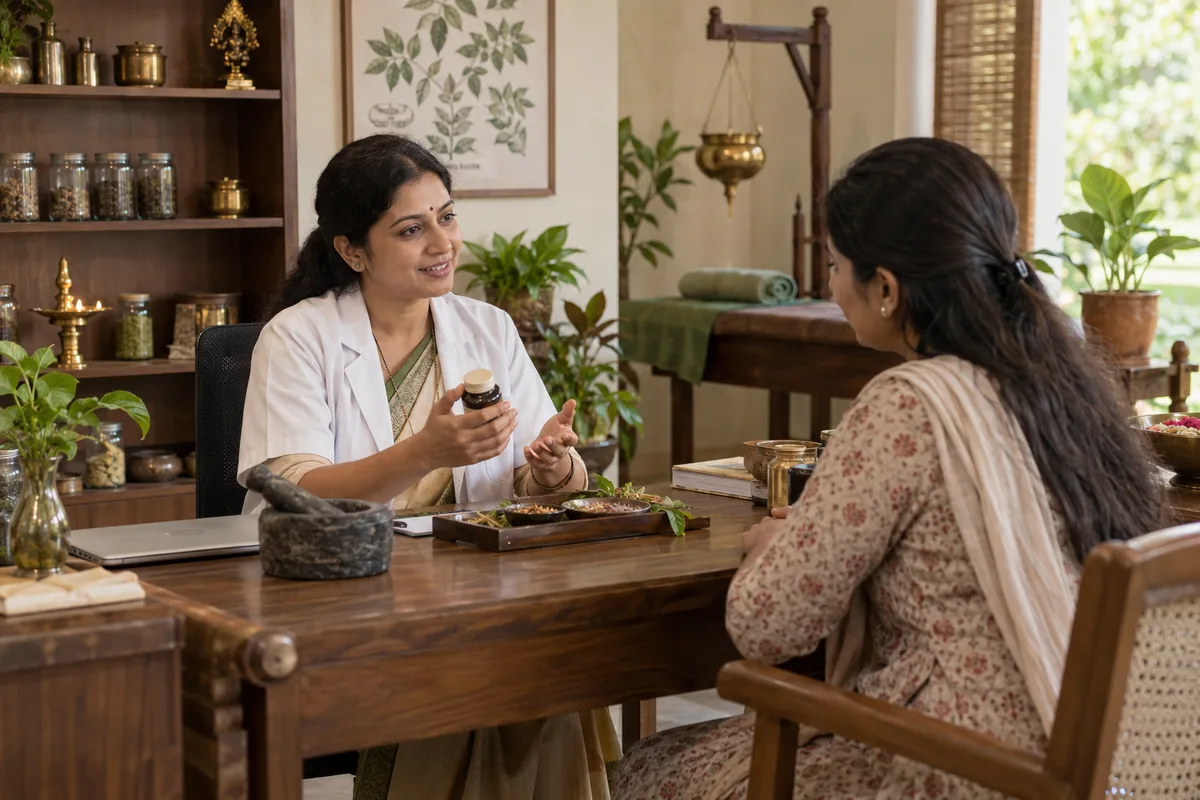
Lead generation is the combined work of every channel that brings in a new enquiry, whether from search, adverts, referrals or a stall at an exhibition. GullySales runs these channels together and reports the number of enquiries each one produced, not the activity behind it.
Plan the next part of the work
Last updated 21 Nov 2026.
For ayurveda clinics
Where it usually goes wrong, and what we would do.
“An enquiry for a condition the physician does not treat wastes a slot”
A clinic known for joint and spine care gets calls about fertility or skin. Each wrong call takes front desk time and sometimes a diary slot. Pages and listings that name what the physician sees filter the enquiry before it reaches the phone.
“The family asks on behalf of the patient”
A son books for an ageing parent, or a daughter for a mother with irregular periods. The enquiry carries the family member's number, not the patient's. The record needs both names, or the review reminder reaches the wrong phone.
“Word of mouth is a lead source that nobody writes down”
Patients arrive because a neighbour, a yoga teacher or a general physician mentioned the clinic. When the front desk does not ask how the patient heard, the clinic cannot tell which source deserves more attention.
“A call that rings out at lunchtime goes to the next clinic”
A patient who has decided to try Ayurveda rings once or twice. If the clinic's line is busy or switched off during the break, the patient moves down the map list to the next name.
What we do
What we deliver for ayurveda clinics.
The work available for this need. We agree the deliverables and responsibilities for your engagement in writing.
A source question at the front desk
One question asked at booking and written in the register: who or what sent the patient.
Result: The owner can read which sources fill the first-consultation diary.
Condition-led enquiry pages
Pages for the conditions the physician wants to see more of, each with the fee, the area and a booking button.
Result: Enquiries arrive naming the condition the physician treats.
A two-name enquiry record
Fields for the person enquiring and the patient, with the right phone number against each.
Result: Reminders for a review reach the patient's family contact.
A booking route for the break hours
A WhatsApp message or form that collects the name, the concern and a preferred slot when the line is busy.
Result: Calls missed at lunch still leave a name and number behind.
A first-consultation tally
A count of enquiries received, booked and seen, kept against each source.
Result: The owner sees where enquiries drop out between asking and arriving.
How the result is measured
- Relevant enquiries by source
- Duplicate and unsuitable enquiries
- Time to the first response
- Accepted enquiries reaching an agreed next step
Recorded as a baseline before work starts, so every later report has an honest comparison.
What to capture or send
An enquiry is worth recording at the moments the clinic can act on it.
- Name of the patient and of the caller
- The desk fills both on the first call. It lets reminders for a review reach the family member who is booking.
- Concern in the patient's own words
- Written as spoken, such as knee pain or irregular periods. It shows which condition pages bring enquiries the physician wants.
- How they heard of the clinic
- One question asked at booking. It separates neighbour, general physician, yoga teacher, map listing and website.
- Preferred slot and missed-call time
- Captured through the break-hours message. It lets the desk call back at a time that suits the patient.
- Booked, seen or dropped
- Marked by the desk after the visit date. It shows where enquiries fall away between asking and arriving.
Who it is for
This is written for these ayurveda clinics.
- Single-physician Ayurveda clinics with an in-house medicine counter
- Ayurveda clinics inside a hospital or a multi-speciality polyclinic
- Ayurveda skin and hair clinics
- Ayurveda clinics for women's health, including PCOS and postnatal care
- Ayurveda clinics for joint, back and spine problems
- Ayurveda clinics for digestive and lifestyle disorders
- Branches of an Ayurveda clinic chain in several localities
- Online-consultation practices that courier medicines to patients in other cities
Before you decide
When this may not be the right fit.
- The physician's diary is full for the next stretch and no new first-consultation slots are open, so more enquiries would only be turned away.
- Nobody at the front desk can write down who asked and how they heard, so the clinic would collect enquiries it cannot trace to a source.
- You want enquiries for conditions the physician does not see, which would fill the line with calls that cannot be booked.
Before you decide
Agree the work. Know how to judge it.
Lead generation for Ayurveda clinics: use these checks to prepare, choose the scope, and review what changes.
Bring the right evidence
Define the organisations or buyers you can serve and the reasons they would consider a conversation. Bring examples of accepted and rejected prospects so the selection rule is visible.
Make the scope clear
Agree the research sources, contact approach, qualification rules, and handover. Clarify which meetings count as accepted and what happens to replies that are not ready to buy.
Check the work in use
Review why a prospect was selected and what was learned from the response. Count held, relevant conversations separately from contacts found, messages sent, or meetings booked.
Know when to change course
If the same objection appears repeatedly, adjust the offer or buyer group before increasing outreach. Respect a request to stop contact and keep the exclusion in the record.
These are discussion points, not a fixed package. GullySales confirms the deliverables, responsibilities, fee, and term in writing after reading your brief and speaking with you.
Before we start
What to have ready before the work starts.
The records, access and decisions this work needs from ayurveda clinics. Anything missing is noted in the written scope, with who will supply it.
- The appointment diary for a recent season
- Hand over the diary, paper or digital, for a stretch you consider typical of the clinic. Names can be blanked. We read dates and first visits. If the diary only records who came and not how they found you, we begin tallying the source from today.
- The physician's list of conditions treated
- A plain list in the physician's own words of what the clinic treats and what it refers on. Handwritten is fine. We use it for the desk's questions and the enquiry pages. Without it, the front desk guesses and slots are given to people the physician must turn away.
- A named person for the phone at lunch
- Decide who answers, or what message plays, when the desk is closed for the break. Even a recorded line with a message option is acceptable. If nobody is named, calls ring out and go to the next clinic.
- Access to the clinic's listing and website
- We need owner rights on the Google listing and an editor login for the site if there is one. If a former vendor holds either, ask for them back now. Without access the new enquiry route cannot be placed where patients look.
- The physician's decision on advance booking
- Tell us whether a first consultation can be booked days ahead, only same day, or by call back. The reply promises exactly this. If the rule is unsettled, the first message promises a slot the clinic then has to refuse.
How it works
How the lead generation work runs
The work itself, in order. How an engagement starts, from your brief to a written scope, is set out on our method page.
- 1
Sit at the reception desk for a clinic session
We spend a full consultation session beside the front desk, listening to how the phone is answered, how the diary is written and what is said when the physician is with a patient. You tell us which calls you think are lost. We note the real pattern.
- 2
Sort the diary by how patients arrived
We take the appointment diary for a recent stretch and mark each new patient by source: a relative, a neighbour, the Google listing, a doctor's referral, a signboard. You correct our guesses from memory. That sheet is the figure we compare against later.
- 3
Separate conditions you treat from those you refer
With the physician we list the concerns the clinic is glad to see and the ones that should be sent elsewhere. This list shapes the questions asked at the desk and the pages that attract enquiries, so slots are not spent on people the clinic cannot help.
- 4
Write the first reply and the enquiry record
We draft the opening reply, the busy-line message and a record that holds both the patient's name and the name of the relative who asked. The physician reads each line. You decide what the desk asks and what is kept for the consultation.
- 5
Make test enquiries through every route
We call, message and fill the form as a patient, as a worried daughter and as someone enquiring during the lunch break. You watch what happens at your end. Gaps in the route, such as an unanswered line at midday, are closed before real patients meet them.
- 6
Read first consultations against the starting tally
We count the new patients booked and seen since the changes, by source, and set them beside the diary sheet from the beginning. You decide which sources deserve more of your attention and which can be left alone, using the clinic's own figures.
Where this fits
Three pieces of sales work, in this order.
This work sits inside sales process design, at stage 1, prospecting and lead generation. The audit comes before it, and sales management keeps it running.
Step 1
Sales audit
Find where deals are being lost and what to fix first.
Start here if you cannot say where orders are lost.
Step 2 · you are here
Sales process design
One written way to sell, from first enquiry to repeat order.
Start here if every salesperson sells differently.
Step 3
Sales management
A target, a review routine and someone who owns the number.
Start here if the team has targets and no routine.
FAQ
Questions owners ask before they call.
Not here? More answers, or ask on WhatsApp.
Should we ask patients how they found the clinic?
Can you promise a number of new patients?
Does lead generation mean running ads?
What should the booking message say when the line is busy?
Who answers the enquiries once the route is built?
What if a patient asks for a cure over the phone?
How much does it cost?
How long is the contract?
How soon will we see results?
Who will actually do the work?
More for ayurveda clinics
Related work to consider.
Closest to this: leads and follow-up
Also for ayurveda clinics
Or start from the overview: sales and marketing for ayurveda clinics.
Your next practical step
Tell us what you are trying to grow, and we will read it before we call.
Eight short steps, mostly taps. Skip anything you would rather answer on the call.