Ayurveda clinics · Buyer persona
Describe the patient and the person who books for the patient, as they really are.
A buyer persona for an Ayurveda clinic is a written picture of the people who arrive: what brought them, who else decides and what they worry about. GullySales builds it from the diary and the front desk, not from guesses.
Scope, fee, reporting and term are agreed in writing after we have read your brief and spoken to you.
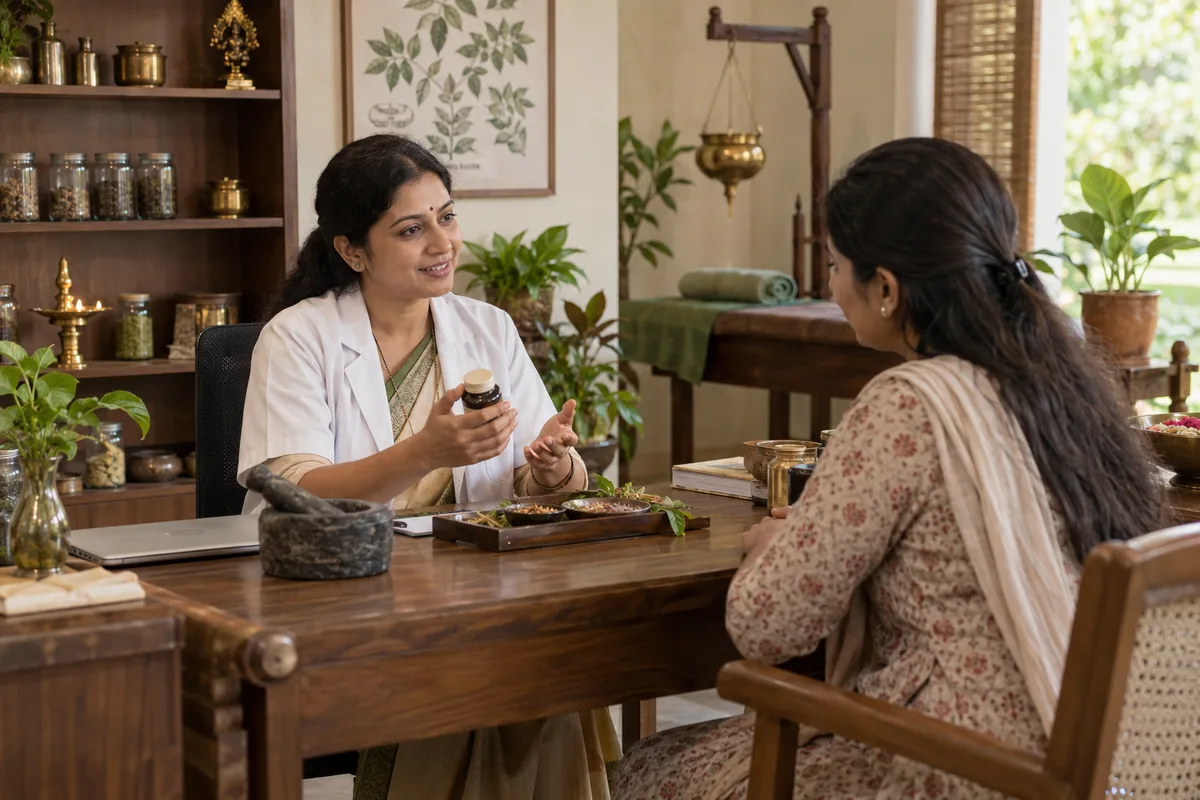
What buyer persona means
A buyer persona is a plain description of the kind of customer who actually buys from you. It includes what they search, what worries them and who else they ask before deciding. GullySales builds this from real enquiries and past sales rather than a generic template, then uses it to write every page and advert.
Last updated 14 Nov 2026.
For ayurveda clinics
Where it usually goes wrong, and what we would do.
“The patient and the person paying are sometimes different”
An adult child pays for a parent's visit. A husband pays for a wife's postnatal care. The page and the reply need to speak to the decider as well as the patient. A persona with only one name misses half the conversation.
“The patient who has tried everything else is the common arrival”
Someone who has seen a general physician, a specialist and a physiotherapist and still has the problem arrives at an Ayurveda clinic with doubt. They need a physician who listens first. A persona records what has already been tried.
“A wellness seeker and a chronic-condition patient want different things”
One asks about diet and sleep, and may not return for a review. The other is committed to a course and wants a plan and a person to call. Treating them alike loses both.
“Language and locality shape the first message”
A patient in Mysuru writes in Kannada. A patient in Pune writes in Marathi or Hindi. A reply in a language the patient does not use feels like a closed door.
What we do
What we deliver for ayurveda clinics.
The work available for this need. We agree the deliverables and responsibilities for your engagement in writing.
A diary read
The register is read for who booked, for whom, with which concern and what they did after the first visit.
Result: The owner sees patterns in the clinic's own people.
Two or three written personas
Short descriptions of the patients and deciders the clinic sees, with what they ask first and what they fear.
Result: The front desk and the page speak to real people.
A question list per persona
The first three questions each persona asks, with the answer the clinic gives.
Result: Replies answer the question before it is repeated.
Language notes
Which languages the clinic's patients write in and how the front desk replies in each.
Result: A patient gets a reply in the language they wrote.
A persona-to-page map
Which page, which message and which follow-up suits each persona.
Result: Each kind of patient has a route that fits.
How the result is measured
- Enquiry match to persona
- Conversion rate by persona
- Content aligned to persona
Recorded as a baseline before work starts, so every later report has an honest comparison.
Who is asking
The person who books is not always the person who sits in the consultation room.
- A son booking for an ageing parent
- The caller asks whether the parent can walk in, how long the visit takes and what the fee is. Record the caller's number beside the patient's.
- A patient who has tried other treatment first
- They ask whether the physician will read earlier reports. The page should say what to bring.
- A wellness seeker with no diagnosis
- They ask about diet and daily routine, not a condition. They need a page that describes the lifestyle consultation.
- A patient with a long-term complaint
- They want to know how many visits the course takes and what each costs. The answer is the physician's, given at the first visit.
- A new resident in the locality
- They search by area and check the map listing for hours and the physician's photograph before they call.
Who it is for
This is written for these ayurveda clinics.
- Single-physician Ayurveda clinics with an in-house medicine counter
- Ayurveda clinics inside a hospital or a multi-speciality polyclinic
- Ayurveda skin and hair clinics
- Ayurveda clinics for women's health, including PCOS and postnatal care
- Ayurveda clinics for joint, back and spine problems
- Ayurveda clinics for digestive and lifestyle disorders
- Branches of an Ayurveda clinic chain in several localities
- Online-consultation practices that courier medicines to patients in other cities
Before you decide
When this may not be the right fit.
- The clinic has not noted who books for the patient, so a persona would describe the patient only and miss the caller.
- The practice sees a handful of patients and the physician knows each one, so a written persona adds paper but no clarity.
- You plan to quote patients' records into the persona, which the clinic should not do.
Before you decide
Agree the work. Know how to judge it.
Buyer personas for Ayurveda clinics: use these checks to prepare, choose the scope, and review what changes.
Bring the right evidence
Write the decision the research must support, such as entering a market or choosing a buyer group. Separate what you know from sales records from what the team currently assumes.
Make the scope clear
Agree which buyers to speak to, which sources to review, and what access you can provide. Include lost enquiries and people who chose another supplier, where they are willing to take part.
Check the work in use
Look for source dates, sample limitations, and evidence that disagrees with the preferred answer. A recommendation should show how it follows from the findings.
Know when to change course
Do not treat a few positive conversations as proof of demand. Test the proposed offer with an actual buying decision before committing to a wider launch.
These are discussion points, not a fixed package. GullySales confirms the deliverables, responsibilities, fee, and term in writing after reading your brief and speaking with you.
Before we start
What to have ready before the work starts.
The records, access and decisions this work needs from ayurveda clinics. Anything missing is noted in the written scope, with who will supply it.
- The diary with identities removed
- Share the diary or register with names and phone numbers blanked, showing dates, localities, concerns and who came. Without it, portraits rest on memory and we label them drafts until the real record can be read. If dates alone are present, we still learn when new patients arrive.
- Patients who agreed to be approached
- A few people who said yes to a short conversation. Ask them before giving us the names. Without any, we rely on the front desk and the physician, and the portraits describe what staff see, not what patients say. Ask them in person, not by a bulk message, and respect a refusal.
- A sitting with the front desk
- The person who answers the phone knows the first question in every call. Set aside a sitting in which they speak freely. If they cannot join, the portraits miss what is asked before the physician arrives. Please add what you think patients are afraid to ask.
- A decision on which health details may be used
- Agree that portraits never name a disease as a label for a person, and that no real patient's record is used. Write it down. Without this rule, a portrait can drift into something that looks like a patient file. Such a rule protects patients and the clinic.
- The clinic's current website and replies
- Whatever patients read now, from the site to the saved replies. We compare it with the portraits. Without it, we cannot show what is missing, and the map from portrait to page stays incomplete. Printouts of the site are enough.
How it works
How the buyer persona work runs
The work itself, in order. How an engagement starts, from your brief to a written scope, is set out on our method page.
- 1
Read the appointment diary for patterns
We read a recent stretch of the diary, with identities blanked, for the ages, localities, concerns and the first message each patient sent. You add what the diary does not hold, such as who accompanied the patient. This gives each portrait a base in real visits. Where the diary is thin, we say so and mark the portrait as a draft.
- 2
Choose the patients worth talking to
With the front desk we pick a few recent patients and relatives who agreed to be approached, including someone who left after one visit. You decide who is contacted. Nobody is pressed to speak, and the physician is not told who said what. The desk gives permission before we contact anybody.
- 3
Ask what brought them and what they feared
We hold short conversations on how they heard of the clinic, what else they tried first, who they consulted at home and what almost stopped them booking. You read the notes. The answers decide the questions each portrait asks. Notes are written without names, so nothing can point back to a person.
- 4
Write two or three portraits and test them
We draft the portraits, each with a concern, a decision-maker, worries and a way of writing the first message. The physician and the desk read them and correct. If a portrait does not sound like anyone they know, it is rewritten. The physician checks that no portrait reads like a patient file.
- 5
Link each portrait to a page and a reply
We map every portrait to the pages it should land on, the reply the desk gives it and the questions it needs answered. You see where the clinic has nothing for a portrait. That gap becomes the next piece of work. Gaps are listed in plain words.
- 6
Compare the first messages with the portraits
After the pages and replies are in use, we read the new enquiries against the portraits and see which ones match. You decide which portraits to keep, which to revise and whether a new one has appeared from the clinic's own record. We keep a short sheet of what each portrait asked, so you can add to it as new enquiries arrive.
Where this fits
Three pieces of sales work, in this order.
This work sits inside sales process design, at stage 0, foundation. The audit comes before it, and sales management keeps it running.
Step 1
Sales audit
Find where deals are being lost and what to fix first.
Start here if you cannot say where orders are lost.
Step 2 · you are here
Sales process design
One written way to sell, from first enquiry to repeat order.
Start here if every salesperson sells differently.
Step 3
Sales management
A target, a review routine and someone who owns the number.
Start here if the team has targets and no routine.
FAQ
Questions owners ask before they call.
Not here? More answers, or ask on WhatsApp.
Do we need a persona if the clinic is small?
Can we use details from patients' records?
What number of personas should we write?
How do we find our personas without using patient records?
Do we need personas when the clinic is small?
How do we find personas without opening patient records?
How much does it cost?
How long is the contract?
How soon will we see results?
Who will actually do the work?
More for ayurveda clinics
Related work to consider.
Closest to this: strategy and research
Also for ayurveda clinics
Or start from the overview: sales and marketing for ayurveda clinics.
Your next practical step
Tell us what you are trying to grow, and we will read it before we call.
Eight short steps, mostly taps. Skip anything you would rather answer on the call.