Ayurveda clinics · Digital marketing
Join the listing, the page, the message and the review into one route to the diary.
Digital marketing for an Ayurveda clinic is the set of online routes by which a patient finds the physician, asks a question and books. GullySales works on how those routes connect and measures which of them end in a first consultation.
Scope, fee, reporting and term are agreed in writing after we have read your brief and spoken to you.
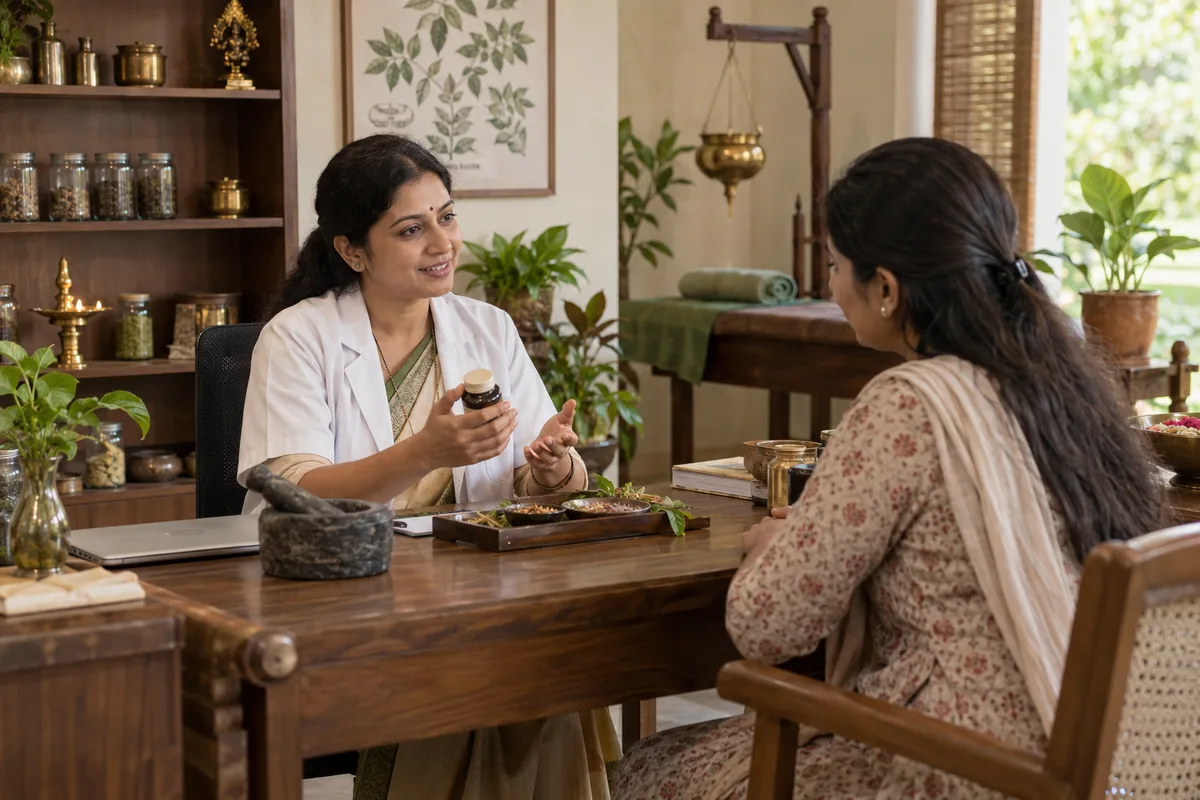
What digital marketing means
Digital marketing is the combined work of search, social media, advertising and website channels running together rather than as separate projects with separate people. GullySales runs these as one connected system so a change in one channel, such as a new offer, is reflected everywhere at once.
Last updated 14 Nov 2026.
For ayurveda clinics
Where it usually goes wrong, and what we would do.
“Each channel is run by a different person, and none talks to the others”
A relative runs the Facebook page, a freelancer made the site and the front desk handles the phone. The patient meets three different clinics. One plan, with one voice, removes the mismatch.
“Spend without a record is guesswork”
An ad runs and the calls rise. Did the patients come from the ad, the listing or a neighbour? Without a source noted at booking, the owner cannot tell and cannot choose where to put effort.
“Paid search suits some concerns and not others”
A clinic with spare diary time for one concern can run a small campaign for that. A clinic with a full diary needs the opposite: reviews and follow-up. The mix depends on the diary, not on a template.
“Advertising rules shape what an ad may say”
Health advertising is regulated. What a health ad may say depends on your profession and state, so have your council or adviser read it before it runs. Ads about the consultation and the physician stay on safer ground than ads about outcomes.
What we do
What we deliver for ayurveda clinics.
The work available for this need. We agree the deliverables and responsibilities for your engagement in writing.
A route map
A plain diagram of how a patient moves from search to listing to page to message to booking.
Result: The owner sees every step a patient takes.
A source record
A booking field that notes where each patient came from, read against the diary.
Result: The clinic knows which routes end in a seen patient.
A small paid search plan
A narrow campaign for concerns with spare capacity, each ad approved by the physician.
Result: Spend follows the gaps in the diary.
A reporting sheet
A plain sheet of enquiries, bookings and seen patients by source, which the owner can read without help.
Result: The owner can check what the work produced.
A review of the whole route
A read of the listing, page, message and follow-up as a patient meets them.
Result: Mismatches between channels are written down and fixed.
How the result is measured
- Enquiries across channels
- Cost per enquiry overall
- Channel mix by contribution
Recorded as a baseline before work starts, so every later report has an honest comparison.
Searches your buyers type
Each route into the diary starts with a search or a message the clinic can answer.
- Ayurvedic doctor near me
- The listing and its call button, with the physician's photograph. It is the first thing the patient sees.
- Ayurveda for back pain in your locality
- A condition page with area, fee and booking button, written for a clinic that sees spine problems.
- Ayurveda clinic fees
- The fee stated on the page and in the first WhatsApp reply, so cost is answered before the second clinic is called.
- Book Ayurveda appointment online
- A short form or message that collects name, concern and slot. It gives each patient a route to the diary.
- Ayurveda doctor reviews
- Review replies written in the clinic's voice. The next patient reads them before choosing.
Who it is for
This is written for these ayurveda clinics.
- Single-physician Ayurveda clinics with an in-house medicine counter
- Ayurveda clinics inside a hospital or a multi-speciality polyclinic
- Ayurveda skin and hair clinics
- Ayurveda clinics for women's health, including PCOS and postnatal care
- Ayurveda clinics for joint, back and spine problems
- Ayurveda clinics for digestive and lifestyle disorders
- Branches of an Ayurveda clinic chain in several localities
- Online-consultation practices that courier medicines to patients in other cities
Before you decide
When this may not be the right fit.
- The clinic has one physician with no open slots and no plan to add any, so more demand would only be turned away.
- No one has fixed who answers the phone, the listing messages and WhatsApp, so a wider plan would scatter the replies further.
- You want paid search for a concern where advertising rules restrict what the advert may say.
Before you decide
Agree the work. Know how to judge it.
Digital marketing for Ayurveda clinics: use these checks to prepare, choose the scope, and review what changes.
Bring the right evidence
Bring a recent won order and an enquiry that went nowhere. Trace how each buyer found you, what they asked, and who handled the next step. A channel list alone will not explain the difference.
Make the scope clear
Choose one offer and one buyer group first. Agree which part needs attention: being found, getting a useful enquiry, or turning an enquiry into an order. Separate recommendations from the work required to carry them out.
Check the work in use
A useful plan names the first change, its owner, the evidence behind it, and the number that will show whether it worked. Ask what has deliberately been left out and why.
Know when to change course
If your team cannot answer the enquiries it already receives, improve that handover before buying more traffic. If the offer itself is unclear, test it with buyers before adding channels.
These are discussion points, not a fixed package. GullySales confirms the deliverables, responsibilities, fee, and term in writing after reading your brief and speaking with you.
Before we start
What to have ready before the work starts.
The records, access and decisions this work needs from ayurveda clinics. Anything missing is noted in the written scope, with who will supply it.
- The appointment diary and source notes
- The diary for a recent stretch, with names hidden, plus whatever the desk remembers about how patients found you. This gives us a starting line. Without it we begin the source record from today, and the first comparison waits. If the diary lacks a source, we start the record from today.
- Access to every account the clinic holds
- Logins or admin roles for the listing, website, social pages and any advert account. Missing access shows up as holes in the report. We tell you which are missing before any channel is run. Names are entered as admins, not as shared logins. This avoids waste on dates when the clinic is already full.
- A named owner for each route
- Decide who looks after the listing, the replies, the social page and the website. A single person can hold several. A route without an owner is left out of the plan rather than built and ignored. One person can own more than one route.
- The physician's list of concerns to attract
- State the concerns the clinic wants more of and the ones it would rather refer. Marketing follows this list. Without it, adverts bring enquiries the physician cannot take, and the desk spends time turning people away. This list becomes the guide for every page and advert.
- A decision on whether to spend on adverts
- Tell us whether the clinic is willing to pay for adverts at all, and what sum it would risk in a season. Rough is fine. If the answer is none, the plan rests on the listing, pages and referrals. The sum can be revisited after the first comparison.
How it works
How the digital marketing work runs
The work itself, in order. How an engagement starts, from your brief to a written scope, is set out on our method page.
- 1
Draw the route a patient takes to the door
With the physician and the desk we draw how a patient moves from a search or a recommendation to a call, a visit and a review. You mark where you think patients drop. The route map shows which channels do real work. The map is drawn on paper, then typed once agreed. Differences between the physician's views and the desk's are noted.
- 2
Start a record of where every patient came from
We set up a simple sheet or tool in which the desk notes the source of each new patient, from the Google listing to a relative. You decide who fills it. A start date is written, because earlier months cannot be rebuilt. The sheet has one line per new patient, and it takes seconds to fill.
- 3
Check the listing, site and replies together
We look at the Google listing, the website pages and the first reply a patient gets, as one journey, and note where they disagree on timings, names or services. You decide what to correct first. Channels are fixed before any money is spent. Timings, names and services must be the same everywhere a patient looks.
- 4
Decide whether paid search suits the clinic
We look at the concerns the clinic treats and how patients search for them, and tell you honestly whether paid search fits. If it does, we write a small plan with the claim rules in view. If it does not, the money goes elsewhere. Where the clinic treats chronic concerns, paid search may not suit and we say so.
- 5
Approve the messages and release them
Every advert, post and page passes the physician and, where needed, your own adviser. You approve the set. We release the channels in the order the route map suggests, not all at once, so the desk can answer what arrives. Releases are staggered so that the desk is not swamped.
- 6
Reconcile the sources with first consultations
We set the source record against the diary and the first consultations booked, and compare with the starting figures. You decide which routes stay, which are rested and which are tried next. The sheet is yours to keep. The sheet stays with you after the work ends.
Where this fits
Three pieces of sales work, in this order.
This work sits inside sales process design, at stage 0, foundation. The audit comes before it, and sales management keeps it running.
Step 1
Sales audit
Find where deals are being lost and what to fix first.
Start here if you cannot say where orders are lost.
Step 2 · you are here
Sales process design
One written way to sell, from first enquiry to repeat order.
Start here if every salesperson sells differently.
Step 3
Sales management
A target, a review routine and someone who owns the number.
Start here if the team has targets and no routine.
FAQ
Questions owners ask before they call.
Not here? More answers, or ask on WhatsApp.
Where should a small clinic start?
Do we need to run ads?
Can you guarantee more patients?
How do we decide between ads and the listing first?
Where should a small clinic with one physician start?
Will the work bring more patients?
How much does it cost?
How long is the contract?
How soon will we see results?
Who will actually do the work?
More for ayurveda clinics
Related work to consider.
Closest to this: strategy and research
Also for ayurveda clinics
Or start from the overview: sales and marketing for ayurveda clinics.
Your next practical step
Tell us what you are trying to grow, and we will read it before we call.
Eight short steps, mostly taps. Skip anything you would rather answer on the call.