Boxing academies · Buyer persona
Write down who actually decides: the teenager who wants it and the parent who pays.
A buyer persona for a boxing academy describes the different people involved in joining, chiefly the young boxer, the parent, and sometimes a school coach or a sponsor. GullySales helps you describe each from your own trial records and conversations.
Scope, fee, reporting and term are agreed in writing after we have read your brief and spoken to you.
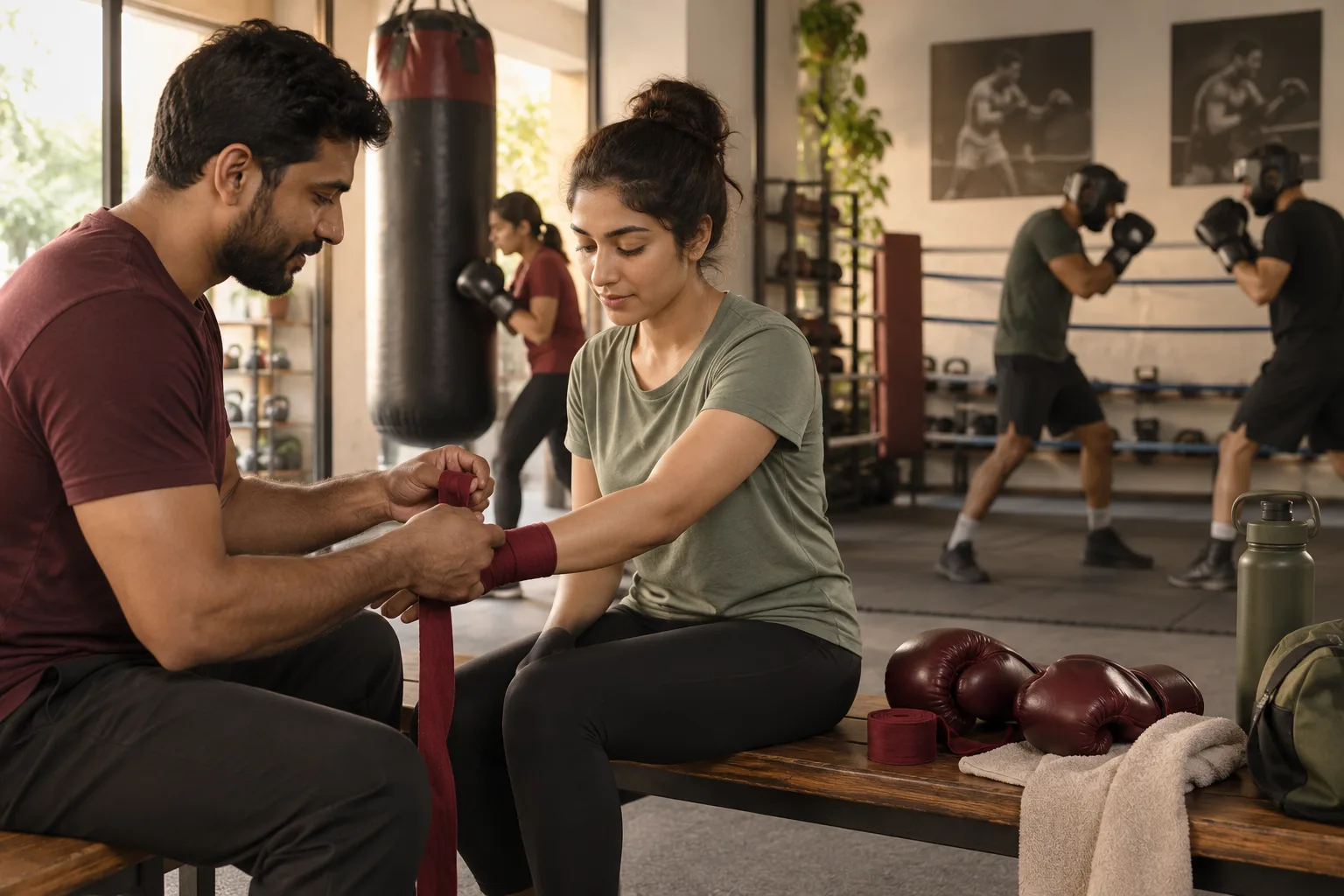
What buyer persona means
A buyer persona is a plain description of the kind of customer who actually buys from you. It includes what they search, what worries them and who else they ask before deciding. GullySales builds this from real enquiries and past sales rather than a generic template, then uses it to write every page and advert.
Last updated 14 Nov 2026.
For boxing academies
Where it usually goes wrong, and what we would do.
“The teenager sets the wish”
The young boxer decides they want to compete after a bout, a film or a local winner. Their question is whether this coach can take them as far as the title they have seen.
“The parent controls safety and money”
The guardian weighs injury, school marks, travel and fees. They decide at home, sometimes with another relative, and the academy hears the result only as a yes or silence.
“The parent of a girl asks a different set of questions”
Who is in the room, who is the coach, is there a separate batch, and who supervises changing and travel. The persona for a girls' batch cannot copy the one for boys.
“A school coach or sports teacher can open the door”
A teacher who spots talent gets the first word with the family. They need to know what the academy offers and how to hand a student over.
What we do
What we deliver for boxing academies.
The work available for this need. We agree the deliverables and responsibilities for your engagement in writing.
Persona sheets for each decider
One page each for the young boxer, the parent, the parent of a girl and the referring teacher, in their own questions.
Result: Staff can say who they are speaking to and what that person needs.
Question bank from real trials
A list of the actual questions families asked during trial days, grouped by person.
Result: Replies and pages are written from questions that were really asked.
Objection and answer notes
Honest responses to worries on safety, studies and commitment, reviewed by the coach.
Result: The coach and desk give the same account of each worry.
Decision path map
A simple drawing of who sees what, from first video to the trial to the fee conversation.
Result: Gaps in the journey are visible and have an owner.
Use guide for the team
How to use each persona in messages, pages and the trial talk.
Result: Every outgoing message names the person it is written for.
How the result is measured
- Enquiry match to persona
- Conversion rate by persona
- Content aligned to persona
Recorded as a baseline before work starts, so every later report has an honest comparison.
Who is asking
The teenager, the parent and the teacher, and what each asks first.
- A teenager who wants to compete
- Wants to know whether they will get into the ring and who they will train with. Looks at the coach's boxers online.
- A parent worried about injury
- Wants the safety rules, the headgear, who supervises sparring and what happens if a boxer is hurt. Needs to watch a session.
- A parent of a girl
- Wants to see a batch for girls with a trained coach, the changing arrangements and who else attends.
- A school sports teacher
- Spots talent and refers a pupil. Wants to know the age groups and whether the academy takes beginners.
- An adult wanting fitness boxing
- Wants a time slot and a price. Belongs in a separate batch from the competitive ring.
Who it is for
This is written for these boxing academies.
- Competitive amateur boxing academies
- State association-affiliated clubs
- Academies running school-age development programmes
- Boxing academies inside sports complexes and stadiums
- Academies with separate batches for girls and women
- Residential and scholarship-supported academies
- Coach-led academies that also run fitness boxing
Before you decide
When this may not be the right fit.
- You have not talked to the families who joined or left, so personas would be guesses.
- All your members are one kind of buyer, so separate profiles would repeat each other.
- You expect a persona to replace talking to the family at the trial.
Before you decide
Agree the work. Know how to judge it.
Buyer persona for boxing academies: use these checks to prepare, choose the scope, and review what changes.
Bring the right evidence
Write the decision the research must support, such as entering a market or choosing a buyer group. Separate what you know from sales records from what the team currently assumes.
Make the scope clear
Agree which buyers to speak to, which sources to review, and what access you can provide. Include lost enquiries and people who chose another supplier, where they are willing to take part.
Check the work in use
Look for source dates, sample limitations, and evidence that disagrees with the preferred answer. A recommendation should show how it follows from the findings.
Know when to change course
Do not treat a few positive conversations as proof of demand. Test the proposed offer with an actual buying decision before committing to a wider launch.
These are discussion points, not a fixed package. GullySales confirms the deliverables, responsibilities, fee, and term in writing after reading your brief and speaking with you.
Before we start
What to have ready before the work starts.
The records, access and decisions this work needs from boxing academies. Anything missing is noted in the written scope, with who will supply it.
- The trial register with ages and sources
- A list of everyone who attended a trial, with age, who accompanied them and how they heard of the academy. It shapes which deciders we write up. Where it does not exist, we start one and the first sheets stay marked as drafts. It helps to add a column for the school of each boxer, since a school coach can bring several families at once.
- Names of families to speak to
- A mix of parents and boxers: some who stayed, some who left, and at least one family of a girl. You approach them first, as they know you. Without a mix, the personas describe only the loyal families and miss the reasons for leaving. Choose families who are likely to speak freely, and tell them we will not repeat their names or the coach's replies.
- Notes on boxers who left in the first term
- Whatever the coach remembers or has written about boxers who stopped coming, with the reason if known. These give the persona its objections. When nothing is written, we ask the coach to recall a few cases before the interviews begin. Even one line per boxer, such as a move to another city or a change of school, is useful, and a guess marked as a guess is better than a gap.
- A decision on sharing family details
- The coach's and your instruction on what we may read and keep, and on whether names can appear in working notes. We keep names out of the final sheets in any case. If no decision is made, we work from the register with names removed. If a parent asked for privacy, say so, and we leave that family out of the working notes altogether.
- Time from the coach to review the sheets
- An hour set aside to read each persona and mark what is wrong. The coach knows the families better than we do. Without a review, the sheets remain our reading of the register and carry a note that the coach has not confirmed them. If the coach cannot spare the time, a short call after training can do, but unreviewed sheets are labelled as drafts.
How it works
How the buyer persona work runs
The work itself, in order. How an engagement starts, from your brief to a written scope, is set out on our method page.
- 1
Pick the deciders to describe first
We agree with the coach which people will be written up: the teenager, the parent, the girl's parent and perhaps a school coach. You decide which of them bring in the greatest number of boxers who stay, so we begin with the right two. We also ask the coach to name two families who never fit the usual pattern, since they show where a sheet would mislead the team.
- 2
Pull the trial register and joining notes
We read the trial register, the joining forms and any chat the coach has kept, noting ages, who came along and what held a family back. You tell us which entries to leave out because the family asked for privacy. We record, in our own notes, which trials ended in a joining and which in silence, and we ask the coach what each family said at the door.
- 3
Talk to a few parents and boxers
We choose a small group of current and past families with your help and hold short, friendly conversations, on the phone or at the ring. The coach does not sit in, so people speak openly, and we promise no names will be used. We keep the conversations short and informal, and we write down the words families use, as these are better than ours for the messages that follow.
- 4
Read what the families said against the register
We compare the conversations with the register, marking where a family's reason for joining or leaving matches what the paper shows and where it does not. The coach reviews these findings and tells us which surprise is real. We also mark where a finding rests on one family only, so the coach does not treat a single story as a pattern.
- 5
Write each persona and check it with you
We write one sheet per decider with their wish, their worry and the question they ask first, in plain words. You and the coach correct each sheet, and any line that sounds like a stereotype instead of a family you know is removed. We also add a short list of questions the team should ask on a call, drawn from what each family wanted to know, and the coach trims it to fit.
- 6
Hand over and test on real enquiries
We give the team a short guide on using the sheets in calls and messages, then read the next enquiries and trials against them. You decide which persona to rewrite once real families have been through, judged by who joined. We also keep the old sheets, with dates, so you can see how the academy's families change from one season to the next.
Where this fits
Three pieces of sales work, in this order.
This work sits inside sales process design, at stage 0, foundation. The audit comes before it, and sales management keeps it running.
Step 1
Sales audit
Find where deals are being lost and what to fix first.
Start here if you cannot say where orders are lost.
Step 2 · you are here
Sales process design
One written way to sell, from first enquiry to repeat order.
Start here if every salesperson sells differently.
Step 3
Sales management
A target, a review routine and someone who owns the number.
Start here if the team has targets and no routine.
FAQ
Questions owners ask before they call.
Not here? More answers, or ask on WhatsApp.
How many personas do we need?
Where does the information come from?
Does a persona replace talking to families?
What does a parent of a girl want that others do not?
Does a persona mean we only chase the ideal boxer?
Who writes the questions for parent interviews?
How much does it cost?
How long is the contract?
How soon will we see results?
Who will actually do the work?
More for boxing academies
Related work to consider.
Closest to this: strategy and research
Also for boxing academies
Or start from the overview: sales and marketing for boxing academies.
Your next practical step
Tell us what you are trying to grow, and we will read it before we call.
Eight short steps, mostly taps. Skip anything you would rather answer on the call.