Golf courses and driving ranges · Local SEO
Appear on Maps for the player deciding where to hit balls this evening.
Local SEO for a golf course or driving range is the work on your Google profile so that a player nearby sees your hours, photographs and rating when they search. GullySales works on the listing, the reviews and the details that decide the map result.
Scope, fee, reporting and term are agreed in writing after we have read your brief and spoken to you.
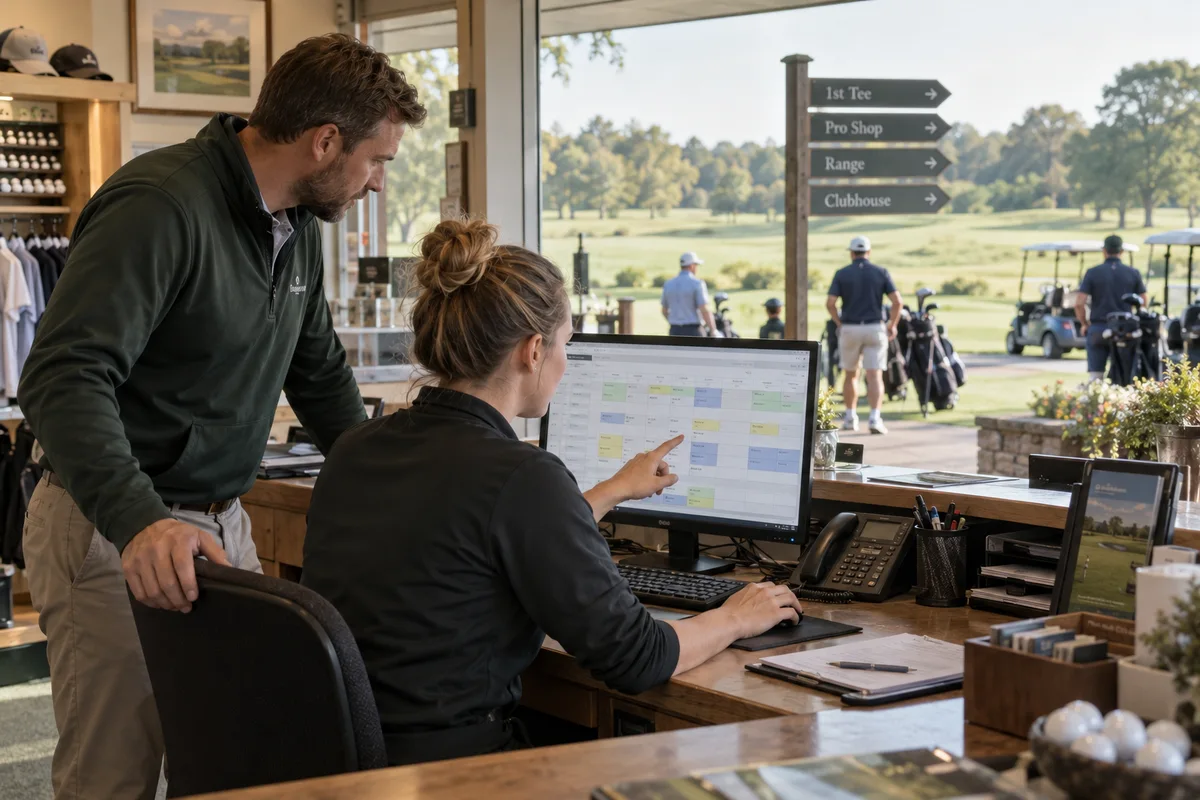
What local SEO means
Local SEO is the work of making your business show up for searches that name your town or locality, such as a service plus an area name. GullySales sets up locality pages, local citations and map listings so nearby customers find you before a competitor across town.
Also for golf courses and driving ranges
- SEO for golf courses and driving ranges
- Website for golf courses and driving ranges
- Lead generation for golf courses and driving ranges
- Social media marketing for golf courses and ranges
- Content marketing for golf courses and driving ranges
- Buyer persona for golf courses and driving ranges
- CRM for golf courses and driving ranges
- Follow-up systems for golf courses and driving ranges
Sales and marketing for golf courses and driving ranges, the overview.
Last updated 14 Nov 2026.
For golf courses and driving ranges
Where it usually goes wrong, and what we would do.
“A range is chosen by distance and by the sunset”
A person searching in the evening needs to know that the range is open and floodlit, or that it closes with the daylight. Hours and a note on lighting decide whether they set off.
“The profile must say what a visitor may do”
A course that lists only a name looks closed to the public. Stating guest play, lessons, club hire and the booking route turns the listing from a landmark into an offer.
“Photographs of the course sell the round”
A golfer judges the fairways, the greens and the clubhouse from pictures. Old shots in poor light make a well-kept course look neglected on the map.
“Reviews mention the staff and the pace”
Players write about the starter, the marshals and how long a round took. Replies that answer a complaint about pace or booking show the next player that someone is listening.
What we do
What we deliver for golf courses and driving ranges.
The work available for this need. We agree the deliverables and responsibilities for your engagement in writing.
A listing with visitor services spelled out
Guest play, driving range, lessons, equipment hire and corporate days entered as services with a plain description of each.
Result: A searcher sees what is open to them.
Accurate hours including twilight and lighting
Opening hours, special hours for tournaments and a note on floodlit sessions entered and kept current.
Result: The evening search finds a range that is open.
A refreshed photograph set
Recent images of fairways, greens, the range, the bays and the clubhouse added to the profile, in good light.
Result: The listing shows the course as it is now.
A review request after a round or lesson
A request with the review link given to the player at the end of the visit, at the counter or by message.
Result: Reviews come from recent visitors.
Replies to every review
A short and polite reply to each review, answering any point about pace, booking or facilities.
Result: Readers see an answered complaint.
How the result is measured
- Map pack ranking
- Local search visibility
- Enquiries by locality
Recorded as a baseline before work starts, so every later report has an honest comparison.
Searches your buyers type
Maps searches for golf are about distance, opening hours and what a visitor may do.
- golf course open to public
- The profile must state guest play and the booking route. A listing that gives only the name reads as private, and a visitor moves on.
- driving range open now
- Accurate hours, including twilight and lighting, keep the range showing as open. A wrong closing time sends a player to a locked gate and a one-star review.
- golf club hire near me
- Add club hire as a service with a short description. The beginner searching this has no clubs and will choose the range that says they are not needed.
- golf coach near me
- List lessons and coach names as services, with a photograph of the practice area. Parents and adults check the coach before they check the price.
- golf course near hotels
- Include the area and nearest landmarks in the description. Business travellers search from where they are staying and need to see how far the course lies.
Who it is for
This is written for these golf courses and driving ranges.
- Private golf clubs with membership and a waiting list
- Resort and real estate golf courses that sell rounds and villas together
- Armed forces and cantonment golf courses open to guests on request
- Public pay-and-play golf courses
- Standalone driving ranges in or near the city
- Golf academies for juniors and beginners
- Indoor golf simulator studios and putting greens
- Pro shops and golf coaching practices based on a course
Before you decide
When this may not be the right fit.
- The course is inside a gated community with no guest entry, so a Maps listing would invite visitors you cannot admit.
- Opening hours change from week to week and nobody keeps the profile current, so searchers would arrive at a closed gate.
Before you decide
Agree the work. Know how to judge it.
Local SEO for golf courses and driving ranges: use these checks to prepare, choose the scope, and review what changes.
Bring the right evidence
Confirm the real business address, service area, contact details, and who controls the business listings. Keep examples of calls that came from the wrong location or asked for a service you do not provide.
Make the scope clear
Choose the locations you actually serve and the information each needs. Agree who approves listing changes, responds to enquiries, and keeps opening hours accurate.
Check the work in use
Check the journey from a local search to a call or enquiry on a phone. The address, service area, and description should agree across your website and listings.
Know when to change course
Do not create an office claim for a place where you only serve customers remotely. Clear service coverage is more useful than a misleading local presence.
These are discussion points, not a fixed package. GullySales confirms the deliverables, responsibilities, fee, and term in writing after reading your brief and speaking with you.
Before we start
What to have ready before the work starts.
The records, access and decisions this work needs from golf courses and driving ranges. Anything missing is noted in the written scope, with who will supply it.
- Owner access to the Google profile
- We need the owner login. Bring the email that created it. Where a former manager holds it, recovering it is first. A manager role is enough for us to work. Without owner access we can only advise, and any change has to be made by you, which slows every correction.
- The year's special hours and closures
- Tournaments, maintenance days and holidays change the hours. Bring the calendar. Without it, the profile shows hours that are wrong on those days. Bring last year's list of closures, with the reason. If the dates are not yet fixed, bring the likely weeks and we enter them once confirmed.
- Photographs with permission
- Bring photographs the club owns. Members in the frame need to agree. Without any, we propose a short shoot. Daylight pictures of the first tee, the range and the clubhouse entrance are the first choice. A phone is fine if the images are sharp.
- The club's formal and resort names
- If the course sits inside a resort, the profile must carry the right name and not the hotel's. Bring the registered name of the club and any trading or resort name. When the two are mixed, duplicates appear and visitors reach the hotel desk instead of the pro shop.
- A person who answers reviews
- Replies must be courteous and prompt. Bring the manager or the pro. Without a named reply person, complaints stand unanswered. The reply should come from the club in a calm tone, and the person should know what the club says about pace of play, lost balls and tee time disputes.
How it works
How the local SEO work runs
The work itself, in order. How an engagement starts, from your brief to a written scope, is set out on our method page.
- 1
Check the listing against the gate sign
We compare the Google profile, the board at the entrance and the club letterhead for name, address, phone and the type of facility listed. You tell us which spelling is correct. What exists afterwards is one fixed set of details. If the club has two entries, one for the course and one for the range, we decide with the manager which stays and how the other is merged or removed.
- 2
Write the services a visitor may use
With the manager we spell out on the profile what a visitor may do: range balls, lessons, a round as a guest, a golf day enquiry. Member-only areas are not listed. You approve each line, since a profile that offers a facility the pro shop must then refuse invites a poor review.
- 3
Set the real hours, twilight and lighting
The head pro reads out when the range opens, closes and lights up, and when tournaments close the course to others. We enter regular hours and special hours. A visitor who arrives at a closed range leaves a bad review. Tournament days that close the range to others are entered as special hours in advance, with the dates you give us.
- 4
Choose photographs that sell a round
We pick, from your set, a first tee, a green at sunrise, the range and the clubhouse entrance. We avoid members' faces unless they consent. A fresh set replaces the stale uploads. Photographs of members are left out unless each person has agreed, and the pro shop keeps the consents in one folder.
- 5
Set the review card at the pro shop
The pro shop hands a card with a link to players after a round or a lesson. We write the wording and agree who replies to each review. A reply goes up for every review. The card carries the club name exactly as it appears on the map, so a reviewer finds the right listing and not a similarly named one.
- 6
Put profile calls and directions beside the baseline
After the profile is complete we put calls, direction requests and bookings beside the earlier figures. You decide what photographs or posts to add. We also read the questions players ask through the profile and decide who answers them.
Where this fits
Three pieces of sales work, in this order.
This work sits inside sales process design, at stage 1, prospecting and lead generation. The audit comes before it, and sales management keeps it running.
Step 1
Sales audit
Find where deals are being lost and what to fix first.
Start here if you cannot say where orders are lost.
Step 2 · you are here
Sales process design
One written way to sell, from first enquiry to repeat order.
Start here if every salesperson sells differently.
Step 3
Sales management
A target, a review routine and someone who owns the number.
Start here if the team has targets and no routine.
FAQ
Questions owners ask before they call.
Not here? More answers, or ask on WhatsApp.
We are inside a resort. Do we need our own listing?
Can we show member-only areas?
How do we handle a review that is unfair?
Do tournament days affect what we show on the profile?
Does a course inside a resort need its own listing?
How do we handle a review about the pace of play?
How much does it cost?
How long is the contract?
How soon will we see results?
Who will actually do the work?
More for golf courses and driving ranges
Related work to consider.
Closest to this: search and visibility
Also for golf courses and driving ranges
Or start from the overview: sales and marketing for golf courses and driving ranges.
Your next practical step
Tell us what you are trying to grow, and we will read it before we call.
Eight short steps, mostly taps. Skip anything you would rather answer on the call.