Herbal and ayurvedic medicine shops · CRM
Remember each regular's routine without keeping anything in the shopkeeper's head alone.
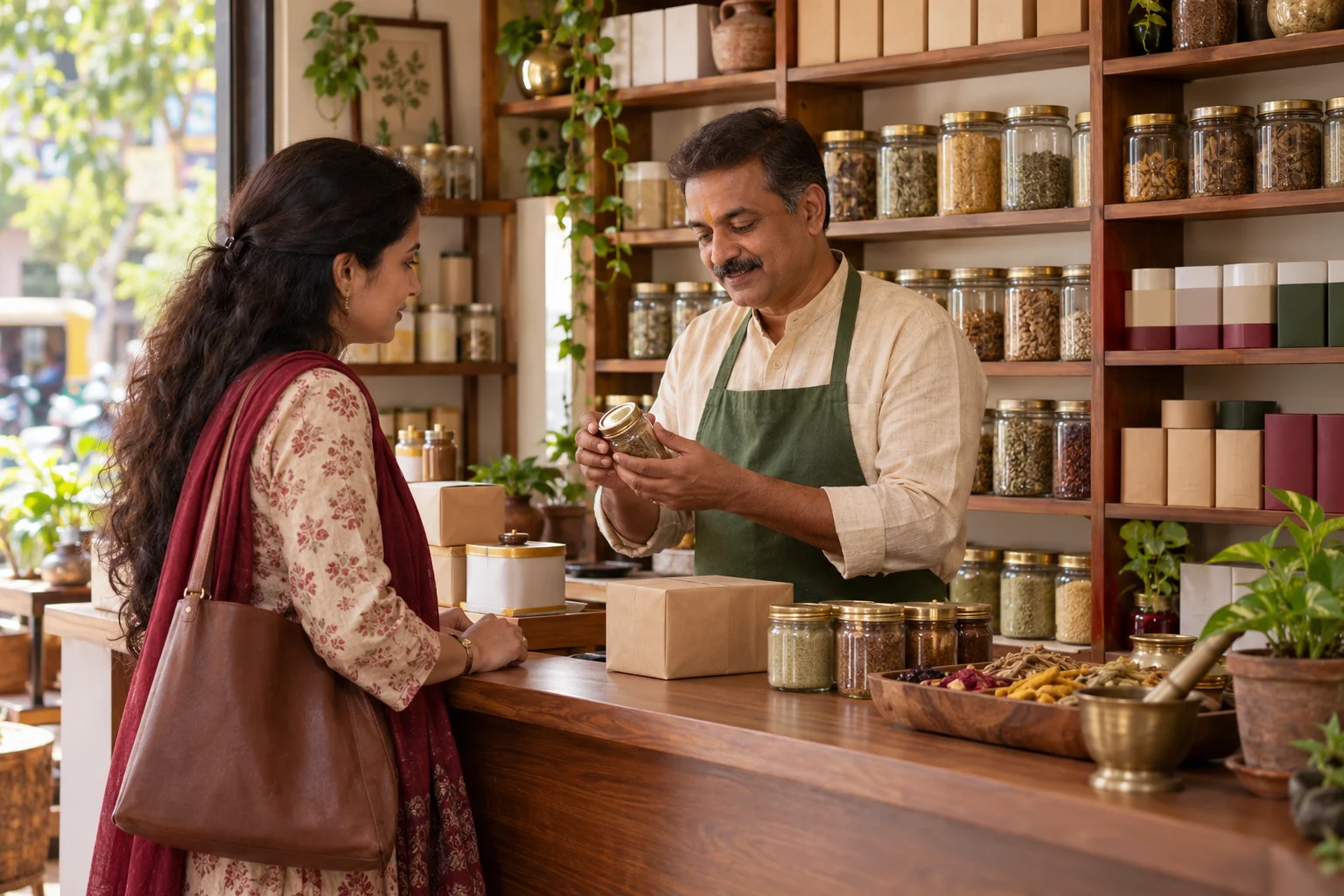
A CRM for an ayurvedic or herbal shop is a simple record of each customer, what they regularly buy, how to reach them and when they last came. It spares the shop from relying on one person's memory. GullySales sets up a light record that respects customer privacy.
Scope, fee, reporting and term are agreed in writing after we have read your brief and spoken to you.
What CRM means
A CRM is the record where every enquiry, call and quote is kept against a customer, replacing separate notebooks, spreadsheets and memory. GullySales sets up or cleans an existing CRM and reports from it by enquiry outcome rather than by activity logged.
Also for herbal and ayurvedic medicine shops
- Lead generation for herbal and ayurvedic medicine shops
- Follow-up systems for herbal and ayurvedic medicine shops
- SEO for herbal and ayurvedic medicine shops
- Local SEO for herbal and ayurvedic medicine shops
- Social media marketing for herbal and ayurvedic medicine shops
- Content marketing for herbal and ayurvedic medicine shops
- Buyer personas for herbal and ayurvedic medicine shops
- WhatsApp marketing for herbal and ayurvedic medicine shops
Sales and marketing for herbal and ayurvedic medicine shops, the overview.
Last updated 14 Nov 2026.
For herbal and ayurvedic medicine shops
Where it usually goes wrong, and what we would do.
“The shopkeeper's memory is the system today”
The shop knows which regular buys which item and when. If that person is away or leaves, the knowledge goes. Writing it down, with consent, turns a personal skill into something the whole counter can use.
“A lapsed regular goes unnoticed”
A customer who buys on a rhythm may stop quietly. Without a record of past purchases, the shop never sees the gap. A simple note of last purchase date lets the counter call or message to ask if the customer needs anything.
“Health information is not for the record”
A purchase list can reveal a person's health. The record should hold names, contact details, items and delivery notes only as needed for service, with the customer's knowledge, and nothing that reads as a medical history.
“Delivery needs the same record”
Address, landmark, preferred time and who receives the parcel are details a delivery person needs. Kept in the same record as the order, they stop the shop from repeating questions and from sending the wrong parcel to the wrong door.
What we do
What we deliver for herbal and ayurvedic medicine shops.
The work available for this need. We agree the deliverables and responsibilities for your engagement in writing.
A customer register
A shared sheet or tool with name, contact, area, items bought and last purchase date, kept with the customer's knowledge.
Result: The counter can see a regular's history at a glance.
A list of customers who asked for refill reminders
A consent-based list of customers who want a reminder when a regular item is due.
Result: The shop can remind a customer who asked for a reminder.
A delivery details field set
Address, landmark, preferred time and receiver recorded with each order.
Result: A delivery goes to the right door without a call.
A privacy note and consent line
A short counter notice and a line in the first chat explaining what is recorded and how to ask for removal.
Result: Customers know what the shop keeps about them.
A lapsed-customer view
A list of regular customers who have not bought in a while, for a polite check-in.
Result: The shop notices a quiet customer before the customer is lost.
How the result is measured
- Enquiries logged in the CRM
- Data completeness
- Reports generated from CRM data
Recorded as a baseline before work starts, so every later report has an honest comparison.
Fields worth keeping
Keep the fields that let the counter greet a regular and serve a refill.
- Name and preferred language
- Filled in by the counter at first purchase. Lets the shop greet the customer correctly and reply in the language they write in.
- Phone number and consent to message
- Taken with the customer's agreement and a yes or no beside it. Lets you contact only those who agreed to hear from you.
- Items bought, by pack and maker
- Entered at billing. Lets the shop find a regular's usual item and the pack size without asking again, and records nothing about why.
- Delivery address and landmark
- Entered once, with the delivery boy's note. Lets any staff member dispatch an order without calling to ask the way.
- Last purchase date
- Updated at each bill. Lets you see which regulars have not bought for a long time and who might want a polite check-in.
Who it is for
This is written for these herbal and ayurvedic medicine shops.
- Ayurvedic medical stores next to clinics and hospitals
- Neighbourhood herbal shops selling oils, churnas and kashayams
- Kerala-style ayurveda stores in cities outside Kerala
- Jadi-buti and raw herb sellers in wholesale markets
- Siddha and Unani medicine shops
- Company-owned outlets of ayurvedic manufacturers
- Organic and herbal wellness stores with an ayurvedic corner
- Shops that also take orders by phone and ship across India
Before you decide
When this may not be the right fit.
- The shop has no habit of noting down a customer's phone number at the counter, so a record would stay nearly empty
- You plan to note customers' health conditions in the record, which the shop should not keep
Before you decide
Agree the work. Know how to judge it.
CRM for herbal and ayurvedic medicine shops: use these checks to prepare, choose the scope, and review what changes.
Bring the right evidence
List the records your team uses and show how an enquiry becomes an order today. Bring examples of duplicate entries, missing owners, and reports that require manual correction.
Make the scope clear
Agree the stages, required fields, access roles, and integrations before configuring the system. Separate software subscriptions from setup, data work, and training.
Check the work in use
Ask the people who will use the CRM to complete a real handover and find the next action without help. Check that the management report can be traced back to individual records.
Know when to change course
If the process is unclear, buying a more complex CRM adds more places for confusion. Start with the minimum fields and rules the team can use consistently.
These are discussion points, not a fixed package. GullySales confirms the deliverables, responsibilities, fee, and term in writing after reading your brief and speaking with you.
Before we start
What to have ready before the work starts.
The records, access and decisions this work needs from herbal and ayurvedic medicine shops. Anything missing is noted in the written scope, with who will supply it.
- The notebook or contacts you use now
- Whatever holds the regulars today: the notebook, the phone contacts or the billing book, copied if the original must stay at the counter. Messy entries and half names are fine. Without it, the register begins empty, and the first refill reminders go to nobody.
- A list of who keeps the register
- Named staff and a covering person who open the register when a customer is at the counter or a chat arrives. Without a name, the register is filled in unevenly, entries differ from one person to the next, and the owner stops trusting it.
- Your decision on what is never recorded
- A plain rule, such as no conditions, no prescriptions and no diagnoses. The owner decides. Missing a rule, staff record what seems helpful, which is how sensitive notes end up in a sheet.
- The wording you use to ask for permission
- How the counter asks a customer to keep their number and send reminders, in the words and language the staff actually use. The current phrase will do. Without it we write one, and you test whether staff are comfortable saying it to an elderly regular.
- A person with authority over the list
- The owner or manager who decides who sees the list and what happens to it when a staff member leaves. Without that person, the list leaves with whoever has the phone, and the shop loses the memory it set out to protect.
How it works
How the CRM work runs
The work itself, in order. How an engagement starts, from your brief to a written scope, is set out on our method page.
- 1
Look at how the notebook is kept today
We open the notebook, the phone contacts and any billing records, and see how regulars are remembered. You show us how the counter finds a customer's usual items. We keep what works and write down what lives only in the shopkeeper's head.
- 2
Choose the few fields worth keeping
Name, phone number, preferred language, delivery address, the product groups the customer returns for and how they like to be reminded. Nothing about conditions or reasons. You decide which fields the counter will fill in, because every field is a task.
- 3
Set up a register the counter will use
This may be a simple sheet or a light customer tool, chosen with the counter staff. We load the records you give us and test it with a few real customers. You decide who may see and change it.
- 4
Add the consent line and the privacy note
A line at the counter or in the chat asks permission to keep a customer's number and send refill reminders, and says how to stop. The privacy note says what is stored and what is never kept. Your own adviser reads both before use.
- 5
Build the delivery and lapsed-regular views
A delivery list shows address, items and the person who carries. A lapsed view shows regulars who have not been in for a while, for a counter call. You decide how long a gap counts as lapsed, as the shop knows its customers.
- 6
Hand over and read what the register shows
The counter staff use it for a stretch while we watch, and we then set reminders sent, lapsed regulars reached and deliveries made against the first notes. You decide what to simplify. The register's value is in being kept, not in its detail.
Where this fits
Three pieces of sales work, in this order.
This work sits inside sales management. A target, a review routine and someone who owns the number.
Step 1
Sales audit
Find where deals are being lost and what to fix first.
Start here if you cannot say where orders are lost.
Step 2
Sales process design
One written way to sell, from first enquiry to repeat order.
Start here if every salesperson sells differently.
Step 3 · you are here
Sales management
A target, a review routine and someone who owns the number.
Start here if the team has targets and no routine.
FAQ
Questions owners ask before they call.
Not here? More answers, or ask on WhatsApp.
Do we need software or is a notebook enough?
What should we never write down?
Can we message customers whose record we hold?
Who owns the customer list if a counter staff member leaves?
Do we need software, or will a notebook do?
What should staff never write down?
How much does it cost?
How long is the contract?
How soon will we see results?
Who will actually do the work?
More for herbal and ayurvedic medicine shops
Related work to consider.
Closest to this: leads and follow-up
Also for herbal and ayurvedic medicine shops
- SEO for herbal and ayurvedic medicine shops
- Local SEO for herbal and ayurvedic medicine shops
- Social media marketing for herbal and ayurvedic medicine shops
- Content marketing for herbal and ayurvedic medicine shops
- Buyer personas for herbal and ayurvedic medicine shops
- WhatsApp marketing for herbal and ayurvedic medicine shops
Or start from the overview: sales and marketing for herbal and ayurvedic medicine shops.
Your next practical step
Tell us what you are trying to grow, and we will read it before we call.
Eight short steps, mostly taps. Skip anything you would rather answer on the call.