Herbal and ayurvedic medicine shops · Local SEO
Show up on the map with true hours and a phone that gets answered.
Local SEO for an ayurvedic or herbal shop is the work of making your Maps listing complete and consistent, so a customer nearby sees that you are open and how to reach you. The shopfront is the asset. GullySales sets up the listing and the local pages around it.
Scope, fee, reporting and term are agreed in writing after we have read your brief and spoken to you.
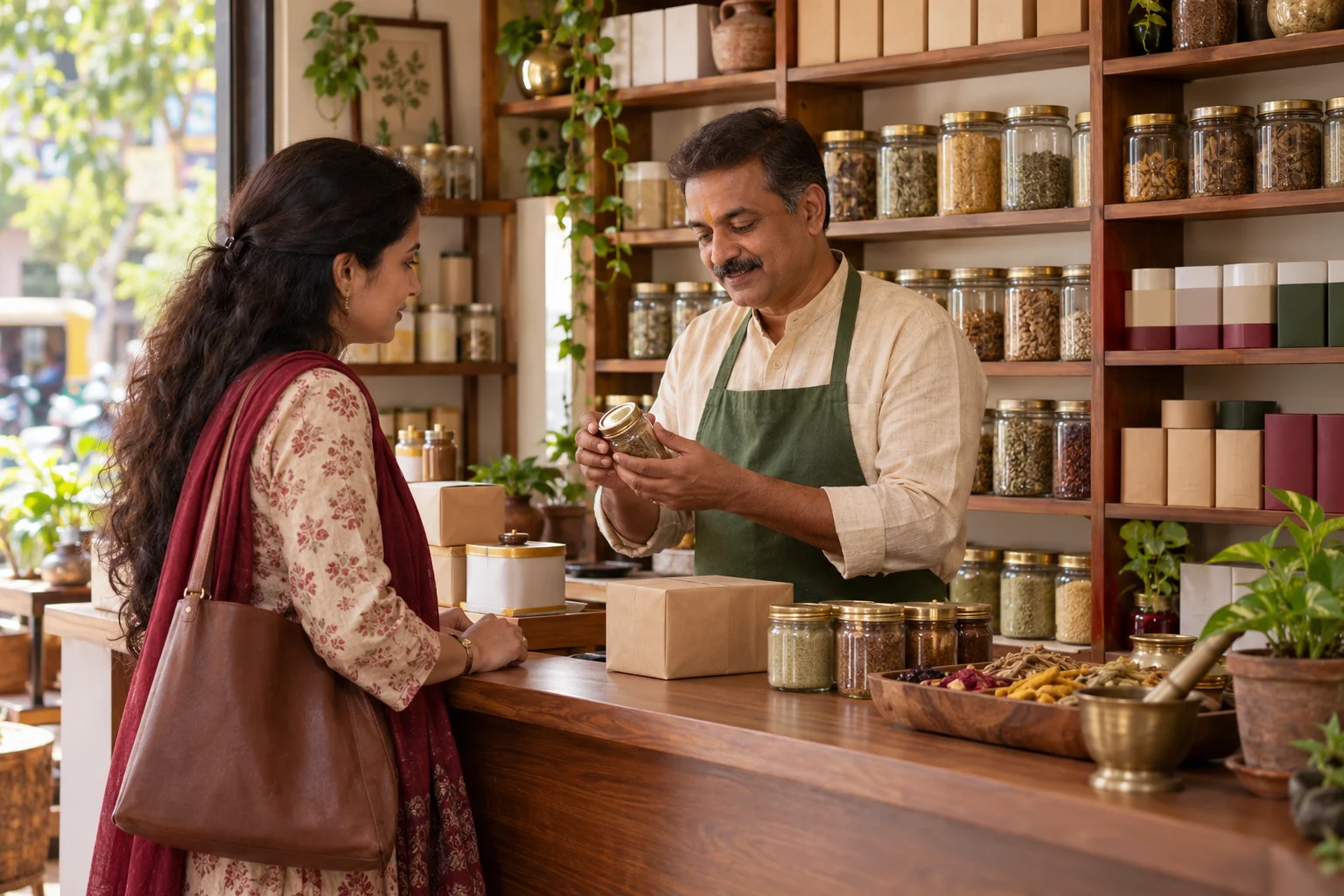
What local SEO means
Local SEO is the work of making your business show up for searches that name your town or locality, such as a service plus an area name. GullySales sets up locality pages, local citations and map listings so nearby customers find you before a competitor across town.
Also for herbal and ayurvedic medicine shops
- SEO for herbal and ayurvedic medicine shops
- Websites for herbal and ayurvedic medicine shops
- Lead generation for herbal and ayurvedic medicine shops
- Social media marketing for herbal and ayurvedic medicine shops
- Content marketing for herbal and ayurvedic medicine shops
- Buyer personas for herbal and ayurvedic medicine shops
- CRM for herbal and ayurvedic medicine shops
- Follow-up systems for herbal and ayurvedic medicine shops
Sales and marketing for herbal and ayurvedic medicine shops, the overview.
Last updated 14 Nov 2026.
For herbal and ayurvedic medicine shops
Where it usually goes wrong, and what we would do.
“The evening search is the one that counts”
A person in need of an item after clinic hours searches the map and calls the first open shop. A listing with no hours or the wrong hours hands that customer to a competitor. Accurate opening times, including festival closures, matter more than design.
“Photos of the shop earn trust”
Customers want to see the counter, the shelves and the signboard before they walk in. Clear photographs taken in daylight, with the street frontage shown so the shop is easy to spot, help a first-time visitor find the door.
“Reviews are read by the next customer”
A new customer scans what others have said about service and stock. A courteous reply to each comment, with no mention of a medicine or a health condition, shows how the shop treats people and keeps the profile compliant.
“Duplicate and wrong listings confuse the map”
A shop that moved, changed name or has an old duplicate may show two entries, one with a dead number. A customer who calls the wrong one gives up. Cleaning the listings is dull work that pays in calls that connect.
What we do
What we deliver for herbal and ayurvedic medicine shops.
The work available for this need. We agree the deliverables and responsibilities for your engagement in writing.
A finished shop listing on the map
Name, address, hours, holiday hours, phone, WhatsApp link, delivery area and product groups all filled in and checked.
Result: A customer sees accurate details at a glance.
A photograph set for the shop
Daylight photographs of the frontage, counter and shelves, and a short guide on keeping them current.
Result: The profile shows a real, findable shop.
A guide to replying to reviews
Short rules for answering praise and complaints without naming a medicine or a condition.
Result: Every reply is courteous and stays within the rules.
A duplicate and consistency clean-up
A check for old or repeated entries and a single version of the name, address and number across directories.
Result: One correct listing replaces several conflicting ones.
Pages for the neighbourhoods served
Pages for each neighbourhood you deliver to, naming landmarks that help a customer place the shop.
Result: A customer finds a page for their own neighbourhood.
How the result is measured
- Map pack ranking
- Local search visibility
- Enquiries by locality
Recorded as a baseline before work starts, so every later report has an honest comparison.
Searches your buyers type
Make the map answer the questions a neighbour asks at the doorstep.
- ayurvedic store open now
- Hours on the listing that match the shop door, with festival closures entered before the day, not after a customer finds the shutter down.
- ayurvedic shop near the hospital
- The landmark written into the address line and a photo of the shop front taken from the road a visitor walks along.
- herbal shop with home delivery
- The delivery area and the phone or chat number placed on the listing, so a tap reaches the counter and not a missed call.
- ayurvedic oil and churna store
- Photos of the shelves by product group, showing what is stocked, with captions that name the item and make no statement of use.
- ayurvedic shop Sunday timings
- A weekly hours entry that includes the day the vaidya's clinic nearby is closed, since that is when your own footfall changes.
Who it is for
This is written for these herbal and ayurvedic medicine shops.
- Ayurvedic medical stores next to clinics and hospitals
- Neighbourhood herbal shops selling oils, churnas and kashayams
- Kerala-style ayurveda stores in cities outside Kerala
- Jadi-buti and raw herb sellers in wholesale markets
- Siddha and Unani medicine shops
- Company-owned outlets of ayurvedic manufacturers
- Organic and herbal wellness stores with an ayurvedic corner
- Shops that also take orders by phone and ship across India
Before you decide
When this may not be the right fit.
- The shop moves premises soon, so a polished listing would carry an address that needs rewriting almost at once
- Nobody will answer the call button or reply to reviews, and an ignored listing tells the next customer the counter is not attended
Before you decide
Agree the work. Know how to judge it.
Local SEO for herbal and ayurvedic medicine shops: use these checks to prepare, choose the scope, and review what changes.
Bring the right evidence
Confirm the real business address, service area, contact details, and who controls the business listings. Keep examples of calls that came from the wrong location or asked for a service you do not provide.
Make the scope clear
Choose the locations you actually serve and the information each needs. Agree who approves listing changes, responds to enquiries, and keeps opening hours accurate.
Check the work in use
Check the journey from a local search to a call or enquiry on a phone. The address, service area, and description should agree across your website and listings.
Know when to change course
Do not create an office claim for a place where you only serve customers remotely. Clear service coverage is more useful than a misleading local presence.
These are discussion points, not a fixed package. GullySales confirms the deliverables, responsibilities, fee, and term in writing after reading your brief and speaking with you.
Before we start
What to have ready before the work starts.
The records, access and decisions this work needs from herbal and ayurvedic medicine shops. Anything missing is noted in the written scope, with who will supply it.
- Ownership of the map listing
- Whoever opened the listing may be a former employee, an agency or a customer. Recover access or ask the platform to transfer it. Without it, we cannot edit, and a wrong pin or hour stays on the map.
- A calendar of festival and holiday closures
- The days the shop shuts or changes hours, written out. A page from the owner will do. When it is missing, the profile shows normal hours on festival days and a customer arrives at a closed door.
- Photographs taken in daylight and evening
- A few shots of the shopfront when it is lit and when the shutter is up. A phone is fine. Without evening images, a customer searching after work cannot see that the shop is open and findable.
- The shop's exact name as on the licence
- The name and address that appear on the licence and on the shop's board. We match the listing to it. If they differ, the owner chooses one and we use it everywhere, so the map is not confused by two names.
- A person to watch reviews and questions
- Someone at the counter who looks at new reviews and customer questions on the listing. Without them, replies wait, and the next customer reads an unanswered complaint.
How it works
How the local SEO work runs
The work itself, in order. How an engagement starts, from your brief to a written scope, is set out on our method page.
- 1
Walk past the shop as a customer would
We look at the shopfront from the road at the hour when people pass: the board, the lighting, the door and the nearest landmark. You tell us how customers describe the way in. These details go onto the listing so a stranger can find the door, not just the street.
- 2
Find every listing that carries the shop's name
We search the map and directories for the shop's name and its old addresses, and list duplicates, wrong pins and listings opened by someone else. You say which is the real one. The rest are merged or reported so the map shows a single shop.
- 3
Fill in the listing with the shopkeeper
Together we write the hours, including the festival closures, the phone number, the delivery area and a plain description of the stock groups. You decide what to say about prescriptions and delivery. Nothing about what a product does appears on the profile.
- 4
Take the photograph set inside and outside
Using a phone, we or the counter staff photograph the board, the entrance, the shelves, the counter and the dispensing area, with customers kept out of shot. You choose which images show the shop at its best. A stranger deciding whether to visit sees a real place.
- 5
Set the review reply guide with the owner
We write short, courteous replies for a thank-you, a delay and a complaint, none of which discusses a person's health. You decide who posts them. The guide also covers how to ask a regular for a review without pressing.
- 6
Compare calls and directions with the first week's record
We set calls, direction requests and views against the figures noted before the listing was changed. The counter staff tell us which callers were new. You decide whether to add area pages or more photographs, based on what the figures and the staff show.
Where this fits
Three pieces of sales work, in this order.
This work sits inside sales process design, at stage 1, prospecting and lead generation. The audit comes before it, and sales management keeps it running.
Step 1
Sales audit
Find where deals are being lost and what to fix first.
Start here if you cannot say where orders are lost.
Step 2 · you are here
Sales process design
One written way to sell, from first enquiry to repeat order.
Start here if every salesperson sells differently.
Step 3
Sales management
A target, a review routine and someone who owns the number.
Start here if the team has targets and no routine.
FAQ
Questions owners ask before they call.
Not here? More answers, or ask on WhatsApp.
How do we handle festival and holiday timings?
May we invite customers to review the shop?
Can we list products on the map profile?
What if a competitor shop uses our shop name on the map?
How should festival timings appear on the listing?
What do we do if the listing is marked closed by mistake?
How much does it cost?
How long is the contract?
How soon will we see results?
Who will actually do the work?
More for herbal and ayurvedic medicine shops
Related work to consider.
Closest to this: search and visibility
Also for herbal and ayurvedic medicine shops
- Lead generation for herbal and ayurvedic medicine shops
- Social media marketing for herbal and ayurvedic medicine shops
- Content marketing for herbal and ayurvedic medicine shops
- Buyer personas for herbal and ayurvedic medicine shops
- CRM for herbal and ayurvedic medicine shops
- Follow-up systems for herbal and ayurvedic medicine shops
Or start from the overview: sales and marketing for herbal and ayurvedic medicine shops.
Your next practical step
Tell us what you are trying to grow, and we will read it before we call.
Eight short steps, mostly taps. Skip anything you would rather answer on the call.