Panchakarma centres · Content marketing
Write the pages that answer the questions a guest asks before paying a deposit.
Content marketing for a Panchakarma centre is the writing, video and photography that explain the programme to a guest who is still reading, in the physician's voice. GullySales works on choosing the questions to answer and on getting each piece checked by the physician before it goes live.
Scope, fee, reporting and term are agreed in writing after we have read your brief and spoken to you.
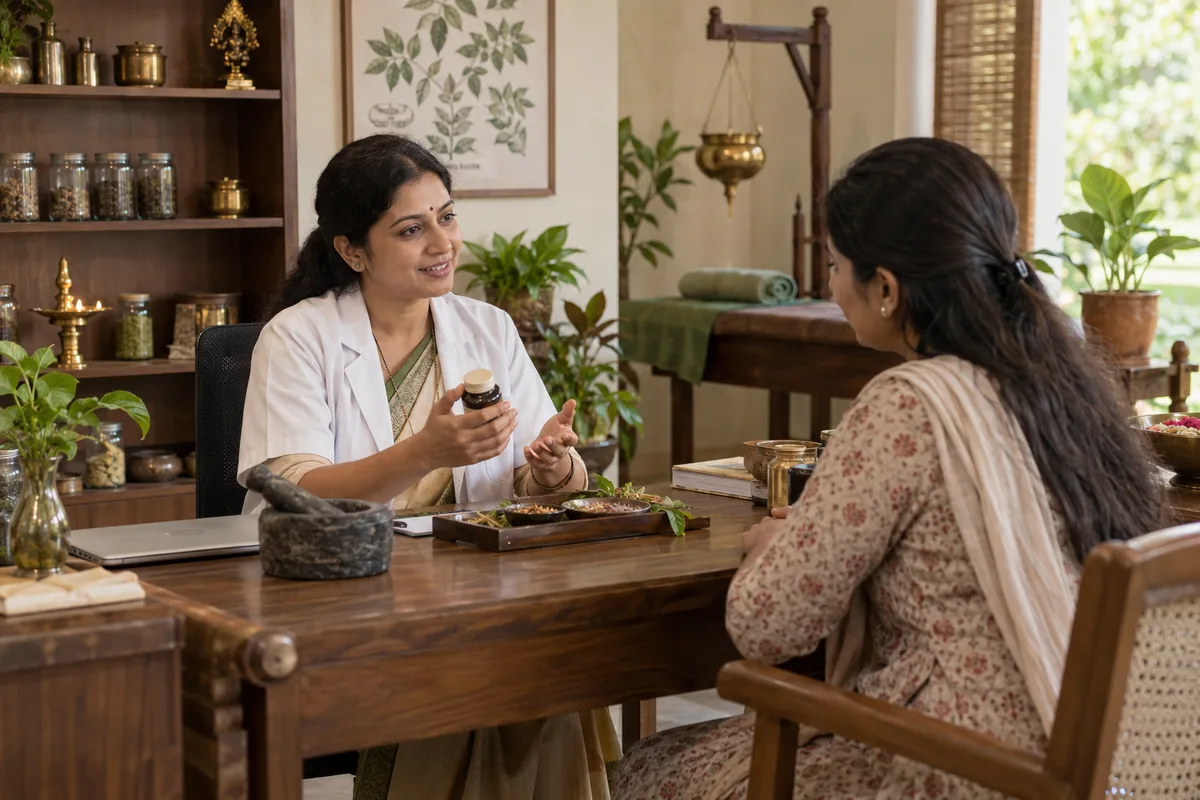
What content marketing means
Content marketing is writing articles, guides and pages that answer the questions buyers search before they are ready to enquire. This makes your business visible and trusted before the first call. GullySales plans this content from the first conversation onward, choosing topics that match real search demand rather than guesses.
Last updated 14 Nov 2026.
For panchakarma centres
Where it usually goes wrong, and what we would do.
“The guest reads for weeks before writing”
Panchakarma is planned over months. The guest reads about preparation, diet, rest and what the first day feels like. A centre that has answered these in plain words is already trusted when the enquiry arrives.
“Generic wellness articles bring the wrong reader”
A post on the benefits of oil massage draws a reader who wants a spa. The pieces that matter to the centre explain the supervised programme and the physician's role, which a spa cannot write.
“The physician's words carry the weight”
A guest weighs a page by who stands behind it. An article reviewed and signed by the physician, with the registration held, reads differently from copy written by an agency and left unchecked.
“Claims in an article are still advertising”
A well-meaning piece that lists what the programme cures can fall foul of the rules. Advertising rules for Ayurveda and health services differ by profession and state, so check wording with your own council or adviser.
What we do
What we deliver for panchakarma centres.
The work available for this need. We agree the deliverables and responsibilities for your engagement in writing.
A list of the questions guests ask
Collected from the desk's WhatsApp history, the physician's consultations and search, grouped by the stage of the guest's decision.
Result: The content plan comes from real questions.
A set of explainer articles
Pieces on preparation, the first day, diet during the programme, rest and what to tell the physician, each reviewed by the physician.
Result: A guest reads the answer before asking the desk.
A short video of the daily routine
A walk through a typical day filmed at the centre, with the physician speaking in plain language.
Result: A guest sees the routine rather than reading a list.
A seasonal page for Karkidakam
A page explaining the monsoon programme, the dates and the consultation step, ready before the season opens.
Result: Early planners have a page to read and share.
A review step with the physician
A short checklist run before each piece goes live: claims, names, photographs and consent.
Result: Nothing goes live without the physician's sign-off.
How the result is measured
- Pages published
- Organic traffic
- Enquiries from content pages
Recorded as a baseline before work starts, so every later report has an honest comparison.
Posts and pieces to plan
Each piece answers a question a guest asks before paying a deposit.
- What happens at a first consultation
- A guide in the physician's words describing the history taken, the questions asked and what the guest should bring.
- What a day in a programme looks like
- A page laying out the daily schedule, meals and rest, with photographs of the rooms, so the guest knows what the stay asks of them.
- Preparing to travel for a stay
- A checklist of what to pack, which medicines to tell the physician about and how to arrange leave, written by the desk.
- Karkidakam season guide
- A seasonal piece published ahead of the monsoon programme, covering the stay and the rooms, with no claim about results.
- Postnatal care at the centre
- A page for families describing who looks after the mother and baby, the room arrangement and the physician's role.
- Questions to ask any Panchakarma centre
- A plain-language guide to the physician's qualification, the hygiene and the consent steps a guest should expect. It sets the centre's own standard.
Who it is for
This is written for these panchakarma centres.
- Residential Panchakarma centres in Kerala, Karnataka and Tamil Nadu
- Day-care Panchakarma units inside city Ayurveda clinics
- Panchakarma wings of Ayurveda hospitals and colleges
- Ayurveda resorts that sell Panchakarma as a stay
- Small hill-station and coastal retreat centres
- Panchakarma centres that serve guests from abroad
- Corporate and group programme providers
- Postnatal and seasonal rejuvenation centres
Before you decide
When this may not be the right fit.
- The physician has no time to review the articles, so published writing would go out unchecked.
- You have not listed the questions guests ask the desk, so the first job is that list and not a content plan.
- You want articles to promise a result for a condition, which advertising rules for health do not allow.
Before you decide
Agree the work. Know how to judge it.
Content marketing for Panchakarma centres: use these checks to prepare, choose the scope, and review what changes.
Bring the right evidence
Bring questions from sales calls and examples of objections that delay a decision. Choose a subject expert who can check the substance, and identify evidence that can be published.
Make the scope clear
Agree the reader, buying question, format, and distribution route for each piece. Set the approval process and distinguish new research from rewriting material you already have.
Check the work in use
Ask a colleague to use the draft in a real buyer conversation. It should answer the question, support its claims, and make the next step clear without requiring a sales pitch to explain it.
Know when to change course
If the same unanswered question appears in several articles, improve the strongest page before commissioning another. More words are not a substitute for missing evidence.
These are discussion points, not a fixed package. GullySales confirms the deliverables, responsibilities, fee, and term in writing after reading your brief and speaking with you.
Before we start
What to have ready before the work starts.
The records, access and decisions this work needs from panchakarma centres. Anything missing is noted in the written scope, with who will supply it.
- The physician as named reviewer
- A single physician who reads each piece before it goes live and signs it off. Without one, we publish nothing that touches a therapy and keep to facts about rooms, food and routine.
- A sitting with the desk
- A short meeting with the person who answers guests, who can recall the questions in the guest's own words. The article list comes from it. If it is skipped, we use the questions on your existing enquiries and the topics are fewer.
- Your current brochure and any signed leaflets
- The printed material the centre already approves, including leaflets given to guests. It shows what the centre is willing to say. If a new piece conflicts with it, the older approved wording stands until the physician changes it.
- A decision on naming medicines and oils
- A written decision from the physician and your adviser on whether pieces may name a herbal formulation or an oil. Rules differ by body. If this is missing, pieces describe procedures and leave out every formulation.
- A short video of the routine
- A clip or two from a staff phone showing the morning routine, a meal and a quiet room, recorded with consent. It helps us write what a day is like. If none exists, we plan a shoot with the therapist before the film step.
How it works
How the content marketing work runs
The work itself, in order. How an engagement starts, from your brief to a written scope, is set out on our method page.
- 1
Collect the guests' questions from the desk
We sit with the receptionist and the physician and write down what guests ask before they book: about the first day, the diet, the phone rules, the room, the follow-up. These questions become the list of topics. You decide which are for public articles and which wait for the consultation.
- 2
Name writer, source and reviewer
For every piece we name a writer from our side, a source on yours and the physician as reviewer. The reviewer's name is recorded. A piece without a named reviewer does not move forward, and the physician decides when a topic is beyond what an article should say.
- 3
Write briefs from the physician's account
Each brief states the reader, the question and the points to cover, and lists what must not appear, such as a cure or a named medicine. The physician or therapist supplies the facts of the routine, and we write only from those. The brief is approved before drafting.
- 4
Draft the explainers and film the routine
We write the explainers on the programme, the consultation and the diet, and plan a short film of the day with the therapist and the cook. The physician reads each draft aloud with us and strikes any sentence that could be taken as advice for a guest's condition.
- 5
Build the seasonal page for Karkidakam
For the monsoon month and the cooler months, we write a page that tells planning guests what the centre offers, how to reserve and what to bring. The physician approves it, and you decide whether to set an enquiry limit so the rooms are not oversold.
- 6
Read which pieces guests mention
We compare the consultation requests, messages and calls that name an article against the enquiry figures from before publication. You decide which piece to revise and whether another is needed. The physician reviews every revision, and a piece that draws wrong enquiries is rewritten, not promoted.
Where this fits
Three pieces of sales work, in this order.
This work sits inside sales process design, at stage 0, foundation. The audit comes before it, and sales management keeps it running.
Step 1
Sales audit
Find where deals are being lost and what to fix first.
Start here if you cannot say where orders are lost.
Step 2 · you are here
Sales process design
One written way to sell, from first enquiry to repeat order.
Start here if every salesperson sells differently.
Step 3
Sales management
A target, a review routine and someone who owns the number.
Start here if the team has targets and no routine.
FAQ
Questions owners ask before they call.
Not here? More answers, or ask on WhatsApp.
How many articles does a centre need?
Can an article describe the benefits of a therapy?
Does the physician need to write the articles?
Can an article name a medicine or herbal formulation?
Can a guest's experience be turned into a story on the site?
How should an article describe the diet during a programme?
How much does it cost?
How long is the contract?
How soon will we see results?
Who will actually do the work?
More for panchakarma centres
Related work to consider.
Closest to this: content and social
Also for panchakarma centres
Or start from the overview: sales and marketing for panchakarma centres.
Your next practical step
Tell us what you are trying to grow, and we will read it before we call.
Eight short steps, mostly taps. Skip anything you would rather answer on the call.