Unisex salons · Digital marketing
Put the shop where a household looks first, and keep the chairs filled.
Digital marketing for a unisex salon is the combined use of listings, search, social pages, messaging and paid reach to bring in customers and bring them back. GullySales works on choosing which of these suit your area, then connecting them so a visitor ends as a booking.
Scope, fee, reporting and term are agreed in writing after we have read your brief and spoken to you.
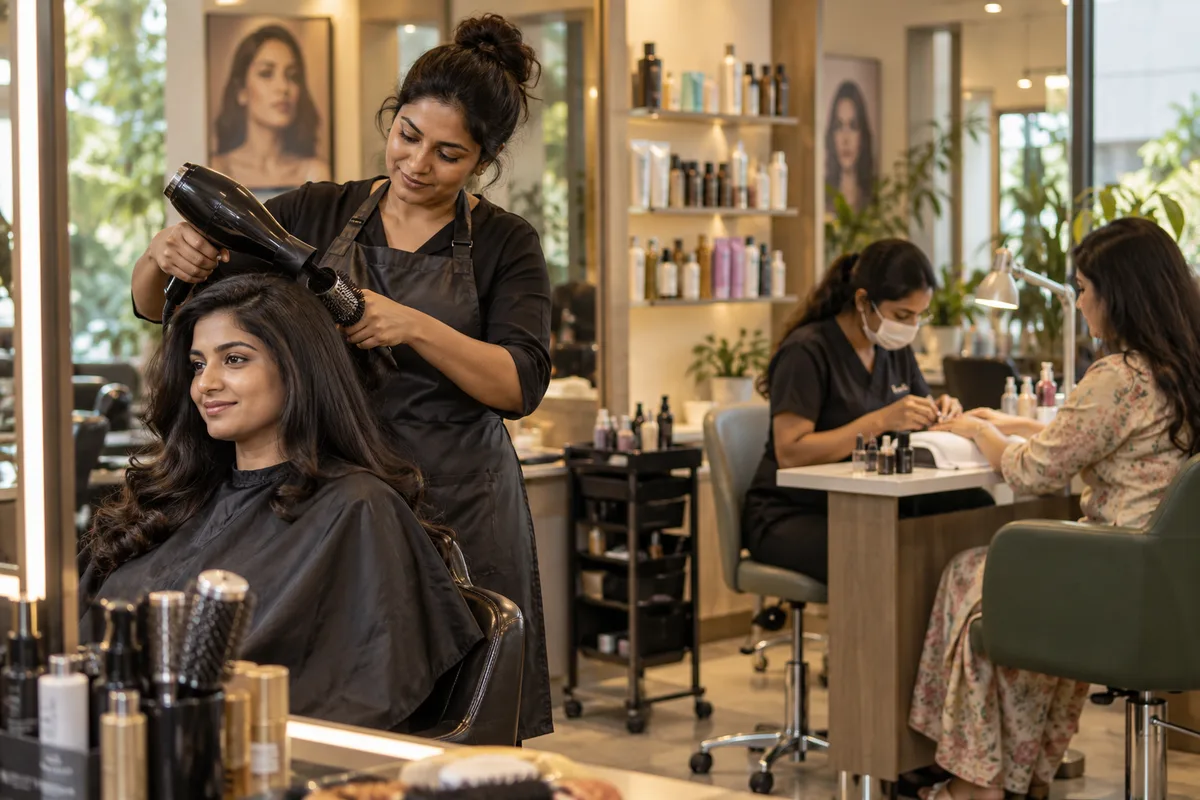
What digital marketing means
Digital marketing is the combined work of search, social media, advertising and website channels running together rather than as separate projects with separate people. GullySales runs these as one connected system so a change in one channel, such as a new offer, is reflected everywhere at once.
Last updated 14 Nov 2026.
For unisex salons
Where it usually goes wrong, and what we would do.
“A salon needs few channels, used well”
The shop serves a few kilometres around it. A map listing, a booking route on WhatsApp and a social page with real work cover the people nearby. More channels without a plan add effort without customers.
“Each channel does a different job”
Maps catches the person searching now. Instagram persuades the person deciding. WhatsApp takes the booking. Reminders bring them back. Judging Instagram on bookings or Maps on style misreads what each is for.
“Paid reach can fill a slow hour but not a weak shop”
An advertisement for the quiet afternoon works when the listing, the menu and the reply are in order. When they are not, the advertisement pays for visits that go to the competitor.
“Without a count, nothing can be improved”
If the salon does not know the number of bookings that came from Maps, from a group or from an Instagram message, every decision is a guess. A simple tally by source beats a dashboard nobody reads.
What we do
What we deliver for unisex salons.
The work available for this need. We agree the deliverables and responsibilities for your engagement in writing.
A channel plan for your area
A short plan naming the channels to use, the job of each and the person who runs it.
Result: The shop knows what each channel is for.
A shared menu and message set
One price list, one set of photographs and one tone used across Maps, Instagram and WhatsApp.
Result: A customer sees the same salon wherever they look.
A source tally
A simple list recording where each new booking came from.
Result: You can read bookings by source.
A small paid test
One local campaign aimed at a quiet hour, with a budget set by the owner and a count of bookings.
Result: The test result is a count of bookings, not clicks.
A review of what to stop
A look at activities that bring nothing, with a suggestion to drop them.
Result: Time is released for what works.
How the result is measured
- Enquiries across channels
- Cost per enquiry overall
- Channel mix by contribution
Recorded as a baseline before work starts, so every later report has an honest comparison.
Searches your buyers type
These searches show where a salon's few channels should point.
- best unisex salon in [area]
- The map listing, the home page and reviews. These carry most of the decision for a household.
- salon booking on WhatsApp
- A booking route in the profile and bio, so a family can book without calling.
- hair colour salon for men
- A page for colour with the stylist and process, found by men who have not booked colour before.
- bridal makeup artist near me
- A bridal page with a trial and group booking route. Test a small paid search for this only near the wedding season.
- kids haircut near me
- A children's page and listing entry, drawing the parent who books for the whole family.
Who it is for
This is written for these unisex salons.
- Neighbourhood unisex salons run by the owner and a few stylists
- Family salons near schools and apartment blocks
- Unisex salons in malls and shopping streets
- Franchise unisex salons of regional and national chains
- Salons in smaller towns that serve the whole family
- Salons attached to a spa or a gym
- Salons near colleges and workplaces
- Salons with a kids' corner and a family package
Before you decide
When this may not be the right fit.
- Your chairs are full at every hour, and attention would only add to a waiting list.
- You cannot yet tell which source brought a booking, so spending would give no reading.
Before you decide
Agree the work. Know how to judge it.
Digital marketing for unisex salons: use these checks to prepare, choose the scope, and review what changes.
Bring the right evidence
Bring a recent won order and an enquiry that went nowhere. Trace how each buyer found you, what they asked, and who handled the next step. A channel list alone will not explain the difference.
Make the scope clear
Choose one offer and one buyer group first. Agree which part needs attention: being found, getting a useful enquiry, or turning an enquiry into an order. Separate recommendations from the work required to carry them out.
Check the work in use
A useful plan names the first change, its owner, the evidence behind it, and the number that will show whether it worked. Ask what has deliberately been left out and why.
Know when to change course
If your team cannot answer the enquiries it already receives, improve that handover before buying more traffic. If the offer itself is unclear, test it with buyers before adding channels.
These are discussion points, not a fixed package. GullySales confirms the deliverables, responsibilities, fee, and term in writing after reading your brief and speaking with you.
Before we start
What to have ready before the work starts.
The records, access and decisions this work needs from unisex salons. Anything missing is noted in the written scope, with who will supply it.
- A map of your customers' areas
- Postcodes or area names from the diary are enough. Without them, we rely on what the stylists remember. Mark the areas where you would like new customers too, since the diary only shows who already comes.
- Passwords or admin rights for every channel
- Listing, social pages, website and messaging accounts all need access. Written down is fine if current. Any account we cannot reach is left out of the plan. If any account is held by a former helper, tell us early so recovery can begin. Even a login held on paper is acceptable, as long as it still works when we try it.
- A budget ceiling for paid reach
- Decide the highest sum you are willing to spend on a test, or decide on none. If no figure is set, the plan has no paid part. The ceiling should be a sum you can lose without worry, since a test is a test.
- The tally sheet kept at the desk
- The source count depends on a habit. Name who writes it and where it lives. Without it, decisions rest on guesses. The tally can be a printed sheet or a shared note on the desk phone. Fill it in on the day, since entries made from memory a week later lose the source.
- The shared service menu
- One current menu is the base of every channel. A printed card is fine. If prices differ between channels, we ask you to settle them first. Include festival and package prices, so no channel quotes an outdated offer.
How it works
How the digital marketing work runs
The work itself, in order. How an engagement starts, from your brief to a written scope, is set out on our method page.
- 1
Draw the map of where customers live
We mark on a street map the lanes, apartment blocks and schools that supply your customers, using addresses from the diary where you can share them. You tell us which areas you want more from. The map decides which channels deserve effort and which would reach people too far away. Customers who travel from further away are marked separately, since they may have come for a particular stylist.
- 2
Rank the channels by the diary
We set Maps, Instagram, WhatsApp, referrals and any paid reach side by side and mark how many recent bookings each brought, using the source entries and the stylists' memory. You choose the two channels to strengthen first. The channels you do not choose are left as they are for now, with their profiles kept correct but no new effort spent on them. A channel that brings in a lot of visitors but few bookings is flagged as a poor fit.
- 3
Write one menu and one message set
The listing, the page, the posts and the replies must say the same things about services and prices. We write a single shared menu and a handful of lines for each channel. You approve it once, and every channel uses the same wording. Mismatches between channels, such as an old price on the listing, are fixed first.
- 4
Start the source tally at the desk
We give the receptionist a simple tally to mark how each booking arrived. You decide who fills it and where it sits. Without this count, no later decision about channels would rest on anything solid. A quiet week still gets a tally entry, so gaps do not look like missing data.
- 5
Run one small paid test
If you wish to try paid reach, we plan one narrow test around a single service and one neighbourhood, with a budget you fix and can stop at any time. You decide whether to run it at all. The test is judged on bookings, not clicks. The test page carries a source code or a phone number that only that test uses, so its bookings are counted apart.
- 6
Decide what to stop
After the tally has run, we read it with you against the diary from before. Anything that brought no bookings is considered for removal. You choose what to drop and where to move the time, and we write that down as the next plan. Anything we stop is written down with the reason, so nobody restarts it by habit.
Where this fits
Three pieces of sales work, in this order.
This work sits inside sales process design, at stage 0, foundation. The audit comes before it, and sales management keeps it running.
Step 1
Sales audit
Find where deals are being lost and what to fix first.
Start here if you cannot say where orders are lost.
Step 2 · you are here
Sales process design
One written way to sell, from first enquiry to repeat order.
Start here if every salesperson sells differently.
Step 3
Sales management
A target, a review routine and someone who owns the number.
Start here if the team has targets and no routine.
FAQ
Questions owners ask before they call.
Not here? More answers, or ask on WhatsApp.
How much should a salon spend on digital marketing?
Is Instagram enough?
How do we judge whether it works?
Should a salon in a small town do digital marketing?
Can we start with just one channel?
Does a salon need to hire a separate person for digital marketing?
How long is the contract?
How soon will we see results?
Who will actually do the work?
What do you need from us?
More for unisex salons
Related work to consider.
Closest to this: strategy and research
Also for unisex salons
Or start from the overview: sales and marketing for unisex salons.
Your next practical step
Tell us what you are trying to grow, and we will read it before we call.
Eight short steps, mostly taps. Skip anything you would rather answer on the call.