Notes for owners · Sales management
A buyer persona that is more than a stock photo and a name
Build a persona from five customer calls. A one-page card with what the buyer fears, what they compare and who they ask, plus a blank template you can copy.
The GullySales team · Updated 17 Oct 2026 · 6 min read

On this page
A useful buyer persona is a one-page card about how one kind of buyer decides: what they fear, what they compare you with, and whom they ask. A persona named "Rahul, 35, likes cricket" tells your team nothing about tomorrow's call. A card that says "afraid the pump stops when the sky is cloudy, compares three installers, asks his son who works in a bank" changes the next quotation.
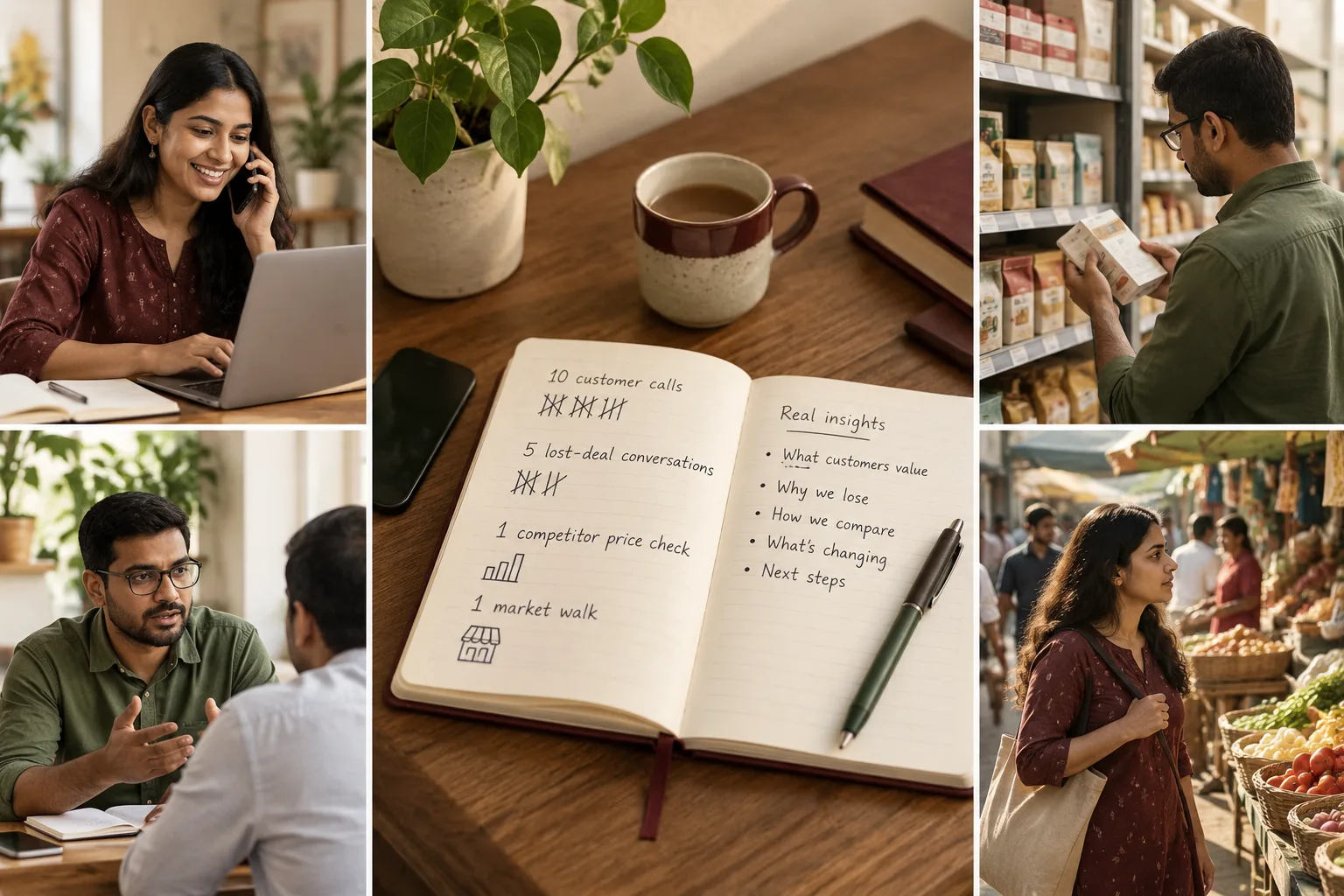
You build it from what real customers said, in their words, then keep it where the person who answers enquiries can see it. The card is a short job. The listening behind it is the longer one, and the interview method is set out in how to talk to five customers to find out why they chose you. If you run a shop or clinic, the lighter version is buyer personas for a local business. This post starts where the notes from those calls end.
What do you do with five pages of call notes?
Do not summarise. Lift the sentences. Read all five sets of notes and mark every place where a customer said something about a fear, a comparison or an adviser. Copy the exact words onto a separate sheet under three headings: afraid of, compared with, asked.
If a customer said "I was scared of the dust", write "dust", not "cleanliness concerns". Your first reply and your quotation should use their word, since that is the word the next buyer will also use in a WhatsApp message.
The card: copy this layout
Keep it to one page. Nine lines.
PERSONA: [a role, not a name. e.g. "Farmer replacing a diesel pump"]
Bought from us when: [the trigger, in their words]
Fear before paying: [one or two]
What they compare: [other names, sources or prices]
Who they ask: [spouse, son, agent, WhatsApp group]
Words they use: [three or four exact phrases]
What made them say yes: [one thing]
Do not say: [one line that put them off]
Where we meet them: [site visit, farm meeting, referral]
Age, income and favourite brand are left off because they changed no answer in any of the calls. A salesperson can read the card in under a minute and use it on the next call.
For example: a solar-pump installer in Anantapur
Imagine an installer in Anantapur who fits solar pumps for farmers with borewells. The owner had always opened quotes with the pump's horsepower and the number of panels. After five customer calls, the sheet of lifted sentences said something else. Three farmers were afraid of the pump stopping on a cloudy day in the middle of sowing. Two asked their sons, one a bank clerk, to read the quote. Four had compared three installers, and two of those had been put off by an installer who had no one to call when a controller failed.
The installer made the card, and its "Do not say" line was "it will run all day". One farmer said that sentence made him sure the installer would say anything. The mistake in the old quote was an unqualified promise. The rewrite said what the pump does on a clear day, what it does under cloud, who the farmer rings if the controller fails, and whose name is on the visit. In this invented case, 3 of the next 10 quotes turned into orders, against 1 in 10 before; the card helped, but two of the three were farmers who already knew the installer. A one-page copy in Telugu went into the quote so the son could read it aloud at home. The sale in a district like his depends on subsidy schemes and bank loans whose rules change, so the installer tells each farmer to confirm eligibility with the local office and not to rely on the installer.
How do you check the card against real enquiries?
Take the last ten enquiries that arrived by message and read the buyers' first lines against the card. If seven of ten use words from the "words they use" line, the card is probably close enough; treat seven as a rule of thumb, not a pass mark. If none do, you built it from customers who are unlike the people now writing to you, perhaps older accounts that came by referral. Rebuild the card from the new messages. Then call two recent buyers and ask what they feared.
The check takes ten minutes. It also catches a common error: a card written only from the happiest customers.
What if your customers disagree?
Then there are two personas, each on its own card. Count how many of your last twenty customers fit each. If one card covers fifteen of them, work on that card first. Never blend two cards into an average person, because the average buyer does not exist.
When one customer answers differently from the other four, write them at the bottom as an exception.
When is a persona not worth building?
Skip it when you sell one thing to the same kind of buyer every time and already know every objection. Skip it too when you have fewer than five customers to call. Use competitors' reviews and your own enquiry messages instead, and expect the first card to be wrong in places.
A card that is never opened again is a poster. Put it where the person replying to enquiries can see it, and change it when a customer says something it did not predict.
Putting the card to work
Use the "words they use" line in the first reply. Use the "fear" line in the quotation, and the "who they ask" line to decide what to send that can be forwarded. The card feeds the steps that follow it in the sales process. If you would like help turning your own call notes into cards, customer research and voice of customer is that work, and you can tell us what you need.