Notes for owners · Sales management
Counter-sales follow-up for component stores: turning walk-in and phone buyers into regulars
A buyer who takes one bearing at your counter has a machine full of parts that wear on the same cycle. Here is what to record at the counter, when to call back, and when not to.
The GullySales team · Updated 17 Oct 2026 · 5 min read
On this page
A fitter who comes to your counter for one bearing is working on a machine with more bearings, belts, seals and couplings that wear on the same cycle. To turn walk-in and phone buyers into regulars, write down who bought, for which machine at which unit, and which part. Then call before the next likely failure or the start of that unit's season, with the parts already set aside. The counter that remembers the machine gets the next order.
Who is standing at your counter?
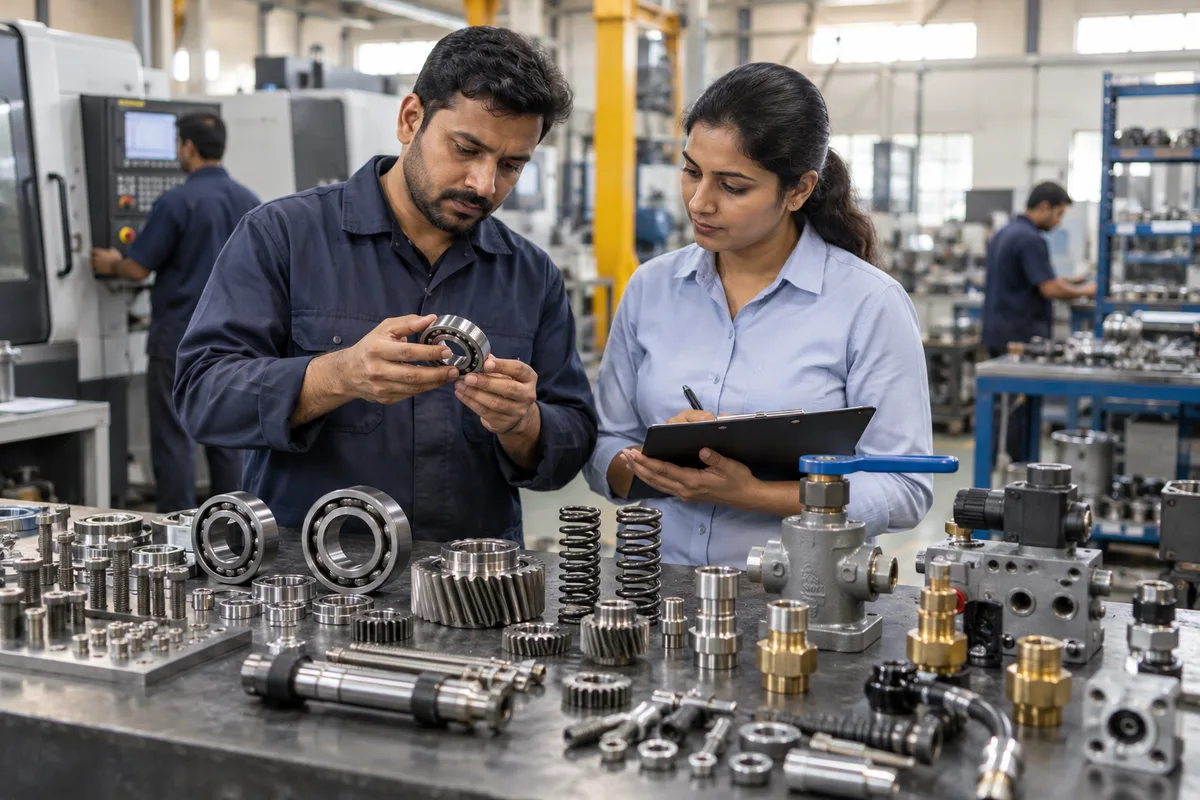
Often it is a fitter, sent by a rice mill, a dal mill, a sawmill or a plastic moulding shop, with the worn part wrapped in a cloth. The fitter decides where to go next time. The unit's owner pays, and sometimes rings to argue the rate. A maintenance contractor may buy for five units at once. At a bigger plant, the stores clerk phones in with a list.
Treat the fitter as the account. Their mobile number matters more than the unit's landline. When the fitter takes a GST invoice for the unit, copy the unit's GSTIN into the book as well: it names the unit even after the fitter moves on. Record the fitter and the unit separately, because a fitter who changes jobs takes their habits along.
What to write down at the counter
Add these columns to the counter book, or to a sheet on the counter phone:
| Date | Buyer and mobile | Unit and area | Machine | Part given | Asked for, not in stock | Likely next need |
|---|---|---|---|---|---|---|
| Sample row | Fitter, with their own number | Dal mill, Hingna Road | Dehuller | Two 6308 bearings | Matching V-belt | Belts and bearings before the new crop |
Two columns do most of the work. "Machine" turns a sale into a reason to call. "Asked for, not in stock" is your lost-sales list, and it tells you what to stock next. "Likely next need" is a guess in pencil: fill it from what that machine usually wears, and cross it out when the fitter tells you otherwise.
A paper register is enough while one person runs the counter. Add a second and it slips. When phone orders also land on several mobiles, records split and calls get missed. That is the point to move to a shared sheet or a simple CRM set up for a counter.
When to call: before the breakdown, not after
Four entries in the book should make you pick up the phone:
- Repeat purchase. The same part bought twice for the same machine in a short time means something is wrong: alignment, lubrication or the wrong grade. Call and ask.
- Season start. Rice mills before the paddy arrives, sugar mills before crushing, ginning units before the cotton. Units tend to overhaul just before, and the order goes to whoever calls first with stock.
- Shutdown. Ask a bigger plant when its annual shutdown falls, and call a few days ahead with its usual list ready.
- Stock arrival. A part you did not have has come in. Tell the buyer who asked.
On the phone or on WhatsApp, keep it to the machine:
"Namaste, last season you took two 6308 bearings and a B-section belt for the dehuller at the dal mill. The new crop will be in soon. Shall I keep a set aside for you?"
What a regular gets that a new buyer does not
Availability, before anything else. Parts kept aside before the season. Short credit for units you know, within a limit you set. A quick check on WhatsApp, where the fitter sends a photo of the old part and you confirm the number before the trip. An evening number for breakdowns, if you choose to give one.
A discount comes last, if at all. A fitter remembers the shop that had the part when the machine was down.
A component store near Hingna MIDC
This is an invented example. A store near Hingna MIDC in Nagpur sells bearings, V-belts, oil seals and fasteners to the units around it. Its cash memo book recorded part numbers and amounts. Nothing else.
A fitter from a dal mill bought the same bearing twice in a few weeks, and nobody at the counter noticed. The third time, the fitter went to a shop across the road. The person there asked which machine it was for, and said the bearing kept failing because the pulley was out of line. That shop got the mill's next maintenance list.
The owner of the first store added the unit and machine columns, and one habit. A part bought a second time for the same machine now draws a question from the counter: why? The counter suggests a check on the pulley alignment first. Before the new crop, someone rings the mills in the book with their usual sets ready. The dal mill's fitter was the first to ask for the counter by name, and two other units followed. Not all of it was gain. The extra calls ate the staff's mornings, and one mill still bought its belts from a cheaper shop. Small, but the register paid for its own ink.
When follow-up calls become a nuisance
A buyer who came once for an odd part and gave no machine does not need a call. Contractors who buy for many units several times a week will call you, so leave them be. And a rate list or festival offer broadcast to every number in the book gets you muted, which costs you the season call later.
One rule covers all of it: call only with a reason tied to the buyer's machine or season.
Start the machine column tomorrow morning
Rule the two new columns into tomorrow's page of the counter book. Ask every buyer which machine the part is for. Write it down even when they seem in a hurry, and by next season you hold a list of units that other counters lack. The habit sits under customer retention, and the sales hub shows where it fits with the rest of selling. If you want that book turned into a calling routine, tell us what you need.