Notes for owners · Channel and customer growth
Serving the workshop trade and the walk-in buyer at the same parts counter
How an auto parts shop can run two lanes at one counter: an account lane for garages that buy on speed and credit, and a retail lane for walk-in owners who buy on price and advice.
The GullySales team · Updated 17 Oct 2026 · 6 min read
On this page
- "It is one counter and three staff. How can there be two lanes?"
- "My regulars are friends. Why write down who is trade?"
- "Will the garage not resent waiting behind a queue of walk-ins?"
- "Credit to garages makes me a bank."
- "Should the trade price be on the board, so nobody can accuse me?"
- "The retail buyer spends little. Why give that buyer time?"
- "How do I know the lanes are working?"
- "What if I only have one lane?"
- Starting at your counter
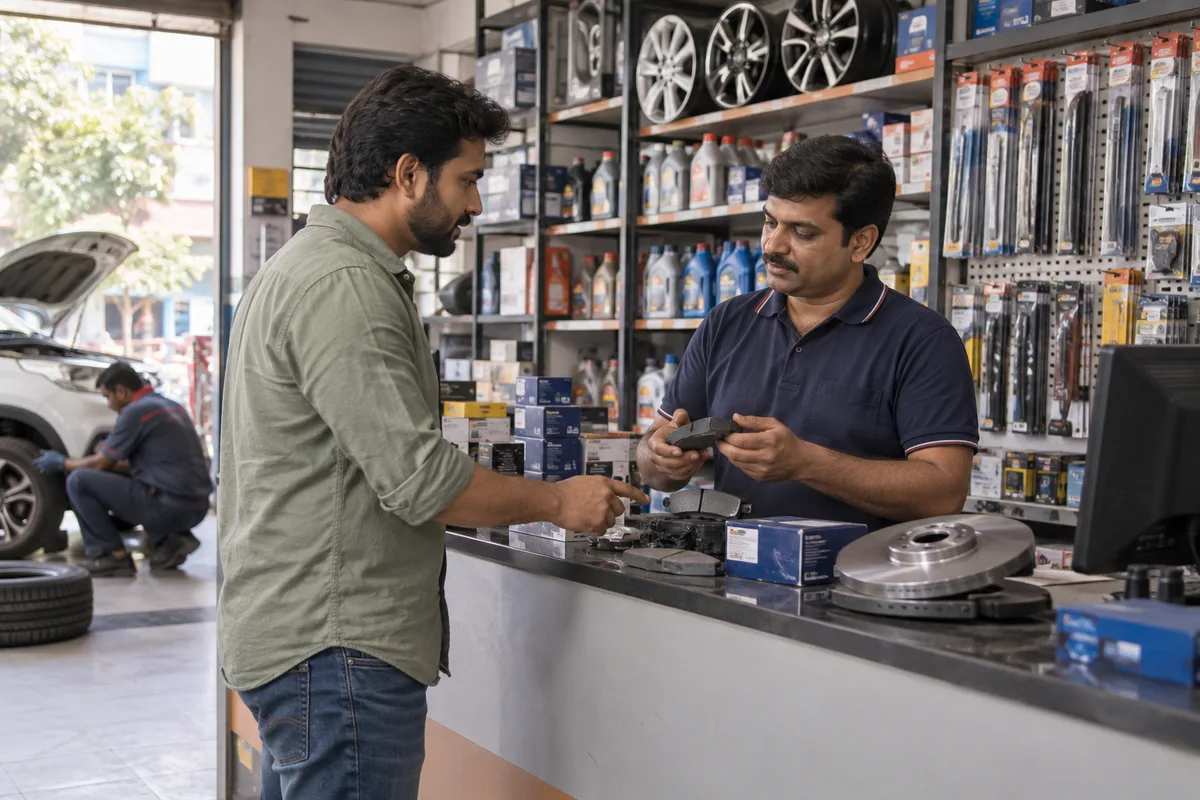
A garage mechanic wants brake pads for a car already on the lift. A scooter owner at the same counter wants to know which of two oils to buy. You cannot give both your full attention. Whoever waits remembers it. Serve them in two lanes, each with its own prices, records and manner of talking. Shop owners resist this. Here are the usual objections.
"It is one counter and three staff. How can there be two lanes?"
A lane is a habit, not a wall. The trade lane is whoever picks up the phone and the WhatsApp orders, often with a photo of the old part. The retail lane is whoever stands facing the street. In a shop of three, one person takes the trade desk through the busy hours and the others serve the counter. Swap them after lunch.
For example, take an invented spares shop in Ambala that sells to truck and tractor workshops on the highway side and to farmers and car owners from the town. Its trade desk keeps one printed sheet with each garage's name, the last bill and what is still due. The retail price board faces the street. When a workshop calls in the middle of a tyre sale, the call goes to the desk person. The cost is a day or two of muddle, since the desk person also has to learn the retail oil range for the afternoons when the counter is short.
"My regulars are friends. Why write down who is trade?"
Because without a written rule the price depends on who is standing there. Put one line on a card: a trade account goes to a workshop, fitter or dealer who buys on most working days and has a signboard you can visit. Account holders get the trade list and a credit limit. Everyone else pays the retail price. You may still decide case by case, such as an owner who runs six auto-rickshaws, but the card means you decide once, not at every sale.
If a regular retail buyer turns out to be a mechanic, ask what they do and offer the account yourself, before the shop across the road does.
"Will the garage not resent waiting behind a queue of walk-ins?"
Only if the mechanic has to join the queue. A trade order is a part number, a fit and a time it is needed by. Take it by phone, make it up against the ledger, and have it wrapped at the counter or sent with a delivery person. The Ambala shop's old habit was the opposite: a mechanic told "wait, I will call back" at peak hour, who bought elsewhere that afternoon and never said why.
A walk-in may not mind a wait if told. Say "two minutes, I am finishing a workshop order". Being ignored is what customers remember.
"Credit to garages makes me a bank."
It does if you extend it without limits. Keep one ledger page per garage with the columns date, bill number, parts, amount, paid on and balance. Tell each garage its limit in words, and tell it before the first bill, so a refusal later is not personal. Do not give fresh parts to a garage that has not cleared the last bill.
Set the limit with your accountant, because what your shop can carry depends on its own cash. If you cannot carry any credit, offer the trade rate for same-day payment. That keeps your money moving.
"Should the trade price be on the board, so nobody can accuse me?"
Usually not. Keep the retail board facing the street and the trade list with the account holder. A walk-in who sees a lower number beside their own may feel cheated. The argument holds up the counter. A mechanic who sees you sell the same part to a stranger at nearly the trade price may start looking elsewhere. Building that list is covered in a trade price list for garages.
"The retail buyer spends little. Why give that buyer time?"
Because the retail buyer wants something the garage never asks for: a plain answer. When the same questions keep returning, put a card near the counter. It says what the manual calls for, one cheaper option, one better option, what each costs. Warranty too. Say plainly what it covers and what it does not.
A scooter owner who feels advised has a reason to come back, and may later ask you where to take a car. A garage owner who watches you treat a stranger fairly has a reason to trust your word on the trade bill.
"How do I know the lanes are working?"
Do not measure sales first. Watch the counter jamming. For two weeks, mark on a sheet each time a customer waited visibly or a phone order stalled, and which lane suffered. If the marks fall on the trade side, the desk needs a second pair of hands at the busy hours. If they fall on the retail side, your counter is doing trade work it should have passed to the desk.
"What if I only have one lane?"
Then do not build the other. A shop that is nearly all walk-ins needs no trade desk, and a depot that sells only to garages needs no street board. A one-person shop can still use a smaller rule: take the call, say "five minutes", and keep the promise.
Starting at your counter
Write the one-line rule for who counts as trade. List your ten most regular garages and check each has a ledger page. Split the two price lists. For the trade side, read selling parts through distributors and mechanics. If the counter is where you lose both kinds of buyer and you want help with the account side through trade and dealer marketing, tell us what you need.
Related services