Notes for owners · CRM, automation and RevOps
Who answers an enquiry from a city where you have no office
Route an enquiry from a city with no branch by language and product, not by the map, and tell the buyer in the first message who will call and what they will send.
The GullySales team · Updated 17 Oct 2026 · 6 min read

On this page
An enquiry comes in from Bhubaneswar. You have no office in Odisha, nobody is sure whose lead it is, and by evening nobody has called. Route it by language and product, not by geography. The enquiry belongs to the person who can talk to that buyer in a language they are comfortable with, about the product they asked for, wherever that person sits. Then the first message tells the buyer who will call, when, and what they will send before the call. The map has no owner for a city you never planned to sell in.
Why the map leaves these enquiries with nobody
Many sales teams are drawn on a map: a manager for the south, one for the west, a branch in Pune. That works for dealers and for field visits. It fails for an enquiry from Raipur, Guwahati or Bhubaneswar, which sits outside every territory.
Then one of three things happens. The enquiry goes to "head office" and waits in a shared inbox. Or it goes to the nearest regional manager, who is out visiting dealers and plans to call "when I am next on that side". Or two people both call, with two different prices. Meanwhile the buyer has asked three other suppliers.
The routing rules, checked in this order
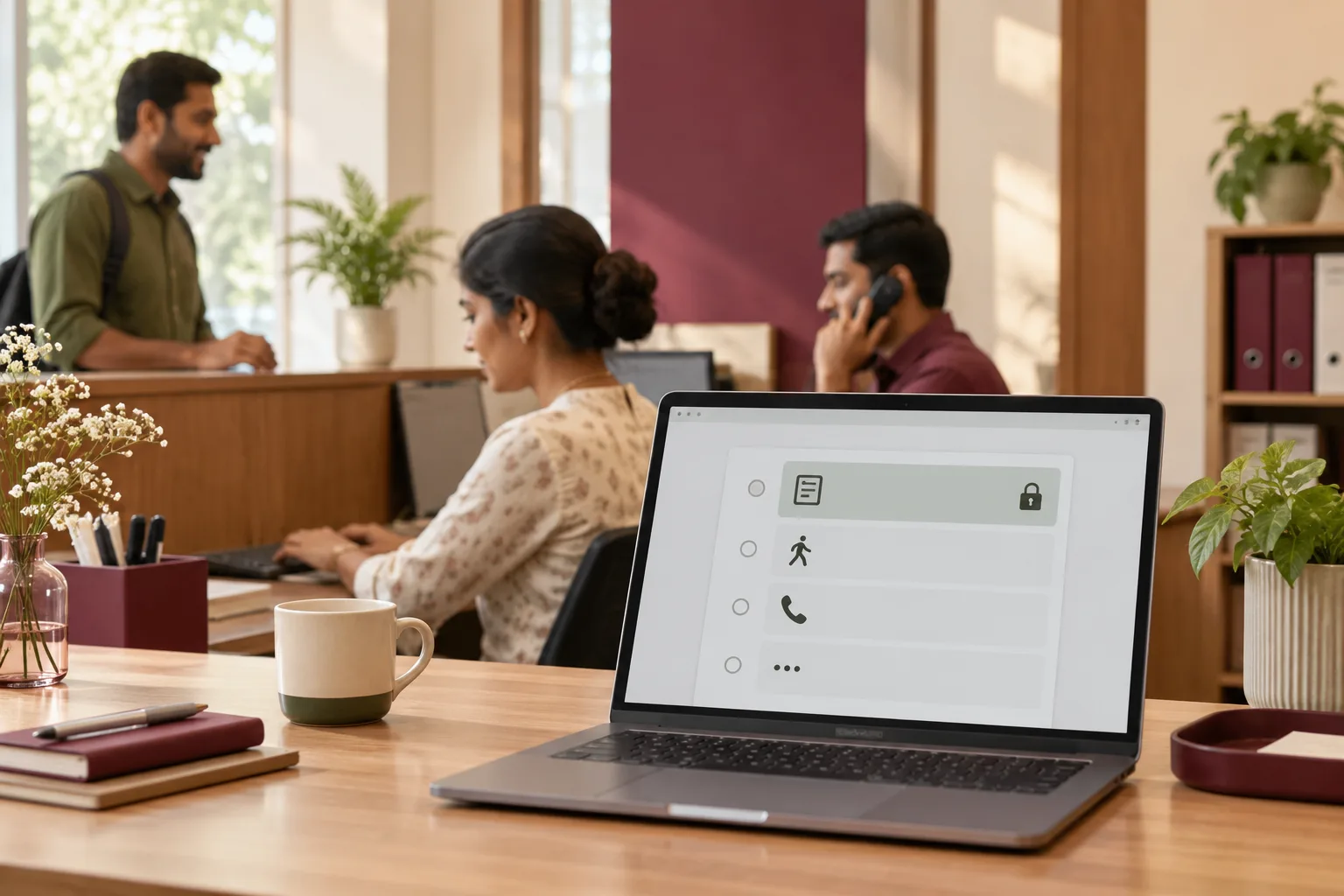
Write the rules on one page before anyone opens the software. Each enquiry is checked from the top, and the first rule that matches decides.
- Is this an existing customer, or a dealer's customer? Then it goes to whoever owns that account. Routing must never take a buyer away from a dealer who already serves them.
- Which language will the buyer want? Read it from the form, from the ad they came through, or from the language of their first message or voice note. Send it to someone who speaks it.
- Which product? A technical product goes to the person who can quote it without checking with the factory. Standard items go to the inside sales desk.
- How big is it? Above a quantity you set, copy the sales head, without changing who owns it.
- Nothing matched? A named fallback person, never "the team".
Then add one clock. If the owner has not touched the enquiry in the time you set, it moves to the fallback person and the owner's manager is told.
Where a dealer covers the buyer's district, decide in advance whether the enquiry goes to the dealer, to you, or to both, and put it in the dealer agreement. The quiet failure is passing an enquiry to a dealer and never hearing what happened. Ask for an outcome on each one.
The first message names the person
A buyer in a city where you have no office does not know your team, and an unknown number from another state looks like a sales call they did not ask for. So the first message, sent the moment the enquiry is assigned, introduces the caller:
Thank you for your enquiry about platform scales and a bagging scale for your rice mill. Ravi from our Vapi office will call you today before 6 pm, and Ravi's number is below so you know it is them. Ravi speaks Hindi and English. Before the call Ravi will send the rate sheet and a short video of the bagging scale filling 50 kg bags at another mill.
The message gives a name, a time, and something to look at before the phone rings, which is the buyer's reason to pick up.
Making the CRM do it
Routing needs four fields on every enquiry: city, state, language and product. City and product come from the form. Language is usually missing, so add one question to the form and to the WhatsApp greeting: "Which language would you like us to call you in?" One tap, and the hardest routing decision is made by the buyer.
Build the rules in the order above and set the clock. Test them on twenty old enquiries before switching on. Our note on automating lead assignment covers the alerts and reminders in more depth. Record your reply time before the change, so the result can be read against it.
For example: weighing scales from Vapi
This is an invented case. A Vapi maker of platform scales, bagging scales and weighbridges gets enquiries from rice mills, warehouses and fertiliser dealers in Patna, Raipur and Bhubaneswar. The team is drawn on a map: a desk in Vapi for Gujarat, and a manager in Pune who looks after dealers in Maharashtra.
The mistake is one line in the CRM: "outside Gujarat goes to Pune". A Patna rice mill's enquiry for three platform scales and a bagging scale waits until the Pune manager is back from a dealer tour. The manager calls in Hindi, which suits the mill. But the manager cannot say whether the bagging scale keeps pace with the mill's packing line, and promises to "send details". The mill buys from a supplier in Kolkata, an order of roughly ₹4 lakh.
So the rules take over from the map. Hindi and English enquiries from central and eastern India go to an inside salesperson in Vapi who speaks both and knows every model. Odia and Bengali enquiries go to the same person for now, with a written summary in English, until there are enough to justify a speaker. Weighbridge enquiries go to whoever can reach the site for a survey, because there geography wins. The Pune manager is copied only where a Maharashtra dealer already serves the buyer. Every enquiry gets the first message as soon as it is assigned. Odisha stays slow: with no Odia speaker, those buyers get English summaries and some still drift away.
When routing by language and product is wrong
If the first conversation has to happen on site, geography wins. A roofing contractor or an interior firm cannot quote without measuring, so the enquiry belongs to whoever can reach the site. If nobody can, say so and offer a date.
A two-person sales team does not need routing rules either, just one shared list and one person answering. Rules are worth writing when enquiries outrun one person, or arrive in more languages than one person speaks.
Your five rules, on one page
Go back through a month or two of enquiries from cities where you have no office. Next to each, write who answered, in which language, and how long it took. Then write your five rules on one page. Lead routing and assignment is the service if you want them set up in your CRM, and our locations pages describe the languages and buying habits by state, which helps decide who your desk needs. When the page is written, tell us what you need.