Used two-wheeler dealers · Automotive
Show the bike, the papers and the price before the buyer walks in.
A college student in Coimbatore has saved up and wants a bike under a limit the family has agreed. The student scrolls Instagram reels and a marketplace app, sees six listings of the same model, and messages three sellers.
Scope, fee, reporting and term are agreed in writing after we have read your brief and spoken to you.
In one paragraph
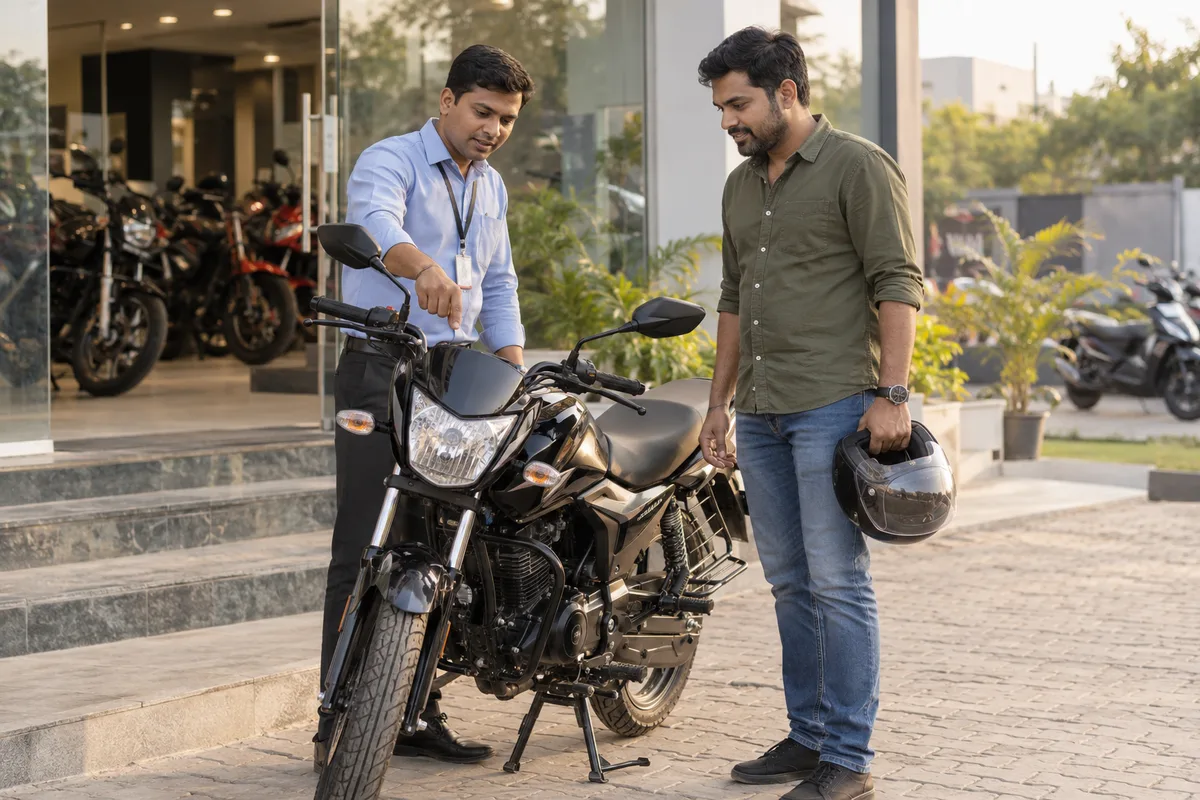
A used two-wheeler dealer buys, reconditions and resells motorcycles and scooters to students, first-time commuters, delivery riders and families on a budget. Used two-wheeler dealer marketing brings buyers to specific bikes. GullySales sets up stock listings, a WhatsApp reply routine and a follow-up list for buyers who asked about a bike and went quiet.
The one who replies in ten minutes with a video of the engine starting, a photo of the RC and a clear price gets the student to the shop that evening. The business is stock turning over. A bike that sits in the yard for two months costs money in space, in battery, in tyres and in the price the owner is willing to drop later. A good dealer works like a small trading desk, buying carefully, cleaning and servicing, listing with honest photos and replying quickly to every serious message.
Last updated 18 Oct 2026.
How buyers decide
How used two-wheeler dealers are chosen.
The buyer is choosing a specific bike more than a shop. The model, the year, the kilometres, the owner count and the price are all set against what similar bikes are listed for. The dealer is judged on whether the bike matches the photos, whether the papers are clean and whether the price leaves room for a reasonable bargain.
Paperwork is the real worry. Buyers ask about the RC, whether the earlier loan has been cleared, whether the name transfer and the NOC are included, and what happens if the bike comes with a challan. Rules and forms differ by state, so a dealer who explains the process in general terms and hands over the transfer papers at delivery is believed over one who says it will be done later.
Finance and a short warranty help decide the sale. A buyer paying in instalments, through a small finance company or a tie-up arranged by the dealer, wants to know what the dealer will fix if the bike gives trouble in the first month. A dealer who names the few parts covered, in writing, gives a friend something definite to repeat.
The problem
What usually goes wrong for used two-wheeler dealers.
What owners tell us on the first call, in their words.
“Our bikes sit in the yard and nobody sees them online”
Stock is photographed in a hurry and listed once. By the time a buyer searches, the bike is buried under newer listings.
“Messages arrive at night and are answered the next afternoon”
A buyer messaging three dealers goes to whoever replies first, and our reply comes after the buyer has already seen another bike.
“Buyers do not trust the paperwork”
They have heard stories about bikes with unpaid loans or a missing NOC, and our word alone is not enough.
“Price haggling eats the margin”
Without a clear explanation of what was done to the bike, the buyer compares our price with a private seller who did nothing to the bike.
“We do not know which bikes to buy”
Stock is bought on feel. Nobody has recorded which models and price bands sell quickly and which sit for months.
“Old customers are not told when we get a bike they would like”
A student who bought a scooter from us last year might want a bike now, and no one calls.
What we do
What we do for used two-wheeler dealers.
Everything included for used two-wheeler dealers.
A listing format for every bike
Front, side, rear, meter, engine and RC photographs, a thirty-second start-up video, kilometres, owner count and a line on what was repaired or replaced.
A WhatsApp reply routine for marketplace and reel enquiries
Saved replies for price, kilometres, papers and visiting hours, with a rule for who answers and a log of every message that asks for a visit.
A paperwork page and a document checklist
A plain description of the RC check, loan clearance, name transfer and NOC steps the dealer handles, and what the buyer brings, written in general terms.
Reconditioning notes with photographs
A card for each bike listing what was cleaned, serviced or changed, with before and after photos of tyres, chain and battery where relevant.
Stock sales record
A simple sheet of model, year, buying price band, days in stock and how it sold, reviewed before the next purchase of bikes.
Finance and warranty one-pager
The finance partners and the first-month cover the dealer offers, in a form that can be sent on WhatsApp and printed for the shop wall.
Past customer list with consent
Each buyer recorded with the bike sold, the date and consent for messages, so the dealer can tell past buyers when a suitable bike arrives.
How the result is measured
- Enquiries by source: marketplace, reel, walk-in, referral
- Time taken to answer a message
- Visits against enquiries
- Bikes sold against bikes listed
- Days in stock by model and price band
- Repeat and referral buyers
- Finance cases opened against sales
Recorded as a baseline before work starts, so every later report has an honest comparison.
Every service, written for used two-wheeler dealers
Each has its own page: what it involves for used two-wheeler dealers, what you get, and what it is measured on.
- Lead generationBring in buyers who ask about a particular bike, not those who only scroll.
- SEOLet a search for your bikes land on your stock page and not on a rival's.
- Local SEOShow up on the map for every buyer within a short ride of your yard.
- Social media marketingPost the bike you have, with the papers and the price, and answer the comments.
- Content marketingWrite down what buyers ask, and the next buyer finds the answer on your page.
- Buyer personasKnow who is buying the bike, who is paying, and who decides.
- CRMKeep every buyer, bike and promise in one place, not in five phones.
- Follow-up systemsReply, call back and close the loop on every buyer who showed interest.
- WhatsApp marketingRun the whole sale from one chat: stock, papers, price and the visit.
- Digital marketingPut your stock where buyers look, then measure which place sends the visit.
- WebsiteGive each bike its own page, with the price, the papers and a button to message.
Worth a page and a campaign of their own
Honest photographs and a short video of every bike · A reply on WhatsApp within minutes during the day · Clear paperwork: RC, loan clearance, NOC and name transfer · Reconditioning notes buyers can read · Finance options explained simply · A short first-month warranty on named parts · Stock buying based on what sold fast · Repeat and referral buyers from past customers · A Business Profile that lists the stock type
Priority campaigns
Campaigns for what used two-wheeler dealers most want to sell.
Each one planned around when your buyers decide, and measured against the baseline.
Student and first-job bike drive
Reels and posts around college reopening and the first salary month, with a price band, a model type and the papers shown at the first visit.
Delivery rider supply
A short offer for delivery riders and gig workers covering reliable commuter bikes, finance help and a quick repair route, shared through rider groups.
Festive exchange and upgrade
Messages to old customers before Dussehra and Diwali, offering to take back their present bike and show newer stock.
Monsoon-ready reconditioned bikes
A post and a Business Profile update on bikes with new tyres, brake checks and battery tests, ahead of the rainy months.
Sold-bike delivery photos
With the buyer's agreement, a photograph of each handover posted in the dealer's profile and status, with no number plate on show.
Beyond search
Where we reach buyers of used two-wheeler dealers, beyond Google.
Search matters, but it is rarely the only way this industry's buyers find a supplier.
College students and hostel groups
A hostel floor passes a dealer's number along by word of mouth. Find the canteen owners, stationery shops and student groups around each campus, and set a fixed student price band before approaching them.
Delivery fleet supervisors
A supervisor who recruits riders needs bikes quickly. A direct number and a ready price list for commuter bikes let the supervisor place an order in one call.
Local finance agents and small lenders
An agent who arranges instalments sends buyers to the dealers whose bikes clear paperwork cleanly. Keep a record of which agent sent which buyer and what was agreed on commission.
Mechanics and tyre shops nearby
A mechanic hears first when a customer wants to sell or swap a bike. A written referral arrangement, with the fee agreed in advance, lets your stock be mentioned to their customers.
Villages and small towns around the shop
Farm families travel to the nearest market town for a bike. A post in the local language with a location pin saves them asking the way at the bus stand.
Who it is for
This is written for these used two-wheeler dealers.
- Roadside and market-area multi-brand used bike dealers
- Showroom exchange counters of authorised two-wheeler dealers
- Premium used bike sellers for performance and cruiser motorcycles
- Used scooter specialists serving women and older riders
- Dealers who supply used bikes to delivery riders and gig workers
- Refurbished bike chains with several outlets
- Brokers who sell on consignment without holding stock
- Rural and semi-urban used bike dealers serving farm families
Not for
It is not the right fit if.
- You want a guaranteed Google ranking or a guaranteed number of leads. Nobody honest can promise either.
- You need enquiries by next week and have nobody to answer them.
- You want posts and reach reported, not enquiries and orders.
How it works
How the work runs for used two-wheeler dealers
The work itself, in order. How an engagement starts, from your brief to a written scope, is set out on our method page.
- 1
Check the stock and the messages
How each bike is photographed, how long it stays in the yard and who answers a marketplace message that arrives at night.
- 2
Set the listing and reply routine
One format for photos and video and one set of saved replies, so every bike is shown the same careful way.
- 3
Make the paperwork visible
A page and a printed sheet that show what the dealer checks and handles, covering the RC, loan clearance, NOC and challans.
- 4
Reach buyers where they look
Reels, marketplace listings and a Business Profile, aimed at the model types and price bands that move in your area.
- 5
Learn from what sold
The stock sheet is read with you, so the next purchase of bikes follows what sold.
Where this fits
Three pieces of sales work, in this order.
GullySales builds every engagement from three pieces of sales work. This page is not one of them, but the same three steps apply to the business behind it.
Step 1
Sales audit
Find where deals are being lost and what to fix first.
Start here if you cannot say where orders are lost.
Step 2
Sales process design
One written way to sell, from first enquiry to repeat order.
Start here if every salesperson sells differently.
Step 3
Sales management
A target, a review routine and someone who owns the number.
Start here if the team has targets and no routine.
FAQ
Questions used two-wheeler dealers ask before they call.
Not here? More answers, or ask on WhatsApp.
Which platform should a used bike dealer spend time on first?
Can we promise a warranty on used bikes?
How should we deal with bikes that have loan or challan history?
Is it worth showing prices online?
How can a small shop with one owner manage all this?
How long is the contract?
How soon will we see results?
Who will actually do the work?
What do you need from us?
What if we are not happy with the work?
Part of Automotive. See the other industries in the sector.
Your next practical step
Tell us what you are trying to grow, and we will read it before we call.
Eight short steps, mostly taps. Skip anything you would rather answer on the call.