E-commerce · Books
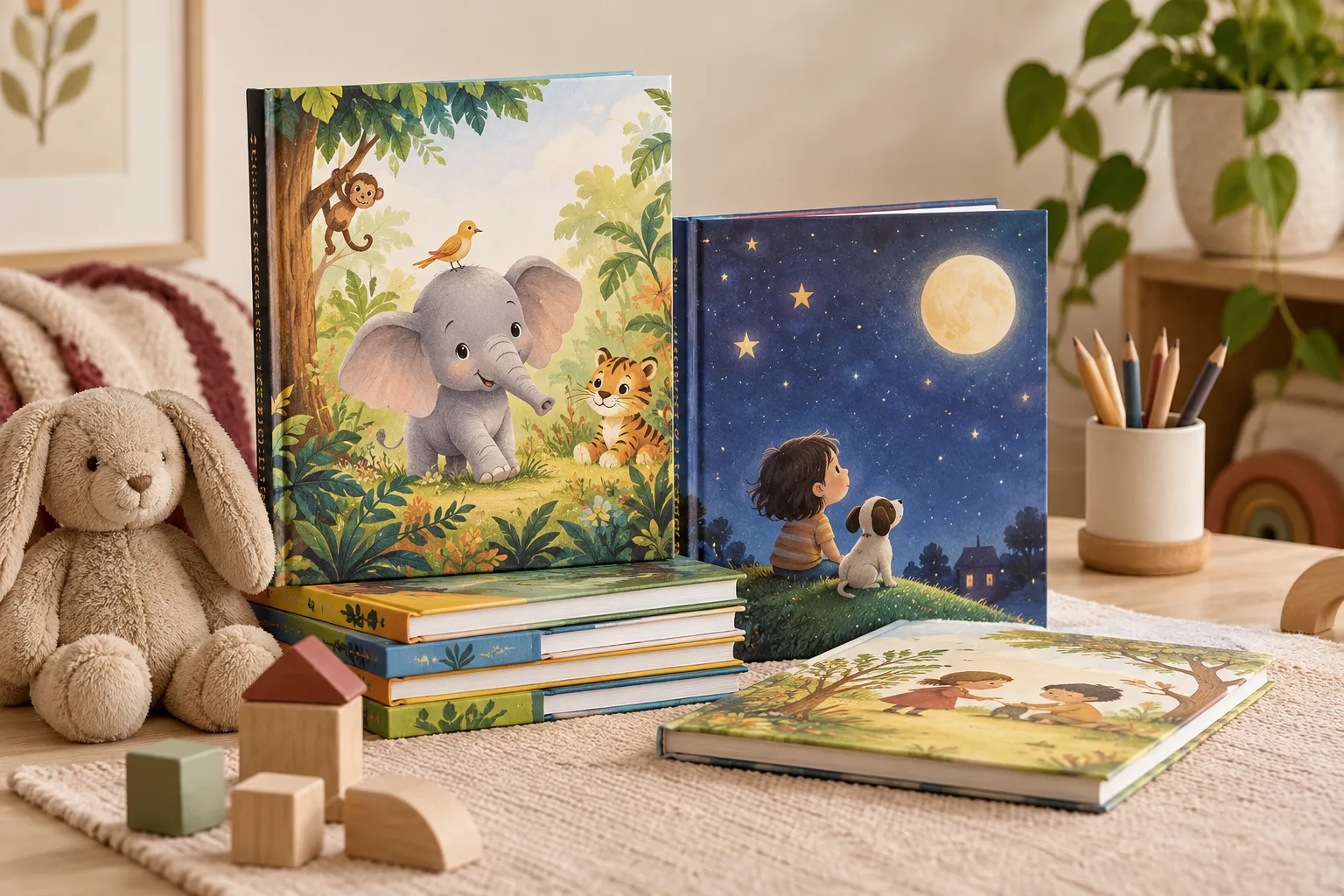
The parent is choosing for a three-year-old, and the page only shows a cover.
The buyer of a children’s book is not the reader. A parent chooses for a child, a grandmother for a grandchild who visits twice a year, a teacher for a classroom. They worry about age, about whether the child will sit still for it, about whether the language and the pictures are right.
Scope, fee, reporting and term are agreed in writing after we have read your brief and spoken to you.
In one paragraph
Children's books are the board books, picture books, early readers, story collections and activity books bought by parents, grandparents, teachers and gift givers for readers from babies to young teens. GullySales builds age-led pages, reading sets and gift routes, and reaches parents where they ask for recommendations.
That makes age bands, previews and recommendations more important than they are for adult books. A listing that does not say who it suits makes the buyer guess, and a guess on a gift is expensive.
Last updated 7 Oct 2026.
Who it is for
This is written for you if you sell children’s books online.
- Specialist children's booksellers and online shops for parents
- Publishers of picture books, early readers and story collections in English and Indian languages
- Sellers of activity books, colouring books and puzzle books for children
- Subscription box and library set sellers who need an easy first order
Not for
It is not the right fit if.
- A seller who cannot say what age a book suits. Parents will not guess.
- Sellers of school textbooks. That is a different buyer and a separate page in this section.
How buyers choose
What decides the sale of children’s books.
Age and reading level
The search is books for a two-year-old, first readers for a six-year-old, stories for a ten-year-old who does not like reading. A page that names the age and the reading stage is read. One that says kids is not.
Look inside
Parents want to see the pictures, the amount of text and the quality of the paper. Board books must be sturdy. A few spreads of the actual pages convince them.
Language and values
A parent may want the story in Kannada, Hindi or English, or in two languages together. Some check that the book reflects their own world and avoids what they do not want their child to read.
A gift for someone else's child
A buyer without a child asks what is popular and suitable. A recommended list by age, a note inside and gift wrap close the sale.
Where sales are lost
What usually goes wrong when you sell children’s books online.
In the words sellers use on the first call.
“Parents browse lists and leave without buying”
They do not trust a bare list. A short note on each book, what it is like and what it teaches, makes a list into a recommendation.
“A wrong age ends in a return”
A book too hard or too young comes back. Show the age band and a sample page, and invite a message from a parent who is unsure.
“Schools and libraries ask for quotations and we only have a cart”
A teacher buying a set wants a quotation and an invoice. A simple request form, a list of bulk terms and a follow-up make it a channel.
“Our Indian-language stories get few clicks”
Parents search in script and by popular character. Titles in the original script, a read-aloud sample and clear age bands bring the page to them.
The scope
The work we would propose for children’s books.
Measured on purchases, conversion rate, cost to win a customer, average order value and repeat purchases. Anything here that needs a platform or tool we have not used with you is confirmed with you before it goes in the scope.
- Age-band pagesA page for each age band, from the first books for babies to books for confident readers, with every title's age, format and language, in the words parents type.
- Preview spreads and read-aloud clipsPhotographs or short clips of inside pages, with the publisher's permission, so the parent sees what the child will.
- Gift guidesLists for birthdays, new babies and festivals, with a gift-wrap option and the order-by date, written for the person who is not a parent.
- Parent and teacher communitiesParenting groups, school circles and Instagram accounts that review children's books, approached for honest reviews and recommendations.
- School and library enquiriesA request page for schools, libraries and nurseries that asks for the age group, number of children and delivery location, with a follow-up from your team.
What we do
What you get for children’s books.
Each deliverable and what it is there to change.
An age-band guide
Each band with the books you carry, the format and the language. It lets the parent find the right book in one visit.
Preview galleries
Inside pages for the main titles. They answer the question can my child read this.
A gift list and wrap page
Lists by age and occasion, with a gift option. It serves the buyer who has no child of their own.
A school and library quotation page
A form and a bulk terms sheet. It opens a channel your cart did not.
How the result is measured
- Purchases
- Conversion rate
- Average order value
- Repeat purchase rate
- Return rate and the reasons given
- Quotation requests from schools and libraries
Recorded as a baseline before work starts, so every later report has an honest comparison.
How it works
From your first message to the first piece of work.
No open-ended retainer. Every step gives you something in writing.
First
Your brief
You tell us what you need in a few short steps: your business, what you want, where enquiries come from and how they are handled.
After the brief
A conversation and a written scope
We read it, then talk with whoever handles your enquiries. If you want our help, the scope, the fee and the reporting come in writing, and nothing starts before you have read them.
Before work starts
Baseline recorded
The numbers this work is meant to move, such as enquiries, quotations, orders, visits or renewals, written down so every later report has an honest comparison.
After the baseline
The first fix goes live
The fix we agreed to start with is put in place and measured against the baseline, whether that is a reply, a follow-up, a page, a listing or the handover between marketing and sales.
As agreed
Report against the baseline
What moved, what did not, and what changes next, in plain words. How often you get it is set in writing before work starts.
At renewal
Renew on the numbers
The term ends and you decide whether to continue from the results. The length is agreed in writing before anything starts.
What we need from you
What to have ready before we talk.
None of it has to be tidy. We read what you have.
- Your children's list with age band, format, language and ISBN
- Photographs of inside pages and permission to use them
- The books that sell as gifts and those that repeat
- Schools, nurseries and libraries who already buy
- Return reasons, especially wrong age and damaged copies
Selling in India and abroad
Selling children’s books beyond your own market.
Where you sell decides sizes, units, seasons and returns. We work from Bengaluru and have no overseas office, so for a new country we start from your own sales and the platforms you already use.
Parents abroad want the home language
Families outside India look for stories in their mother tongue to read with their children. Look at your own platforms to see which countries already ask.
Weight and rights
Picture books are large and heavy in a parcel, and territory limits may apply to some editions. Check postage costs and your publisher's terms first.
FAQ
Questions about selling children’s books online.
Not here? More answers, or ask on WhatsApp.
How should I describe the age for a children's book?
Is it worth selling children's books in regional languages?
Can schools buy from my site?
How much does it cost?
How long is the contract?
How soon will we see results?
Who will actually do the work?
What do you need from us?
What if we are not happy with the work?
Sellers of children’s books also need
Also selling from a shop, a workshop or a warehouse? See the page for retailers.
This page is part of the e-commerce section. The D2C brands page covers the arithmetic of acquisition cost and the second order for any brand.
Why us
Why owners pick GullySales over an agency.
Marketing and sales, as one job
Most agencies stop at the enquiry. We also fix what happens after it: the reply, the follow-up, the quote and the CRM.
The person on the first call does the work
No account managers in between. You are never handed to someone you have not met.
A baseline before anything starts
Your numbers are written down on day one, so every later report compares against something honest.
The fee in writing, split three ways
Our time, your media spend and production on separate lines. You always see what goes to us.
No guarantees we cannot keep
The term is agreed in writing and never a default twelve months. We never promise a ranking or a lead count, because nobody controls those.
One office, and we say so
Nagarbhavi, Bengaluru. We work across India by call and WhatsApp and travel when a session needs to be in person.
#257, 3rd floor, Sri Nanjundeshwara Complex, Nagarbhavi 8th Block, Outer Ring Road. How we work.
Engagement options
Ways to work with us.
Pick the size of commitment that fits. Every option starts with your brief and a conversation.
Option 1
The conversation on its own
A call after you send your brief. It says honestly whether you need outside help, and many fixes are ones your own team can make.
Option 2
One fix, scoped
Start with the fix that matters most, such as reply time or follow-up. The fee is in writing before anything starts.
Option 3
An ongoing programme
We run the work, report against the baseline, and you renew on the numbers. The term and the reporting are agreed in writing first.
Option 4
Guidance for your own team or agency
We plan, brief and check the work of your in-house team or current agency, instead of replacing them.
Your brief
Tell us what you need, and we will read it before we call.
Eight short steps about your business, what you want and who decides. Most questions are a tap, and you can skip any you would rather answer on the call.
Your next practical step
Tell us what you are trying to grow, and we will read it before we call.
Eight short steps, mostly taps. Skip anything you would rather answer on the call.