E-commerce · Books, office, art and hobbies
Everyone likes our notebooks, but nobody pays more than the shop down the road.
Stationery is cheap, familiar and bought without much thought, which is the trouble. A buyer can get a blue pen or a ruled notebook from the kirana at the corner, so your listing has to explain why theirs should arrive in a courier box. The things that make a good notebook, such as paper that does not bleed or a binding that lies flat, cannot be seen in a thumbnail.
Scope, fee, reporting and term are agreed in writing after we have read your brief and spoken to you.
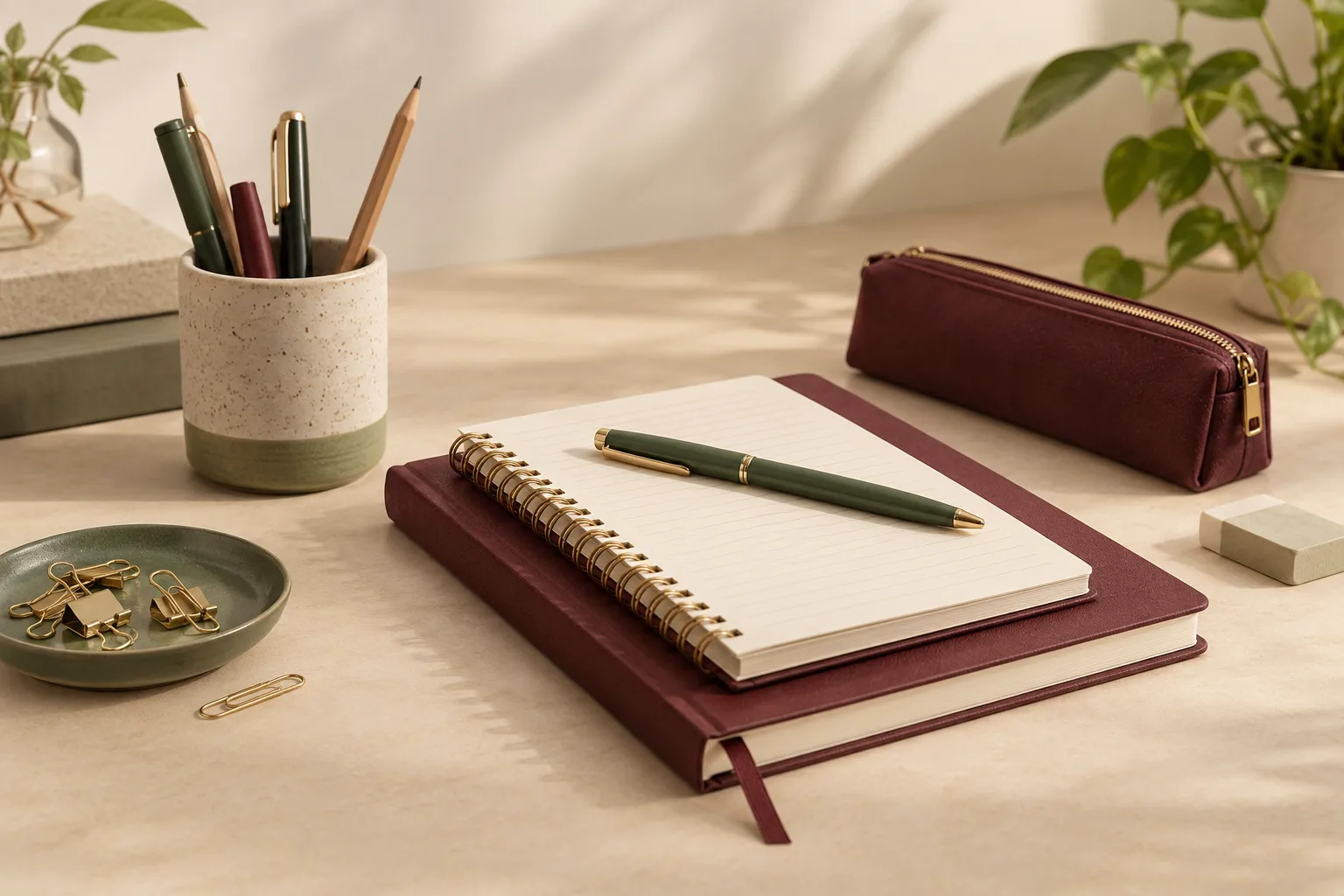
In one paragraph
Stationery e-commerce is the online sale of notebooks, pens, planners, school supplies and paper goods, to buyers who decide on paper weight, ink feel, ruling and a price they can match at the nearest shop. GullySales works on what makes your product look different from a plain one in a photograph, how bulk and school-list buyers reach you, and how a one-pen customer becomes a customer who reorders.
The segment splits in two. Some buyers want a nice object and will pay for it, like the person who owns eleven fountain pens. Others want forty identical books by the first week of school. Both are served online, and the page, the pack size and the shipping all differ.
Last updated 7 Oct 2026.
5 types of product
Each kind of stationery sells differently, so each has its own page.
Open the one that matches what you sell. It covers who buys it, where the sale is lost and what we would do.
 NotebooksThe paper is good, but buyers cannot feel it through a phone.
 Writing InstrumentsA pen sells on how it writes, and nobody can test that on a product page.
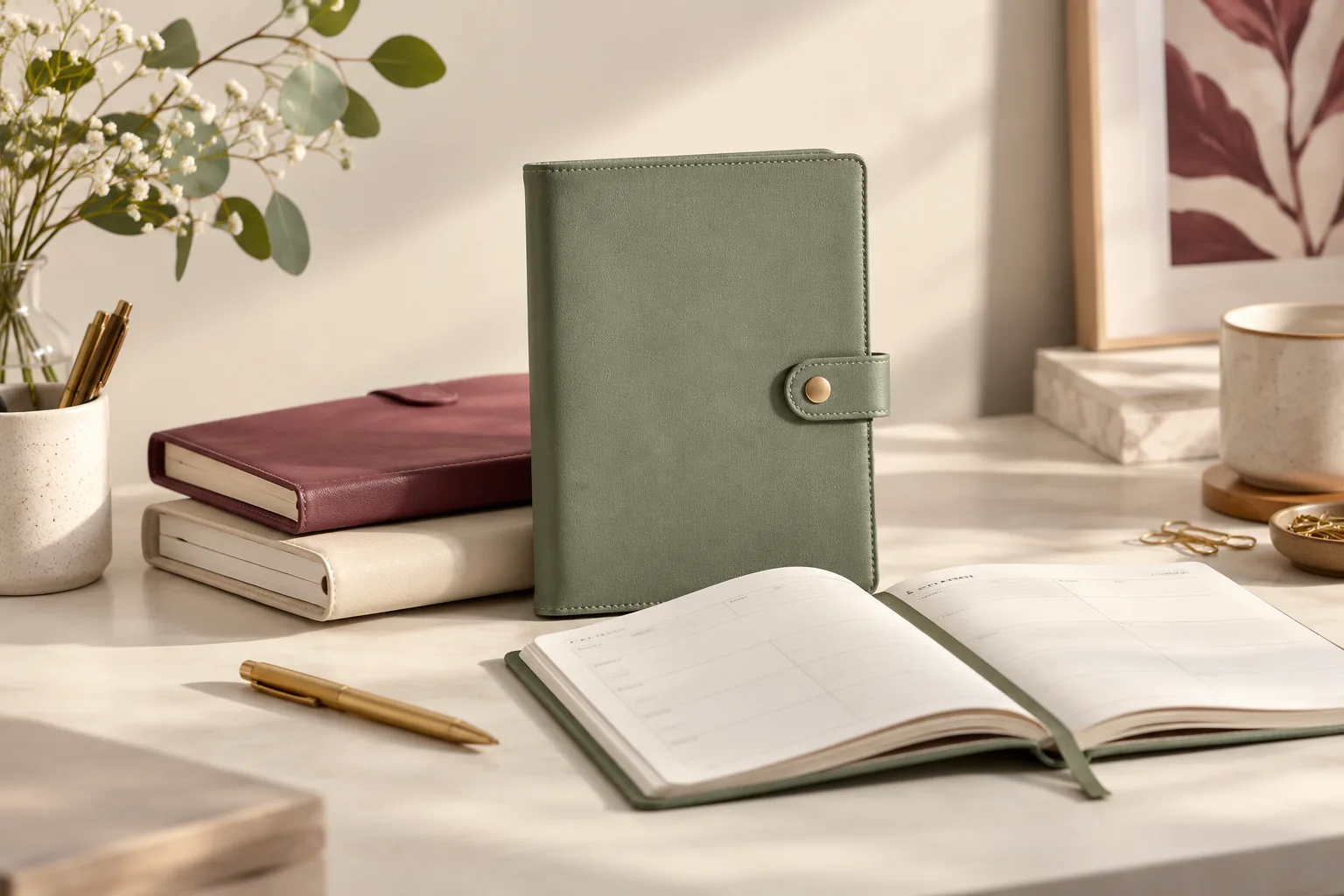 PlannersPeople buy a planner in January and abandon it by March.
 School SuppliesParents buy the school list in one weekend, and we are not on it.
 Paper ProductsOur cards and envelopes are lovely, but people want them in time for Saturday.
Who it is for
This is written for you if you sell stationery online.
- Brands that design and sell their own notebooks, planners and journals
- Pen and writing-instrument sellers, including importers of fountain pens and inks
- Sellers of school kits, geometry boxes and bulk classroom supplies
- Paper product makers selling cards, envelopes, sticky notes and wrapping paper
- Marketplace sellers on Amazon, Flipkart or Meesho who want to own their customers
Not for
It is not the right fit if.
- A seller competing only on the lowest price for plain exercise books, where margin is thin and marketing cannot change the buyer's rule
- A brand that has no stock photograph of the actual product and cannot take one
How buyers choose
What decides who wins in stationery.
Paper, ink and what the listing can prove
Buyers look for paper weight in GSM, whether ink shows through and the colour of the page. Ask a seller of journals what the review says and it is usually about bleed, not about the cover.
Size, ruling and binding
A5 or A4, ruled, dotted, squared or plain, hardbound or spiral. A buyer who gets the wrong ruling returns the book, so these belong in the title and not in the third bullet.
Pack size and the unit price
A pack of five is compared with a pack of ten on the cost of one book. Listings that do not say how many pieces are in the box lose to the ones that do.
The gift and the season
The same planner is bought for a new year, a graduation, a colleague and a school reopening. Buying peaks arrive on dates the seller can plan for.
Where sales are lost
What usually goes wrong when you sell stationery online.
In the words sellers use on the first call.
“They love it and then compare the price with the shop”
A single pen or notebook has nothing to hold a premium except the page itself. Without paper weight, close-up photographs and a handwriting sample, the buyer goes by the number.
“Our reviews say the paper is thin”
Reviews on stationery mention paper, ink bleed and binding far more than design. If the listing never said which paper you use, the buyer decided for themselves.
“Orders are small and shipping eats the margin”
A notebook costs less than the courier charge on it. Basket value and bundles decide whether the order makes money.
“School and office orders go to someone else”
A teacher or purchase manager who needs forty of one thing wants a quotation and a bulk rate. A consumer checkout offers neither.
The scope
The work we would propose for stationery.
Measured on purchases, conversion rate, cost to win a customer, average order value and repeat purchases. Anything here that needs a platform or tool we have not used with you is confirmed with you before it goes in the scope.
- Listings that show the paperProduct pages rewritten to carry GSM, ruling, binding and a handwriting sample close to the price, so the premium over the nearest shop has a reason.
- Search by use and by objectCollection pages for what people type: dotted A5 notebook, fountain pen friendly paper, undated planner, geometry box for class 6, and for the one-off search for a refill by its code.
- Baskets, bundles and reordersNotebook with the pen that suits its paper, refills offered at checkout, a starter pack for a student, so the courier charge is spread across more than one rupee of goods.
- Instagram and creator contentJournalling, planning and calligraphy creators who actually use the product, shown writing on it, not holding it in a flat lay.
- A bulk and school order routeA short form for schools, offices and resellers that asks quantity, item and date, and a follow-up on every quotation so a teacher's enquiry does not sit unanswered.
What we do
What you get for stationery.
Each deliverable and what it is there to change.
A listing template for paper goods
One order of information for every notebook and planner: size, pages, GSM, ruling, binding and a close-up of the page, so a buyer compares you on facts.
A handwriting and ink-test image set
Photographs and a short clip of pen, gel, fountain pen and highlighter on your paper, shown on the page and in ads.
A bundle and add-on plan
Which refills, pens and covers sit next to which notebook, and the basket value that makes shipping worth it.
A school and bulk enquiry page
A page for classroom and office quantities with a form that captures the list, the quantity and the delivery date.
A calendar of stationery seasons
School reopening, exam season, the new financial year, the new calendar year and festival gifting, with the product and message for each.
How the result is measured
- Purchases and conversion rate
- Customer acquisition cost
- Average order value
- Repeat purchase rate
- Return rate
- Bulk and school quotation requests
Recorded as a baseline before work starts, so every later report has an honest comparison.
How it works
What the work involves for stationery
The work itself, in order. How an engagement starts, from your brief to a written scope, is set out on our method page.
- 1
Follow a notebook to the checkout
After the first conversation we trace one best-seller from search to payment and read the returns and reviews on it, to see whether the problem is the page, the price or the paper.
- 2
Fix the listings first
Paper, ruling, pack size and sample images go onto the pages that already get visitors, before new spend goes anywhere.
- 3
Build the basket and the bulk route
Bundles and add-ons for the single-item buyer, and a quotation path for schools and offices.
- 4
Plan the stationery year
Campaigns set around school reopening, exams, the new year and gifting, with a baseline of orders and returns recorded before they start.
- 5
Measure and adjust
Reporting is set against that baseline, on a schedule written down after the first conversation, and the school and gifting seasons that follow are planned from what sold.
What we need from you
What to have ready before we talk.
None of it has to be tidy. We read what you have.
- Your store and marketplace links
- Your best-selling items and which were returned and why
- Reviews that mention paper, ink bleed or binding
- Any bulk or school enquiries from the past season
- What you spend on ads and which pens or books it sold
Selling in India and abroad
Selling stationery beyond your own market.
Where you sell decides sizes, units, seasons and returns. We work from Bengaluru and have no overseas office, so for a new country we start from your own sales and the platforms you already use.
Who buys Indian stationery abroad
Indian handmade paper, block-print covers and festival diaries sell to the diaspora and to buyers of gifts, and sizes follow local paper standards. Letter size is common in the US, so A4 products are explained.
Light parcels and marketplaces
Paper is light but returns are costly across borders. Etsy and Amazon global listings are an option, and shipping and duty depend on the destination. We begin from the orders you already ship out of India.
FAQ
Questions about selling stationery online.
Not here? More answers, or ask on WhatsApp.
How do I sell notebooks online when the shop next door is cheaper?
Do I need to list paper GSM on every notebook?
Is it worth selling to schools and offices as well?
Should I sell on Amazon or my own website?
How much does it cost?
How long is the contract?
How soon will we see results?
Who will actually do the work?
What do you need from us?
What if we are not happy with the work?
Sellers of stationery also need
Also selling from a shop, a workshop or a warehouse? See the page for stationery and office supply dealers.
This page is part of the e-commerce section. The D2C brands page covers the arithmetic of acquisition cost and the second order for any brand.
Why us
Why owners pick GullySales over an agency.
Marketing and sales, as one job
Most agencies stop at the enquiry. We also fix what happens after it: the reply, the follow-up, the quote and the CRM.
The person on the first call does the work
No account managers in between. You are never handed to someone you have not met.
A baseline before anything starts
Your numbers are written down on day one, so every later report compares against something honest.
The fee in writing, split three ways
Our time, your media spend and production on separate lines. You always see what goes to us.
No guarantees we cannot keep
The term is agreed in writing and never a default twelve months. We never promise a ranking or a lead count, because nobody controls those.
One office, and we say so
Nagarbhavi, Bengaluru. We work across India by call and WhatsApp and travel when a session needs to be in person.
#257, 3rd floor, Sri Nanjundeshwara Complex, Nagarbhavi 8th Block, Outer Ring Road. How we work.
Engagement options
Ways to work with us.
Pick the size of commitment that fits. Every option starts with your brief and a conversation.
Option 1
The conversation on its own
A call after you send your brief. It says honestly whether you need outside help, and many fixes are ones your own team can make.
Option 2
One fix, scoped
Start with the fix that matters most, such as reply time or follow-up. The fee is in writing before anything starts.
Option 3
An ongoing programme
We run the work, report against the baseline, and you renew on the numbers. The term and the reporting are agreed in writing first.
Option 4
Guidance for your own team or agency
We plan, brief and check the work of your in-house team or current agency, instead of replacing them.
Your brief
Tell us what you need, and we will read it before we call.
Eight short steps about your business, what you want and who decides. Most questions are a tap, and you can skip any you would rather answer on the call.
Your next practical step
Tell us what you are trying to grow, and we will read it before we call.
Eight short steps, mostly taps. Skip anything you would rather answer on the call.