E-commerce · Garden Supplies
The pot looked right in the photograph and was a hand-width too small for the plant.
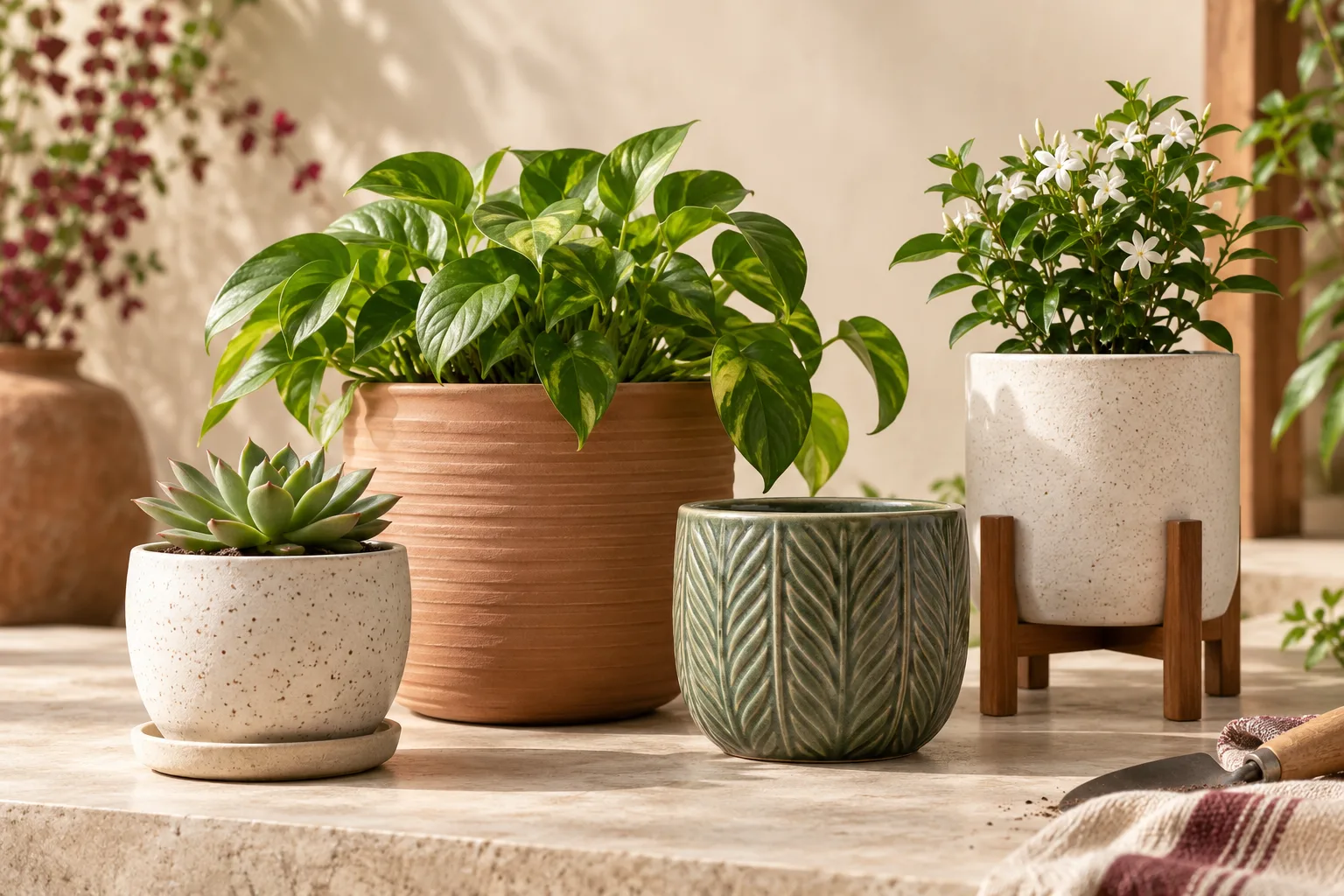
A planter is bought twice: once as an object that has to look good in a corner, and once as a container that has to keep a plant alive. The buyer wants the colour and shape from the first, and the drainage and the size from the second. Listings usually answer only the first.
Scope, fee, reporting and term are agreed in writing after we have read your brief and spoken to you.
In one paragraph
Planters are the pots, troughs, hanging baskets, grow bags and vertical gardens that hold plants on balconies, terraces and windowsills. GullySales writes listings with the dimensions that matter, plans packing for breakable and bulky stock, and builds sets and matching ranges that raise the order value.
Planters are also heavy, bulky and prone to cracking. A ceramic pot that arrives chipped is a refund and a one-star review, and the shipping cost can exceed the price of the pot.
Last updated 7 Oct 2026. Product, labelling and advertising rules for garden supplies differ by product and change. We describe them in general terms, so check the current position with your own adviser or the regulator before you publish a claim.
Who it is for
This is written for you if you sell planters online.
- Makers and traders of ceramic, terracotta, fibre, plastic and metal planters
- Grow bag and fabric pot sellers serving terrace gardeners
- Sellers of vertical garden frames, hanging baskets and railing planters
- Wholesalers supplying nurseries, landscape designers and decor shops with pots in volume
Not for
It is not the right fit if.
- A seller of very large cement or stone planters that move only by local truck. Online listing for that is a quotation, not a cart.
- Sellers with no control of packing. Without it, breakage will swallow the margin.
How buyers choose
What decides the sale of planters.
Diameter, height and what fits
The buyer measures their plant or corner and compares against top diameter, depth and capacity. A page with only small, medium and large sends them to a competitor with centimetres.
Material and weather
Terracotta breathes and cracks, fibre is light, plastic fades, ceramic is heavy. Buyers ask which survives a sunny balcony or a rainy terrace, and look for how it is finished.
Drainage hole and saucer
A plant dies without drainage. The buyer looks for a hole, a plug, a matching saucer, and whether the planter is for indoors where water spills.
Set, colour and style
Many buy three or four in one design for a row of plants. They search by colour and by style, such as white ceramic, rustic terracotta or railing planter for a flat.
Where sales are lost
What usually goes wrong when you sell planters online.
In the words sellers use on the first call.
“Pots break in transit and the refund eats the profit”
Packing design and the choice of what to ship are more useful than a discount. Stacking, corner protection and the boxes you use are part of the work.
“Customers say it is smaller than expected”
A photograph with nothing beside it hides the size. Show the pot next to a hand, a common plant and a ruler, and put the measurement in the first lines.
“We sell one pot and the buyer needed six”
A buyer filling a balcony wants a set. Matching ranges and pack-of offers raise the order and save the cost of a second delivery.
“Freight on bulky orders makes us uncompetitive”
Nested pots and flat-pack planters ship better. Which items to push online and which to sell nearby is a decision made from your own freight figures.
The scope
The work we would propose for planters.
Measured on purchases, conversion rate, cost to win a customer, average order value and repeat purchases. Anything here that needs a platform or tool we have not used with you is confirmed with you before it goes in the scope.
- Dimension-led listingsTop diameter, base diameter, height, capacity, material, drainage and weight on every page, plus photographs beside a known plant, using the words buyers search.
- Sets and matching rangesPacks of three and five in a design, and a matching saucer or stand offered beside each pot. Priced to beat buying them one at a time.
- Marketplace and InstagramStyled photographs of the planter in a balcony or on a shelf for Instagram and the listing's gallery, and marketplace listings that carry the measurements.
- Bulk and trade enquiriesA trade page for nurseries, landscape designers and decor shops with price slabs by quantity, minimum order and delivery terms.
Packing review
We go through how each product type is packed and shipped, check the damage reports with you and set the packing standard that goes on every order.
What we do
What you get for planters.
Each deliverable and what it is there to change.
A pot size chart
Maps pot dimensions to the plants that fit, so a buyer chooses the right size in one visit.
A material comparison table
Terracotta, ceramic, fibre, plastic and metal compared on weight, weather and care. It answers the question before it is asked.
Packing standards by product type
A written guide for your dispatch team. It lowers breakage and tells you what to charge for freight.
A trade price sheet
Quantity slabs and delivery terms in one file. It lets a nursery order without a phone call.
How the result is measured
- Purchases
- Conversion rate
- Average order value
- Return rate for damage and for size
- Repeat purchase rate
- Trade enquiries and orders by quantity
Recorded as a baseline before work starts, so every later report has an honest comparison.
How it works
From your first message to the first piece of work.
No open-ended retainer. Every step gives you something in writing.
First
Your brief
You tell us what you need in a few short steps: your business, what you want, where enquiries come from and how they are handled.
After the brief
A conversation and a written scope
We read it, then talk with whoever handles your enquiries. If you want our help, the scope, the fee and the reporting come in writing, and nothing starts before you have read them.
Before work starts
Baseline recorded
The numbers this work is meant to move, such as enquiries, quotations, orders, visits or renewals, written down so every later report has an honest comparison.
After the baseline
The first fix goes live
The fix we agreed to start with is put in place and measured against the baseline, whether that is a reply, a follow-up, a page, a listing or the handover between marketing and sales.
As agreed
Report against the baseline
What moved, what did not, and what changes next, in plain words. How often you get it is set in writing before work starts.
At renewal
Renew on the numbers
The term ends and you decide whether to continue from the results. The length is agreed in writing before anything starts.
What we need from you
What to have ready before we talk.
None of it has to be tidy. We read what you have.
- Your range with measurements and weights
- Photographs, with a plant or hand beside the pot if possible
- A list of damaged or returned orders and the products involved
- Freight quotes or the courier rates you pay for bulky items
- Names of nurseries or designers who already order in volume
Selling in India and abroad
Selling planters beyond your own market.
Where you sell decides sizes, units, seasons and returns. We work from Bengaluru and have no overseas office, so for a new country we start from your own sales and the platforms you already use.
Weight and breakage decide the market
A pot is mostly air by volume. Nested or flat-pack designs are easier to export than a single large ceramic piece. A freight quote from your forwarder tells you first.
Metric and imperial
Overseas buyers read pot sizes in inches or centimetres depending on the market. Show both, and describe the colours in plain words beside the name.
FAQ
Questions about selling planters online.
Not here? More answers, or ask on WhatsApp.
How do I show the size of a planter online?
Should I sell ceramic pots online if they break?
Do planters sell to businesses as well?
How much does it cost?
How long is the contract?
How soon will we see results?
Who will actually do the work?
What do you need from us?
What if we are not happy with the work?
More in Garden Supplies
Sellers of planters also need
Also selling from a shop, a workshop or a warehouse? See the page for landscape contractors.
This page is part of the e-commerce section. The D2C brands page covers the arithmetic of acquisition cost and the second order for any brand.
Why us
Why owners pick GullySales over an agency.
Marketing and sales, as one job
Most agencies stop at the enquiry. We also fix what happens after it: the reply, the follow-up, the quote and the CRM.
The person on the first call does the work
No account managers in between. You are never handed to someone you have not met.
A baseline before anything starts
Your numbers are written down on day one, so every later report compares against something honest.
The fee in writing, split three ways
Our time, your media spend and production on separate lines. You always see what goes to us.
No guarantees we cannot keep
The term is agreed in writing and never a default twelve months. We never promise a ranking or a lead count, because nobody controls those.
One office, and we say so
Nagarbhavi, Bengaluru. We work across India by call and WhatsApp and travel when a session needs to be in person.
#257, 3rd floor, Sri Nanjundeshwara Complex, Nagarbhavi 8th Block, Outer Ring Road. How we work.
Engagement options
Ways to work with us.
Pick the size of commitment that fits. Every option starts with your brief and a conversation.
Option 1
The conversation on its own
A call after you send your brief. It says honestly whether you need outside help, and many fixes are ones your own team can make.
Option 2
One fix, scoped
Start with the fix that matters most, such as reply time or follow-up. The fee is in writing before anything starts.
Option 3
An ongoing programme
We run the work, report against the baseline, and you renew on the numbers. The term and the reporting are agreed in writing first.
Option 4
Guidance for your own team or agency
We plan, brief and check the work of your in-house team or current agency, instead of replacing them.
Your brief
Tell us what you need, and we will read it before we call.
Eight short steps about your business, what you want and who decides. Most questions are a tap, and you can skip any you would rather answer on the call.
Your next practical step
Tell us what you are trying to grow, and we will read it before we call.
Eight short steps, mostly taps. Skip anything you would rather answer on the call.