E-commerce · Food and drink
A kilo of rice is the same kilo until the buyer reads the word polished on a rival's pack.
Pantry staples look alike on a screen. Rice is rice, until the buyer has a view on the variety, the age, the polish and the miller. The sale then goes to the pack that tells them about it, not to the cheapest one.
Scope, fee, reporting and term are agreed in writing after we have read your brief and spoken to you.
In one paragraph
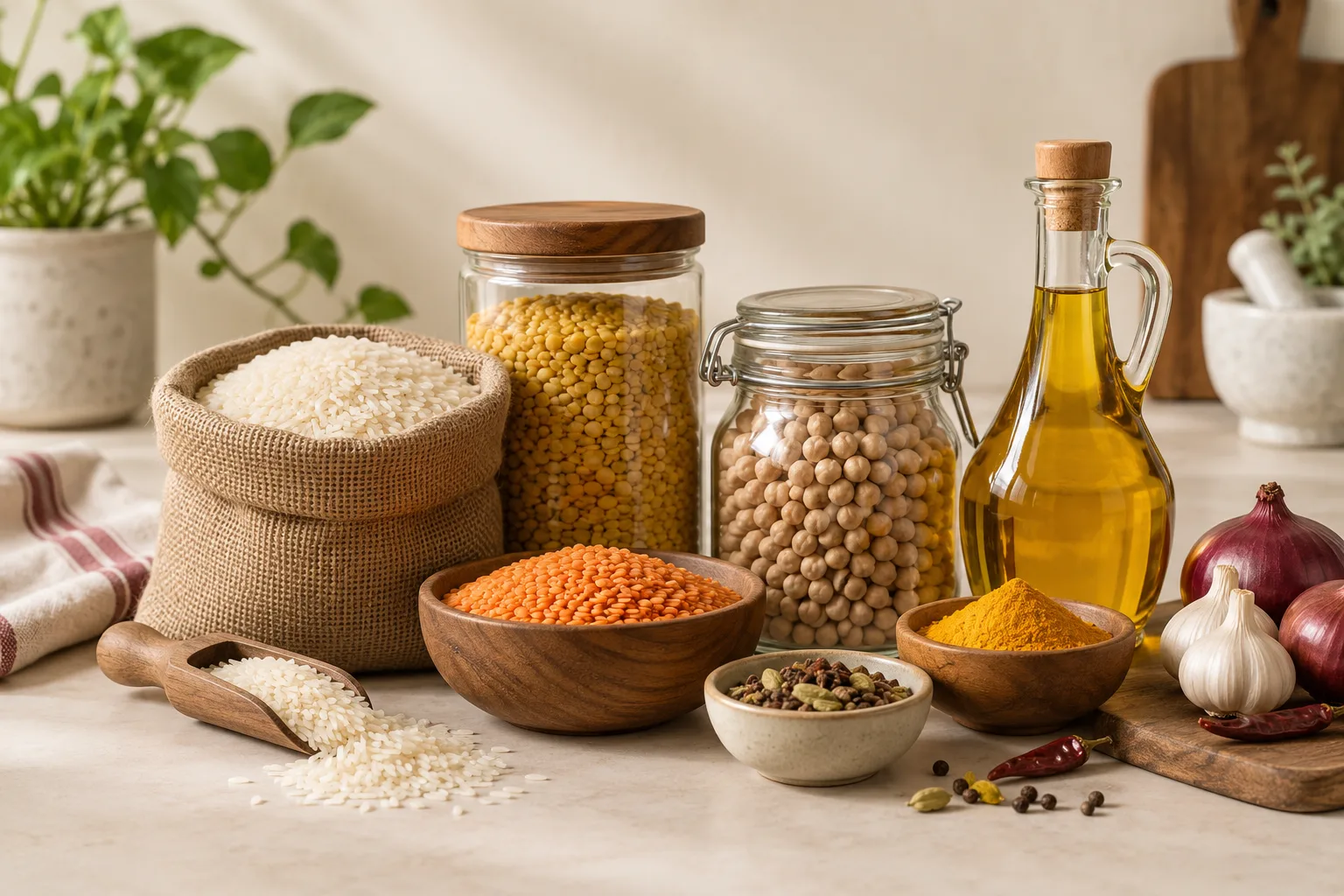
Grocery and pantry e-commerce is the online sale of the staples a household cooks from, such as grains, pulses, cooking oils, spices, sauces and baking ingredients, bought again and again in set pack sizes. GullySales works on how your listings show origin, grade, packing and freshness, how a first order becomes a repeat basket, and how label and claim wording is checked with your adviser before it goes live.
The buyer is also a repeat buyer. A household that finds a dal or an oil it likes buys it again, and a seller who treats each order as a one-off pays for the same customer twice. The work in this segment is mostly to make the second and third basket easy.
Six kinds of pantry product are covered on these pages. A bag of grain, a jar of spice and a bottle of oil are bought in different pack sizes, judged on different signs, and fail in different ways.
Last updated 7 Oct 2026. Product, labelling and advertising rules for grocery & pantry differ by product and change. We describe them in general terms, so check the current position with your own adviser or the regulator before you publish a claim.
6 types of product
Each kind of grocery & pantry sells differently, so each has its own page.
Open the one that matches what you sell. It covers who buys it, where the sale is lost and what we would do.
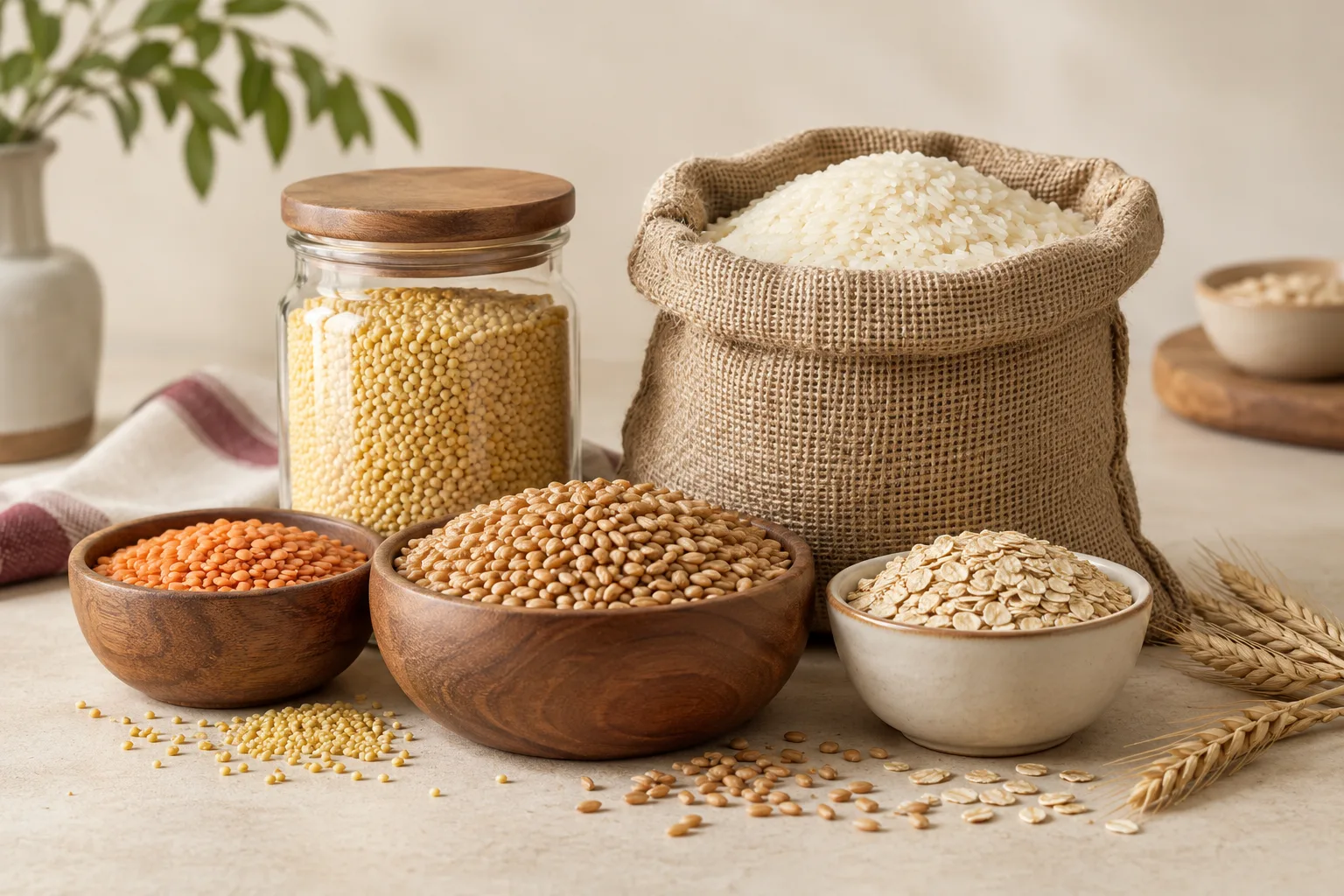 GrainsFamilies buy rice by the bag and judge it by the first pot, so the first bag is everything.
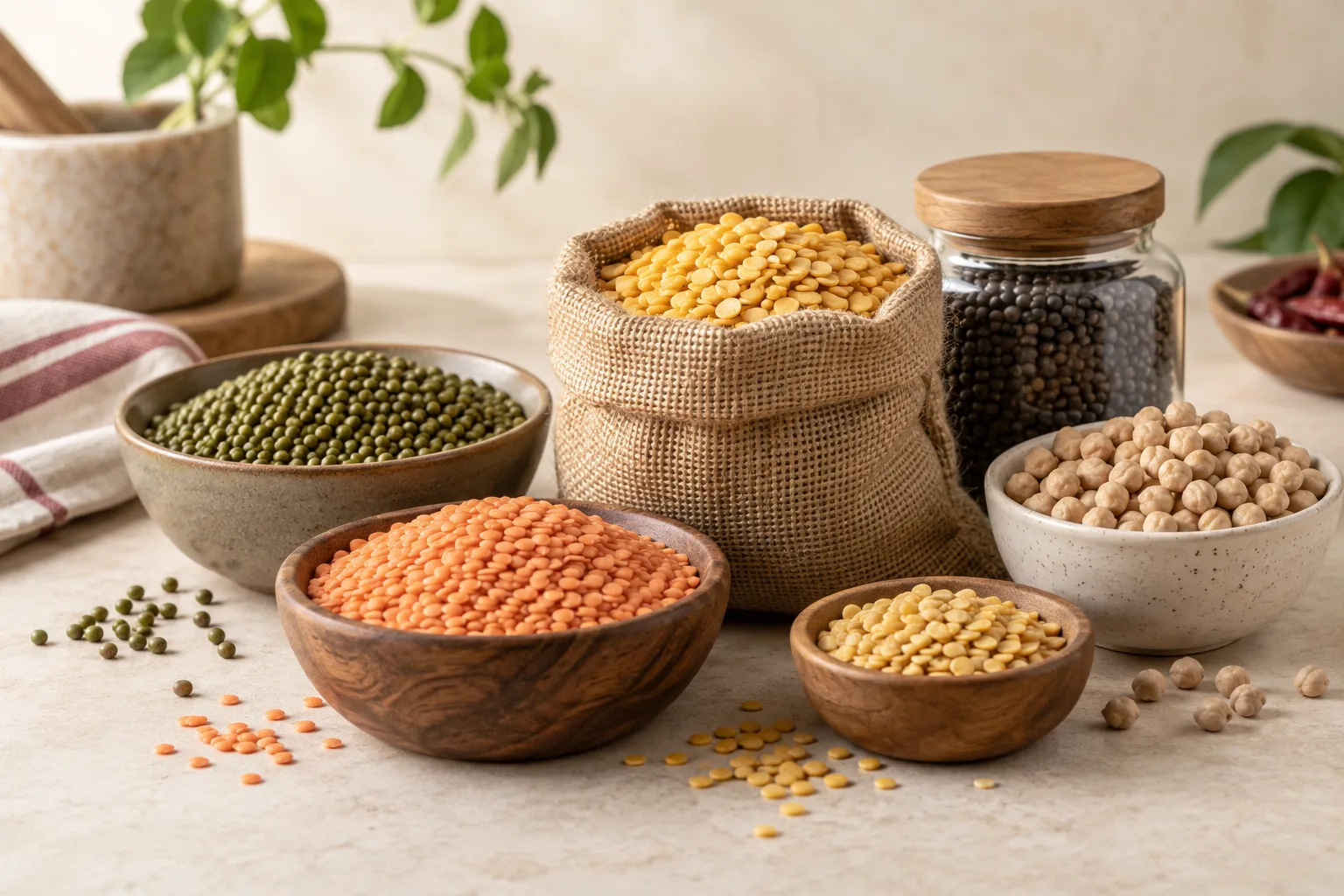 PulsesA dal that never softens gets blamed on the seller, not the water.
 Cooking OilsBuyers pay more for oil they believe in, and one rancid bottle ends the belief.
 SpicesA buyer opens the packet, smells it and decides in two seconds whether to ever buy again.
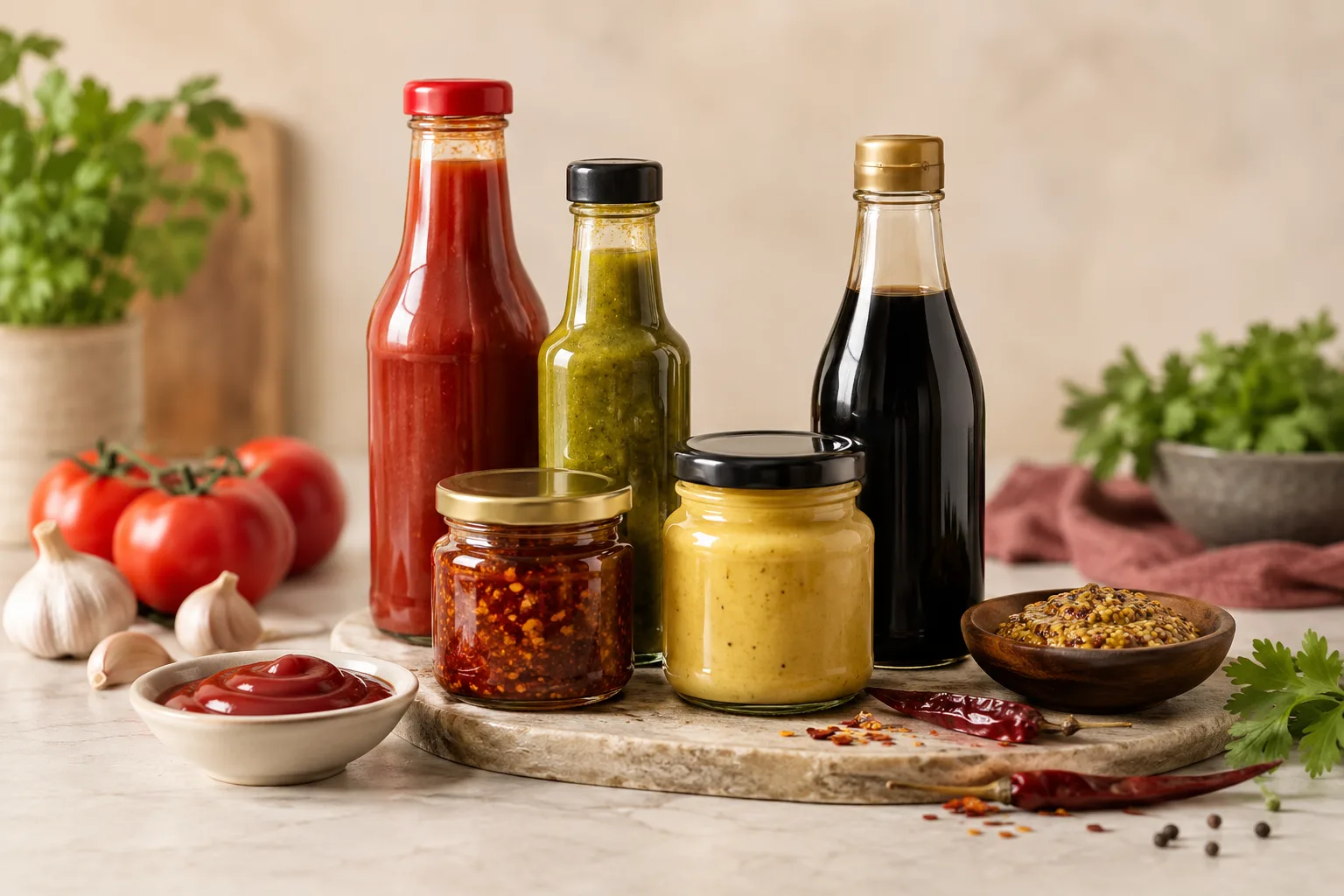 Sauces & CondimentsNobody wants to buy a full jar of a sauce they have never tasted.
 Baking IngredientsA baker who loses one cake to bad flour does not try your flour twice.
Who it is for
This is written for you if you sell grocery & pantry online.
- Packed-foods brands selling pulses, grains and spices on their own site and marketplaces
- Mills and traders moving from loose or wholesale sales into branded packs
- Cold-pressed oil, sauce and baking ingredient makers selling on Instagram and online
- Regional brands whose product is well known locally and not outside their state
- Sellers of household grocery baskets and bulk packs for families, PGs and small businesses
Not for
It is not the right fit if.
- A seller who wants wording on health, purity or origin that the product and papers do not support
- A seller with no control over packing dates, batches and storage, who wants advertising to fix a freshness problem
How buyers choose
What decides who wins in grocery & pantry.
Origin, variety and grade
Buyers search by the name: sona masoori, toor dal, byadgi chilli, wood-pressed groundnut oil. A pack that names the variety and where it grew is read as better than one that says only premium.
Pack size and price per kilo
A household compares a 1 kg pack with a 5 kg one by the price per kilo, then checks that it will be used before it ages. The mess of sizes is the first thing they sort out.
Freshness, packing date and storage
Buyers look for the packing date and for a pack that seals properly, and ask in reviews whether the insects came with it. For oils and flours, how long it has been on the shelf matters more than the label.
Labels, licence and claims
A careful buyer reads the label, the ingredients and who packed it. Wording about purity, naturalness or health on the pack and the page needs to be checked with your adviser before it is used.
Where sales are lost
What usually goes wrong when you sell grocery & pantry online.
In the words sellers use on the first call.
“Customers complain about quality and we cannot show it”
A seller of loose or lightly branded grain has no way to show what the buyer will get. Photographs of the grain at full size and the actual packing room answer what words do not.
“Orders are small, so the cost of getting each customer is too high”
A basket of one dal and one oil rarely covers an ad click and carriage. The path to a larger or repeat basket is the work, not the click.
“The big apps are one tap away”
A buyer can order a packet of anything from an app and have it delivered fast. A seller has to give a reason that is not speed: origin, quality, a pack size not stocked elsewhere.
“Spills and damage in transit”
A torn bag of flour or a leaking oil bottle ruins an order and the buyer's mood. Packing and the carrier decide this more than any listing.
The scope
The work we would propose for grocery & pantry.
Measured on purchases, conversion rate, cost to win a customer, average order value and repeat purchases. Anything here that needs a platform or tool we have not used with you is confirmed with you before it goes in the scope.
- Listings that name the variety and originTitles and images that state variety, region, grade and pack size, with a photograph of the grain or the powder at full size and the packing date shown.
- A repeat-basket and subscription offerA set basket that the household reorders in one tap, with a reminder through WhatsApp or email when it is likely to be running out, with their consent.
- Search for the product and the usePages for which rice for biryani, which dal for sambar, how to store spices, each tied to the pack you sell.
- Recipes and kitchen contentShort videos of the product being cooked in a home kitchen, so the buyer sees how the dal softens or the oil behaves.
Label and claim review
Each sentence on the pack, listing and advert checked against what you can show. Anything about purity, health or standards goes to your adviser before it is used.
What we do
What you get for grocery & pantry.
Each deliverable and what it is there to change.
A variety and origin sheet for each product
Variety, region, grade and how it is milled or pressed, in one page that the listing, the pack and the replies all draw from.
A pack-size and price-per-kilo table
A comparison of your sizes in one place, to settle the question of which pack to buy.
A repeat basket and reminder set
A starter basket per household type, with the reminder messages that bring the buyer back.
A claims and labels checklist
The wording the pack and pages may use, and the wording your adviser needs to see, kept as a reference for your team.
How the result is measured
- Purchases
- Conversion rate
- Customer acquisition cost
- Repeat purchase rate
- Average order value
- Damage and quality complaints
Recorded as a baseline before work starts, so every later report has an honest comparison.
How it works
What the work involves for grocery & pantry
The work itself, in order. How an engagement starts, from your brief to a written scope, is set out on our method page.
- 1
Start with one product and its second order
After the first conversation we look at your best-selling product, who reorders it, how, and what customers say about quality and packing.
- 2
Put the proof on the page
Variety, origin, packing date, pack sizes and price per kilo go onto the listings that already get visitors, and the label wording is checked with your adviser.
- 3
Build the repeat basket
A reorder path and reminders are set up with a baseline of orders, returns and repeat purchases recorded first.
- 4
Measure against the baseline
Results are reported against it, with the way and timing of reports agreed in writing after we have spoken to you, and the range is adjusted from what repeated.
What we need from you
What to have ready before we talk.
None of it has to be tidy. We read what you have.
- Your site and marketplace links, and the products on each
- Variety, origin and packing details for each product
- Complaints and returns by reason, such as damage, stale stock or taste
- How your repeat buyers order and how often, if you track it
- Your label designs and the wording currently used
Selling in India and abroad
Selling grocery & pantry beyond your own market.
Where you sell decides sizes, units, seasons and returns. We work from Bengaluru and have no overseas office, so for a new country we start from your own sales and the platforms you already use.
Indian households abroad and their pantry
They search for the exact staples and brands they grew up with and pay for the shipping. Sizes, labels and what a country allows into it differ, so your adviser checks what may be sold and shipped before you list.
Local sale or cross-border shipping
Cross-border parcels of food face customs and labelling rules in the destination. Selling to an importer or an Indian grocer abroad is another route. Start from your own orders to see which countries already buy.
FAQ
Questions about selling grocery & pantry online.
Not here? More answers, or ask on WhatsApp.
Can I sell staples online when my competitors are on the quick delivery apps?
What can I say about purity or naturalness on my pack and listing?
How do I get repeat orders for something people buy again and again?
Is it worth advertising a low-priced staple?
How long is the contract?
How soon will we see results?
Who will actually do the work?
What do you need from us?
What if we are not happy with the work?
Sellers of grocery & pantry also need
Also selling from a shop, a workshop or a warehouse? See the page for food product manufacturers and fmcg and beverage brands.
This page is part of the e-commerce section. The D2C brands page covers the arithmetic of acquisition cost and the second order for any brand.
Why us
Why owners pick GullySales over an agency.
Marketing and sales, as one job
Most agencies stop at the enquiry. We also fix what happens after it: the reply, the follow-up, the quote and the CRM.
The person on the first call does the work
No account managers in between. You are never handed to someone you have not met.
A baseline before anything starts
Your numbers are written down on day one, so every later report compares against something honest.
The fee in writing, split three ways
Our time, your media spend and production on separate lines. You always see what goes to us.
No guarantees we cannot keep
The term is agreed in writing and never a default twelve months. We never promise a ranking or a lead count, because nobody controls those.
One office, and we say so
Nagarbhavi, Bengaluru. We work across India by call and WhatsApp and travel when a session needs to be in person.
#257, 3rd floor, Sri Nanjundeshwara Complex, Nagarbhavi 8th Block, Outer Ring Road. How we work.
Engagement options
Ways to work with us.
Pick the size of commitment that fits. Every option starts with your brief and a conversation.
Option 1
The conversation on its own
A call after you send your brief. It says honestly whether you need outside help, and many fixes are ones your own team can make.
Option 2
One fix, scoped
Start with the fix that matters most, such as reply time or follow-up. The fee is in writing before anything starts.
Option 3
An ongoing programme
We run the work, report against the baseline, and you renew on the numbers. The term and the reporting are agreed in writing first.
Option 4
Guidance for your own team or agency
We plan, brief and check the work of your in-house team or current agency, instead of replacing them.
Your brief
Tell us what you need, and we will read it before we call.
Eight short steps about your business, what you want and who decides. Most questions are a tap, and you can skip any you would rather answer on the call.
Your next practical step
Tell us what you are trying to grow, and we will read it before we call.
Eight short steps, mostly taps. Skip anything you would rather answer on the call.