E-commerce · Grocery & Pantry
Nobody wants to buy a full jar of a sauce they have never tasted.
A condiment is a small, personal purchase that has to compete with the one already in the fridge. The buyer will try yours if it looks interesting and costs little. If it is the wrong heat or too sweet, the jar sits at the back for a year and the brand is written off.
Scope, fee, reporting and term are agreed in writing after we have read your brief and spoken to you.
In one paragraph
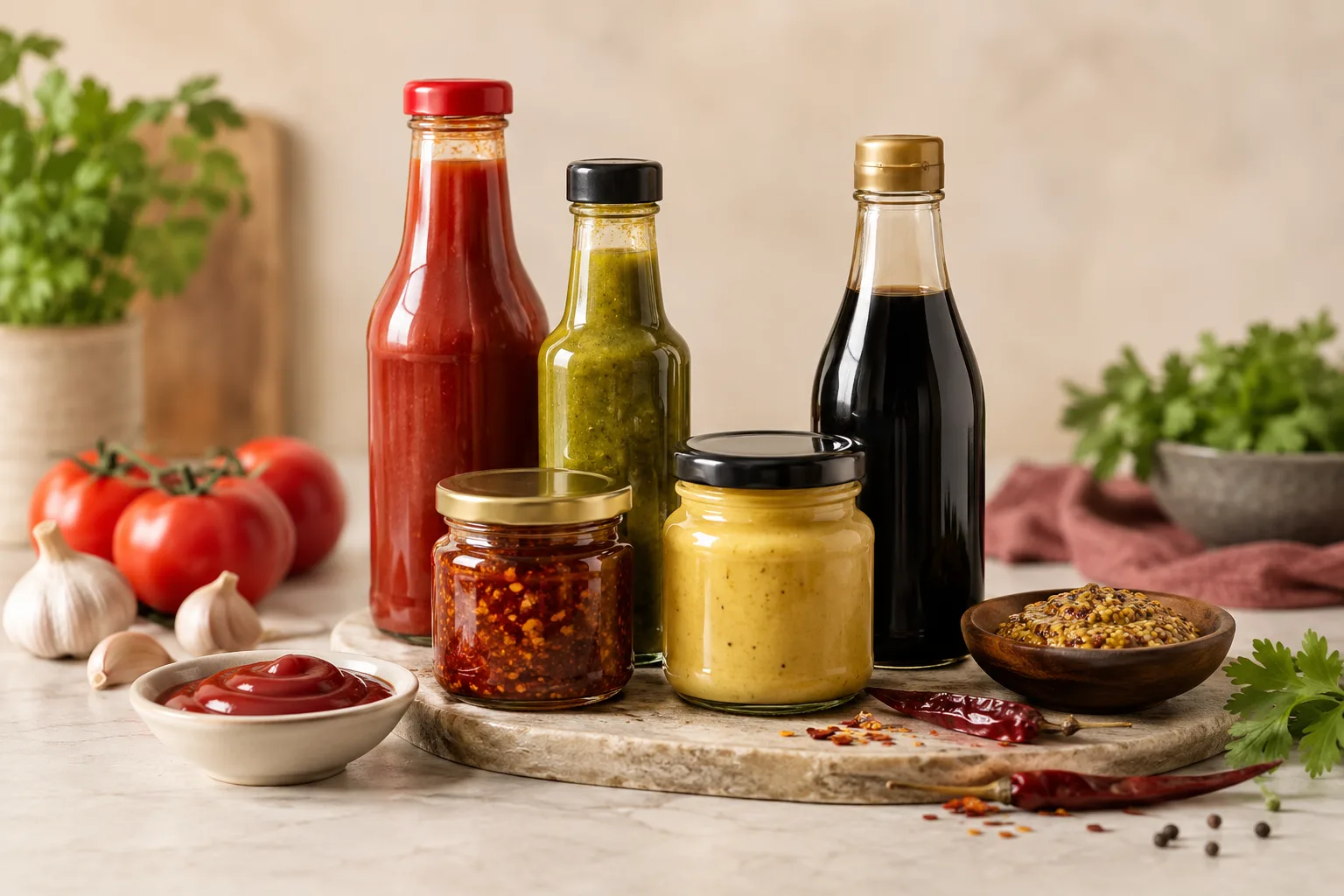
Sauces and condiments online cover ketchup, chilli and soy sauces, mayonnaise, mustard, vinegar, pickles, chutneys and spreads, sold in bottles and jars and bought on taste, heat and the label. GullySales works on how your listings describe flavour and heat for people who cannot taste them, make a trial affordable, and turn the buyer of one jar into the buyer of a shelf, along with checking label wording with your adviser.
So the sale is about reducing the risk of a bad first jar. A taster pack, a clear heat guide and a picture of what it goes with do more than a claim about quality. The second sale is about the dish at home that the sauce becomes part of.
Last updated 7 Oct 2026. Product, labelling and advertising rules for grocery & pantry differ by product and change. We describe them in general terms, so check the current position with your own adviser or the regulator before you publish a claim.
Who it is for
This is written for you if you sell sauces & condiments online.
- Home-style pickle and chutney makers selling regional recipes online
- Sauce and mayonnaise brands selling to households and to small cafes
- Makers of chilli oils, schezwan sauces and spreads who sell on Instagram
- Food entrepreneurs moving from local shops to marketplaces
Not for
It is not the right fit if.
- A seller who cannot say how long a jar lasts, and how it should be stored once opened
- A seller who wants to say a sauce is free of something that it may contain
How buyers choose
What decides the sale of sauces & condiments.
Heat, sweetness and what it goes with
Buyers cannot taste it. They look for a heat scale, a description and a dish: with momos, with idli podi, on a sandwich, with curd rice.
Ingredients and what is not in it
Many read the list for the first few items, and for preservatives and colours. Wording about what is absent or natural is the kind your adviser needs to see.
Shelf life and storage after opening
A pickle lasts longer than a mayonnaise, and a buyer wants to know whether to refrigerate it. They look for the best-before and for how long a jar keeps once opened.
Glass, plastic and the seal
A leak is the most remembered flaw. Buyers read for how the jar is sealed and packed, and for the oil that rises in a pickle.
Where sales are lost
What usually goes wrong when you sell sauces & condiments online.
In the words sellers use on the first call.
“The first jar is the last jar”
A buyer who got a sauce that was too sweet or too hot does not return. A trial size, or a note on heat on the page, lowers that risk.
“Jars break or leak in the parcel”
Glass and oil together are the hardest parcel to send. A leaking pickle jar spoils the other items in the box and the buyer's day.
“Our pickle is a family recipe and nobody outside the area knows it”
Regional pickles are searched by name in their own region and rarely elsewhere. The story and the recipe are the reason to buy, and they have to be on the page.
The scope
The work we would propose for sauces & condiments.
Measured on purchases, conversion rate, cost to win a customer, average order value and repeat purchases. Anything here that needs a platform or tool we have not used with you is confirmed with you before it goes in the scope.
- A heat guide and a pairing line on each listingA heat scale you define, and a short list of what the sauce goes with, placed in the first image of every product.
- Trial packs and setsA set of small jars across your range, priced to be tried, with a path from the set to the full-size jar of the one the buyer liked.
- Recipes with the sauce in themShort clips of a dish made with each sauce, for the listing, Instagram and WhatsApp, with the jar visible.
- Regional and gifting searchPages for the name of the pickle in its region, a pickle gift box for relatives abroad, a sauce for momos, each tied to a product.
Packing test for glass and oil
A look at how your jars are sealed and packed for each carrier, and a test shipment of the heaviest set before it is sold.
What we do
What you get for sauces & condiments.
Each deliverable and what it is there to change.
A heat and sweetness chart
One scale used on every product, so buyers can compare across your range and pick by taste.
A pairing card for each jar
Three dishes each sauce goes with, on the listing and in the box.
A trial set page
A set of small jars with a clear price and a prompt to order the full size of the favourite.
A packing and shelf-life note
How long each product lasts and how to store it once opened, in the listing and on the card, after your adviser has seen the wording.
How the result is measured
- Purchases
- Conversion rate
- Average order value
- Repeat purchase rate
- Return rate
- Leak and breakage complaints
Recorded as a baseline before work starts, so every later report has an honest comparison.
How it works
From your first message to the first piece of work.
No open-ended retainer. Every step gives you something in writing.
First
Your brief
You tell us what you need in a few short steps: your business, what you want, where enquiries come from and how they are handled.
After the brief
A conversation and a written scope
We read it, then talk with whoever handles your enquiries. If you want our help, the scope, the fee and the reporting come in writing, and nothing starts before you have read them.
Before work starts
Baseline recorded
The numbers this work is meant to move, such as enquiries, quotations, orders, visits or renewals, written down so every later report has an honest comparison.
After the baseline
The first fix goes live
The fix we agreed to start with is put in place and measured against the baseline, whether that is a reply, a follow-up, a page, a listing or the handover between marketing and sales.
As agreed
Report against the baseline
What moved, what did not, and what changes next, in plain words. How often you get it is set in writing before work starts.
At renewal
Renew on the numbers
The term ends and you decide whether to continue from the results. The length is agreed in writing before anything starts.
What we need from you
What to have ready before we talk.
None of it has to be tidy. We read what you have.
- Your products with ingredients, shelf life and storage advice
- Photographs of the product and of dishes made with it
- Complaints about leaks, taste or heat
- Your current packing method and carriers
- Which of your products repeat buyers reorder
Selling in India and abroad
Selling sauces & condiments beyond your own market.
Where you sell decides sizes, units, seasons and returns. We work from Bengaluru and have no overseas office, so for a new country we start from your own sales and the platforms you already use.
Indian pickles and chutneys travel with families
A relative abroad is the usual buyer of a gift box of pickles. Rules on what food may be sent by parcel differ by country, so check with your adviser before shipping.
Jars are heavy and fragile
Freight on glass erodes the price. Pouches and plastic jars help, and your own order data shows whether any country already buys enough to justify the effort.
FAQ
Questions about selling sauces & condiments online.
Not here? More answers, or ask on WhatsApp.
How do I describe heat on a sauce page?
Can I say my sauce has no preservatives?
Is it worth selling a single jar of pickle online?
How much does it cost?
How long is the contract?
How soon will we see results?
Who will actually do the work?
What do you need from us?
What if we are not happy with the work?
More in Grocery & Pantry
Sellers of sauces & condiments also need
Also selling from a shop, a workshop or a warehouse? See the page for food product manufacturers and fmcg and beverage brands.
This page is part of the e-commerce section. The D2C brands page covers the arithmetic of acquisition cost and the second order for any brand.
Why us
Why owners pick GullySales over an agency.
Marketing and sales, as one job
Most agencies stop at the enquiry. We also fix what happens after it: the reply, the follow-up, the quote and the CRM.
The person on the first call does the work
No account managers in between. You are never handed to someone you have not met.
A baseline before anything starts
Your numbers are written down on day one, so every later report compares against something honest.
The fee in writing, split three ways
Our time, your media spend and production on separate lines. You always see what goes to us.
No guarantees we cannot keep
The term is agreed in writing and never a default twelve months. We never promise a ranking or a lead count, because nobody controls those.
One office, and we say so
Nagarbhavi, Bengaluru. We work across India by call and WhatsApp and travel when a session needs to be in person.
#257, 3rd floor, Sri Nanjundeshwara Complex, Nagarbhavi 8th Block, Outer Ring Road. How we work.
Engagement options
Ways to work with us.
Pick the size of commitment that fits. Every option starts with your brief and a conversation.
Option 1
The conversation on its own
A call after you send your brief. It says honestly whether you need outside help, and many fixes are ones your own team can make.
Option 2
One fix, scoped
Start with the fix that matters most, such as reply time or follow-up. The fee is in writing before anything starts.
Option 3
An ongoing programme
We run the work, report against the baseline, and you renew on the numbers. The term and the reporting are agreed in writing first.
Option 4
Guidance for your own team or agency
We plan, brief and check the work of your in-house team or current agency, instead of replacing them.
Your brief
Tell us what you need, and we will read it before we call.
Eight short steps about your business, what you want and who decides. Most questions are a tap, and you can skip any you would rather answer on the call.
Your next practical step
Tell us what you are trying to grow, and we will read it before we call.
Eight short steps, mostly taps. Skip anything you would rather answer on the call.