E-commerce · Home Décor
A rug is the biggest thing in the room that the buyer cannot touch before ordering.
Rugs are bought by floor. The buyer measures the gap between the sofa and the wall, picks a size in feet, then picks a colour that goes with a floor they already have. A rug a foot too short looks wrong forever, so they do not order until they are sure.
Scope, fee, reporting and term are agreed in writing after we have read your brief and spoken to you.
In one paragraph
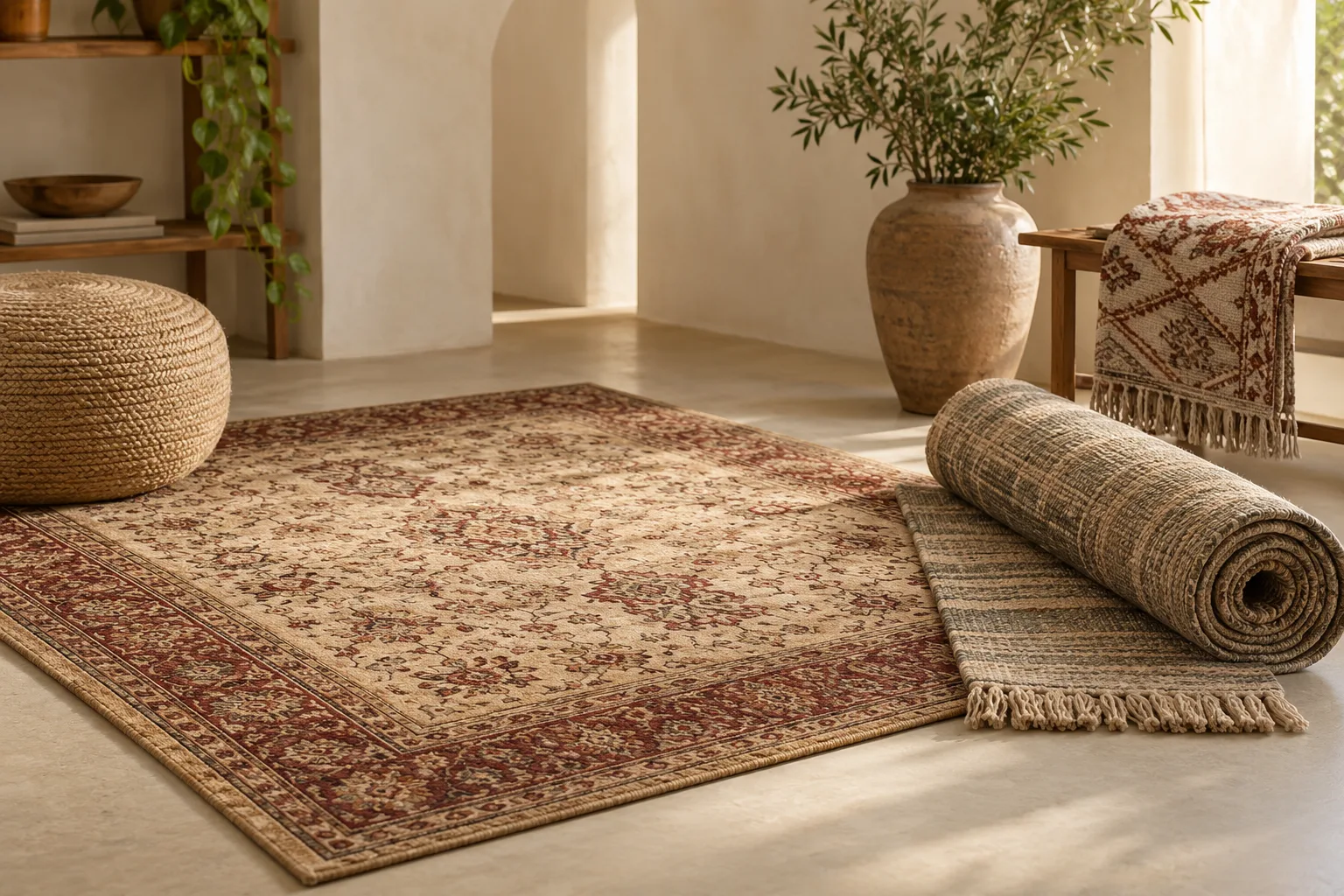
Rug e-commerce is the online sale of carpets, runners, dhurries, jute mats and area rugs in wool, cotton, polyester, silk blends or jute, bought for a specific floor in a specific size. GullySales works on how your listings show size, pile and texture, how colour and shedding are described honestly, and how buyers choose between a handmade and a machine-made rug.
Touch is the second problem. Pile height, softness, thickness and the way a wool rug feels underfoot are what they pay for, and the photograph says nothing about any of them.
Last updated 7 Oct 2026.
Who it is for
This is written for you if you sell rugs online.
- Handmade rug and carpet makers from Jaipur, Bhadohi, Panipat or Kashmir selling direct
- Machine-made rug brands selling on Amazon, Flipkart and their own store
- Dhurrie, kilim and jute mat sellers with a craft story
- Runner and doormat sellers working on lower prices and higher volumes
Not for
It is not the right fit if.
- A seller who calls a polyester rug wool in any form
- A brand that cannot offer a return or exchange on a rug that arrives the wrong size
How buyers choose
What decides the sale of rugs.
Size in feet, and the room layout
Buyers need to know whether the front legs of the sofa sit on the rug. They look for the size against a sofa, a bed or a dining table.
Material and how it is made
Hand-knotted wool, hand-tufted, flat-woven, machine-made. Each has a price range and a lifespan, and buyers who do not know the difference ask on WhatsApp.
Pile, thickness and feel
Short pile for a living room that gets traffic, long pile for a bedroom. A buyer with children or pets is checking how easily it cleans.
Shedding and smell
New wool and tufted rugs shed in the first weeks, and some smell of latex backing. Reviewers mention both, so buyers check.
Where sales are lost
What usually goes wrong when you sell rugs online.
In the words sellers use on the first call.
“The colour in the photograph is not the rug that arrives”
A grey in one picture, a beige in another. Rugs are large enough that the difference is obvious in the room, and the return is expensive to collect.
“Customers order the wrong size and cannot return a roll”
A rug that is too small is a heavy return. The cost of collecting it is higher than the margin on the sale.
“A handmade rug looks expensive next to a cheap machine-made one”
The buyer cannot tell what the extra money bought. A listing that does not show knots, the maker or the weave leaves price as the only difference.
The scope
The work we would propose for rugs.
Measured on purchases, conversion rate, cost to win a customer, average order value and repeat purchases. Anything here that needs a platform or tool we have not used with you is confirmed with you before it goes in the scope.
- Size-in-room guides on every listingThe rug shown in each size under a sofa, a bed and a dining table, with a simple rule for how far the rug should extend.
- Close-ups that show the weaveA set of photographs for pile, edge, backing and the pattern in daylight, so colour and texture are not guessed.
- Handmade rug storiesWho made it, where, how long it took and what the knots are, written as a page the buyer can read before paying more.
- Search by room, size and materialCollections for 5x8 rug for a bedroom, jute rug for a living room, wool dhurrie, runner for a corridor.
Sample and swatch offer
A way for buyers of larger rugs to ask for a swatch before ordering. Whether it is worth the cost is decided with you after the first conversation.
What we do
What you get for rugs.
Each deliverable and what it is there to change.
A rug size chart by room
Which size for a three-seat sofa, a queen bed or a six-seat table, with a diagram, so the order matches the room.
A handmade versus machine-made page
A plain explanation of hand-knotted, hand-tufted, flat-woven and machine-made, with what each is and how long it lasts.
A care and shedding page
What to expect in the first weeks, how to vacuum, how to treat spills, linked from the delivery message.
A swatch request form
A short form that asks for the rug, the room and the address, so swatches go only to serious buyers.
How the result is measured
- Purchases
- Conversion rate
- Customer acquisition cost
- Average order value
- Return rate
- Returns for size or colour
Recorded as a baseline before work starts, so every later report has an honest comparison.
How it works
From your first message to the first piece of work.
No open-ended retainer. Every step gives you something in writing.
First
Your brief
You tell us what you need in a few short steps: your business, what you want, where enquiries come from and how they are handled.
After the brief
A conversation and a written scope
We read it, then talk with whoever handles your enquiries. If you want our help, the scope, the fee and the reporting come in writing, and nothing starts before you have read them.
Before work starts
Baseline recorded
The numbers this work is meant to move, such as enquiries, quotations, orders, visits or renewals, written down so every later report has an honest comparison.
After the baseline
The first fix goes live
The fix we agreed to start with is put in place and measured against the baseline, whether that is a reply, a follow-up, a page, a listing or the handover between marketing and sales.
As agreed
Report against the baseline
What moved, what did not, and what changes next, in plain words. How often you get it is set in writing before work starts.
At renewal
Renew on the numbers
The term ends and you decide whether to continue from the results. The length is agreed in writing before anything starts.
What we need from you
What to have ready before we talk.
None of it has to be tidy. We read what you have.
- Your rug range with size, material and construction
- Colour and size returns, with photographs if you have them
- Customer questions about pile, shedding and cleaning
- Your cost to collect a returned rug
- Marketplace listings for your best-selling rugs
Selling in India and abroad
Selling rugs beyond your own market.
Where you sell decides sizes, units, seasons and returns. We work from Bengaluru and have no overseas office, so for a new country we start from your own sales and the platforms you already use.
Rug sizes in feet and metres
Buyers in the US read in feet, in Europe in centimetres. A size table in both avoids a wrong order, and an unusual size from India's own standard sizes needs explaining.
Heavy parcels and handmade claims
Overseas freight on rugs is costly, and claims about handmade origin may need documents. What your listing can say is checked with your adviser first.
FAQ
Questions about selling rugs online.
Not here? More answers, or ask on WhatsApp.
What size rug should I recommend for a living room?
Should I offer swatches for rugs?
How do I explain why a handmade rug costs more?
How long is the contract?
How soon will we see results?
Who will actually do the work?
What do you need from us?
What if we are not happy with the work?
More in Home Décor
Sellers of rugs also need
Also selling from a shop, a workshop or a warehouse? See the page for home decor businesses.
This page is part of the e-commerce section. The D2C brands page covers the arithmetic of acquisition cost and the second order for any brand.
Why us
Why owners pick GullySales over an agency.
Marketing and sales, as one job
Most agencies stop at the enquiry. We also fix what happens after it: the reply, the follow-up, the quote and the CRM.
The person on the first call does the work
No account managers in between. You are never handed to someone you have not met.
A baseline before anything starts
Your numbers are written down on day one, so every later report compares against something honest.
The fee in writing, split three ways
Our time, your media spend and production on separate lines. You always see what goes to us.
No guarantees we cannot keep
The term is agreed in writing and never a default twelve months. We never promise a ranking or a lead count, because nobody controls those.
One office, and we say so
Nagarbhavi, Bengaluru. We work across India by call and WhatsApp and travel when a session needs to be in person.
#257, 3rd floor, Sri Nanjundeshwara Complex, Nagarbhavi 8th Block, Outer Ring Road. How we work.
Engagement options
Ways to work with us.
Pick the size of commitment that fits. Every option starts with your brief and a conversation.
Option 1
The conversation on its own
A call after you send your brief. It says honestly whether you need outside help, and many fixes are ones your own team can make.
Option 2
One fix, scoped
Start with the fix that matters most, such as reply time or follow-up. The fee is in writing before anything starts.
Option 3
An ongoing programme
We run the work, report against the baseline, and you renew on the numbers. The term and the reporting are agreed in writing first.
Option 4
Guidance for your own team or agency
We plan, brief and check the work of your in-house team or current agency, instead of replacing them.
Your brief
Tell us what you need, and we will read it before we call.
Eight short steps about your business, what you want and who decides. Most questions are a tap, and you can skip any you would rather answer on the call.
Your next practical step
Tell us what you are trying to grow, and we will read it before we call.
Eight short steps, mostly taps. Skip anything you would rather answer on the call.