E-commerce · Kitchen Appliances
Our oven bakes well, but the buyer who wants to bake cakes cannot tell which type to pick.
A buyer of an oven is usually about to try baking. They have a recipe, a birthday or a small home business in mind, and they do not know the difference between an OTG and a convection oven. The listing that explains it in their words wins their trust.
Scope, fee, reporting and term are agreed in writing after we have read your brief and spoken to you.
In one paragraph
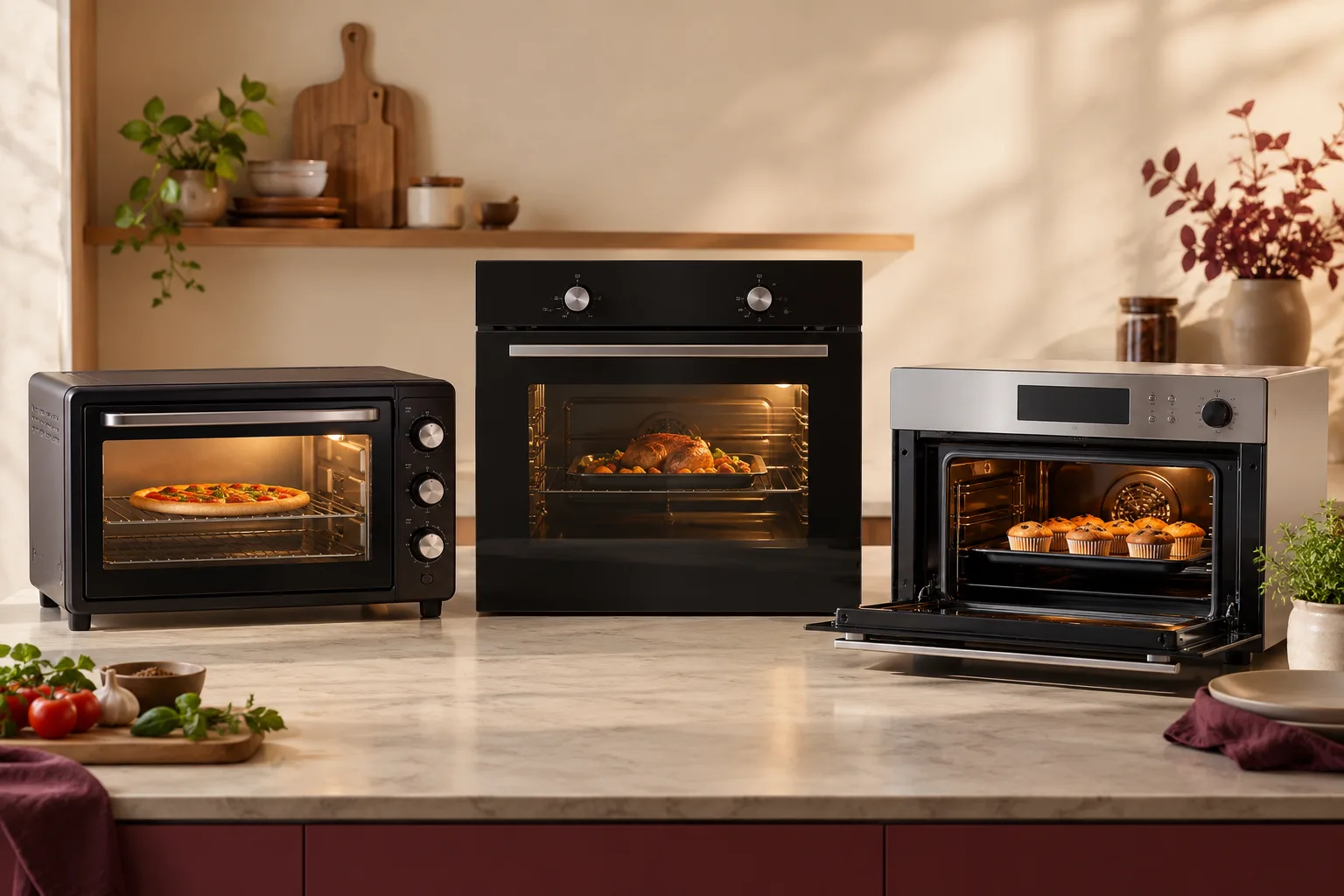
Ovens online include OTG (oven, toaster, griller) models, convection ovens and built-in ovens, bought mainly by home bakers and families who want cakes, pizza, grills and roasts without a microwave. GullySales works on how your listings tell a first-time baker which oven type to choose, show how the oven heats and bakes, and handle the installation and space questions that come before a built-in order.
Built-in ovens add another layer. The oven has to fit a cabinet cut-out, sit on a power connection that the kitchen may not have, and arrive with someone who can fit it. Those questions come before price.
Last updated 7 Oct 2026. Product, labelling and advertising rules for kitchen appliances differ by product and change. We describe them in general terms, so check the current position with your own adviser or the regulator before you publish a claim.
Who it is for
This is written for you if you sell ovens online.
- Brands with OTG and convection ovens sold on Amazon, Flipkart and their own stores
- Dealers of built-in ovens who work with interior designers and builders
- Importers of countertop and steam-assisted ovens for baking-led buyers
- Sellers of baking-oriented ovens to home bakers running a small business
Not for
It is not the right fit if.
- A seller who cannot arrange installation for built-in models and wants to sell them nationwide anyway
- A brand that wants to call an oven suitable for commercial baking without proof
How buyers choose
What decides the sale of ovens.
OTG, convection or built-in
Buyers ask which one bakes a cake evenly and which is just a toaster with a grill. Without a clear comparison, they open another tab to find out.
Capacity in litres and what fits
Will a twelve-inch pizza or a two-pound cake tin fit. The tray size and the usable height inside count for more than the litre figure.
Temperature range and how steady it is
Bakers read reviews for hot spots and uneven browning, and for whether the thermostat is accurate.
Space, power and fitting
For a built-in model the buyer needs the cut-out dimensions, the power requirement and who will do the installation. A countertop buyer wants to know about clearance from the wall.
Where sales are lost
What usually goes wrong when you sell ovens online.
In the words sellers use on the first call.
“Customers order an OTG expecting it to work like a microwave”
It takes preheating and a baking time, and cannot reheat a plate in a minute. The mismatch ends in a return and a review that says it is slow.
“Built-in ovens stall on the fitting question”
The buyer likes the oven, the designer likes the oven, and nobody knows who will fit it. The order stays in the cart.
“Bakers want trays and tins and we sell the oven alone”
The new baker needs a tray, a thermometer and tins, which a competing seller bundles into the same basket.
The scope
The work we would propose for ovens.
Measured on purchases, conversion rate, cost to win a customer, average order value and repeat purchases. Anything here that needs a platform or tool we have not used with you is confirmed with you before it goes in the scope.
- An oven-type chooserA page that asks what the buyer wants to bake, how big the family is and whether the kitchen is being built, and points to OTG, convection or built-in.
- Baking demonstrations in your own ovenA short video of a cake baking and a pizza browning in your models, with the preheating time shown as it is, in real conditions.
- Listing bundles for new bakersThe oven with a starter set of tins, a tray and a thermometer, offered where the baker is already deciding.
- Home baker communitiesPresence in baking groups and with home bakers who post their work, with product loaned or shown for honest use rather than a scripted review.
Installation and cut-out pages for built-in models
A page for each built-in model with the cut-out size, the power need and the way fitting is arranged, plus a request form for the fitter.
What we do
What you get for ovens.
Each deliverable and what it is there to change.
A type comparison page
OTG against convection against built-in in plain words, with a pointer to your own model for each, shown wherever the buyer is torn.
A fits-in-it chart
What tray, cake tin and pizza size each oven takes, shown as a picture, so capacity is judged by use.
A built-in model fact sheet
Cut-out size, power connection and fitting steps for each built-in model, with a form that sends the fitting request to you.
A preheating and first-bake guide
A card in the box and a message after delivery with the first recipe, preheating advice and care of the trays.
How the result is measured
- Purchases
- Conversion rate
- Customer acquisition cost
- Average order value with accessories
- Return rate
- Fitting requests per built-in enquiry
Recorded as a baseline before work starts, so every later report has an honest comparison.
How it works
From your first message to the first piece of work.
No open-ended retainer. Every step gives you something in writing.
First
Your brief
You tell us what you need in a few short steps: your business, what you want, where enquiries come from and how they are handled.
After the brief
A conversation and a written scope
We read it, then talk with whoever handles your enquiries. If you want our help, the scope, the fee and the reporting come in writing, and nothing starts before you have read them.
Before work starts
Baseline recorded
The numbers this work is meant to move, such as enquiries, quotations, orders, visits or renewals, written down so every later report has an honest comparison.
After the baseline
The first fix goes live
The fix we agreed to start with is put in place and measured against the baseline, whether that is a reply, a follow-up, a page, a listing or the handover between marketing and sales.
As agreed
Report against the baseline
What moved, what did not, and what changes next, in plain words. How often you get it is set in writing before work starts.
At renewal
Renew on the numbers
The term ends and you decide whether to continue from the results. The length is agreed in writing before anything starts.
What we need from you
What to have ready before we talk.
None of it has to be tidy. We read what you have.
- Your oven range and the type of each
- Dimensions, cut-out sizes and power details for built-in models
- Your fitting arrangement and the cities it covers
- Reviews and returns that mention heat, speed or fit
- Baking accessories you stock
Selling in India and abroad
Selling ovens beyond your own market.
Where you sell decides sizes, units, seasons and returns. We work from Bengaluru and have no overseas office, so for a new country we start from your own sales and the platforms you already use.
Power and fit first
Ovens are bulky and use mains power, so shipping one overseas needs the voltage, the plug and the dimensions to match what the buyer has. Any overseas interest is likely to come from Indian households abroad.
Parts and trays travel better than ovens
Baking trays, tins and accessories ship far more easily than the oven itself, and a baking brand may do better to start there. Look at your order data for the countries that already buy.
FAQ
Questions about selling ovens online.
Not here? More answers, or ask on WhatsApp.
What is the difference between an OTG and a convection oven in a listing?
How do I sell built-in ovens online?
Do I need baking videos?
How much does it cost?
How long is the contract?
How soon will we see results?
Who will actually do the work?
What do you need from us?
What if we are not happy with the work?
More in Kitchen Appliances
Sellers of ovens also need
Also selling from a shop, a workshop or a warehouse? See the page for electronics and appliance stores and household products brands.
This page is part of the e-commerce section. The D2C brands page covers the arithmetic of acquisition cost and the second order for any brand.
Why us
Why owners pick GullySales over an agency.
Marketing and sales, as one job
Most agencies stop at the enquiry. We also fix what happens after it: the reply, the follow-up, the quote and the CRM.
The person on the first call does the work
No account managers in between. You are never handed to someone you have not met.
A baseline before anything starts
Your numbers are written down on day one, so every later report compares against something honest.
The fee in writing, split three ways
Our time, your media spend and production on separate lines. You always see what goes to us.
No guarantees we cannot keep
The term is agreed in writing and never a default twelve months. We never promise a ranking or a lead count, because nobody controls those.
One office, and we say so
Nagarbhavi, Bengaluru. We work across India by call and WhatsApp and travel when a session needs to be in person.
#257, 3rd floor, Sri Nanjundeshwara Complex, Nagarbhavi 8th Block, Outer Ring Road. How we work.
Engagement options
Ways to work with us.
Pick the size of commitment that fits. Every option starts with your brief and a conversation.
Option 1
The conversation on its own
A call after you send your brief. It says honestly whether you need outside help, and many fixes are ones your own team can make.
Option 2
One fix, scoped
Start with the fix that matters most, such as reply time or follow-up. The fee is in writing before anything starts.
Option 3
An ongoing programme
We run the work, report against the baseline, and you renew on the numbers. The term and the reporting are agreed in writing first.
Option 4
Guidance for your own team or agency
We plan, brief and check the work of your in-house team or current agency, instead of replacing them.
Your brief
Tell us what you need, and we will read it before we call.
Eight short steps about your business, what you want and who decides. Most questions are a tap, and you can skip any you would rather answer on the call.
Your next practical step
Tell us what you are trying to grow, and we will read it before we call.
Eight short steps, mostly taps. Skip anything you would rather answer on the call.