E-commerce · Office Supplies & Equipment
A school buys a projector once, and a purchase committee decides it.
Presentation equipment is bought for a room, not for a person: the buyer of a projector or an interactive panel has a classroom or a boardroom in mind. A principal, a training head or an admin manager is choosing, other people have to agree, and the price decides less than whether it works in that light and that space.
Scope, fee, reporting and term are agreed in writing after we have read your brief and spoken to you.
In one paragraph
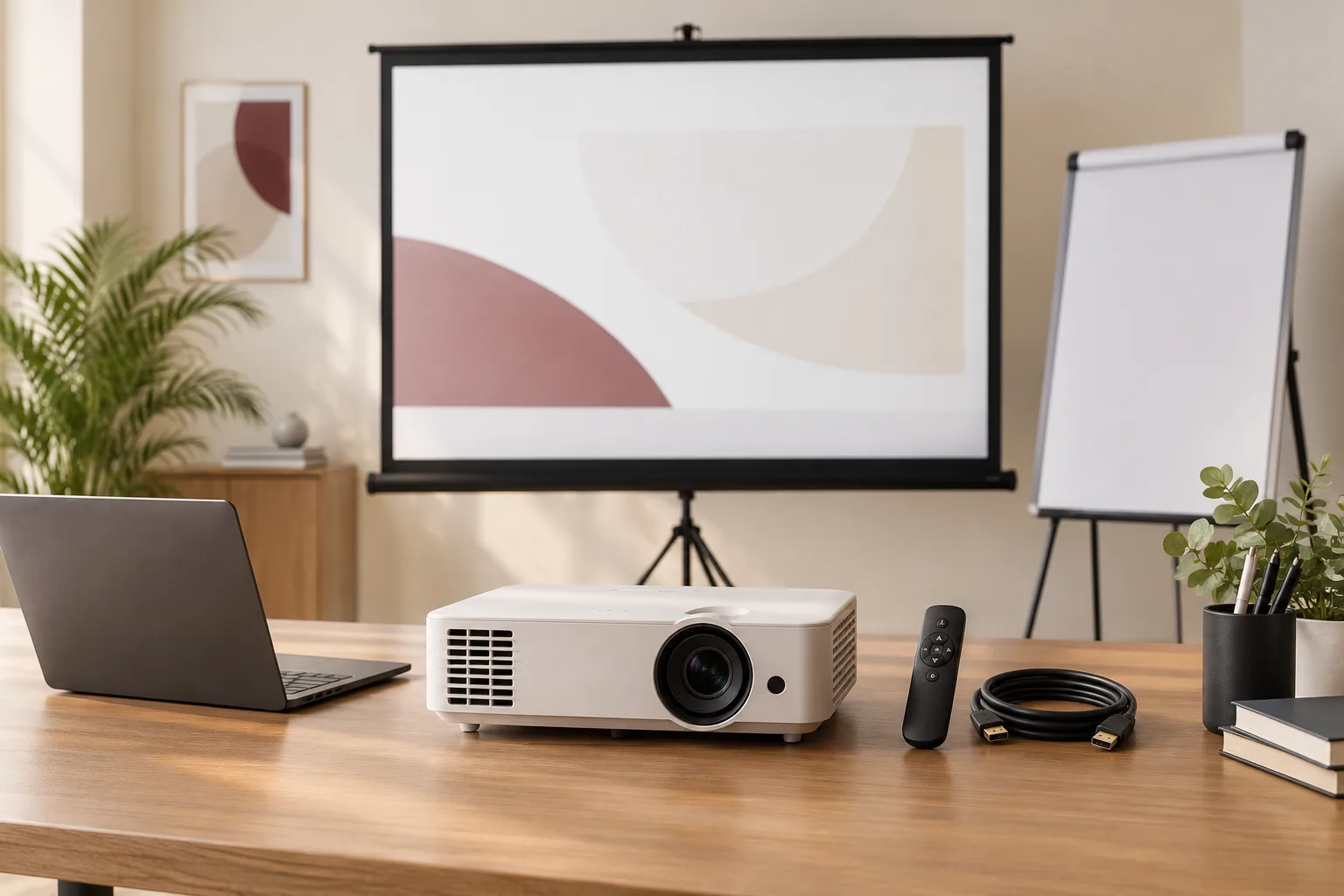
Presentation equipment online covers projectors, projector screens, whiteboards, flipcharts, laser pointers, interactive panels and conference-room displays, bought by schools, training firms and offices for a particular room. GullySales works on how your pages explain brightness, throw and room size in plain words, how institutional buyers get a quotation and a demonstration, and how installation and AMC are presented.
Whiteboards and flipcharts are an easier retail sale. The big-ticket kit is a quotation business, and the website has to behave like one.
Last updated 7 Oct 2026.
Who it is for
This is written for you if you sell presentation equipment online.
- Projector and interactive panel dealers supplying schools, colleges and offices
- Sellers of whiteboards, glassboards and flipcharts
- Training and event firms who buy presentation kit in volume
- Resellers who offer installation and an annual maintenance contract
Not for
It is not the right fit if.
- A seller who cannot install or arrange installation and will leave the buyer to mount a panel on a wall
- Anyone listing projector brightness or panel specifications that the maker has not published
How buyers choose
What decides the sale of presentation equipment.
Room size and lighting
Seating distance, whether the room can be darkened and how many people sit in it. A projector chosen without this fails on the first day.
Resolution, brightness and connectivity
HDMI, wireless casting, the laptop or the phone that will be connected. The buyer wants to know it will work with what they have.
Installation and what it includes
Ceiling mount, cabling, screen fitting and a demonstration. Often this is as big a question as the machine.
Warranty, lamp life and service contract
A projector lamp or panel fails eventually, and the institutions ask what the warranty covers and who services it.
Where sales are lost
What usually goes wrong when you sell presentation equipment online.
In the words sellers use on the first call.
“Schools ask for a quote and compare four”
A committee collects quotes from several dealers. The one with a clear specification sheet and a follow-up call stays on the shortlist.
“The buyer chose the wrong size or brightness”
The room was larger and brighter than the listing assumed. Nobody asked about the room.
“We install well and nobody knows”
Our installations are good, but the site shows only product shots. A buyer judges you on the box and not the work.
The scope
The work we would propose for presentation equipment.
Measured on purchases and, for trade buyers, qualified enquiries, quotation requests and repeat orders. Anything here that needs a platform or tool we have not used with you is confirmed with you before it goes in the scope.
- A room-based selectorQuestions about room size, light and use that lead to a projector or panel suited to that room, in words a school administrator follows.
- Quotation with a specification sheetA standard quotation with specification, installation, warranty and AMC terms, followed up until a committee decides.
- Reaching schools and training firmsA list of institutions in your region, approached with a demonstration offer and a short case from a room you have fitted.
- Installation work shownPhotographs and short videos of finished rooms, with the institution's permission, in place of shots of boxes.
- Search for room and usePages for a projector for a classroom, a smart board for training, a screen for a conference room, and a whiteboard in a given size.
What we do
What you get for presentation equipment.
Each deliverable and what it is there to change.
A room and equipment guide
A page that matches room size, light and use to the equipment, written for an administrator and not an engineer.
A quotation pack for institutions
Specification, installation scope, warranty and service terms in one document that a committee can pass around.
Installed-room photographs
A short set of images and a clip for each type of room you have equipped.
A demonstration request page
A form that records the room, the institution and who decides.
How the result is measured
- Purchases of retail items
- Qualified institutional enquiries
- Quotation requests
- Follow-up on each quotation
- Orders won
- Demonstrations booked
Recorded as a baseline before work starts, so every later report has an honest comparison.
How it works
From your first message to the first piece of work.
No open-ended retainer. Every step gives you something in writing.
First
Your brief
You tell us what you need in a few short steps: your business, what you want, where enquiries come from and how they are handled.
After the brief
A conversation and a written scope
We read it, then talk with whoever handles your enquiries. If you want our help, the scope, the fee and the reporting come in writing, and nothing starts before you have read them.
Before work starts
Baseline recorded
The numbers this work is meant to move, such as enquiries, quotations, orders, visits or renewals, written down so every later report has an honest comparison.
After the baseline
The first fix goes live
The fix we agreed to start with is put in place and measured against the baseline, whether that is a reply, a follow-up, a page, a listing or the handover between marketing and sales.
As agreed
Report against the baseline
What moved, what did not, and what changes next, in plain words. How often you get it is set in writing before work starts.
At renewal
Renew on the numbers
The term ends and you decide whether to continue from the results. The length is agreed in writing before anything starts.
What we need from you
What to have ready before we talk.
None of it has to be tidy. We read what you have.
- Your range with the specifications you can stand behind
- Institutions you have supplied and which agree to be shown
- Quotations sent in the last season and how each ended
- Your installation and service arrangement
- Photographs of finished rooms
Selling in India and abroad
Selling presentation equipment beyond your own market.
Where you sell decides sizes, units, seasons and returns. We work from Bengaluru and have no overseas office, so for a new country we start from your own sales and the platforms you already use.
Voltage and approvals
Projectors and panels are electrical goods, with local plug, voltage and approval rules and separate warranty terms. Check these before listing abroad.
Installation is local
An interactive panel needs mounting and support in the buyer's own city. Cross-border sale of large equipment is rare, and whiteboards and small accessories travel more easily.
FAQ
Questions about selling presentation equipment online.
Not here? More answers, or ask on WhatsApp.
How do I sell projectors and panels to schools?
Should whiteboards and flipcharts have a different route?
Can I show my installations if I have no photographs?
How much does it cost?
How long is the contract?
How soon will we see results?
Who will actually do the work?
What do you need from us?
What if we are not happy with the work?
More in Office Supplies & Equipment
Sellers of presentation equipment also need
Also selling from a shop, a workshop or a warehouse? See the page for stationery and office supply dealers and home and office automation.
This page is part of the e-commerce section. The D2C brands page covers the arithmetic of acquisition cost and the second order for any brand.
Why us
Why owners pick GullySales over an agency.
Marketing and sales, as one job
Most agencies stop at the enquiry. We also fix what happens after it: the reply, the follow-up, the quote and the CRM.
The person on the first call does the work
No account managers in between. You are never handed to someone you have not met.
A baseline before anything starts
Your numbers are written down on day one, so every later report compares against something honest.
The fee in writing, split three ways
Our time, your media spend and production on separate lines. You always see what goes to us.
No guarantees we cannot keep
The term is agreed in writing and never a default twelve months. We never promise a ranking or a lead count, because nobody controls those.
One office, and we say so
Nagarbhavi, Bengaluru. We work across India by call and WhatsApp and travel when a session needs to be in person.
#257, 3rd floor, Sri Nanjundeshwara Complex, Nagarbhavi 8th Block, Outer Ring Road. How we work.
Engagement options
Ways to work with us.
Pick the size of commitment that fits. Every option starts with your brief and a conversation.
Option 1
The conversation on its own
A call after you send your brief. It says honestly whether you need outside help, and many fixes are ones your own team can make.
Option 2
One fix, scoped
Start with the fix that matters most, such as reply time or follow-up. The fee is in writing before anything starts.
Option 3
An ongoing programme
We run the work, report against the baseline, and you renew on the numbers. The term and the reporting are agreed in writing first.
Option 4
Guidance for your own team or agency
We plan, brief and check the work of your in-house team or current agency, instead of replacing them.
Your brief
Tell us what you need, and we will read it before we call.
Eight short steps about your business, what you want and who decides. Most questions are a tap, and you can skip any you would rather answer on the call.
Your next practical step
Tell us what you are trying to grow, and we will read it before we call.
Eight short steps, mostly taps. Skip anything you would rather answer on the call.