E-commerce · Business, industrial and safety supplies
A buyer wants fifty boxes today, and your site only has a photograph and a phone number.
Packaging is bought by people who are about to run out of it. The online seller has a parcel to send this evening, the sweet shop has a festival order, the exporter has a container to load. They search for a size and a material, not for a brand.
Scope, fee, reporting and term are agreed in writing after we have read your brief and spoken to you.
In one paragraph
Selling packaging supplies online means a small seller, a factory or a restaurant finds a carton, mailer, tape or label by its size and material, asks for a price and reorders when stock runs low. GullySales builds the size-based product pages, the quotation request and the reorder follow-up that turn a one-off buyer into an account.
That makes the catalogue's job simple and difficult at once. Every box needs its inside length, width and height, the ply and the strength, the pack size and a price that shows what a hundred cost. A listing that says 'strong carton, many sizes' sells nothing.
The profit is in the second order. A box that fits is bought again every few weeks, and a supplier who remembers the size and calls before the stock ends keeps the account. Packaging suppliers who only wait for the phone to ring lose that to the one who calls.
Last updated 7 Oct 2026. Product, labelling and advertising rules for packaging supplies differ by product and change. We describe them in general terms, so check the current position with your own adviser or the regulator before you publish a claim.
6 types of product
Each kind of packaging supplies sells differently, so each has its own page.
Open the one that matches what you sell. It covers who buys it, where the sale is lost and what we would do.
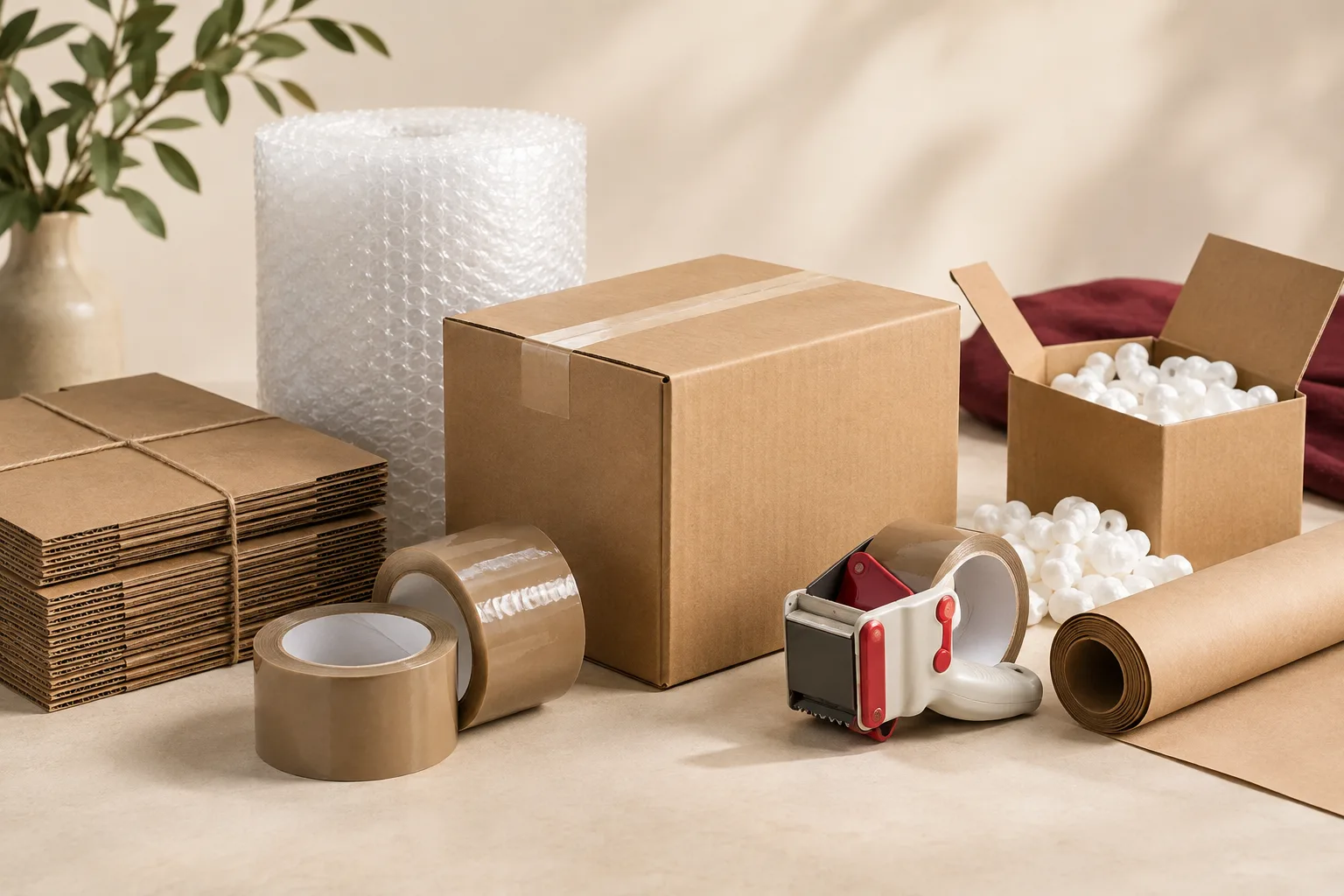
 BoxesThe carton is two centimetres too small, so the buyer orders from someone with a size chart.
 MailersThe online seller's parcel arrives with the bag torn, and your mailer takes the blame.
 Packaging TapeThe tape lets go in the monsoon, and the buyer blames the box.
 Protective PackagingThe glass arrived in pieces, and the seller wants to know which wrap would have saved it.
 LabelsThe label printer jams, and the buyer does not know the roll was the wrong core size.
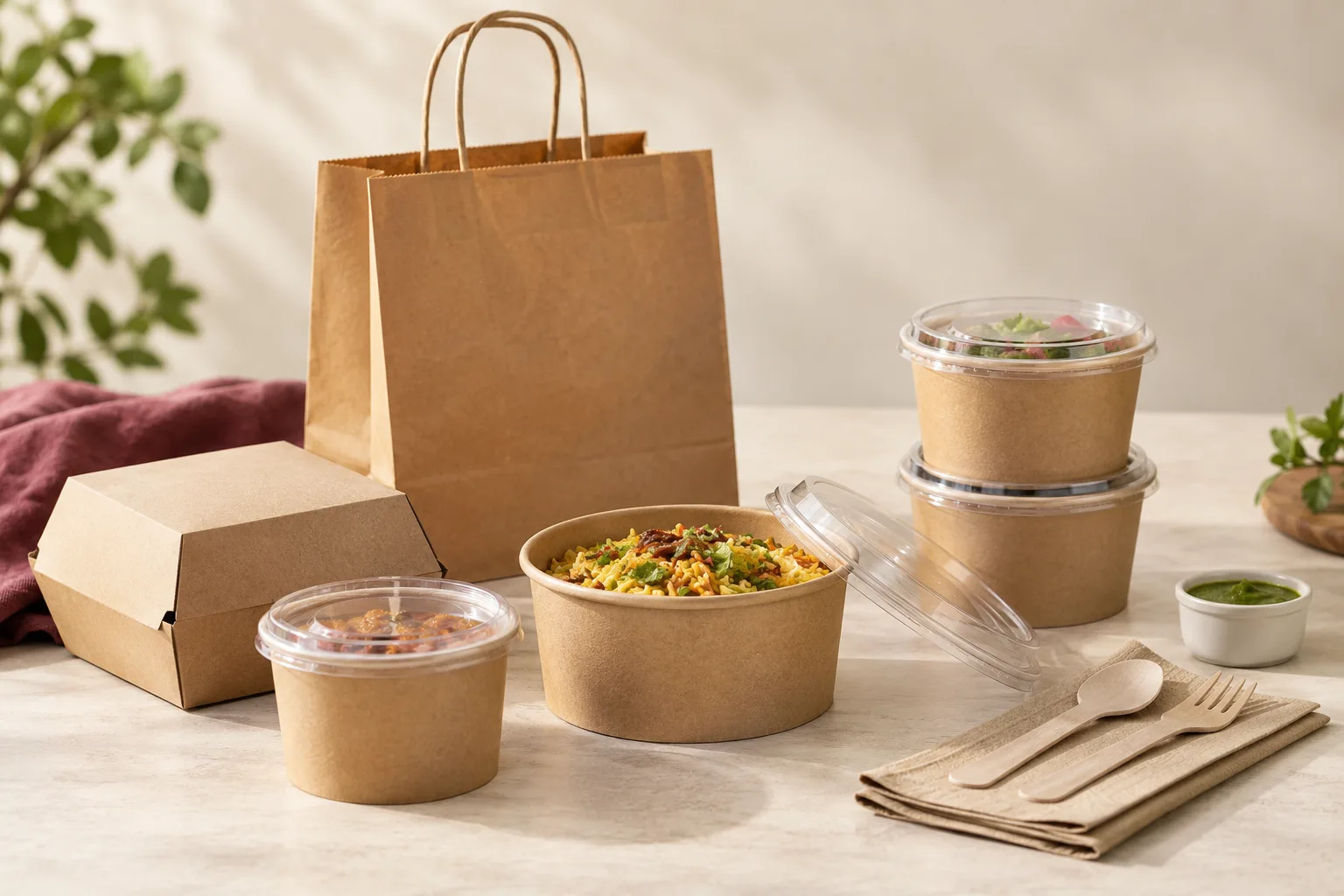 Food PackagingThe gravy leaked in the delivery bag, and the kitchen is looking for another container.
Who it is for
This is written for you if you sell packaging supplies online.
- Manufacturers of corrugated boxes, mailers, tape, labels and protective materials who sell direct
- Traders and stockists of packaging materials with a large range and a small enquiry desk
- Converters who print and make to order for brands and food businesses
- Suppliers whose main buyers are online sellers and small manufacturers who reorder
Not for
It is not the right fit if.
- A supplier who cannot say a price or a minimum order. Buyers leave when they must ask for both.
- Sellers who plan to sell only through a tender or a few fixed accounts. Marketing will not change that, and we will say so.
How buyers choose
What decides who wins in packaging supplies.
Size first, material second
The buyer measures the product and searches for the carton that fits, in centimetres or inches, and then checks ply and strength. A page that lists the internal dimensions in a table is found, and one that says medium is skipped.
Minimum order and price breaks
Whether the minimum is fifty or five thousand decides who the buyer is. The price at a hundred, five hundred and a thousand is the first thing they look for.
Sample before bulk
A buyer of boxes or mailers asks for a sample, and often tests it by packing and dropping the product. A sample request on the page is a serious enquiry, and each one should be followed up.
Printing and artwork
Brands ask for their logo on the box, the mailer or the tape. They need to know the artwork format, the cost of the printing set-up and the minimum for a printed run before they ask for a quotation.
Where sales are lost
What usually goes wrong when you sell packaging supplies online.
In the words sellers use on the first call.
“Enquiries say 'need boxes, send rate' and nothing else”
A reply costs time without size, quantity or delivery town. A form that asks for those three, with a size calculator or a size list, separates the real buyers.
“Customers phone for the size that is out of stock”
A page that shows stock status and the next-nearest size saves calls and sales. A buyer sent away empty-handed rarely returns.
“We lose small buyers to marketplaces that deliver tomorrow”
Small orders go where it is easy. A clear price for small packs and a straight statement of delivery area get these buyers, who often grow into large ones.
“We never hear from a buyer after the first order”
A box that fits is reordered. Without a record of what each buyer takes and how often, no one calls in time, and the reorder goes elsewhere.
The scope
The work we would propose for packaging supplies.
Measured on qualified enquiries, quotation requests, follow-up, orders won and repeat orders. Anything here that needs a platform or tool we have not used with you is confirmed with you before it goes in the scope.
- Size-led product pagesA page per box, mailer or tape family listing internal sizes, ply or thickness, pack quantity and use, in the units the buyer measures with.
- Quotation and sample requestA form asking size, quantity, printing needs and delivery pincode, plus a sample request, so the first reply can carry a price.
- Follow-up on quotations and samplesEvery quotation and sample gets an owner and a date to call, and a reason recorded when it is won or lost.
- Marketplace and directory leadsA look at how leads from IndiaMART and similar listings are answered, which categories bring buyers who order, and how quickly the first call goes out.
- Reorder remindersA list of buyers by what they take and how often, and a call or WhatsApp message when they are likely to run short.
- Product feed and shopping listingsWhere the standard sizes suit it, a product feed for Google Merchant Centre and shopping listings. Which products fit this is decided after we have read your brief and spoken to you.
What we do
What you get for packaging supplies.
Each deliverable and what it is there to change.
A size and material table
Every standard size with internal dimensions, ply, pack quantity and price break. It lets a buyer choose without a phone call.
A quotation and sample request page
The request form and its confirmation message, asking for what your estimator must have to price the job. It replaces the vague enquiry with a priceable one.
A quotation and sample tracker
Each request with its buyer, quantity, value and next call. It makes sure none is sent and forgotten.
A reorder list
Past buyers with what they take and when they last ordered, with the next call scheduled. It turns a first order into an account.
How the result is measured
- Qualified enquiries
- Quotation requests
- Follow-up on each quotation
- Orders won
- Repeat orders
- Sample requests that became orders
Recorded as a baseline before work starts, so every later report has an honest comparison.
How it works
What the work involves for packaging supplies
The work itself, in order. How an engagement starts, from your brief to a written scope, is set out on our method page.
- 1
Audit the catalogue and the enquiry desk
We look at which sizes can be found, how quotation and sample requests arrive and who answers them. We go through this with your sales desk.
- 2
Choose the product families to start with
A large range cannot be rewritten at once. We pick the sizes with the most repeat demand or the best margin.
- 3
Build the size pages and the request form
Size tables, product pages and the quotation and sample form go live for the chosen families, with tracking from the first day.
- 4
Set up quotation follow-up and reorder reminders
The tracker, the call dates and the reorder list are put in place and agreed with whoever answers your phone.
- 5
Measure against the baseline
Each report compares enquiries, quotations and orders with the baseline taken before work began. When and how you are reported to is settled in writing after we have read your brief and spoken to you.
- 6
Extend to the next families
What brought orders decides what comes next. Families with enquiries but no orders are looked at again before more are added.
What we need from you
What to have ready before we talk.
None of it has to be tidy. We read what you have.
- Your website, IndiaMART or marketplace listing links
- Your product list with sizes, ply or thickness and pack quantities
- Your minimum orders and price breaks
- A handful of recent enquiries and what became of them
- Your best-selling sizes and the printed work you have done
Selling in India and abroad
Selling packaging supplies beyond your own market.
Where you sell decides sizes, units, seasons and returns. We work from Bengaluru and have no overseas office, so for a new country we start from your own sales and the platforms you already use.
Export packing is its own specification
A buyer shipping overseas asks for pallet sizes, carton strength for sea freight and treated wood or no wood at all. Your page should say what you make for export, and what you do not.
Start with enquiries you already get
Your own enquiry and order data show which countries already ask. We begin there, and decide languages and markets from it.
Units and standards
Overseas buyers state sizes in inches, centimetres or both, and may ask for documents on materials. What you can supply is for you to confirm, and rules on exports are for your forwarder.
FAQ
Questions about selling packaging supplies online.
Not here? More answers, or ask on WhatsApp.
Can I sell boxes without a price on the website?
How do I get found for the box size my customer needs?
Is it worth selling to small online sellers?
Do I need to mention certificates and standards on the page?
How long is the contract?
How soon will we see results?
Who will actually do the work?
What do you need from us?
What if we are not happy with the work?
Sellers of packaging supplies also need
Also selling from a shop, a workshop or a warehouse? See the page for packaging manufacturers.
This page is part of the e-commerce section. The D2C brands page covers the arithmetic of acquisition cost and the second order for any brand.
Why us
Why owners pick GullySales over an agency.
Marketing and sales, as one job
Most agencies stop at the enquiry. We also fix what happens after it: the reply, the follow-up, the quote and the CRM.
The person on the first call does the work
No account managers in between. You are never handed to someone you have not met.
A baseline before anything starts
Your numbers are written down on day one, so every later report compares against something honest.
The fee in writing, split three ways
Our time, your media spend and production on separate lines. You always see what goes to us.
No guarantees we cannot keep
The term is agreed in writing and never a default twelve months. We never promise a ranking or a lead count, because nobody controls those.
One office, and we say so
Nagarbhavi, Bengaluru. We work across India by call and WhatsApp and travel when a session needs to be in person.
#257, 3rd floor, Sri Nanjundeshwara Complex, Nagarbhavi 8th Block, Outer Ring Road. How we work.
Engagement options
Ways to work with us.
Pick the size of commitment that fits. Every option starts with your brief and a conversation.
Option 1
The conversation on its own
A call after you send your brief. It says honestly whether you need outside help, and many fixes are ones your own team can make.
Option 2
One fix, scoped
Start with the fix that matters most, such as reply time or follow-up. The fee is in writing before anything starts.
Option 3
An ongoing programme
We run the work, report against the baseline, and you renew on the numbers. The term and the reporting are agreed in writing first.
Option 4
Guidance for your own team or agency
We plan, brief and check the work of your in-house team or current agency, instead of replacing them.
Your brief
Tell us what you need, and we will read it before we call.
Eight short steps about your business, what you want and who decides. Most questions are a tap, and you can skip any you would rather answer on the call.
Your next practical step
Tell us what you are trying to grow, and we will read it before we call.
Eight short steps, mostly taps. Skip anything you would rather answer on the call.