E-commerce · Packaging Supplies
The gravy leaked in the delivery bag, and the kitchen is looking for another container.
A kitchen owner chooses packaging with a dish in mind: biryani that must stay hot, a cake that must not slide, a curry that must not leak, a laddu box that must look like a gift. The dish drives the search, and the supplier who names it is found.
Scope, fee, reporting and term are agreed in writing after we have read your brief and spoken to you.
In one paragraph
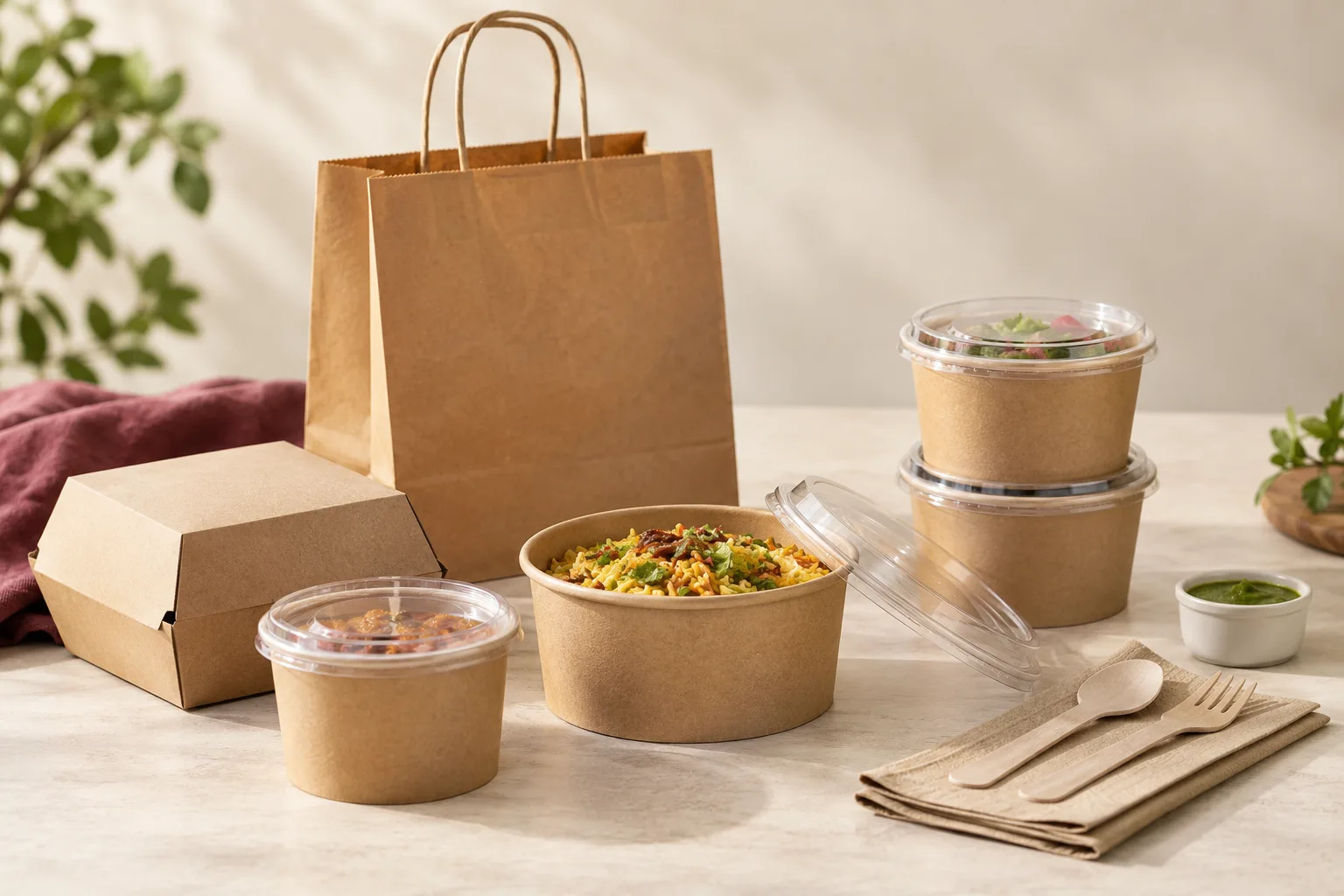
Food packaging is the containers, pouches, cups, paper bags, foil trays and wraps that hold food for sale or delivery, bought by kitchens, bakeries, sweet shops and food brands. GullySales builds pages by dish and use, a sample and quotation route, and the reorder follow-up, with every material claim checked before it is stated.
Food packaging is also the corner of this trade where claims need the most care. Words like food-grade, microwave-safe, compostable and leak-proof are what buyers ask for, and what a supplier can state depends on what they can show. Pages here describe the container and the use, and leave any claim that cannot be backed.
Last updated 7 Oct 2026. Product, labelling and advertising rules for packaging supplies differ by product and change. We describe them in general terms, so check the current position with your own adviser or the regulator before you publish a claim.
Who it is for
This is written for you if you sell food packaging online.
- Suppliers of containers, cups, bowls and boxes to cloud kitchens and restaurants
- Makers of paper bags, wraps, butter paper and trays for bakeries and sweet shops
- Pouch and packaging suppliers to home food brands and packaged food makers
- Dealers who supply packaging materials to caterers and event kitchens
Not for
It is not the right fit if.
- A supplier who wants to put a food-safety or compostable claim on a page without a document to support it. We will not write it.
- Sellers who cannot say what material a container is made of.
How buyers choose
What decides the sale of food packaging.
Dish first, container second
A cloud kitchen types a container for gravy dishes, a cup for cold coffee, a box for six cupcakes. The page should open with the dish, the capacity in millilitres and the lid type.
Hot, cold and the journey
The container has to survive a bike ride with the lid down. Buyers ask about leaks, steam, and whether the lid stays on. A photograph of a packed, sealed container does more than a description.
Material and what it can hold
Plastic, paper, aluminium and plant-fibre containers suit different foods. Buyers ask about hot oil and heating in a microwave, and the answer must come from the manufacturer's information, with the document available.
Branding and the first small run
A new brand wants its name on a bag or a box, but not in thousands. Small printed runs, stickers and a stamp are common first steps, and the minimums are asked before the price.
Where sales are lost
What usually goes wrong when you sell food packaging online.
In the words sellers use on the first call.
“Our containers get compared on price with no way to show difference”
Two round containers look the same in a photograph. Capacity in millilitres, lid fit, the weight of the container and a test with oil show the difference.
“Kitchens ask for a sample and never reply”
A kitchen tests on a busy night and forgets. A follow-up call with a short question about how the lid held, on a day agreed at the time of the sample, brings the answer.
“We are asked for compostable and cannot say it”
A claim without a document is a risk to you and the buyer. Say what the material is, give the information you hold, and tell the buyer to ask their own adviser what the claim allows.
“Festival season floods us and then it goes quiet”
Diwali sweet boxes, wedding hampers and Ramzan packs spike. Planning pages and offers before the season, and reminding past buyers, smooths the year.
The scope
The work we would propose for food packaging.
Measured on qualified enquiries, quotation requests, follow-up, orders won and repeat orders. Anything here that needs a platform or tool we have not used with you is confirmed with you before it goes in the scope.
- Pages by dish and by food typeA page for biryani containers, sweet boxes, cake boxes, soup cups, salad bowls and so on, each with capacity, lid, material and what it is made for.
- Sample request for kitchensA form asking what dish, how many orders in a day and how the food travels, followed by a sample set and a dated call.
- Festival and wedding planningA calendar of festivals and seasons when sweet shops and caterers order, with the offers and pages ready ahead of each.
- Quotation follow-up and reorder callsEach quotation and sample gets an owner and a date. Past buyers are listed by container and usage, and called before they run out.
- Aggregator and cloud-kitchen outreachContent and messages for new cloud kitchens, who open often and need packaging at once. Who to reach is worked out from your own order data.
Material information page
What each container is made of and the documents you hold, written plainly and approved by whoever is responsible for your compliance. We do not state any standard or approval ourselves.
What we do
What you get for food packaging.
Each deliverable and what it is there to change.
A container guide by dish
Dishes against containers with capacity and lid type. It lets a kitchen choose without waiting for a call.
A sample request page
A form and a confirmation that sets a date for the follow-up call. It turns a sample into a conversation.
A material information sheet
The material and any documents you hold, without claims you cannot back. It answers the buyer's question honestly.
A festival ordering calendar
Dates by which sweet shops and caterers should order, with matching offers. It spreads the rush and brings buyers back early.
How the result is measured
- Qualified enquiries
- Sample requests
- Quotation requests
- Orders won
- Repeat orders
- Complaints on leaks or lids by product
Recorded as a baseline before work starts, so every later report has an honest comparison.
How it works
From your first message to the first piece of work.
No open-ended retainer. Every step gives you something in writing.
First
Your brief
You tell us what you need in a few short steps: your business, what you want, where enquiries come from and how they are handled.
After the brief
A conversation and a written scope
We read it, then talk with whoever handles your enquiries. If you want our help, the scope, the fee and the reporting come in writing, and nothing starts before you have read them.
Before work starts
Baseline recorded
The numbers this work is meant to move, such as enquiries, quotations, orders, visits or renewals, written down so every later report has an honest comparison.
After the baseline
The first fix goes live
The fix we agreed to start with is put in place and measured against the baseline, whether that is a reply, a follow-up, a page, a listing or the handover between marketing and sales.
As agreed
Report against the baseline
What moved, what did not, and what changes next, in plain words. How often you get it is set in writing before work starts.
At renewal
Renew on the numbers
The term ends and you decide whether to continue from the results. The length is agreed in writing before anything starts.
What we need from you
What to have ready before we talk.
None of it has to be tidy. We read what you have.
- Your container and packaging list with capacities and materials
- Documents you hold on materials, and who in your firm answers for them
- Photographs of the packaging holding real food
- Your regular buyers and what they order
- Your minimums and the first printed run you offer
Selling in India and abroad
Selling food packaging beyond your own market.
Where you sell decides sizes, units, seasons and returns. We work from Bengaluru and have no overseas office, so for a new country we start from your own sales and the platforms you already use.
Food rules differ by country
A packaging claim that is acceptable here may not be in another market. Whether your product may be sold for food contact abroad is for the buyer's adviser and your own compliance person to confirm.
Indian food brands abroad
Brands selling snacks or sweets to the Indian community overseas ask for pouches and boxes that survive a long journey. Say what you have made for it, and start from the enquiries you already receive.
FAQ
Questions about selling food packaging online.
Not here? More answers, or ask on WhatsApp.
Can I call my containers food-grade or microwave-safe?
How do I find new cloud kitchens as customers?
Are printed bags worth it for a small bakery?
How much does it cost?
How long is the contract?
How soon will we see results?
Who will actually do the work?
What do you need from us?
What if we are not happy with the work?
More in Packaging Supplies
Sellers of food packaging also need
Also selling from a shop, a workshop or a warehouse? See the page for packaging manufacturers.
This page is part of the e-commerce section. The D2C brands page covers the arithmetic of acquisition cost and the second order for any brand.
Why us
Why owners pick GullySales over an agency.
Marketing and sales, as one job
Most agencies stop at the enquiry. We also fix what happens after it: the reply, the follow-up, the quote and the CRM.
The person on the first call does the work
No account managers in between. You are never handed to someone you have not met.
A baseline before anything starts
Your numbers are written down on day one, so every later report compares against something honest.
The fee in writing, split three ways
Our time, your media spend and production on separate lines. You always see what goes to us.
No guarantees we cannot keep
The term is agreed in writing and never a default twelve months. We never promise a ranking or a lead count, because nobody controls those.
One office, and we say so
Nagarbhavi, Bengaluru. We work across India by call and WhatsApp and travel when a session needs to be in person.
#257, 3rd floor, Sri Nanjundeshwara Complex, Nagarbhavi 8th Block, Outer Ring Road. How we work.
Engagement options
Ways to work with us.
Pick the size of commitment that fits. Every option starts with your brief and a conversation.
Option 1
The conversation on its own
A call after you send your brief. It says honestly whether you need outside help, and many fixes are ones your own team can make.
Option 2
One fix, scoped
Start with the fix that matters most, such as reply time or follow-up. The fee is in writing before anything starts.
Option 3
An ongoing programme
We run the work, report against the baseline, and you renew on the numbers. The term and the reporting are agreed in writing first.
Option 4
Guidance for your own team or agency
We plan, brief and check the work of your in-house team or current agency, instead of replacing them.
Your brief
Tell us what you need, and we will read it before we call.
Eight short steps about your business, what you want and who decides. Most questions are a tap, and you can skip any you would rather answer on the call.
Your next practical step
Tell us what you are trying to grow, and we will read it before we call.
Eight short steps, mostly taps. Skip anything you would rather answer on the call.