Gymnastics academies · Website
Build a site that shows the facility, the levels and the trial in one visit.
A website for a gymnastics academy is the place a parent checks the facility, the timetable and the safety answers before they walk in. GullySales builds and improves the pages, the timetable and the trial booking so a parent can decide with confidence.
Scope, fee, reporting and term are agreed in writing after we have read your brief and spoken to you.
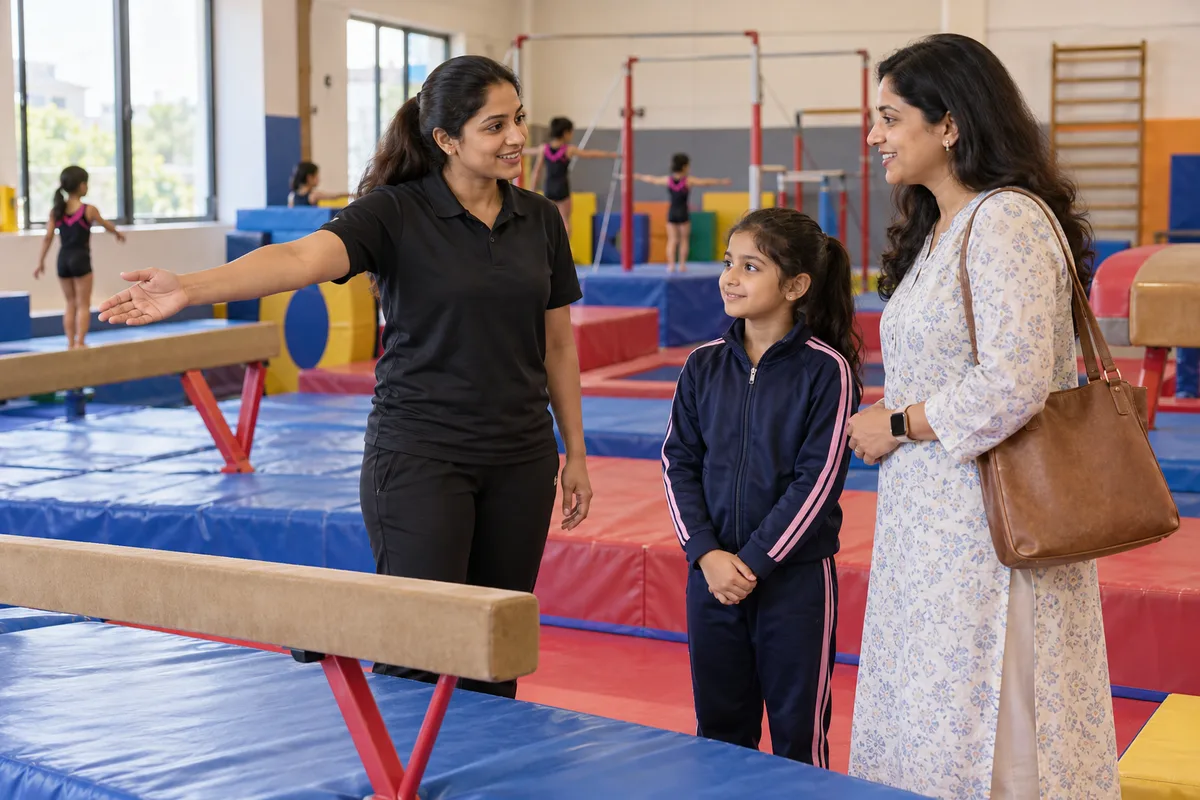
What website means
A website is the page a customer lands on after searching, clicking an advert or scanning a code, and it decides whether they call or leave. GullySales builds and maintains sites that load quickly, explain the offer plainly and make the enquiry form or phone number easy to find.
Also for gymnastics academies
- SEO for gymnastics academies
- Local SEO for gymnastics academies
- Lead generation for gymnastics academies
- Social media marketing for gymnastics academies
- Content marketing for gymnastics academies
- Buyer personas for gymnastics academies
- CRM for gymnastics academies
- Follow-up systems for gymnastics academies
Sales and marketing for gymnastics academies, the overview.
Last updated 14 Nov 2026.
For gymnastics academies
Where it usually goes wrong, and what we would do.
“Parents check the academy from the school gate”
A parent looking up the academy is standing in a school gate or sitting in a car. A page that loads on a phone and shows the age groups, the days and a trial button serves them; a heavy desktop layout does not.
“A timetable pasted as an image cannot be read”
A scanned timetable cannot be searched, enlarged properly or read by a screen reader. Written as text on the page, it can be found by search engines and read by every parent.
“No photographs of the facility means no trust”
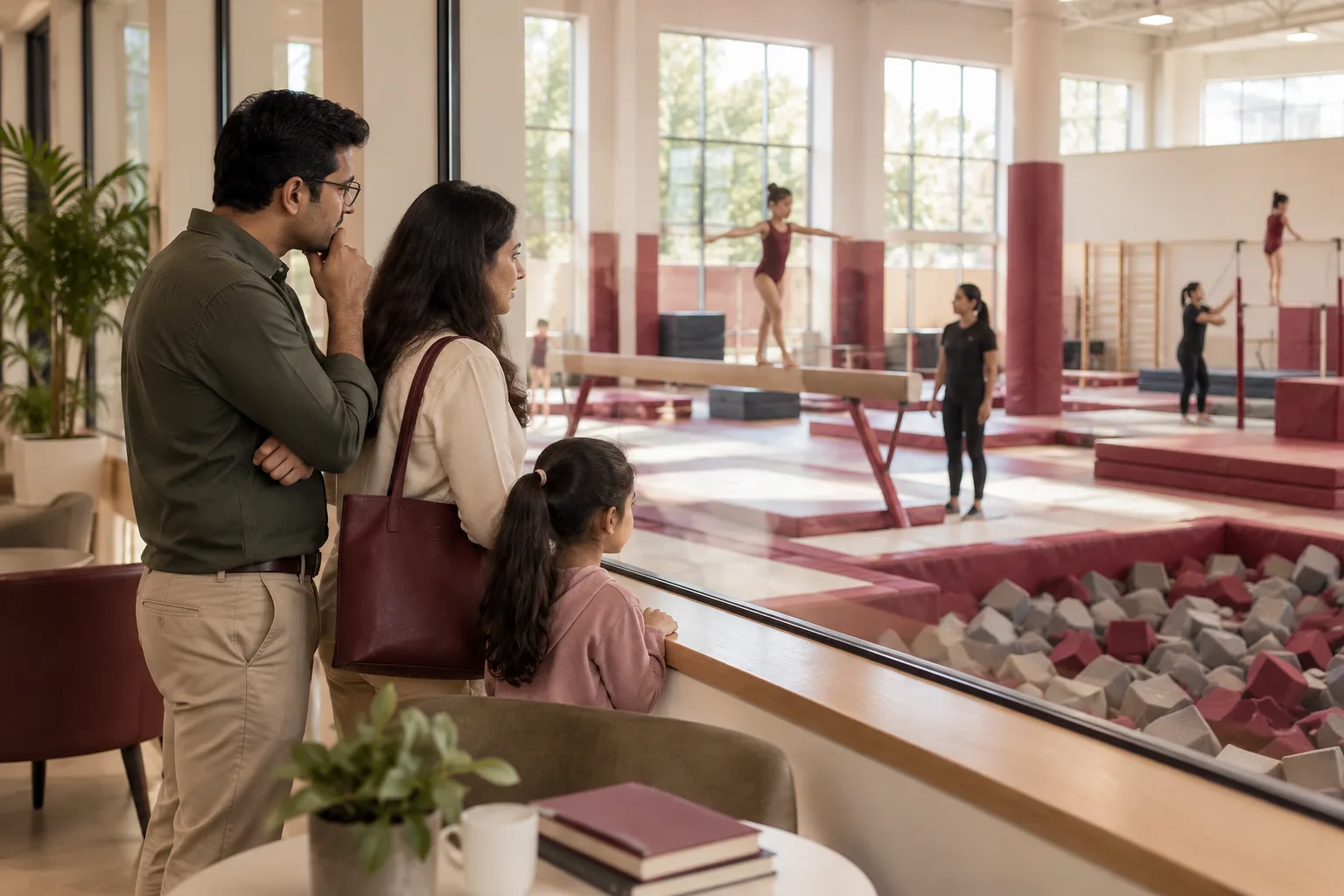
Parents judge the mats, the apparatus and the cleanliness before they judge the coach. A site that hides the facility makes them wonder what is missing, and they choose the academy that shows it.
“A contact form nobody answers is worse than none”
A parent who fills in a form and hears nothing assumes the academy is careless. Each form must reach a named person with a reply routine behind it, and each submission should offer a trial slot.
What we do
What we deliver for gymnastics academies.
The work available for this need. We agree the deliverables and responsibilities for your engagement in writing.
A home page that shows the facility
Photographs and a short video of the mats, apparatus and supervised floor, with the age groups and the trial button above the fold.
Result: A parent understands the academy in one look.
Programme and level pages
A page for toddlers, recreational batches and competitive squads, with the levels explained in plain words.
Result: Each parent finds the page written for their child.
A timetable written as text
The days, times and venues for each batch, set out as readable text and updated as batches fill.
Result: Parents get a correct timetable on any phone.
A trial booking form that works
A short form or WhatsApp link asking the child's age and preferred days, routed to a named person on the desk.
Result: Every visitor can book a trial without calling.
A safety and coaches page
A plain account of supervision, matting and progression, with the coaches' roles named and photographs used only with consent.
Result: The worry parents arrive with is answered on the site.
Speed, mobile and search basics
Loading time, mobile layout, page titles and a Google Business Profile link checked and corrected.
Result: The site loads on a phone and can be found.
How the result is measured
- Page load time
- Bounce rate
- Enquiries from the website
Recorded as a baseline before work starts, so every later report has an honest comparison.
Searches your buyers type
Questions a gymnastics parent brings to the site.
- Which batch for my child's age
- An age-and-batch page with a plain table of groups, days and the coach for each.
- What does the facility look like
- A gallery of the hall, the mats and the changing rooms, shot empty so no child appears without consent.
- How do trial classes work
- A trial page explaining what a child does, how long parents may stay and how to book a slot.
- Where is the academy
- A location page with the address, a map, parking and the nearest school stop.
- What does the competitive squad involve
- A squad page describing the training hours, the selection step and the coach, with no promise of results.
Who it is for
This is written for these gymnastics academies.
- Recreational gymnastics academies
- Artistic gymnastics clubs
- Rhythmic gymnastics academies
- Toddler and preschool movement programmes
- Competitive gymnastics squads
- Gymnastics within multi-sport centres
- Parkour, tumbling and trampoline programmes
- Gymnastics and fitness programmes for older children and teenagers
Before you decide
When this may not be the right fit.
- The timetable changes every term and nobody will update the page, so parents would see wrong timings.
- You have no photographs of the facility yet, and a page without them gives a parent nothing to trust.
Before you decide
Agree the work. Know how to judge it.
Website for gymnastics academies: use these checks to prepare, choose the scope, and review what changes.
Bring the right evidence
List the pages that support a buying decision and the actions visitors must complete. Keep examples of failed forms, unclear product information, and questions your team answers repeatedly.
Make the scope clear
Agree the page list, content ownership, integrations, and who controls the domain and hosting. Include redirects and existing search traffic in a redesign brief, before changing addresses.
Check the work in use
Complete a real enquiry journey on a phone and a laptop. Check that the confirmation appears, the enquiry reaches the right person, and tracking records the action once.
Know when to change course
If visitors can enquire but the team does not follow up, start with the sales handover. A larger website will not resolve that delay.
These are discussion points, not a fixed package. GullySales confirms the deliverables, responsibilities, fee, and term in writing after reading your brief and speaking with you.
Before we start
What to have ready before the work starts.
The records, access and decisions this work needs from gymnastics academies. Anything missing is noted in the written scope, with who will supply it.
- Owner access to the domain and hosting
- We need to know who registered the domain and who pays for hosting, with logins in the academy's name. If they sit with a former developer, recovering them comes first. Without control of the domain, a new site could be switched on and later lost, and the old addresses could not be redirected.
- The timetable as text, term by term
- Write out the timetable for every batch with its age band and coach, and note which batches are full. A photograph of a printed sheet is enough. Without it we cannot build the timetable page, and a placeholder would send parents to classes that do not exist.
- Photographs of the hall, taken in daylight
- Bring clear pictures of the mats, apparatus, reception, changing area and viewing gallery, with no children unless consent is on file. We can arrange a short photo visit if none exist. Without real photographs the site would use stock images, which parents recognise and distrust.
- Decisions on fees and the trial booking
- Decide whether fees appear on the site, whether a trial is free and who confirms a booking. Only the owner can decide these. If they are left open, the form still collects enquiries, but the page says that fees are given on request and the desk handles the rest.
- Coach names, roles and approved biographies
- Bring each coach's name, role and a short note they have agreed to publish. A coach who does not want a photograph is listed by role. If this is missing, the coaches page is left out, which weakens the safety answer parents look for, and we say so in the plan.
How it works
How the website work runs
The work itself, in order. How an engagement starts, from your brief to a written scope, is set out on our method page.
- 1
Gather the photographs and the timetable first
We ask for the timetable, the fee structure you are willing to publish, the photographs and the coach profiles before anything is designed. The head coach and manager sit with us for the first conversation. What exists afterwards is a list of what the site must say, with the gaps marked for you to fill.
- 2
Confirm the domain, hosting and old pages
We find out who holds the domain and where the current site is hosted, and we list every page now live. You give us access, or name the person who does. Pages that parents have bookmarked or search results point to are kept in mind, so none of them leads to an error after the new site arrives.
- 3
Agree the sitemap and approve the design
We lay out the pages: home, programmes by age, levels, timetable, safety and coaches, camps and the trial form. You see how a parent moves from the home page to a booking in a few taps on a phone. You approve the plan and the look before anything is built.
- 4
Read the test site with the head coach
The pages are built on a private test site and the head coach reads every one: ages, levels, supervision, equipment and the timetable text. Corrections come back to us. The manager tries the trial form and the desk confirms the enquiry arrives where it should.
- 5
Approve the launch and the redirects
On a date you choose, the new site replaces the old one, and the old addresses are redirected to the new pages. We check the site on two phones and a computer. Nothing goes live until you have signed off the test site in writing, and the desk is told the hour of the switch.
- 6
Test the published pages and pass on logins
After launch we click through every page, submit a test enquiry and confirm the timetable matches what the floor is doing. You receive the logins to the site, the domain and the form notifications, in the academy's name. Enquiries and trial bookings are compared with the figures taken before the new site went up.
Where this fits
Three pieces of sales work, in this order.
This work sits inside sales process design, at stage 1, prospecting and lead generation. The audit comes before it, and sales management keeps it running.
Step 1
Sales audit
Find where deals are being lost and what to fix first.
Start here if you cannot say where orders are lost.
Step 2 · you are here
Sales process design
One written way to sell, from first enquiry to repeat order.
Start here if every salesperson sells differently.
Step 3
Sales management
A target, a review routine and someone who owns the number.
Start here if the team has targets and no routine.
FAQ
Questions owners ask before they call.
Not here? More answers, or ask on WhatsApp.
Can we keep our current website?
How many pages does an academy need?
Should we list fees on the website?
Should the site take payments?
Who writes the text on the new website?
What happens to our current website while the new one is built?
How long is the contract?
How soon will we see results?
Who will actually do the work?
What do you need from us?
More for gymnastics academies
Related work to consider.
Closest to this: search and visibility
Also for gymnastics academies
Or start from the overview: sales and marketing for gymnastics academies.
Your next practical step
Tell us what you are trying to grow, and we will read it before we call.
Eight short steps, mostly taps. Skip anything you would rather answer on the call.