Invoice discounting and factoring providers · Local SEO
Be the provider a supplier in a manufacturing town finds close by, with a real office behind it.
Local SEO for a receivables finance provider is the work of making your offices and cluster pages appear when a supplier searches near them. GullySales cleans each Business Profile, aligns directories and builds city pages that your compliance head approves.
Scope, fee, reporting and term are agreed in writing after we have read your brief and spoken to you.
What local SEO means
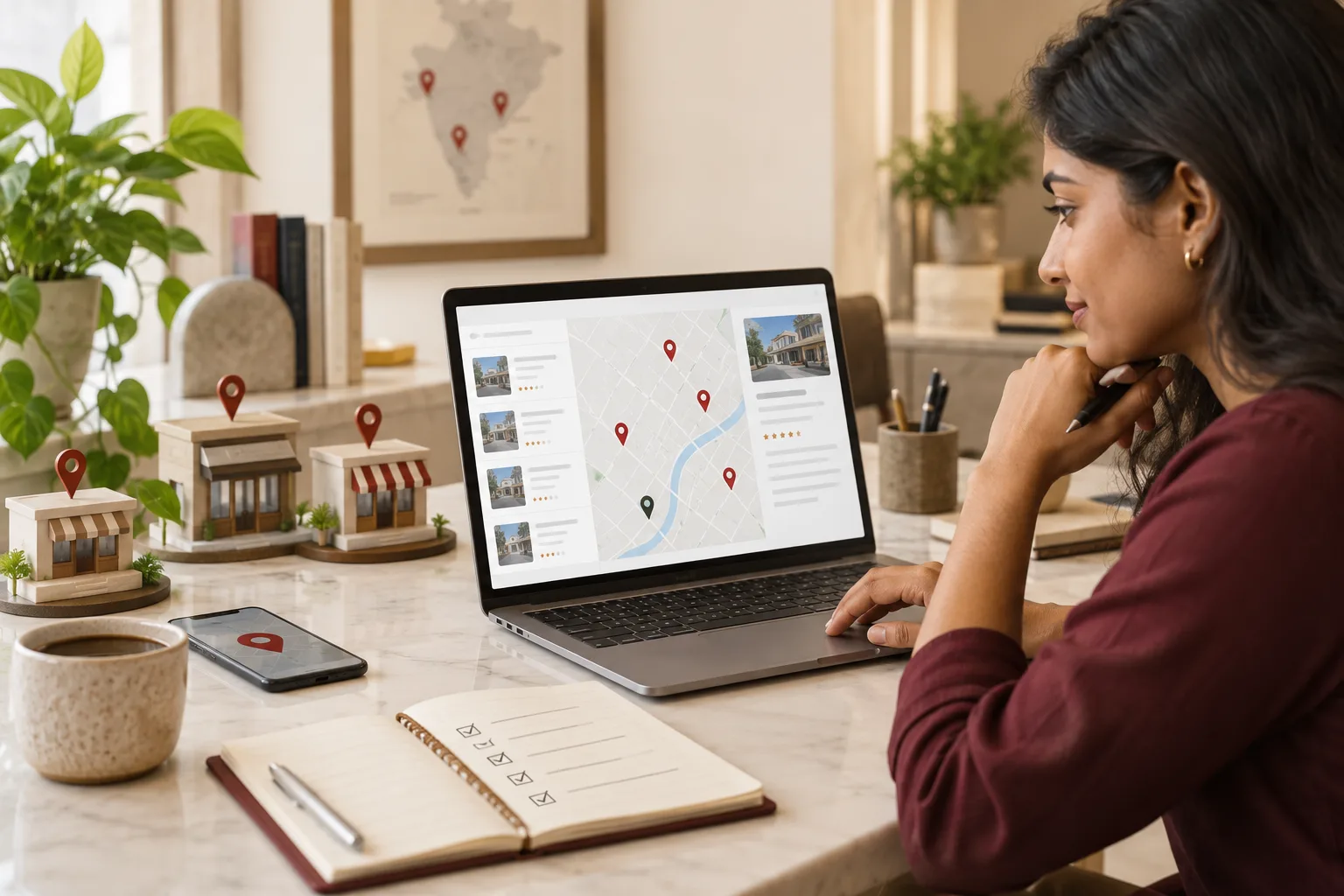
Local SEO is the work of making your business show up for searches that name your town or locality, such as a service plus an area name. GullySales sets up locality pages, local citations and map listings so nearby customers find you before a competitor across town.
Also for invoice discounting and factoring providers
- SEO for invoice discounting and factoring providers
- Website for invoice discounting and factoring providers
- Lead generation for invoice discounting and factoring providers
- Social media marketing for invoice discounting and factoring providers
- Content marketing for invoice discounting and factoring providers
- Buyer persona for invoice discounting and factoring providers
- CRM for invoice discounting and factoring providers
- Follow-up systems for invoice discounting and factoring providers
Sales and marketing for invoice discounting and factoring providers, the overview.
Last updated 14 Nov 2026. Rules for this trade differ by state and professional body, and they change. We describe restrictions in general terms, so check the current position with your own council or adviser before you publish anything.
For invoice discounting and factoring providers
Where it usually goes wrong, and what we would do.
“A finance desk nobody can find”
A supplier who wants to meet someone before sending invoices looks for an office in the cluster. A provider with an unlisted branch is passed over for one with a visible address.
“Head office listed for every branch”
One listing in a metro for a provider that serves Ludhiana, Surat and Coimbatore leaves the cluster towns blank. Each place served needs its own entry or its own page.
“Sector words missing from the listing”
A supplier searches with the trade, such as hosiery or castings. A listing that never names the sectors served does not appear for them.
“Reviews are scarce and sensitive”
A supplier may not want to say publicly whom they finance with. The approach to feedback has to respect business confidentiality.
What we do
What we deliver for invoice discounting and factoring providers.
The work available for this need. We agree the deliverables and responsibilities for your engagement in writing.
A cleaned listing per office
Correct name, address, hours, services and photos for each office, with the business type chosen for financial services.
Result: Each branch is visible in its own town.
Directory details that match
The same name, address and number across JustDial, IndiaMART and your site, with duplicates marked.
Result: A supplier finds one consistent set of details.
Cluster pages with sectors named
A page per town served, naming the trades and the buyers' types you work with, within wording compliance has cleared.
Result: A local owner sees their trade on the page.
A service-area setup for remote work
Where a branch does not host visitors, a listing that shows areas served without a false address.
Result: The profile reflects how you serve.
A confidential feedback approach
A way to invite comments that respects business privacy, with no suppliers or buyers named.
Result: Reviews arrive without exposing anyone.
How the result is measured
- Map pack ranking
- Local search visibility
- Enquiries by locality
Recorded as a baseline before work starts, so every later report has an honest comparison.
What Google weighs here
How Google reads a receivables finance provider's listing, and what to fix in each part.
- Relevance of the business type
- Choose the financial services type that matches your real work and list the services in the profile. A wrong type brings consumer loan searches you cannot serve.
- Distance in a manufacturing town
- A supplier searching near an industrial estate sees the closest listing first. If your office is near the estate, say so and add the estate's name to the description.
- Prominence in the cluster
- Mentions in association pages and honest comments from members build standing. Ask the association to link to your correct listing.
- Directories that suppliers use
- JustDial and IndiaMART carry listings from every trade. Make the name, address and number match your profile, and remove old duplicates.
- Name, address and number consistency
- Every place you appear should show the same details. A mismatch in a directory is a reason for Google to trust the listing less.
Who it is for
This is written for these invoice discounting and factoring providers.
- NBFC factors working with MSME suppliers across industrial clusters
- Fintech platforms that connect suppliers to several financiers
- Bank and financier desks that onboard suppliers of anchor buyers
- Invoice discounting providers focused on one sector such as textiles or auto components
- TReDS-linked providers helping suppliers register and upload invoices
- Providers serving exporters with receivables on overseas buyers
- Providers working with a single anchor buyer's supplier base
- Smaller regional factors in cities such as Ludhiana, Surat and Coimbatore
Before you decide
When this may not be the right fit.
- You serve suppliers entirely by phone from one office and have no address you wish to show, so a service-area setup is the only step.
- Your branch address changes soon, so listings built now would need rework.
- You have not decided which sectors and towns you serve, so the pages would name places you cannot support.
Before you decide
Agree the work. Know how to judge it.
Local SEO for invoice discounting and factoring providers: use these checks to prepare, choose the scope, and review what changes.
Bring the right evidence
Confirm the real business address, service area, contact details, and who controls the business listings. Keep examples of calls that came from the wrong location or asked for a service you do not provide.
Make the scope clear
Choose the locations you actually serve and the information each needs. Agree who approves listing changes, responds to enquiries, and keeps opening hours accurate.
Check the work in use
Check the journey from a local search to a call or enquiry on a phone. The address, service area, and description should agree across your website and listings.
Know when to change course
Do not create an office claim for a place where you only serve customers remotely. Clear service coverage is more useful than a misleading local presence.
These are discussion points, not a fixed package. GullySales confirms the deliverables, responsibilities, fee, and term in writing after reading your brief and speaking with you.
Before we start
What to have ready before the work starts.
The records, access and decisions this work needs from invoice discounting and factoring providers. Anything missing is noted in the written scope, with who will supply it.
- Registration papers for each office
- Bring the documents that show the legal name and address for every office, such as the lease or the registration certificate. A listing must match them, and a mismatch can cause verification to fail. If a document is missing, the office stays out of the plan until the address is proven.
- A person who answers the office phone
- The number on a listing must be picked up by someone who knows the product. Name that person for each office. If calls go to a general line or are missed, the listing will draw complaints in reviews, and we advise holding the number back until it is covered.
- Photographs of each office and its signboard
- A supplier looking for a finance desk in an unfamiliar estate needs to recognise the building. Bring recent photographs of the entrance, signboard and reception, taken in daylight on any phone. Without them, the profiles go live with only the map pin and get fewer visits.
- A list of the clusters and sectors served
- Local SEO for this trade follows industrial clusters and sectors, not only city names. Write down the clusters each office covers and the sectors there, such as textiles or auto parts. If the list is vague, the cluster pages become generic and compete with each other.
- Owner access to existing profiles
- Some offices already have a map listing, possibly claimed by a former employee or an agency. Find out who holds the login. If nobody does, we start the ownership claim, which can take time and stalls any change to that listing until it is settled.
How it works
How the local SEO work runs
The work itself, in order. How an engagement starts, from your brief to a written scope, is set out on our method page.
- 1
Choose which offices get a listing
We go through your offices and cluster desks and agree which are real places a supplier can visit or call and which are only addresses on paper. A listing for a desk that cannot receive a visitor invites wrong visits and bad reviews. You decide which locations carry a listing and which are served as an area.
- 2
Confirm names, addresses and hours on paper
We ask for the registration papers or office letterhead that give the legal name and address of each place. Your team confirms the working hours and the number that is actually answered. These are the facts every listing and directory must match, so we fix them once and compare everything else against them.
- 3
Search for each office as a supplier would
We search for your firm from the cluster as a supplier would, in words like invoice finance near an industrial estate, and note who appears, what your listing shows and which duplicates exist. You tell us which competitors are real and which are not. From this we rank the offices by where a better listing would matter more.
- 4
Write the profile text and cluster pages
We draft the description of each profile and a page for each cluster, naming the sectors the office serves. Your compliance head clears the wording, especially anything near eligibility or approval. Photographs of the office entrance and signage are chosen with you, so a supplier recognises the building on arrival. We also list the sectors named in each description so the wording matches the suppliers who really visit that desk.
- 5
Correct directories and fix duplicates
We update the listing, then work through the directories and aggregator sites so the name, address and number match the confirmed facts. Duplicate listings are claimed or reported for removal. You approve the changes to any profile you own, and we keep a list of what was changed and where.
- 6
Read calls and visits against the baseline
We compare calls, direction requests and visits from each listing with the figures noted before the work began. You tell us which of those were real suppliers with a workable buyer. Offices whose listings brought only wrong calls are reviewed, and we decide whether to adjust the service area or remove the listing.
Where this fits
Three pieces of sales work, in this order.
This work sits inside sales process design, at stage 1, prospecting and lead generation. The audit comes before it, and sales management keeps it running.
Step 1
Sales audit
Find where deals are being lost and what to fix first.
Start here if you cannot say where orders are lost.
Step 2 · you are here
Sales process design
One written way to sell, from first enquiry to repeat order.
Start here if every salesperson sells differently.
Step 3
Sales management
A target, a review routine and someone who owns the number.
Start here if the team has targets and no routine.
FAQ
Questions owners ask before they call.
Not here? More answers, or ask on WhatsApp.
Is a service-area business different from a visitable office?
We share premises with a group company. Is that a problem?
How do we deal with fake competitor listings?
Do we need a listing per branch?
Can we list an office that is shared with a group company?
Should we ask suppliers for reviews?
How much does it cost?
How long is the contract?
How soon will we see results?
Who will actually do the work?
More for invoice discounting and factoring providers
Related work to consider.
Closest to this: search and visibility
Also for invoice discounting and factoring providers
- Lead generation for invoice discounting and factoring providers
- Social media marketing for invoice discounting and factoring providers
- Content marketing for invoice discounting and factoring providers
- Buyer persona for invoice discounting and factoring providers
- CRM for invoice discounting and factoring providers
- Follow-up systems for invoice discounting and factoring providers
Or start from the overview: sales and marketing for invoice discounting and factoring providers.
Your next practical step
Tell us what you are trying to grow, and we will read it before we call.
Eight short steps, mostly taps. Skip anything you would rather answer on the call.