Payment service providers · Lead generation
Find the merchants who will actually switch on payments and transact.
Lead generation for a payment service provider means reaching shop owners, online sellers and developers who are ready to take payments, and separating them from people who only browse. GullySales builds the enquiry routes and counts the merchants who reach a first live payment, not the forms filled.
Scope, fee, reporting and term are agreed in writing after we have read your brief and spoken to you.
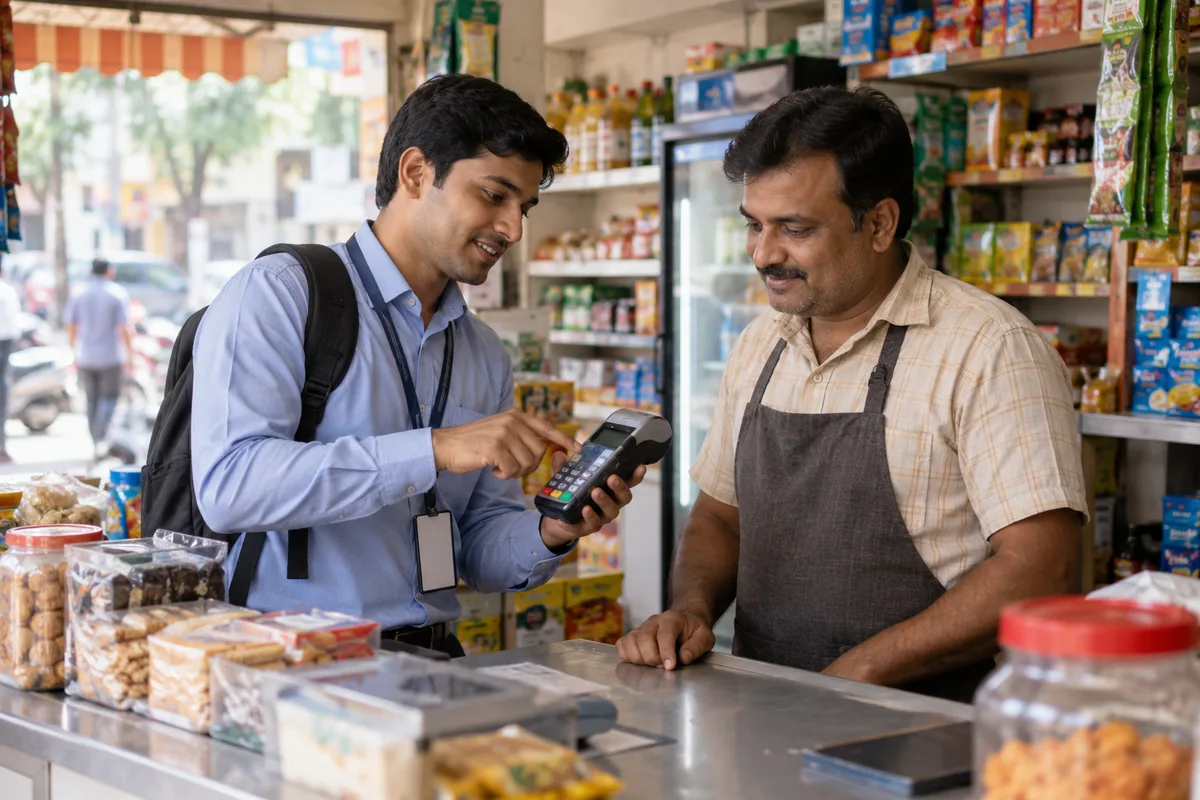
What lead generation means
Lead generation is the combined work of every channel that brings in a new enquiry, whether from search, adverts, referrals or a stall at an exhibition. GullySales runs these channels together and reports the number of enquiries each one produced, not the activity behind it.
Also for payment service providers
- CRM for payment service providers
- Follow-up systems for payment service providers
- SEO for payment service providers
- Social media marketing for payment service providers
- Content marketing for payment service providers
- Buyer personas for payment service providers
- WhatsApp marketing for payment service providers
- Digital marketing for payment service providers
Sales and marketing for payment service providers, the overview.
Plan the next part of the work
Last updated 21 Nov 2026. Rules for this trade differ by state and professional body, and they change. We describe restrictions in general terms, so check the current position with your own council or adviser before you publish anything.
For payment service providers
Where it usually goes wrong, and what we would do.
“A signup is not a merchant until money moves”
A form with a business name is the cheapest thing to collect. The lead that matters is the one that reaches documents, activation and a first transaction, so the source of each signup needs to stay attached to that journey.
“The kirana owner and the developer search for different things”
One looks for a QR code and a soundbox, the other for an API and a sandbox. A single enquiry route sends both to the same page, and one of them leaves without asking anything.
“Field executives and online forms feed the same pipeline”
A merchant met on the shop floor and a seller who filled a form at night both need follow-up. When the two sit in separate sheets, nobody can say which route produces merchants who transact.
“Larger merchants ask for rates before anything else”
A business with real volume opens with a request for lower charges. A lead route that has no answer ready for that conversation hands the merchant to a competitor with a sharper reply.
What we do
What we deliver for payment service providers.
The work available for this need. We agree the deliverables and responsibilities for your engagement in writing.
Audience-split enquiry pages
Separate entry pages for shop owners, online sellers, developers and finance heads, each with its own short form.
Result: Each enquiry arrives labelled with the kind of merchant it is.
One lead register for field and online
A single sheet or CRM view where a field signup, a call, a form and a partner introduction are recorded with their source.
Result: You can read the source of every merchant in one place.
A rate-request reply kit
An agreed set of answers for merchants who ask for lower charges, written in wording your compliance head has approved.
Result: Your team replies to a rate request from the same approved text.
Go-live status on every lead
Stages from enquiry to documents, activation, integration and first payment, shown against each lead.
Result: You can see which leads are stuck and at which stage.
Source report by live merchant
Spend and effort set against merchants who transacted, split by route and by executive.
Result: You can compare sources on live merchants, not on forms.
How the result is measured
- Relevant enquiries by source
- Duplicate and unsuitable enquiries
- Time to the first response
- Accepted enquiries reaching an agreed next step
Recorded as a baseline before work starts, so every later report has an honest comparison.
What to capture or send
The details that show whether a signup is a merchant who will take payments.
- Business type and what is sold
- A kirana, a clinic, a Shopify seller and a school need different products. Capture it first so the reply names the right setup.
- Online or in-person selling
- This decides between a gateway, a QR or a card machine. Ask it in the form, not on the third call.
- Current way of taking money
- Cash, a rival QR, bank transfer or another gateway. It tells the caller what the merchant is switching from.
- Documents ready or not
- Note whether the PAN, bank proof and business papers are at hand. A merchant with them can go live, and one without needs a different conversation.
- Source: field, web or developer page
- Record where the lead came from. Field and online leads reach the same register, and only a source field shows which turns into live merchants.
- First transaction date
- Fill it when money first moves. Without it the register counts signups and hides the merchants who never transact.
Who it is for
This is written for these payment service providers.
- Payment aggregators and gateways for online sellers and platforms
- UPI QR, soundbox and card machine providers for shops and restaurants
- Payment link and invoice collection providers for small sellers
- Merchant acquiring resellers and sales partners
- Payout and vendor payment platforms for marketplaces and businesses
- Bill payment and recurring collection providers for fees and subscriptions
- Cross-border payment providers for exporters and freelancers
- Providers that serve a single sector, such as schools, clinics or logistics
Before you decide
When this may not be the right fit.
- Your onboarding team cannot verify more merchants than it does now, so extra signups would only lengthen the queue.
- You cannot see which signups become live merchants, so new lead sources could not be judged.
- Your charges are still being renegotiated with a partner bank, and a rate request from a large merchant could not be answered.
Before you decide
Agree the work. Know how to judge it.
Lead generation for payment service providers: use these checks to prepare, choose the scope, and review what changes.
Bring the right evidence
Define the organisations or buyers you can serve and the reasons they would consider a conversation. Bring examples of accepted and rejected prospects so the selection rule is visible.
Make the scope clear
Agree the research sources, contact approach, qualification rules, and handover. Clarify which meetings count as accepted and what happens to replies that are not ready to buy.
Check the work in use
Review why a prospect was selected and what was learned from the response. Count held, relevant conversations separately from contacts found, messages sent, or meetings booked.
Know when to change course
If the same objection appears repeatedly, adjust the offer or buyer group before increasing outreach. Respect a request to stop contact and keep the exclusion in the record.
These are discussion points, not a fixed package. GullySales confirms the deliverables, responsibilities, fee, and term in writing after reading your brief and speaking with you.
Before we start
What to have ready before the work starts.
The records, access and decisions this work needs from payment service providers. Anything missing is noted in the written scope, with who will supply it.
- The field executives' lead notebooks
- Our register is only as good as what your executives already wrote down. Photographed pages are acceptable, untidy handwriting included. When they are missing, field leads start at zero in the register and the source report undercounts that route.
- Export of web form and call enquiries
- We need the raw list with dates and the page each person came from. A spreadsheet is enough. Without it we cannot separate shop owners from developers, and the audience split rests on guesses rather than your own history.
- A named person for rate requests
- Only you can decide who may answer a larger merchant on rates. One named person with a phone that is picked up is what the reply kit needs. If nobody is named, rate requests sit in the shared inbox and go cold.
- The onboarding status list as it stands
- We need to see which merchants are stuck at documents, integration or first payment today. A current export from your onboarding team is acceptable. Without it, the go-live status on each lead is filled in from memory and the count of live merchants cannot be trusted.
- Written definition of a developer lead
- Someone must decide whether a developer exploring the sandbox counts as a lead or as a user. Your product head makes that call. If it is left open, engineering enquiries are counted twice or dropped, and the source report cannot be compared month to month.
How it works
How the lead generation work runs
The work itself, in order. How an engagement starts, from your brief to a written scope, is set out on our method page.
- 1
Define what counts as a live merchant
We sit with your onboarding head and agree the exact event that turns a signup into a merchant: documents cleared, integration passed, first successful payment. That definition goes into the lead register as the last column, and every later count in this work refers to it.
- 2
Split the kirana owner from the developer
We list the questions each audience types before they know your name. A shop owner asks about a QR code and next-day settlement. A developer asks about a sandbox and a webhook. You tell us which of the two your field team and your engineers can actually serve today.
- 3
Merge field notebooks and form entries
We collect the executives' notebooks, the web form export and the missed-call list into one register. You decide which source names stay, and which duplicate merchants are merged. When this is done, the starting figures for enquiries and live merchants are written down before anything is changed.
- 4
Draft the rate-request reply with finance
A larger merchant asks for rates first. We write the reply with your finance head: what can be said in writing, what needs a call, and which documents the merchant is asked for next. You decide who is allowed to quote, and the reply kit carries only what you approve.
- 5
Place a test enquiry from each route
We submit a shop-owner enquiry, a developer enquiry and a rate request ourselves, then watch who in your team receives each one and what they do. Gaps in the handoff, such as a form that reaches nobody on a holiday, are fixed before any real merchant arrives.
- 6
Compare sources against live merchants
We read the source report against the starting figures: enquiries by route, documents completed, integrations passed and first payments made. You decide which routes get more of your executives' time and which are paused, using merchants who transacted rather than forms filled.
Where this fits
Three pieces of sales work, in this order.
This work sits inside sales process design, at stage 1, prospecting and lead generation. The audit comes before it, and sales management keeps it running.
Step 1
Sales audit
Find where deals are being lost and what to fix first.
Start here if you cannot say where orders are lost.
Step 2 · you are here
Sales process design
One written way to sell, from first enquiry to repeat order.
Start here if every salesperson sells differently.
Step 3
Sales management
A target, a review routine and someone who owns the number.
Start here if the team has targets and no routine.
FAQ
Questions owners ask before they call.
Not here? More answers, or ask on WhatsApp.
Which leads should we count as real?
Can lead generation include developer enquiries?
Do you promise a number of merchants?
Should field and online leads go to the same team?
Who in our team has to be involved in lead generation?
What happens to the leads our existing vendor already collected?
How much does it cost?
How long is the contract?
How soon will we see results?
Who will actually do the work?
More for payment service providers
Related work to consider.
Closest to this: leads and follow-up
Also for payment service providers
Or start from the overview: sales and marketing for payment service providers.
Your next practical step
Tell us what you are trying to grow, and we will read it before we call.
Eight short steps, mostly taps. Skip anything you would rather answer on the call.